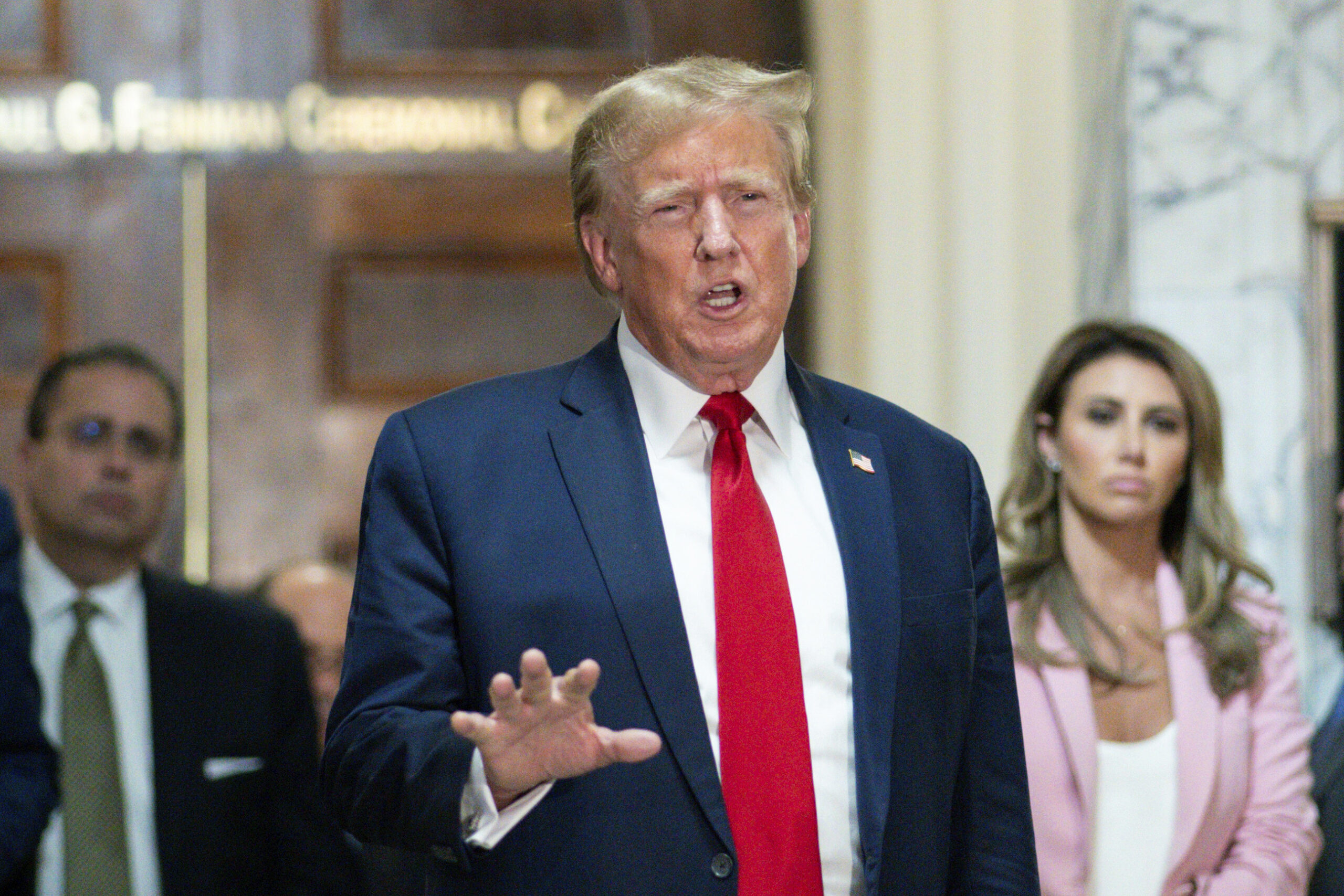
Despite his supposed billionaire status, former President Donald Trump cannot afford to secure the bond needed to appeal the civil fraud case he lost earlier this year in New York, his lawyers claimed in court papers filed on Monday.
Trump’s post-presidency has been marked by numerous legal troubles, including criminal investigations, civil lawsuits, and federal charges. These issues include allegations of electoral interference, mishandling classified documents, and tax fraud related to the Trump Organization.
Additionally, Trump faces accusations stemming from “hush-money” payments to adult film star Stormy Daniels during his 2016 campaign, aimed at silencing her claims of an affair, and he was found guilty of sexually assaulting and defaming E. Jean Carroll.
Following a trial for civil fraud in Manhattan led by Attorney General Letitia James, where Trump was found liable for lying to inflate the value of his properties and get more favorable terms on loans, his attorneys reported to a New York appellate court that he could not afford to secure a $464 million bond. They called it a “practical impossibility.”
The appellate court was informed on Monday that despite concerted efforts, including approaching about 30 surety companies through four different brokers, Trump has been unable to secure a bond for the full amount of the judgment against him, which includes more than $450 million in damages and interest. Typically, a bond or full payment into escrow is required to halt collection efforts during an appeal process in civil cases.
Facing a March 25 deadline to post the bond, Trump’s legal team has petitioned the court for either a suspension of the judgment or permission to post a significantly lower bond amount.
Last month, an appeals court judge denied his request to pause the enforcement of the judgment, which had been imposed for widespread business fraud. The case, now before the full panel of the New York appeals court, sees Trump’s legal representatives proposing a $100 million bond, a figure far below the required amount, a proposal opposed by James’s office.
Trump, his adult sons and several associates and companies collectively owe more than $464 million. His lawyers argue that the enormity of the required bond, nearing a billion dollars in cash reserves for a private entity, is unprecedented. They highlighted the challenge of securing such a bond, noting that few companies are willing to consider bonds of this magnitude and those that do require cash or marketable securities, not real estate, as collateral.
The dilemma of liquidating real estate holdings to raise funds was described as causing “massive, irreparable losses.”
Trump recently posted a separate $91.6 million bond in the defamation verdict related to writer E. Jean Carroll.