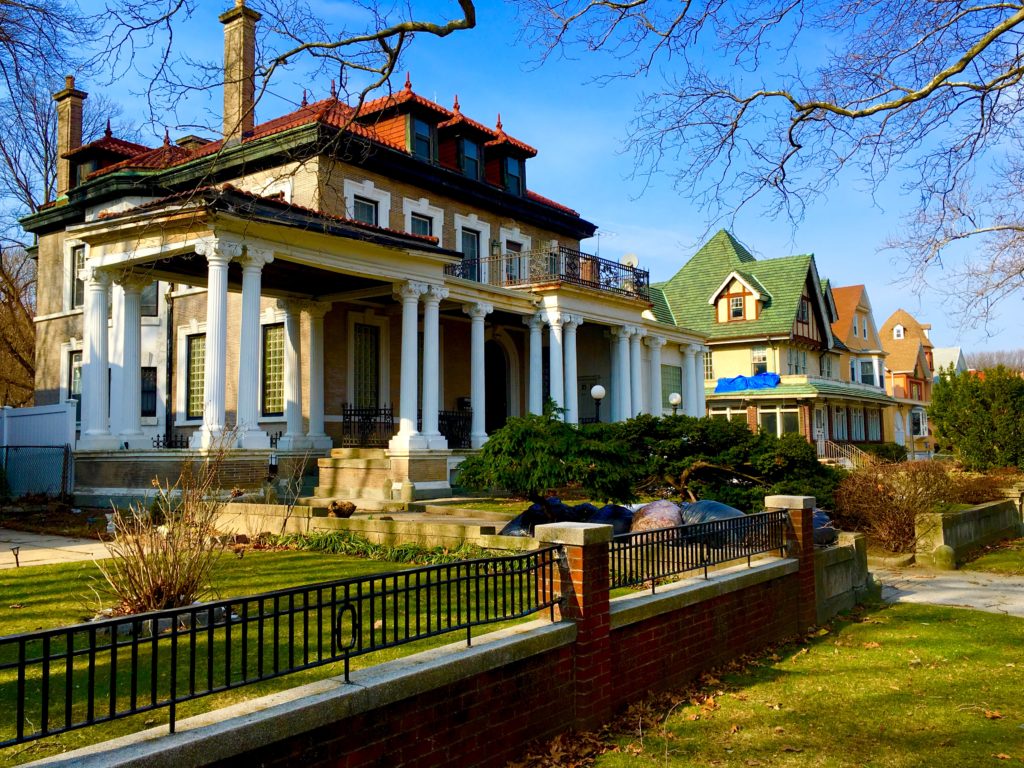
Sometimes considered a part of East New York, Cypress Hills has become a fully developed suburban neighborhood filled mostly with single- and multi-family townhouses.
It was settled in the early 1700s as part of New Lots of the town of Flatbush. African-American slaves farmed the area for Dutch, French, Huguenot and English land owners, and it remained mostly rural until the early 1800s.
The area’s first signs of development came with the construction of Jamaica Plank Road in 1807, a structure along what is now Jamaica Avenue. By 1835, the first building lots were sold.
One of the major catalysts in the development of Cypress Hills was the Union Course, one of the earliest thoroughbred racetracks, built in 1821. A community called Union Place, later Unionville, then Union Course, sprouted around the racetrack and remained there until after the Civil War.
It was in Queens, just over the county line from Cypress Hills. When the City of Brooklyn was consolidated into New York City in 1898, parts of Queens County became parts of Brooklyn.
City Line, a sub-section of Cypress Hills near the Queens County line, reflects that rezoning.
Residents began to become attracted to the area more after the Long Island Rail Road’s Great Eastern Railroad line was completed. Detached houses were then built, and commercial development spurred on Atlantic Avenue.
Another sub-section is Highland Park, which developed around the Ridgewood Reservoir and opened in 1903.
By the early 1920s, almost every block of the neighborhood was filled with houses, and as the population doubled in the 1930s, construction continued.
Cypress Hills now looks similar to how it did then, filled with stable working-class residents.