In move ‘away from brute force,’ NYPD closes anti-crime units linked to death of Eric Garner
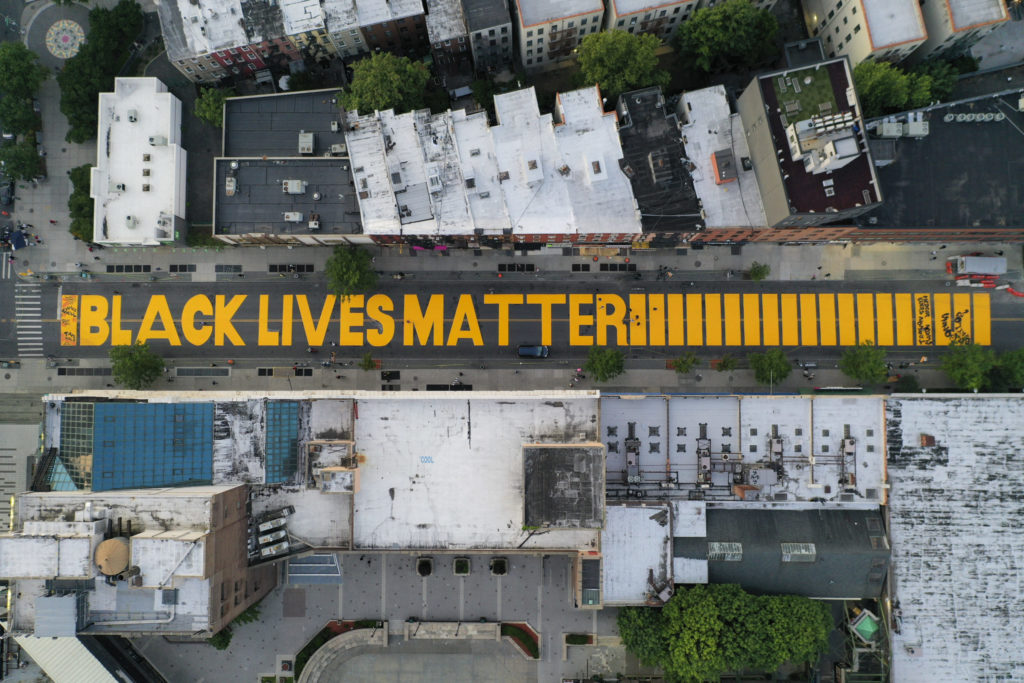
A giant "BLACK LIVES MATTER" message has been painted in orange on Fulton Street in Brooklyn. Photo: John Minchillo/AP
By Michael R. Sisak Associated Press
June 16, 2020
Copy Link
Email
Facebook
X
LinkedIn
WhatsApp
Telegram
Pinterest
Print
New York City’s police department is disbanding the type of plainclothes anti-crime units that were involved in the 2014 death of Eric Garner and have long been criticized for aggressive tactics, Commissioner Dermot Shea said Monday.
The NYPD’s anti-crime units, which focused primarily on seizing illegal guns, were responsible for a disproportionate number of shootings and complaints, Shea told reporters after meeting with top deputies to discuss the move.
The change comes amid a nationwide reckoning over police brutality sparked by George Floyd’s death in Minnesota.
A holdover from the department’s “stop and frisk” era, the anti-crime unit no longer fit in a department that has shifted to relying more heavily on intelligence, data and tools like video, DNA and shot-detection technology to fight crime, Shea said.
“Make no mistake, this is a seismic shift in the culture of how the NYPD polices this great city,” Shea said. “It will be felt immediately in the communities that we protect.”
About 600 officers working in the unit will be given new assignments, Shea said. A separate anti-crime unit will still operate in the transit system and the department will continue to use plainclothes officers for things like surveillance and narcotics work, Shea said. The officers will be reassigned immediately, he said.
Plainclothes officers have been responsible for about half of the police shootings in New York City in recent years, according to department data.
The Legal Aid Society, a public defender organization that has pushed for police reforms, said the move was “welcome news,” but cautioned that New Yorkers would not be better served “if these officers are simply reassigned, carrying with them the same bad habits that earned Anti-Crime its dismal reputation.”
New York City Police Commissioner Dermot Shea, left, and Mayor Bill de Blasio spoke during a news conference in New York. Photo: John Minchillo/AP File
The unit took on many of the duties of the former Street Crime Unit, which was closed in a largely symbolic move after four of its officers killed a Guinean immigrant, Amadou Diallo, in a barrage of 41 shots in 1999 after mistaking his wallet for a gun.
In its pursuit of illegal guns, the anti-crime unit relied heavily on stopping and frisking people without justification. A federal judge ruled in 2013 that the practice violated the civil rights of people of color.
In 2014, anti-crime officer Daniel Pantaleo used a banned chokehold to take Garner to the ground as he tried to arrest him for selling loose, untaxed cigarettes on Staten Island. Pantaleo was fired last year after a departmental disciplinary trial.
Floyd echoed Garner’s dying pleas of “I can’t breathe” as a Minneapolis police officer pressed a knee into his neck, leading to his death May 25, and the words have again become a rallying cry among police reform activists marching in cities across the nation.
“We can do it with brains. We can do it with guile. We can move away from brute force,” Shea said. “It is lost on no one, certainly not the people that live in the neighborhoods that we serve, that endure being stopped or their children being stopped. We can do it better, we can do it smarter, and we will.”
But some of the most notorious police killings did not involve officers from the anti-crime unit.
The officer who chased unarmed Ramarley Graham into his own home and killed him in his bathroom was a part of an anti-narcotics squad. The officers whose 50-shot barrage killed Sean Bell on his wedding day in 2006 were working undercover. The sergeant who killed Deborah Danner in 2016 was a precinct officer.
The head of the city’s biggest police union criticized the closure of the anti-crime unit, which operated in each of the NYPD’s 77 precincts.
“Shooting and murders are both climbing steadily upward, but our city leaders have clearly decided that proactive policing isn’t a priority anymore,” Police Benevolent Association president Pat Lynch said in a statement. “They chose this strategy. They will have to reckon with the consequences.”
SUNSET PARK — “As a resident of Marine Park, one of the great surprises I found biking around Industry City and visiting Japan Village was to discover Bush Terminal Park. I continue to be amazed at the serene hideaways that the city offers in some of the busiest places — and, still, with an iconic view.”
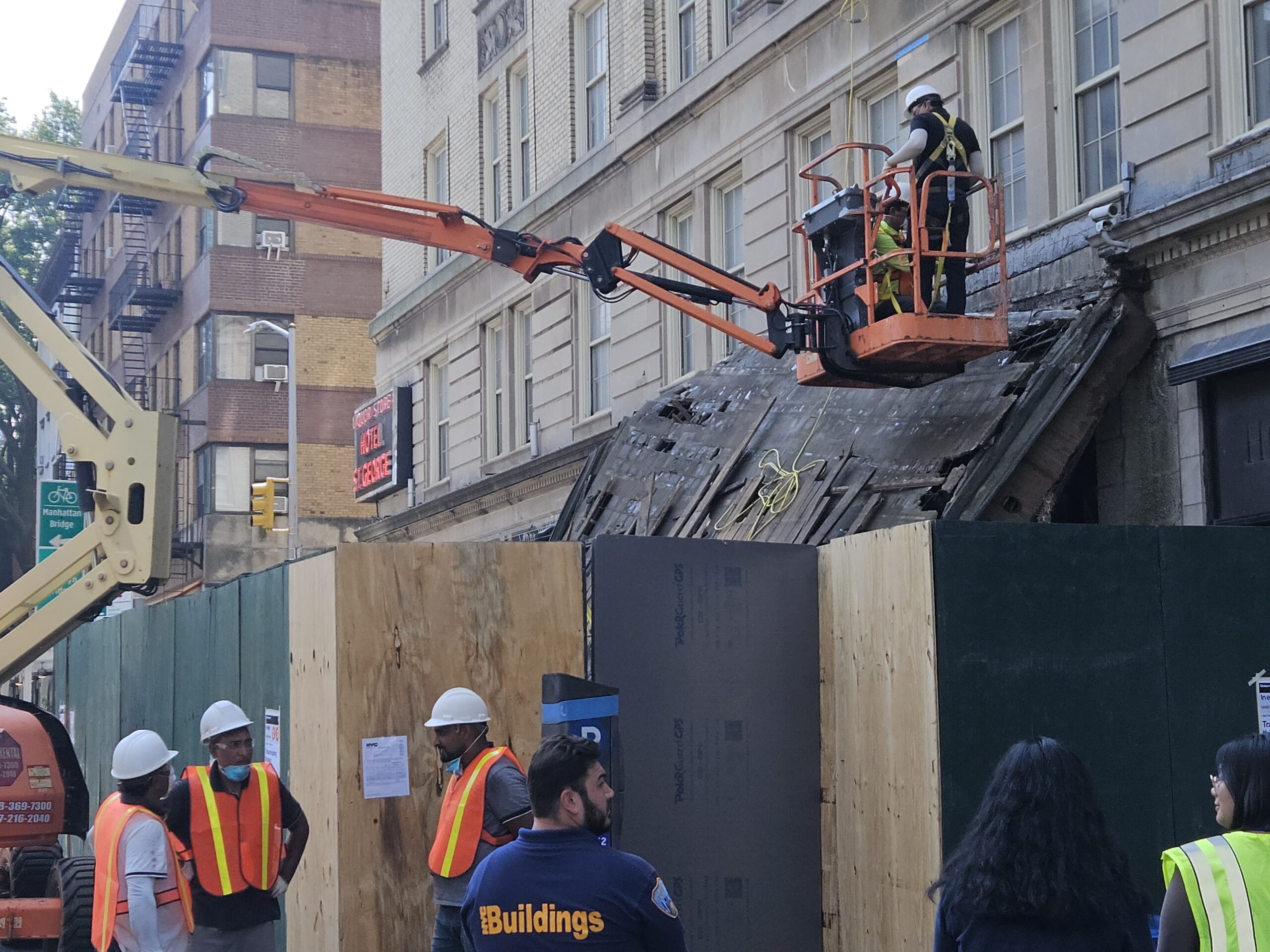
BROOKLYN HEIGHTS — ‘A miracle that no one was killed …’ That’s what neighbors are saying about the collapse of the Hotel St. George marquee. Shown in this photograph are workmen beginning the removal and repair of the historic, old neon sign at the corner, referencing a relic of Brooklyn Heights’ past: the St. George Hotel.
ATLANTIC AVENUE — Exhausted shopper with cluster of bags and goods from mall at Boerum Place stops to look at huge construction site across the street. “Is that REALLY going to be a jail??” Her male companion is reassuring, “Nothing like Rikers … this is 21st Century.”
BROOKLYN HEIGHTS — Overheard in line at one of most popular pastry outlets on Montague Street: “Hope I can get them into a camp …” A mother with two pre-schoolers in tow was showing a friend the Dodge Y flyer for Healthy Kids Day on Saturday, April 18.