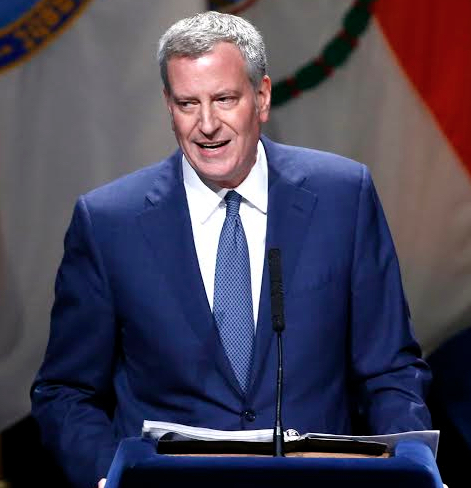
New York City Mayor Bill de Blasio said Thursday he has begun shutting down the nonprofit group that was advancing his political agenda, a move that comes just weeks after a government watchdog called for a probe into its actions.
His group, dubbed the Campaign for One New York, was not bound by city campaign finance laws and could accept unlimited contributions from donors. It used that money to promote some of de Blasio’s signature policy initiatives, including universal pre-K and a rezoning plan that would aid in his effort to build more affordable housing.
The rezoning plan is expected to be approved in a City Council vote next week, which de Blasio said is triggering the group’s closure.
“The work is done,” de Blasio said Thursday.
But aides to the mayor said the decision was made to wind the group down so it does not become more of a distraction during the run-up to de Blasio’s 2017 re-election campaign.
Good government groups had expressed fears that the nonprofit’s donors may be looking to curry influence with elected officials through their sizable checks. One such group, Common Cause New York, had called for an investigation into its spending.
Its president said Thursday that “it does not serve the public interest to have a shadow government, serving only to breed mistrust and confusion among voters.”
“We do not accept that secret money is a necessary function of the modern mayoralty,” said Susan Lerner, the group’s head. “This is the right decision which we hope others will follow.”
The Campaign for One New York had received more than $1 million in donations from real estate developers since its launch in 2014. Many of those corporate donors have projects underway in the city and have backed the mayor’s housing plan.
Though not required to by law, de Blasio’s 501(c)(4) group does disclose donors. But many more of the nonprofits, which have been in use for years at the federal level and have become increasingly popular among mayors and governors, do not, leading good government groups to dub their spending “dark money.”
The demise of de Blasio’s group, which was first reported by The Wall Street Journal, will be finalized in the coming weeks. De Blasio is far from the first political figure to disband a nonprofit when questions arose about its dealings; in 2013, Gov. Andrew Cuomo closed the Committee to Save New York but disbanded it in 2013 after criticism about its donors’ business ties to the state.