R-E-S-P-E-C-T. Find out what it means to me.
The city Landmarks Preservation Commission (LPC) dished out a dollop of respect for the historic buildings of East New York on Tuesday, or two of them, at least.
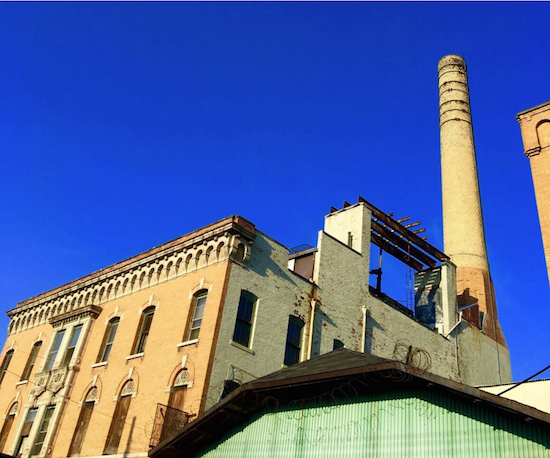
The preservation agency unanimously voted to put two buildings in the former Borden Dairy Corp. factory complex on Atlantic Avenue onto its calendar for landmarking consideration.
The LPC refers to them as the Empire State Dairy Co. Buildings because that was their original occupant.
There are just three city landmarks in East New York and neighboring Cypress Hills.
The calendaring of the century-old industrial properties comes at a crucial time.
The City Council held a hearing Monday on a plan to rezone a wide swath of East New York and Cypress Hills to promote affordable housing development. If enacted, rezoning would turn buildings in prime locations like the old dairy into targets for demolition.
Prior to the LPC’s vote, which was held at the agency’s Lower Manhattan headquarters, Chair Meenakshi Srinivasan said that because rezoning will probably bring changes to East New York, “preservation of these buildings is really critical.”
Following the vote, Srinivasan said a hearing about landmarking the Atlantic Avenue dairy buildings will be held in July.
Another reason the calendaring comes at a crucial time — though no mention of this was made at the LPC meeting — is that the entire five-building former Borden’s complex is for sale. The asking price is $12 million, an online posting by listing broker Coldwell Banker Reliable Commercial Division indicates.
The property has belonged since 1982 to an entity called 2840 Atlantic Ave. Realty Corp., city Finance Department records indicate. It is currently occupied by Royal Plastics Corp.-Allied Manufacturing Corp.
When a property is on the LPC’s calendar, it is somewhat protected. If its owner files for a demolition permit, the city Buildings Department alerts the LPC, which then has 40 days to decide whether to landmark the property.
Landmarked sites cannot be torn down or have their exteriors altered without the LPC’s permission.
A group called Preserving East New York (PENY) has been campaigning to get numerous neighborhood buildings onto the LPC’s calendar.
Prior to the agency’s vote, LPC research staffer Jessica Baldwin summarized the historic merits of the two buildings that were added to the landmarking calendar.
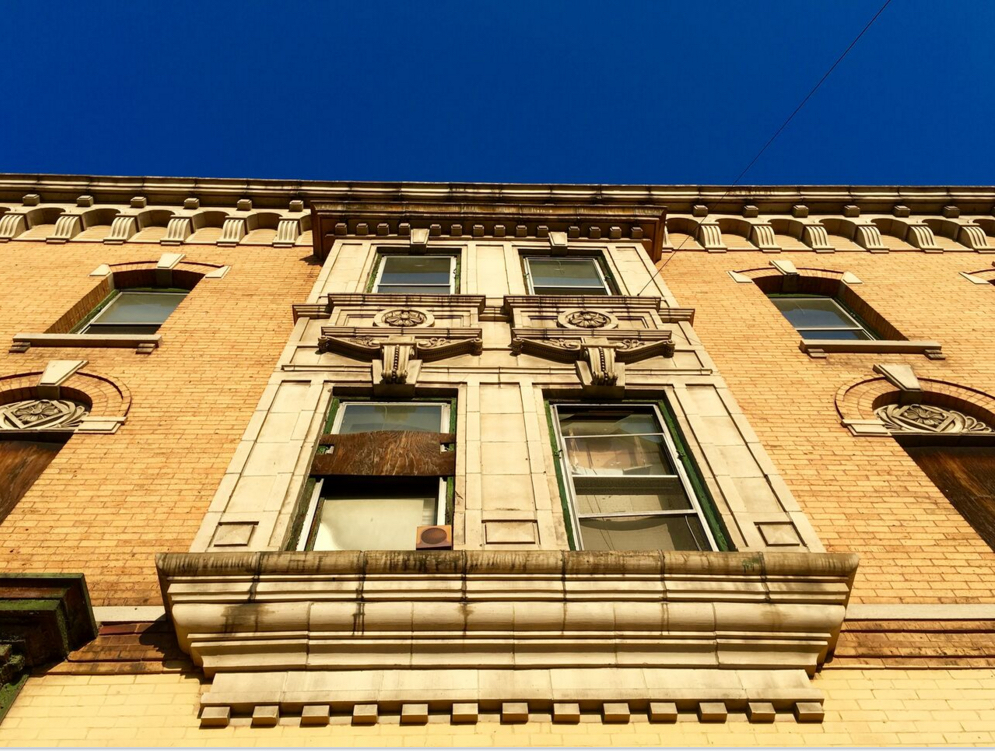
Renaissance/Romanesque Revival-style 2840 Atlantic Ave., on the corner of Schenck Avenue, was built in 1906-1907.
The second building, 2858 Atlantic Ave. on the corner of Barbey Street, was built in 1914-1915. It is Abstracted Classicist with Secession detail — two early 20th-Century architectural styles that are very seldom mentioned when Brooklyn buildings are being described.
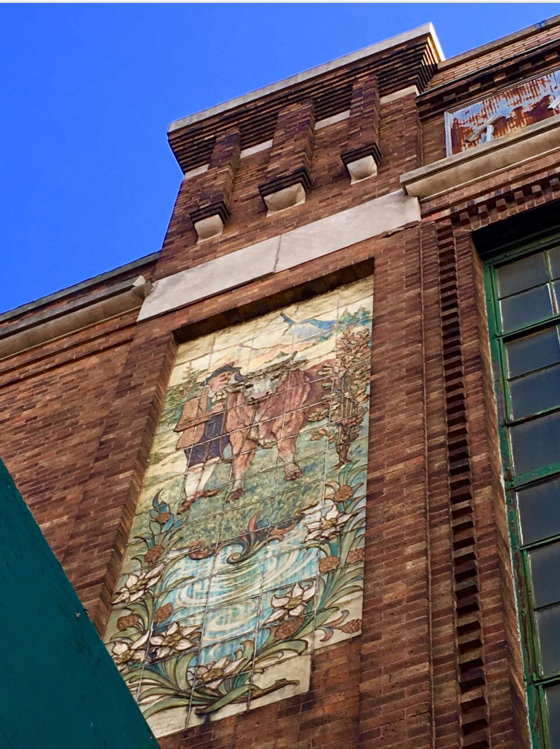
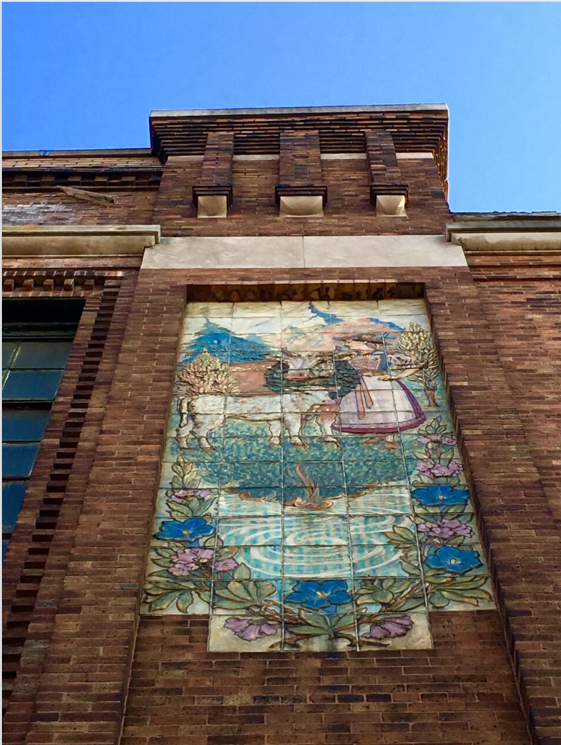
The factory complex’s most picturesque historic feature can be found on the second building’s façade. It’s a pair of charming tile murals.
One mural depicts a milkmaid with her cows and a backdrop of majestic mountains. The other, which has a similar setting, shows a lederhosen-garbed man with a cow by his side.
These artworks were created by American Encaustic Tiling Co., which at one point was the largest U.S. manufacturer of floor and wall tiles.
According to a recent Brownstoner.com interview with architectural historian Michael Padwee, the tiles were probably made by hand and are “American majolica,” with “bright glazes, high relief, naturalistic forms.”
Also on Tuesday, the LPC designated the 1920s-vintage former Parkway Branch of the East New York Savings Bank as a city landmark.