Before there was a Prospect Park, there was a Mount Prospect, also called Prospect Hill, just on the eastern side of Flatbush Avenue.
Most of the neighborhood developed after Prospect Park was finished in 1873. By the 1890s, the neighborhood had the name Prospect Heights, and brownstones, townhouses and apartment buildings began appearing there at the turn of the century.
Prospect Park was designed by Frederick Law Olmsted and Calvert Vaux, the duo who designed Central Park.
The creation of a Brooklyn park was authorized in 1859, but proper planning was delayed by the Civil War. Olmsted and Vaux finally got to the drawing board in 1865, and Prospect Park’s construction was completed by 1873.
The plan divided the park into three areas: meadows, forests and bodies of water. The final product was 526 landmarked acres of fields, woods, lakes and trails, with a skating rink and a carousel.
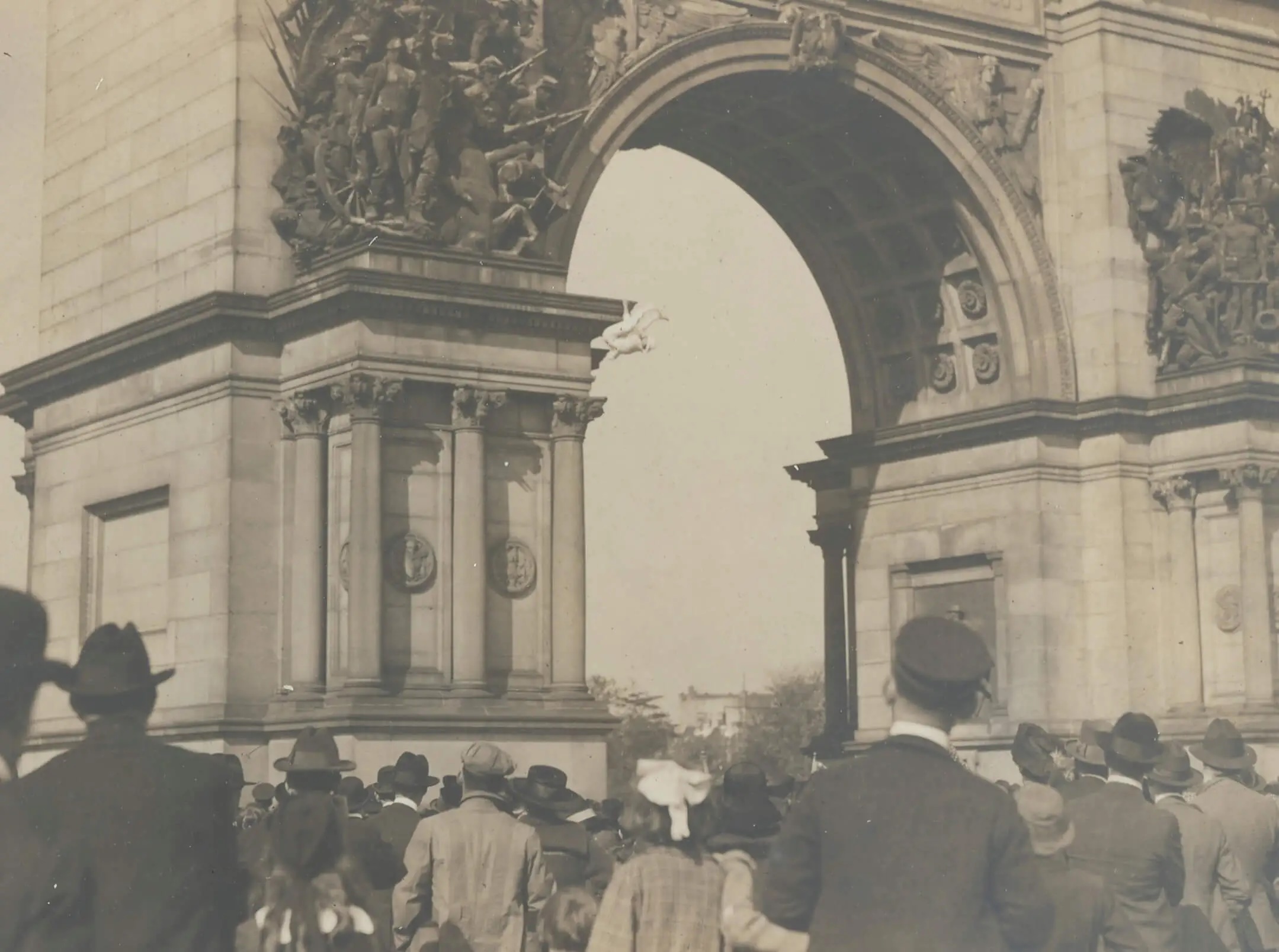
Today, Prospect Heights boasts some of the city’s cultural treasures. Grand Army Plaza — where Prospect Park West, Flatbush Avenue and Eastern Parkway meet — has the Soldiers’ and Sailors’ Memorial Arch, honoring the troops of the Civil War, and the John F. Kennedy Memorial.
A triangular space bounded by Eastern Parkway, Washington Avenue and Flatbush Avenue is now home to the Brooklyn Museum of Art, the Brooklyn Botanic Garden and the Brooklyn Public Library.
A portion of the neighborhood was developed for commercial and residential purposes, primarily over the Long Island Rail Road train yard, in the 2000s and 2010s. A key element in it is the Barclays Center sports arena, which opened in 2012. The area, adjacent to Downtown Brooklyn and Fort Greene, was originally known as Atlantic Yards but was renamed Pacific Park by the developers. It is often considered a neighborhood of its own.