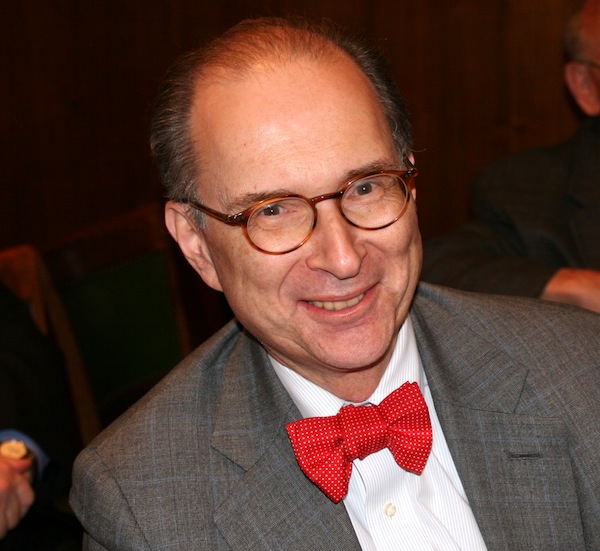
Longtime judge, legal scholar and established Brooklyn attorney Barry Kamins has announced that he will retire from the bench effective Dec. 1. The announcement comes as a surprise to many in the Brooklyn legal community.
“The New York judicial system has lost one of its finest judges and it is a loss to everybody,” attorney Marvin Hirsch told the Brooklyn Daily Eagle. Prior to his appointment to the bench, Kamins and Hirsch were partners at the Brooklyn law firm Flamhaft Levy Kamins Hirsch & Rendiero.
Kamins’ retirement may have provided a bittersweet sigh of relief. In June, the New York City Department of Investigation (DOI) issued a report alleging unethical judicial conduct by Kamins in support of his friend, former Brooklyn District Attorney Charles Hynes.
The Commission on Judicial Conduct began its investigation into the numerous email exchanges between Hynes and Kamins in an effort to determine whether or not Kamins improperly advised, assisted and otherwise participated in Hynes’ failed re-election 2013 campaign or spoke to Hynes about pending legal matters within the D.A.’s Office.
In a stipulation agreement made public Oct. 1, Kamins agreed to step down from the bench in exchange for an end to the investigation. According to the agreement Kamins submitted, “The appropriate papers to the Office of Court Administration and the New York State Local Retirement System stating that he will relinquish his judicial position on Dec. 1, 2014.”
Kamins, a former Brooklyn state Supreme Court justice, will remain at his post in Queens County Supreme Court until his effective retirement date.
Beginning his career in Brooklyn, Kamins was a prosecutor turned private attorney, with his law firm opening its offices on Court Street in 1972. Kamins was appointed to the criminal court bench in 2008 by then-Mayor Michael Bloomberg and quickly rose up the ranks; he was appointed to the high position of chief administrator of New York City Criminal Courts in 2012.
Kamins’ career continued on the upswing when in 2013, the judge was asked to serve as chief of planning and policy for the New York state Office of Court Administration. Following the DOI report, Kamins was reassigned to the Queens bench.
“In his tenure as judge, Barry Kamins improved NYC Criminal Courts by dramatically reducing arrest to arraignment time and reducing case backlogs,” noted Jay Schwitzman, president of the Kings County Criminal Bar Association. “These improvements will continue for years and benefits lawyers, prosecutors, court staff and defendants and their families,” the criminal defense attorney added.
“Barry Kamins has been a longstanding, highly accomplished member of New York’s legal community, known for his outstanding legal scholarship and numerous contributions to the justice system,” Chief Administrative Judge A. Gail Prudenti said in a released statement.
Aside from serving on the bench, Kamins was a law professor at both Brooklyn and Fordham University law schools, where he taught courses on criminal procedure — a topic he knows well. Kamins wrote a book on “New York Search and Seizure” (1991), which is republished yearly and used as a learning supplement in many law classrooms throughout the city.
Kamins has expressed a hope to continue his scholarly pursuits and hinted at a possible return to private practice.
“I have decided to leave the bench and am considering several options in the private sector,” Kamins said in a statement.
As part of the stipulation agreement, Kamins has agreed he “will neither seek [nor] accept judicial office anytime in the future.”
Brooklyn’s legal community, while saddened by news of the judicial investigation, made it clear that Kamins’ character remains unblemished.
“I sympathize with Judge Kamins,” said civil rights attorney Andrew Stoll in a June blog post. “The thoughts we commit to emails are not always the most carefully deliberated,” the attorney noted in reference to the emails at issue in the investigation against Kamins.
“Barry Kamins’ accomplishments as a prosecutor, defense lawyer, judge, author, professor, lecturer, bar association leader and mentor greatly outweigh the recent judicial ethical violation of participating in a political campaign,” Schwitzman added.
“I leave gratified, knowing that our criminal justice system and our courts are stronger now than ever before,” Kamins said. “Working for the people of the city and state has been a distinct honor and privilege.”
Prudenti included final words for her court colleague: “I wish him the very best in all his future endeavors.”