Hundreds of communities around the country will share more than $1 billion in federal money to help them plant and maintain trees under a federal program that is intended to reduce extreme heat, benefit health and improve access to nature.
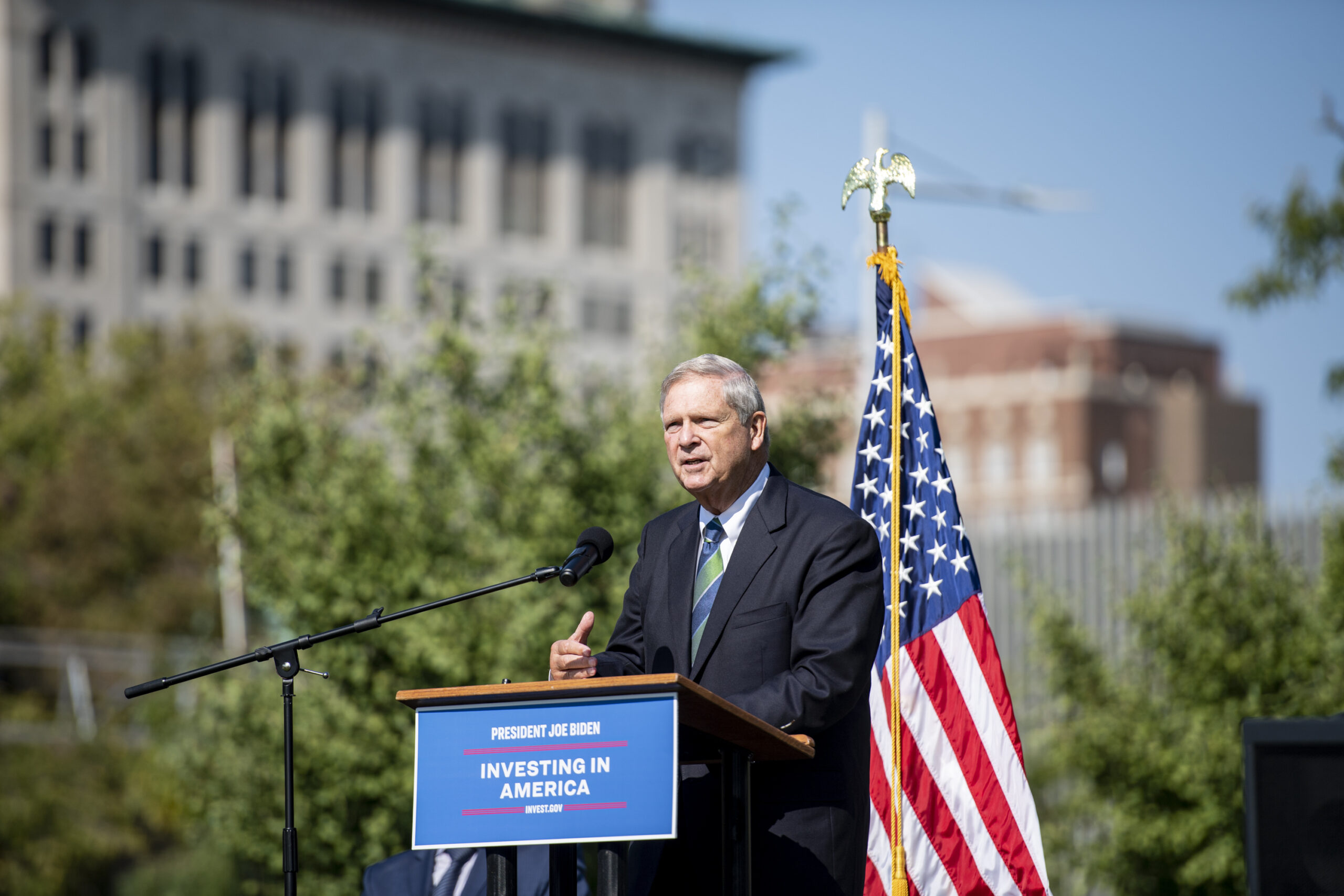
U.S. Department of Agriculture Secretary Tom Vilsack announced the $1.13 billion in funding for 385 projects at an event Thursday morning in Cedar Rapids, Iowa. The tree plantings efforts will be focused on marginalized areas in all 50 states as well as Washington, D.C., Puerto Rico, the Virgin Islands and some tribal nations.
“We believe we can create more resilient communities in terms of the impacts of climate,” Vilsack told reporters in previewing his announcement. “We think we can mitigate extreme heat incidents and events in many of the cities.”
Separately, the USDA’s Forest Service allocated $250 million to most state and territory forest agencies to benefit urban tree canopies and access to nature. That money was granted to other local organizations through a competitive application program, the USDA said.
In announcing the grants in Cedar Rapids, Vilsack spotlighted the eastern Iowa city of 135,000 people that lost thousands of trees during an extreme windstorm during the summer of 2020. Cedar Rapids has made the restoration of its tree canopy a priority since that storm, called a derecho, and will receive $6 million in funding through the new grants.
Other grant recipients include some of the nation’s largest cities, such as New York, Houston and Los Angeles, and much smaller communities, such as Tarpon Springs, Florida, and Hutchinson, Kansas.
Brenda Mallory, chair of the White House Council on Environmental Quality, joined Vilsack at the Iowa event. She told reporters earlier that many communities have lacked access to nature and that all the tree grants would benefit marginalized and underrepresented communities.
“Everyone should have access to nature,” Mallory said. “Urban forests can really play a key role in ensuring both that access but also increasing the climate resilience of communities, helping reduce extreme heat and making communities more livable.”
The federal money comes from the Inflation Reduction Act.