Kavanagh, Gallagher introduce bill mandating all-electric buildings in NYS
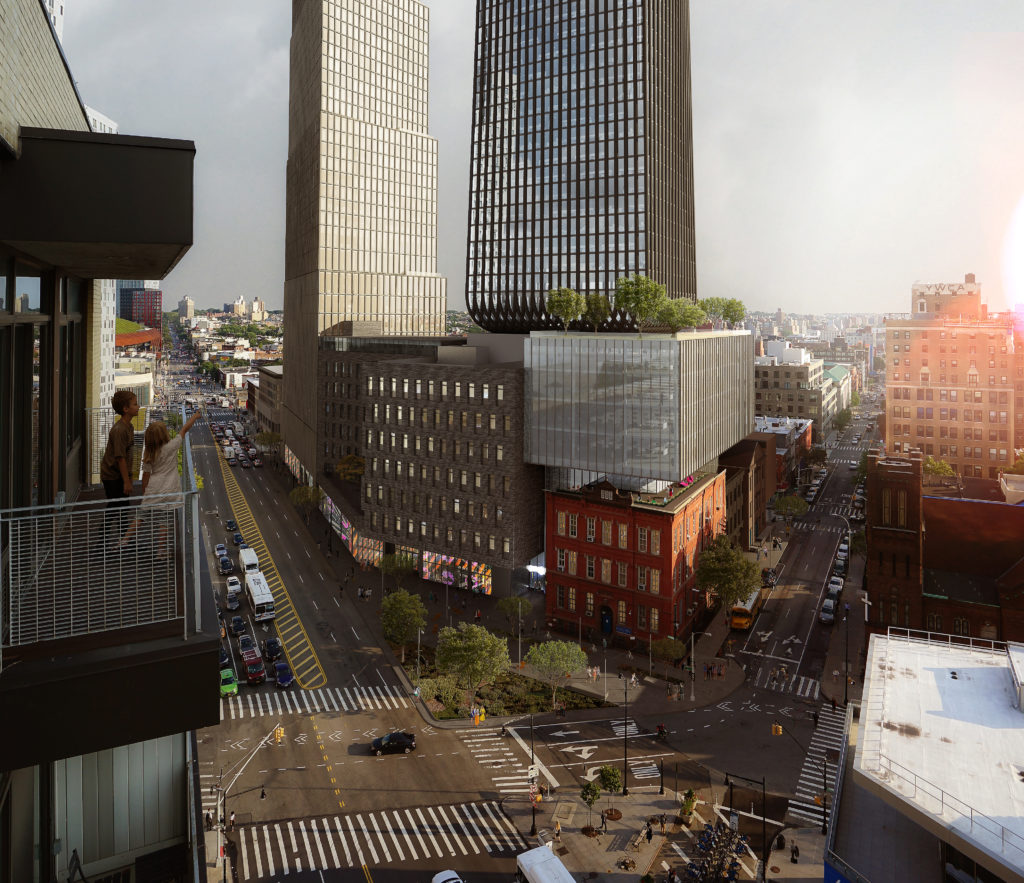
Alloy Development’s planned 80 Flatbush tower in Boerum Hill, which started construction in May, is billed as New York City’s first all-electric tower. Rendering courtesy of Alloy Development
Two Brooklyn state legislators, State Sen. Brian Kavanagh (North Brooklyn waterfront area-Lower Manhattan) and Assemblymember Emily Gallagher (D-Greenpoint-Williamsburg-Navy Yard area), at a City Hall news conference on Monday, announced the introduction of State Senate Bill S6843, the “All-Electric Building Act.”
The bill prohibits municipalities throughout the state from issuing any new permits for the construction of new gas-powered buildings after 2023 and conversions of existing buildings after 2022, with some exceptions if there are no feasible alternatives for a particular project.
The official summary that’s part of the bill says it “provides that no city, town or village shall issue a permit for the construction of new buildings that are not an all-electric building if the initial application for a permit was submitted after December 31, 2023 unless certain circumstances apply.”
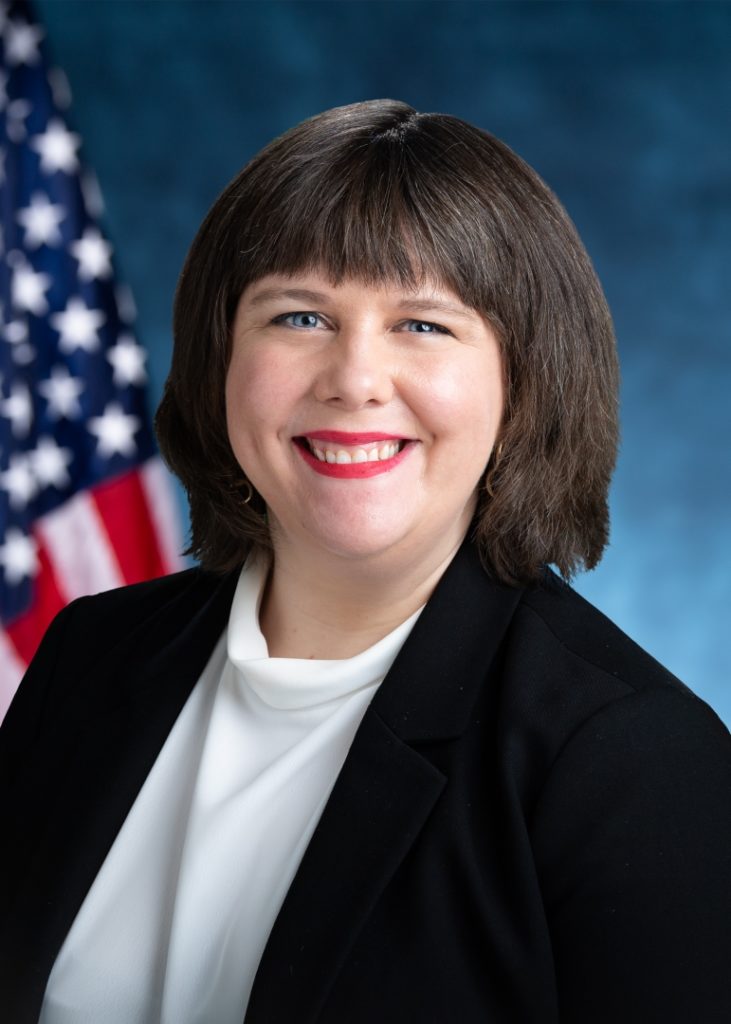
State Sen. Brian Kavanagh. Photo courtesy of Kavanagh’s office
Kavanagh, chair of the Senate Committee on Housing, Construction and Community Development, said, “If we are serious about reducing the harmful effects of climate change, then we must take aggressive action to decrease greenhouse gas emissions and air pollution in all sectors of our society and economy, including construction projects.”
Buildings account for 28 percent of the United States’ energy use and greenhouse gas emissions, according to the two legislators, who quoted federal figures.
Among the organizations supporting the bill are the New York League of Conservation Voters, Sane Energy Project, Sierra Club, the Renewable Heat Now Coalition, WE ACT for Environmental Justice and the Alliance for a Green Economy.”
Assemblymember Emily Gallagher. Photo courtesy of NYS Assembly
The state has already launched several pilot projects geared at ramping up electrification, according to the New York State Energy Research and Development Authority.
For example, the Clean Energy Initiative seeks to create 600 energy-efficient, all-electric affordable housing units. In addition, the Low Carbon Pathways for Multifamily Buildings program is making $7.8 million available for owners or managers of multifamily buildings to implement “low-carbon solutions” as part of planned upgrades.
The city of Berkeley became the first in the country, in 2020, to ban new natural gas hookups.
Support for such a bill may not be universal, however. For example, Pennsylvania’s State Senate last month approved legislation that would bar municipalities from adopting building codes that prohibit gas hookups. The Marcellus Shale gas reservoir beneath that state is the nation’s most prolific natural gas reservoir.
SUNSET PARK — “As a resident of Marine Park, one of the great surprises I found biking around Industry City and visiting Japan Village was to discover Bush Terminal Park. I continue to be amazed at the serene hideaways that the city offers in some of the busiest places — and, still, with an iconic view.”
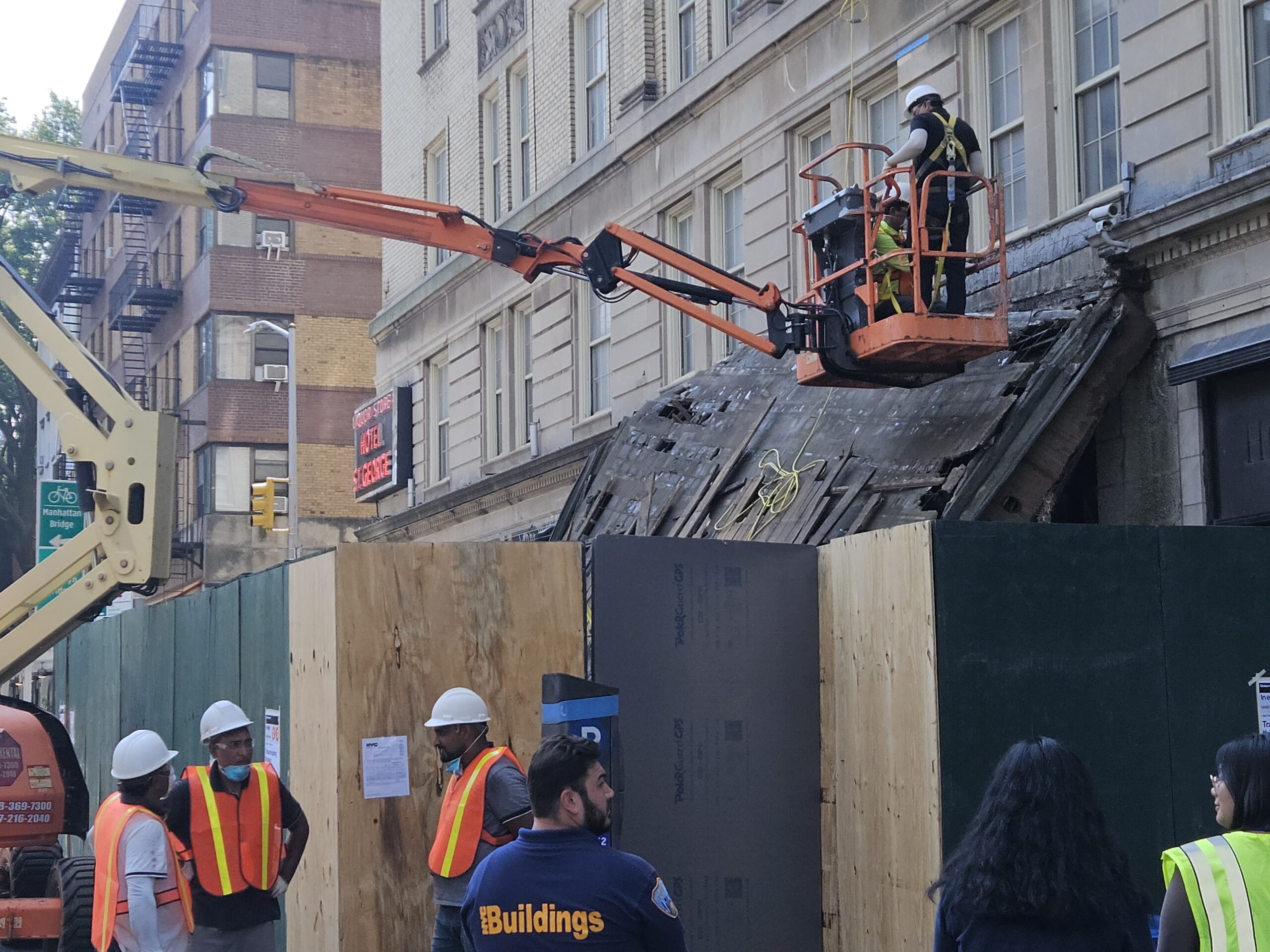
BROOKLYN HEIGHTS — ‘A miracle that no one was killed …’ That’s what neighbors are saying about the collapse of the Hotel St. George marquee. Shown in this photograph are workmen beginning the removal and repair of the historic, old neon sign at the corner, referencing a relic of Brooklyn Heights’ past: the St. George Hotel.
ATLANTIC AVENUE — Exhausted shopper with cluster of bags and goods from mall at Boerum Place stops to look at huge construction site across the street. “Is that REALLY going to be a jail??” Her male companion is reassuring, “Nothing like Rikers … this is 21st Century.”
BROOKLYN HEIGHTS — Overheard in line at one of most popular pastry outlets on Montague Street: “Hope I can get them into a camp …” A mother with two pre-schoolers in tow was showing a friend the Dodge Y flyer for Healthy Kids Day on Saturday, April 18.