‘Those Who Were There’ podcast features Brooklyn Holocaust survivor Sally Frishberg
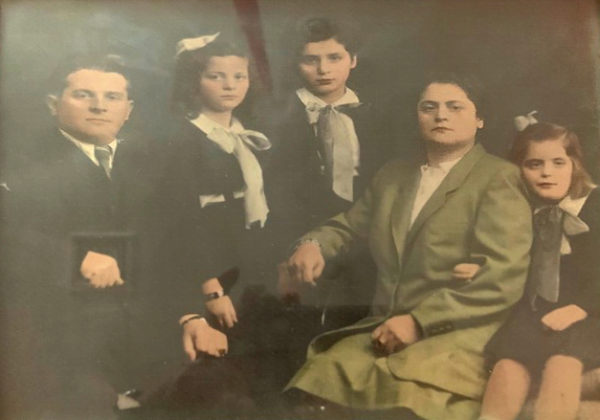
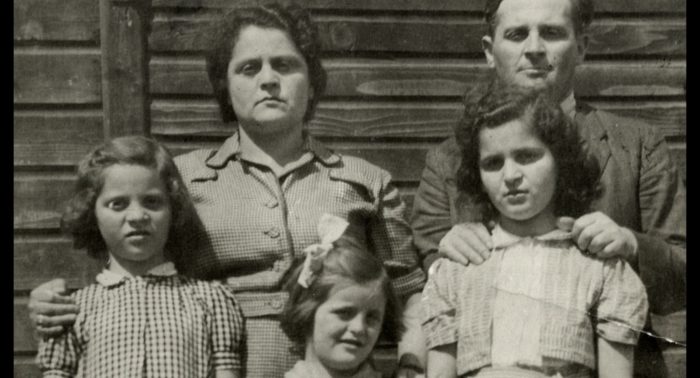
Sally Frishberg, at bottom right, with her parents and her sisters Miriam and Lola. Photo courtesy of Debbie Goodstein/Voices from the Attic
By Editorial Staff
October 23, 2020
Copy Link
Email
Facebook
X
LinkedIn
WhatsApp
Telegram
Pinterest
Print
Brooklyn high school teacher and Holocaust survivor Sally Engleberg Frishberg is the focus of the premiere episode of the second season of “Those Who Were There: Voices from the Holocaust,” the only podcast dedicated to sharing the history of the Holocaust through the first-hand testimonies of survivors and witnesses.
Frishberg’s testimony covers an incredible breadth of experience, beginning with her idyllic pre-war childhood in rural Poland and shifting quickly into her village’s occupation and, ultimately, terrorization at the hands of the Nazis. The unique format of the podcast creates an incredible intimacy between Frishberg and the listener as she describes the experience of hiding — for nearly two years — with ten members of her family in the small attic of a non-Jewish neighbor.
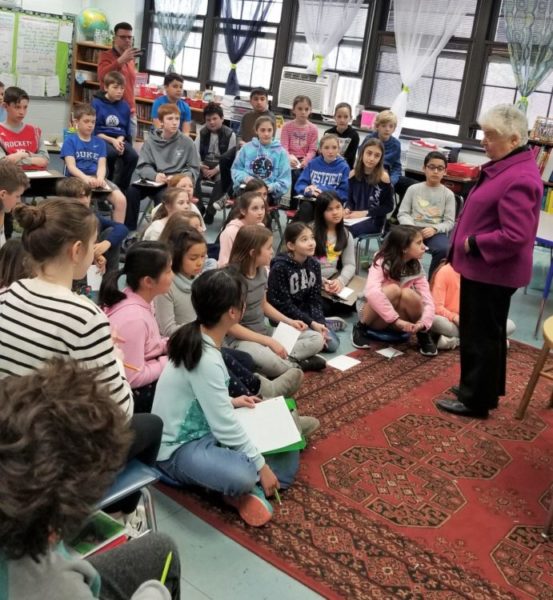
Frishberg addressing Westfield Public Schools students in Westfield, New Jersey, in 2018. Photo courtesy of Westfield Public Schools
Frishberg experienced near-starvation and witnessed the death of family members before being liberated by the Russians. Her family immigrated to New York City in 1947, establishing themselves in Brooklyn’s Midwood neighborhood.
In 1958, Frishberg became a teacher at Bay Ridge’s Fort Hamilton High School. Like many of her generation, Frishberg was urged by family and others in her Jewish community to avoid discussion of the Holocaust. But as a teacher, she was dismayed to see the topic of the Holocaust avoided in the curriculum of her Brooklyn school.
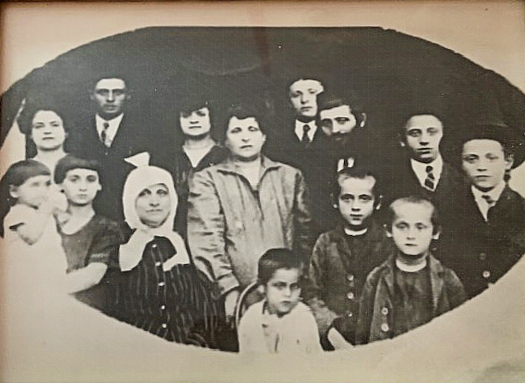
Frishberg’s mother’s family photo, prewar. Frishberg’s mother is on the far left. The couple in middle are Frishberg’s grandmother and grandfather. Seated with white kerchief is Sally’s great grandmother. Also pictured are Frishberg’s aunts and uncles. Photo courtesy of Sally Frishberg
Sally lobbied administrators to bring Holocaust history into the classroom and, encouraged by the English Department chair to lead the effort herself, obtained an education degree at Brooklyn College.
In 1970, she began teaching the subject herself and sharing her own story of survival. She has continued to teach and lecture on the subject at schools and institutions throughout New York City and the region. In 2005, Frishberg was awarded the Yavner Award for Excellence in Holocaust Education by the State of New York.
“It’s probably about 20 years that I’ve been teaching youngsters about the Holocaust,” says Frishberg in her 1991 testimony. “I am very hopeful that they understand the issue is man hating man because we’re different. It can’t go on, the cycle must be broken. And they are the people to do it. I try very hard. I hear from them — I now hear from old graduates who tell me they’re doing their best. But I think we need a lot more help.”
Frishberg, at center, with, from left to right, her father, her sister Miriam, her mother, and her sister Lola. This photo was taken c. 1945-46 in a DP camp, where Sally and her sisters were the only children. An American soldier who supervised the camp had provided the family with the address of a seamstress, who made their outfits and took the photo. Photo courtesy of Sally Frishberg
Today, Frishberg continues to share her story of survival, as a volunteer educator for the Museum of Jewish Heritage and a guest speaker in public schools.
The testimonies featured in the “Those Who Were There” podcast serve as a warning for our society of what is possible when hatred, racist ideologies, extreme nationalism and war are unleashed. The second 10-episode season features, in addition to Sally Frishberg, the stories of survivors who made their lives, postwar, in the New York City area, like Isaac Zieman, a young Latvian whose wartime odyssey took him across the entire breadth of the Soviet Union; and Annelies Herz, who spent most of the war hiding in Berlin with her nearly blind twin sister.
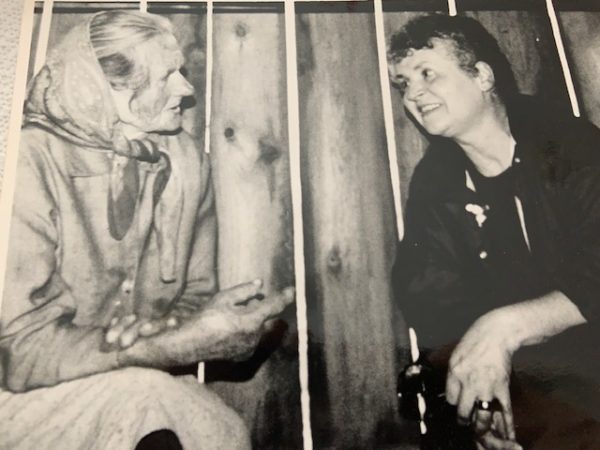
Frishberg, at right, with Stashek Grocholski, in the Grocholskis’ attic in Przeworsk, Poland, in 1984. Grocholski is a non-Jewish neighbor who sheltered Frishberg and her family during the Holocaust. Photo courtesy of Sally Frishberg
These are just two more individuals who generously shared their stories with the Museum and the Fortunoff Archive, and who now we hear as the subjects of podcast episodes.
Season two of “Those Who Were There” is narrated by Eleanor Reissa, actress and Yiddish theater director; Professor Samuel Kassow provides historical oversight. The podcast is co-produced by Nahanni Rous, host of the Jewish Women’s Archives’ podcast “Can We Talk,” and Eric Marcus, founder and host of the award-winning podcast “Making Gay History.”
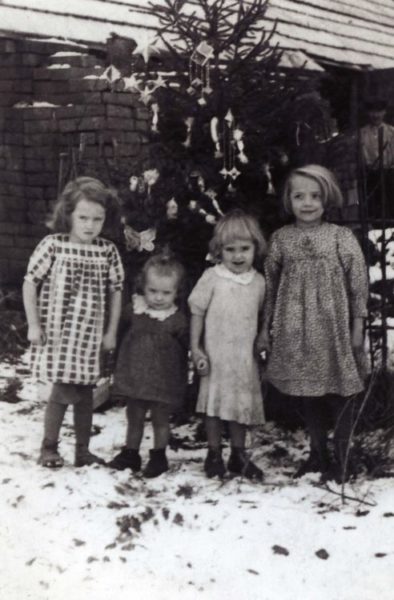
Stashek Grocholski’s daughters Zofia, Helena, Genowefa, and Anna. Photo courtesy of Yad Vashem
About the Fortunoff Video Archive
In 1979, the Holocaust Survivors Film Project began recording video interviews of Holocaust survivors in the New Haven area. In 1981, the collection was donated to Yale University and The Video Archive for Holocaust Testimonies, part of the Yale University Library, opened its doors to the public the following year. The Fortunoff Archive has been working to record, collect and preserve Holocaust witness testimonies — and facilitate the work of researchers, educators and the general public — ever since.
The Fortunoff Archive currently holds more than 4,400 testimonies, comprising over 12,000 recorded hours of videotape. Testimonies were produced in cooperation with thirty-six affiliated projects across North America, South America, Europe, and Israel, and each project maintains a duplicate collection of locally recorded videotapes. The Fortunoff Archive and its affiliates recorded the testimonies of willing individuals with first-hand experience of the Nazi persecutions, including survivors, bystanders, resistants, and liberators.
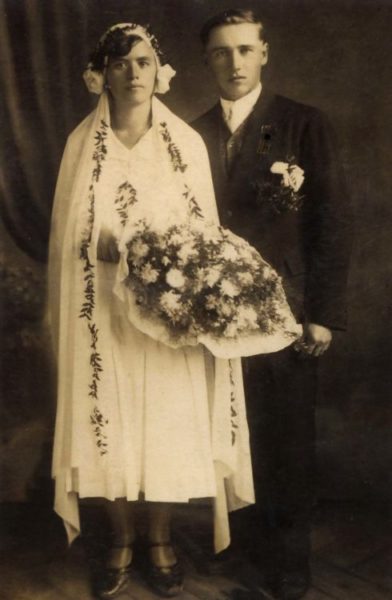
Maria and Stanisław (Stashek) Grocholski, who sheltered Frishberg’s family during the Holocaust. Photo courtesy of Yad Vashem
About the Museum of Jewish Heritage
The Museum of Jewish Heritage – A Living Memorial to the Holocaust is New York’s contribution to the global responsibility to never forget. The Museum is committed to the crucial mission of educating diverse visitors about Jewish life before, during, and after the Holocaust. The third largest Holocaust museum in the world and the second largest in North America, the Museum of Jewish Heritage anchors the southernmost tip of Manhattan, completing the cultural and educational landscape it shares with the Statue of Liberty and Ellis Island.
The Museum of Jewish Heritage maintains a collection of more than 40,000 artifacts, photographs, documentary films, and survivor testimonies and contains classrooms, a 375-seat theater, special exhibition galleries, a resource center for educators, and a memorial art installation, Garden of Stones, designed by internationally acclaimed sculptor Andy Goldsworthy. The Museum is the home of National Yiddish Theatre Folksbiene.
SUNSET PARK — “As a resident of Marine Park, one of the great surprises I found biking around Industry City and visiting Japan Village was to discover Bush Terminal Park. I continue to be amazed at the serene hideaways that the city offers in some of the busiest places — and, still, with an iconic view.”
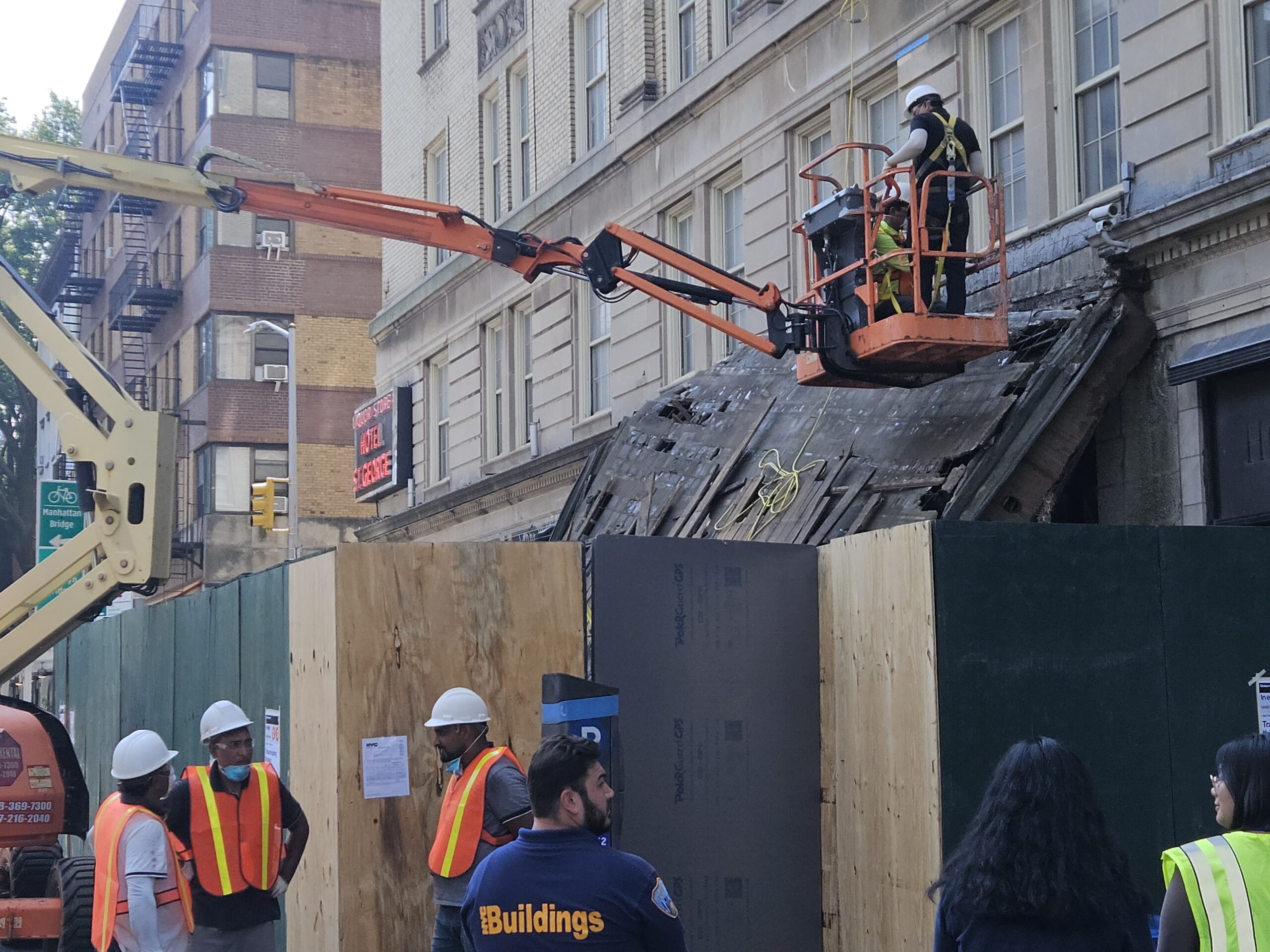
BROOKLYN HEIGHTS — ‘A miracle that no one was killed …’ That’s what neighbors are saying about the collapse of the Hotel St. George marquee. Shown in this photograph are workmen beginning the removal and repair of the historic, old neon sign at the corner, referencing a relic of Brooklyn Heights’ past: the St. George Hotel.
ATLANTIC AVENUE — Exhausted shopper with cluster of bags and goods from mall at Boerum Place stops to look at huge construction site across the street. “Is that REALLY going to be a jail??” Her male companion is reassuring, “Nothing like Rikers … this is 21st Century.”
BROOKLYN HEIGHTS — Overheard in line at one of most popular pastry outlets on Montague Street: “Hope I can get them into a camp …” A mother with two pre-schoolers in tow was showing a friend the Dodge Y flyer for Healthy Kids Day on Saturday, April 18.