As New York City approaches the two-year anniversary of the COVID-19 shutdown that forced the temporary closure of non-essential businesses, drove hundreds of thousands of New Yorkers out of work, and caused universal disruption to nearly every sector of the economy, more than half of small businesses in Brooklyn are still struggling due to ongoing financial impacts, according to a survey released on Wednesday by the Brooklyn Chamber of Commerce.
Although the city took many steps toward returning to normalcy in 2021, only 41 percent of businesses reported an increase in year-over-year revenues from 2020 to 2021, and 72 percent of businesses continued to experience sales lower than 2019 levels. Some 68 percent reported losses of customers compared to 2019, and 41 percent still had slimmer employee headcounts.
In a comprehensive survey detailing the myriad issues still affecting small businesses and prolonging the city’s unsteady economic recovery, the owners of 185 retailers, restaurants and bars, gyms, real estate and construction firms, manufacturers, and professional services representing neighborhoods across Brooklyn provided key insights into the difficulties that kept them from moving forward in 2021. Forty-seven percent of the businesses profiled are minority-, women- or immigrant-owned.
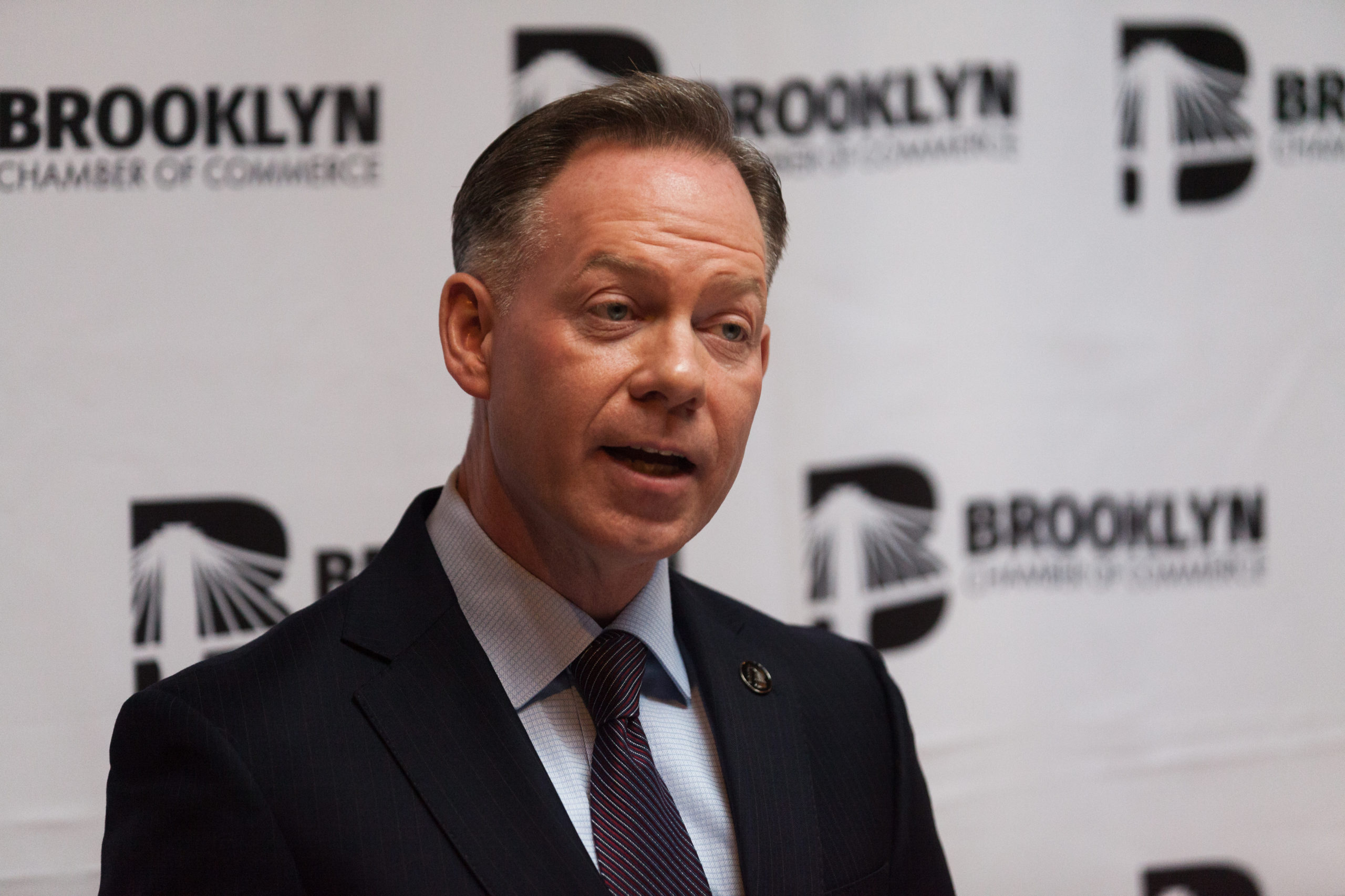
“What our end of the year survey definitively shows is that business owners are continuously facing ongoing challenges roadblocking the truly robust recovery New York City deserves and is capable of achieving,” said Randy Peers, president and CEO of the Brooklyn Chamber of Commerce. “But more than anything, our small businesses are amazingly resilient, and we have their backs for the long haul.”
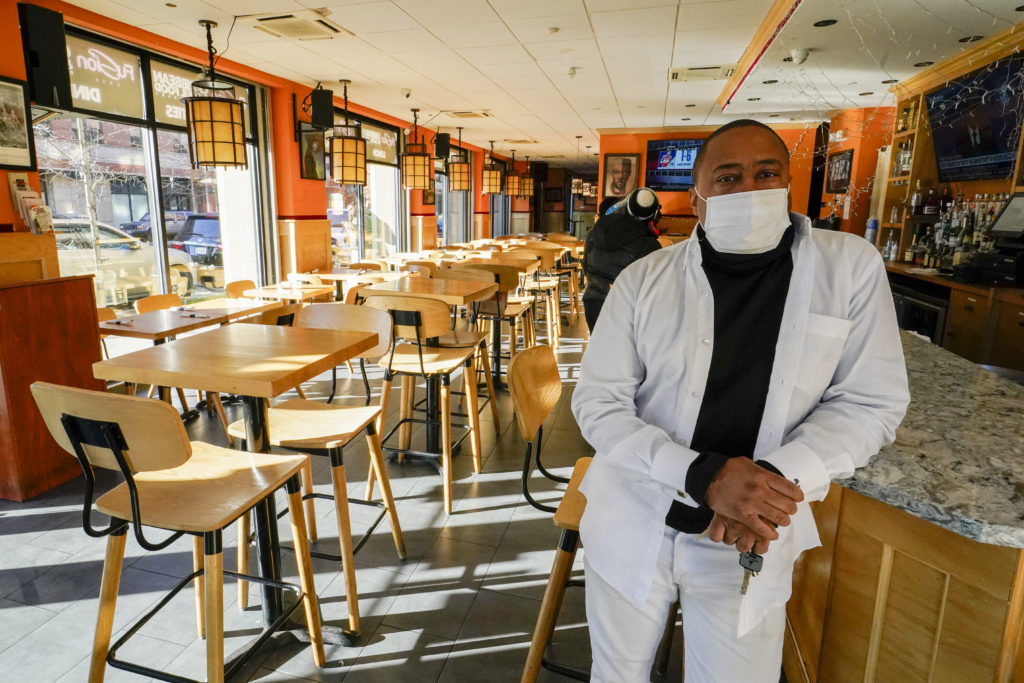
Andrew Walcott, owner of Fusion East Caribbean & Soul Food restaurant, poses for a photo at the restaurant in East New York, Thursday, Jan. 7, 2021. AP Photo/Mary Altaffer
Staffing continued to be a major sticking point for operations. One-quarter of businesses were unable to operate or had to close for periods of time due to shortages. Only one third of business owners reported they were able to retain or expand staff, while 41 percent answered that they experienced labor shortages or had hard times filling positions, even as most said the vaccine mandate did not affect business significantly because employees were compliant.
Difficulties paying rent persisted for a third of the businesses in 2021, with many of those businesses now in jeopardy of closing since the state lifted its 20-month pandemic-inspired eviction moratorium. Two-thirds of the businesses taking part in the survey reported they had no issues paying rent last year.
Many businesses benefited from one or several forms of assistance, with two-thirds answering they had received Paycheck Protection Program (PPP) funding and 46 percent getting an Economic Injury Disaster Loan (EIDL). In addition, the Chamber itself connected more than half of the businesses with financial grants or low-interest loan programs. Businesses also received other sources of assistance, including 33 percent through government agencies and 18 percent from corporate or private foundations.
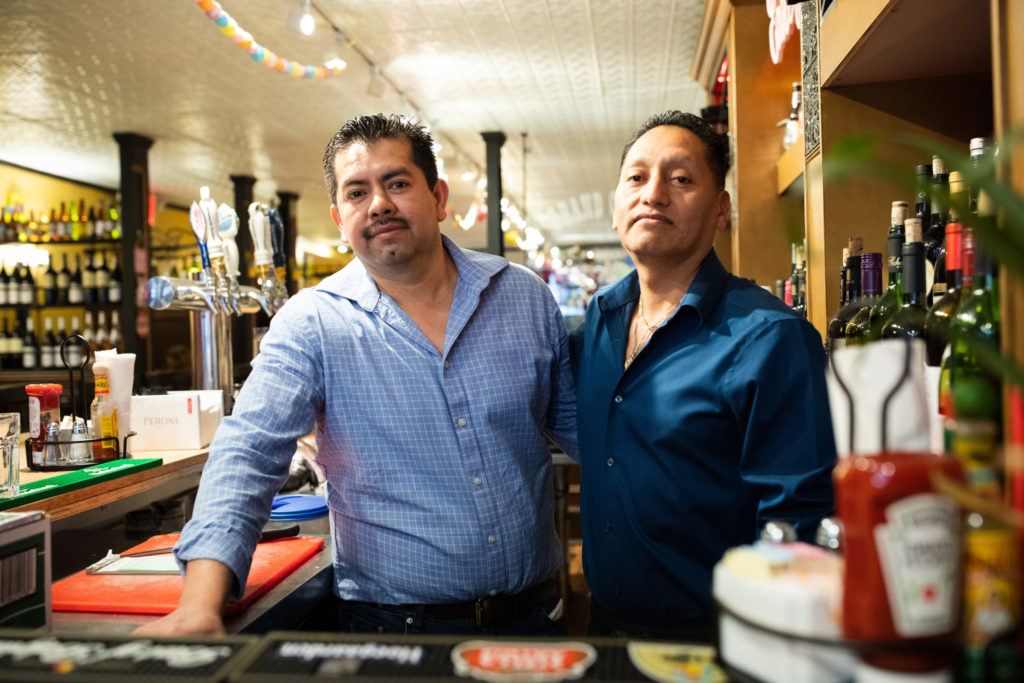
Owners of the Grand Canyon Restaurant, Cesar Reudon, left, and Victor Correto. Photo: Paul Frangipane/Brooklyn Eagle
All responding restaurants and bars that participated in the popular temporary outdoor dining and alcohol-to-go programs allowed in 2021 experienced a jump in sales. Sixty-seven percent of businesses saw a 10 to 20 percent increase in revenue thanks to outdoor dining, and 50 percent said alcohol-to-go increased their bottom line by 10 to 20 percent.
Thirty-three percent of businesses said outdoor dining increased revenues by 20 percent or more, and half of the businesses surveyed credited alcohol-to-go as increasing sales by 20 percent or more. One business owner said, “The only way we survived was with the seating outside. With each wave of the virus, everyone moved outside even in winter.”
Governor Hochul championed permanently reinstating alcohol-to-go as part of her inaugural State of the State and Budget. While both the State Senate and Assembly axed alcohol-to-go from their budget proposals, it’s currently being renegotiated in Albany, according to the Chamber. The New York City Council is also considering proposals to permanently extend outdoor dining, backed by Mayor Eric Adams.
As was the case in 2020, many businesses last year were forced to get creative in the ways they dealt with COVID’s ongoing impacts. Forty percent reported reducing their hours of operation, 66 percent spoke of technology adaptations or adjustments, including upgrading point-of-sale (POS) systems and websites and converting to more online/e-commerce, and 26 percent changed their product mix.
Peers continued, “Optimism won’t pay the bills or ensure there is a path to continued growth for so many small businesses that at a point over the last two years probably were not sure whether they would survive another week or month. While we can see a time where COVID is not directly harming significant numbers of our neighbors, we need to double down on ensuring our small businesses have the guidance, resources and tools to build back our main streets and communities.”
SUNSET PARK — “As a resident of Marine Park, one of the great surprises I found biking around Industry City and visiting Japan Village was to discover Bush Terminal Park. I continue to be amazed at the serene hideaways that the city offers in some of the busiest places — and, still, with an iconic view.”
BROOKLYN HEIGHTS — ‘A miracle that no one was killed …’ That’s what neighbors are saying about the collapse of the Hotel St. George marquee. Shown in this photograph are workmen beginning the removal and repair of the historic, old neon sign at the corner, referencing a relic of Brooklyn Heights’ past: the St. George Hotel.
ATLANTIC AVENUE — Exhausted shopper with cluster of bags and goods from mall at Boerum Place stops to look at huge construction site across the street. “Is that REALLY going to be a jail??” Her male companion is reassuring, “Nothing like Rikers … this is 21st Century.”
BROOKLYN HEIGHTS — Overheard in line at one of most popular pastry outlets on Montague Street: “Hope I can get them into a camp …” A mother with two pre-schoolers in tow was showing a friend the Dodge Y flyer for Healthy Kids Day on Saturday, April 18.