RED HOOK — The new 40,000-square-foot Red Hook Barrel Yard brings a trifecta of a winery, cidery and soon-to-open distillery under one roof.
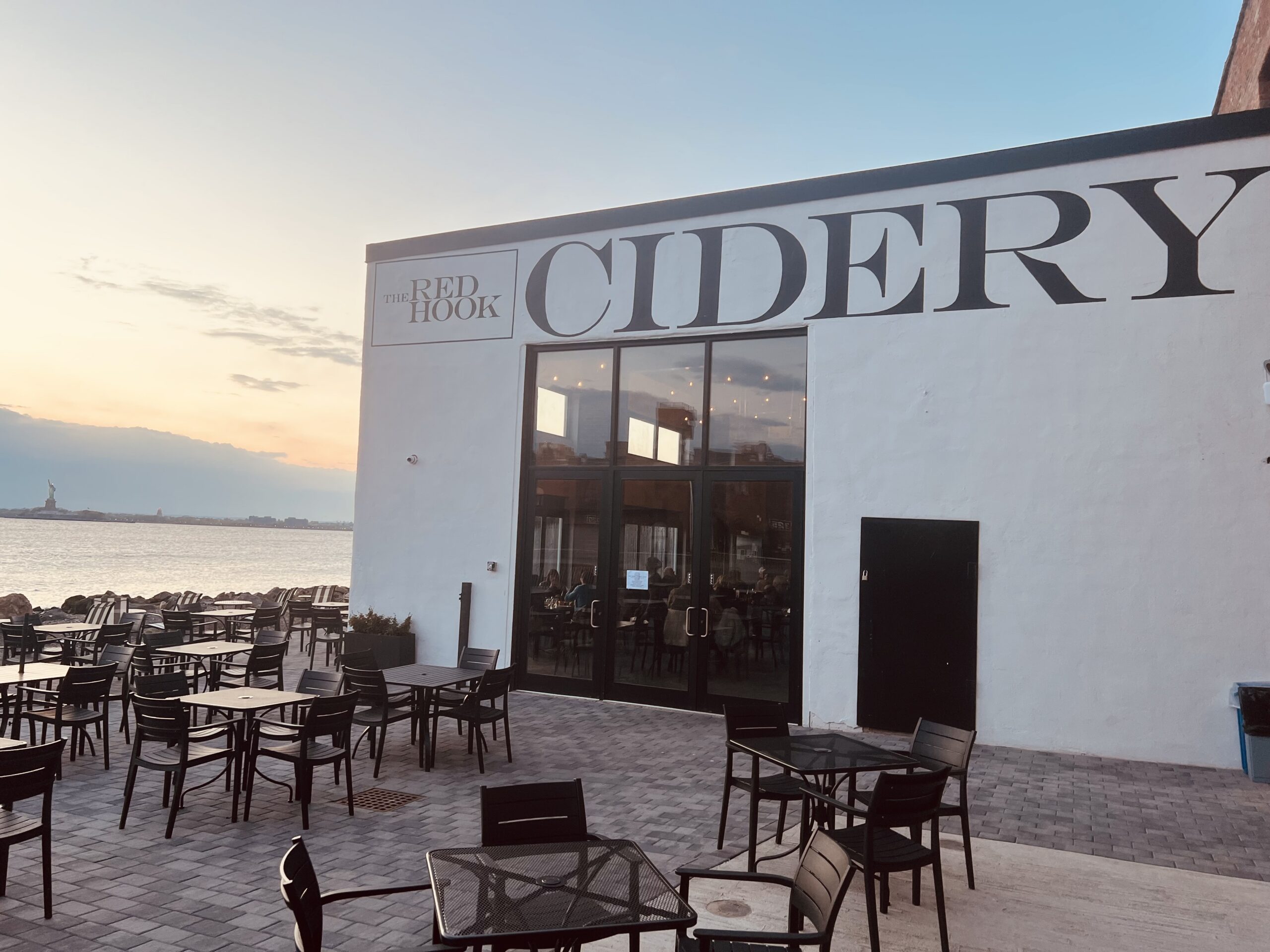
Located on Red Hook’s waterfront at 185 Van Dyke St., the Barrel Yard, with sweeping views of Lower Manhattan and the Statue of Liberty, was created out of the former Red Hook Winery, which was established in 2008.
The winery offers selections from Long Island’s North Fork region, and the cidery boasts curated flights of New York cider. The upcoming distillery plans to offer a large line of small-batch spirits. Food options are provided by Lundy’s and include a “Lundy’s on the Waterfront” menu crafted by head chef Steve Mannino.
View of the cidery. Photo: Wayne Daren Schneiderman/Brooklyn Eagle
Barrel Yard co-proprietor Sandra Snyder, who owns the space along with her husband, Mark, called the new venue “a love letter to New York that we have brought to the waterfront of Brooklyn.”
Snyder is also the proprietor of Lundy’s in Red Hook.
“We’re very excited to help everyone understand the destination,” Snyder said. “The goal is for this to be a one-stop shop for handcrafted spirits. Come create an entire day down on the waterfront and finish it with some food from Lundy’s, another New York staple.”
According to Snyder, the summers in Red Hook are “spectacular.”
“There is no better view of the Statue of Liberty, unless you are on the water, but here, you feel like you are,” she said.
“For the winery, we worked with over 36 different vineyards to make over 63 different cuvees — usually 25 to 35 per vintage. No one will have a setup quite like ours,” Snyder added.
Mark Snyder raises a glass behind the bar in celebration. Photo: Wayne Daren Schneiderman/Brooklyn Eagle
Snyder said that business has been steady and strong since opening. On Independence Day, the Red Hook Barrel Yard hosted a “Fourth of July viewing” for hundreds of patrons.
“While we couldn’t be happier with the immediate response to the Barrel Yard, it’s important to realize it’s still in its infancy,” Snyder said. “As a business owner, you’ll never take your foot off the pedal and say ‘Okay, we did it.’ I think the responsibility is more ongoing, and I’m excited for the ride.”
Co-proprietor Mark Snyder, who spearheaded the Red Hook Winery around 18 years ago, spoke to the Brooklyn Eagle about Red Hook’s changing landscape.
A family enjoying the exterior grounds of the Red Hook Barrel Yard this past July 4. Photo: Wayne Daren Schneiderman/Brooklyn Eagle
“From a short-term view, it’s very easy to see an incredible amount of gentrification, an incredible amount of development and a lot of complicated political views on the development of Red Hook and what’s been happening,” Snyder said. “However, from a long-term view, I think that the spirit of Red Hook, which is old New York, the spirit of artistry, of craftsmanship, of development, of a hark back to a former period of time — I think it still exists in a modern context.”
“While there are modern developments being created, you still have the ability for artists to survive and thrive, as well as craftsmen, furniture builders, welders, steelworkers and the like,” Snyder continued. “It’s really about establishing a balance. Red Hook is such an amazing one-of-a-kind destination. There is no place in Brooklyn quite like it.”
A history of Red Hook
Before European settlement, Red Hook was part of the homeland of the Lenape people, an Indigenous people of the northeastern woodlands. In the 1600s, Dutch settlers named it Roode Hoek, or Red Point, likely referring to the reddish soil and the shape of the land jutting into the harbor.
By the 1800s, Red Hook was one of New York’s busiest industrial waterfronts.
Outside the Barrel Yard’s distillery. Photo: Wayne Daren Schneiderman/Brooklyn Eagle
In the early and mid-20th century, the neighborhood became home to dockworkers and longshoremen as well as large immigrant communities.
After the war, container shipping reduced the need for local dock labor, cargo operations shifted to New Jersey ports and public housing developments like the Red Hook Houses became central to the neighborhood.
Starting in the 1990s and continuing into the 2000s, artists and small manufacturers moved into vacant industrial buildings, waterfront redevelopment brought new businesses and tourism, and the neighborhood began balancing preservation with slow gentrification.
SUNSET PARK — “As a resident of Marine Park, one of the great surprises I found biking around Industry City and visiting Japan Village was to discover Bush Terminal Park. I continue to be amazed at the serene hideaways that the city offers in some of the busiest places — and, still, with an iconic view.”
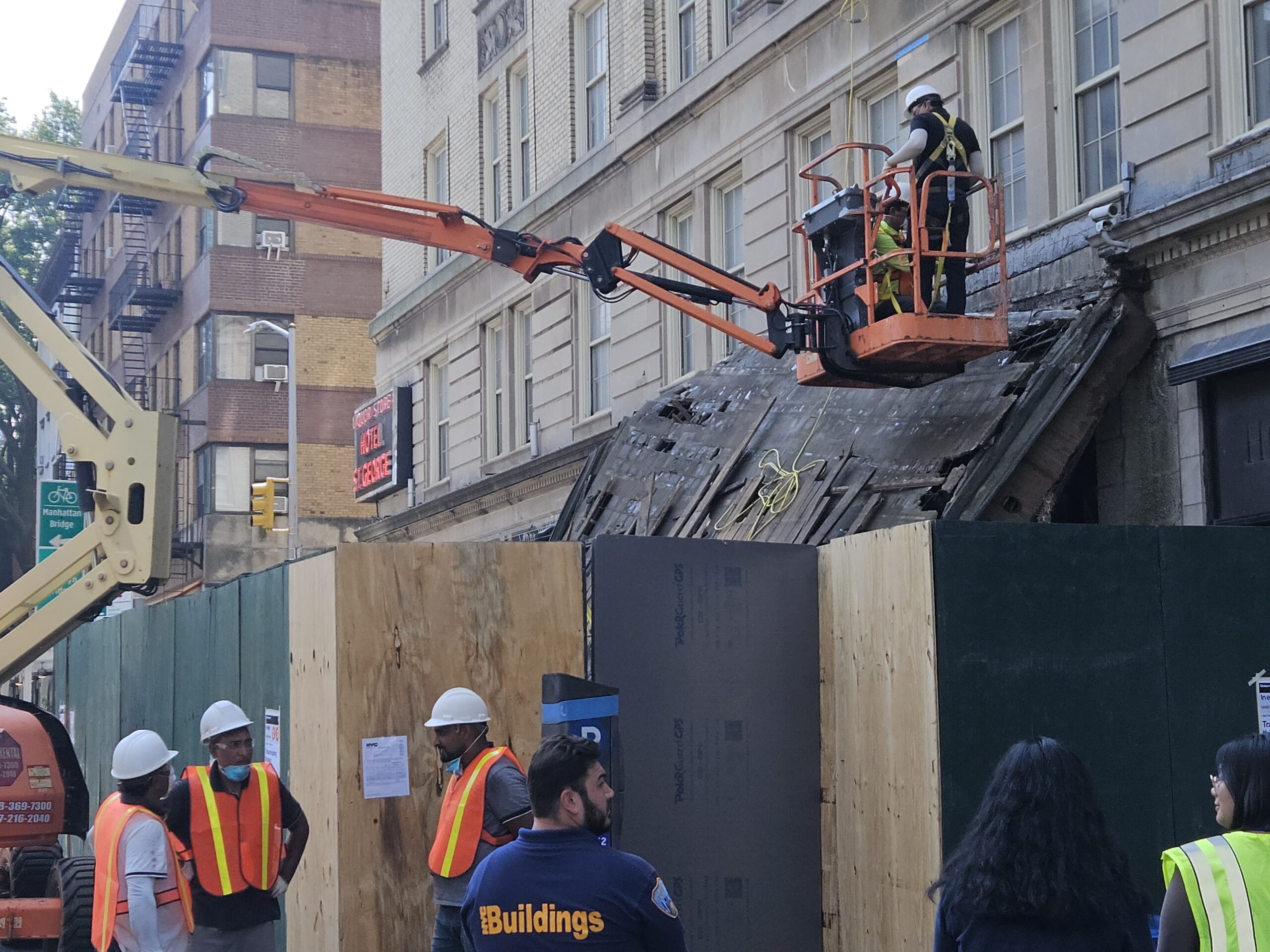
BROOKLYN HEIGHTS — ‘A miracle that no one was killed …’ That’s what neighbors are saying about the collapse of the Hotel St. George marquee. Shown in this photograph are workmen beginning the removal and repair of the historic, old neon sign at the corner, referencing a relic of Brooklyn Heights’ past: the St. George Hotel.
ATLANTIC AVENUE — Exhausted shopper with cluster of bags and goods from mall at Boerum Place stops to look at huge construction site across the street. “Is that REALLY going to be a jail??” Her male companion is reassuring, “Nothing like Rikers … this is 21st Century.”
BROOKLYN HEIGHTS — Overheard in line at one of most popular pastry outlets on Montague Street: “Hope I can get them into a camp …” A mother with two pre-schoolers in tow was showing a friend the Dodge Y flyer for Healthy Kids Day on Saturday, April 18.