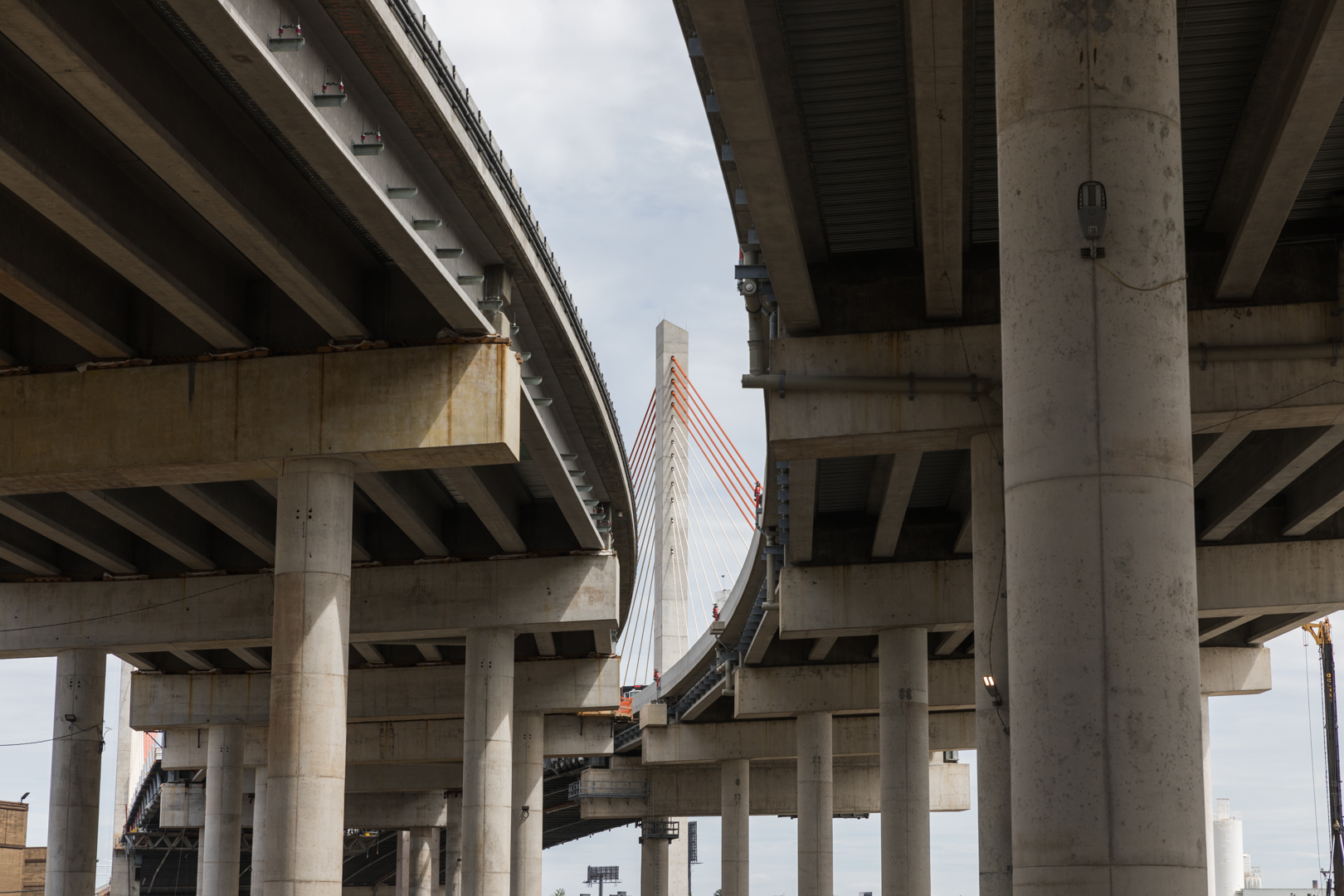
As the second and final span of the new Kosciuszko Bridge opens this week, the state announced it is handing over seven acres of land under the Brooklyn side of the bridge in Greenpoint. The land parcel — along with $6 million in state funding — will help create brand new parkland featuring recreational space, public artwork, concerts and other cultural events.
The community endured nearly 80 years of traffic jams on the old narrow bridge that connected Brooklyn to Queens over Newtown Creek and five years of construction on the new spans, so as a reward, “Under the K” will begin programming by the summer of 2020.
“We are learning that as we build our infrastructure, we can add beauty and open space in new and refreshing ways,” said Assemblymember Joe Lentol, who pushed for the park to be coupled with the bridge construction. “This investment is going to have a lasting impact on our community. It’s not going to be just a bridge anymore, it’s going to be more than that.”
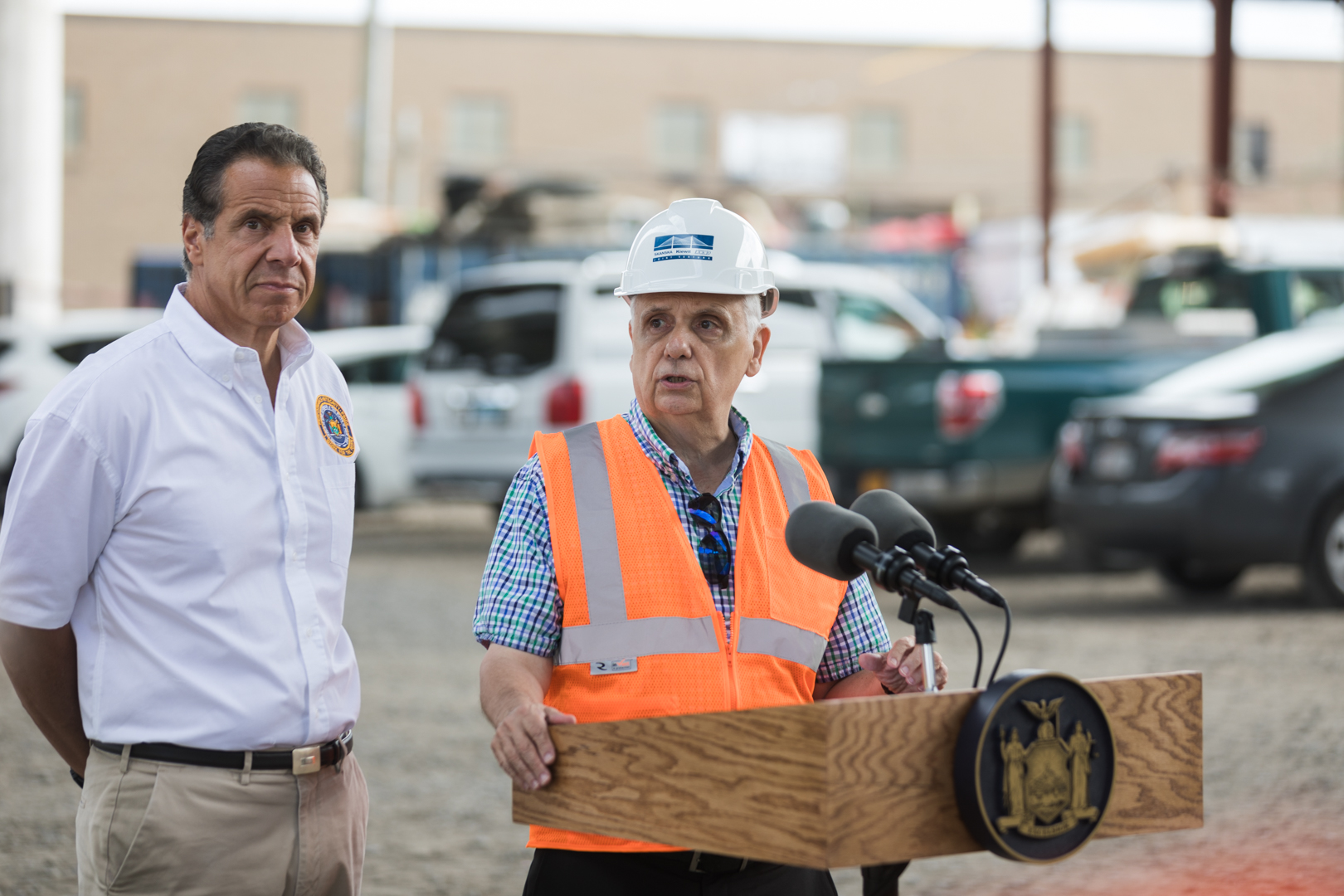
Assemblymember Joe Lentol (right) pushed for new parkland under the new Kosciuszko Bridge. He stands next to Gov. Andrew Cuomo. Eagle photo by Paul Frangipane
Before the land under the bridge was handed over by the state Department of Transportation, it would have likely been used for DOT storage, according to the governor. Instead, North Brooklyn Parks Alliance will lead the design and construction of the new green space.
Construction of the park will be split into two phases. The first includes creating the park’s perimeter, the preparation of future planning areas and paving the space, which now consists of loose rocks and dirt. The second phase, of which there is no estimated completion date set, will involve landscaping, installing seating and planting trees.
The new space will also be designed by PUBLIC WORK, the Toronto-based landscape architecture firm behind The Bentway, a re-purposed set of urban trails under the Gardiner Expressway in Toronto.
“The one thing cities don’t have a lot of is extra space,” Dave Carey, co-executive director of The Bentway, told Brooklyn Eagle earlier this month. “So we need to look at the spaces that we have and be open to re-imagining them and re-thinking them in interesting ways. Cities don’t need single-purpose solutions. We need multi-purpose solutions.”
The second and final span of the new Kosciuszko Bridge will open to traffic Thursday at 5 a.m. Eagle photo by Paul Frangipane
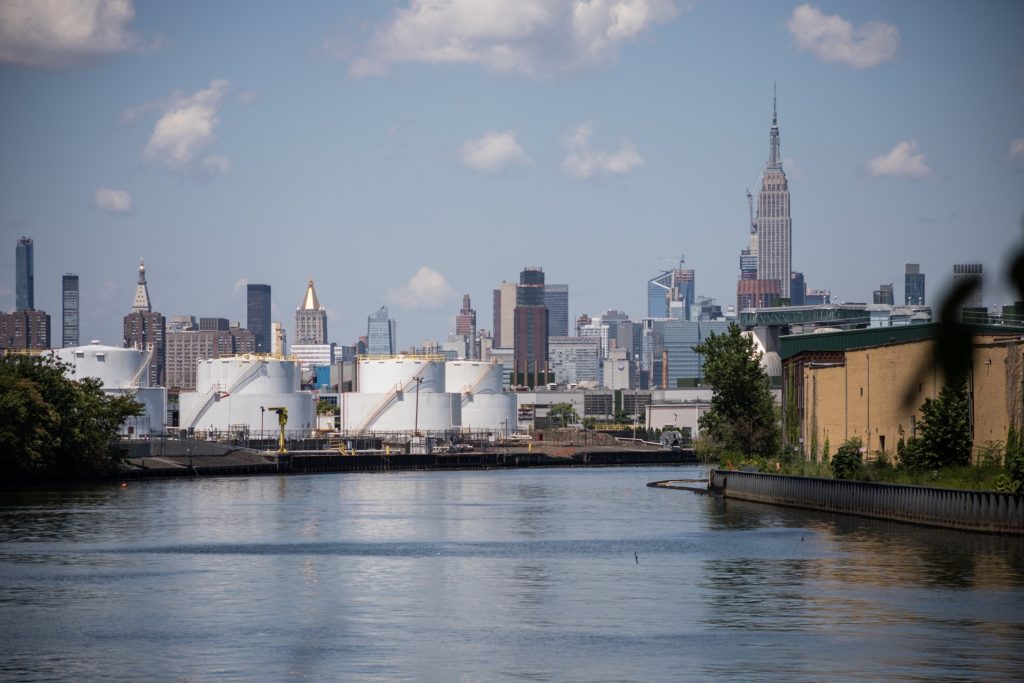
The park is expected to stretch all the way to the shore of Newtown Creek, a designated federal Superfund site. Local environmental groups hope to use the space to educated parkgoers on the history of the polluted creek.
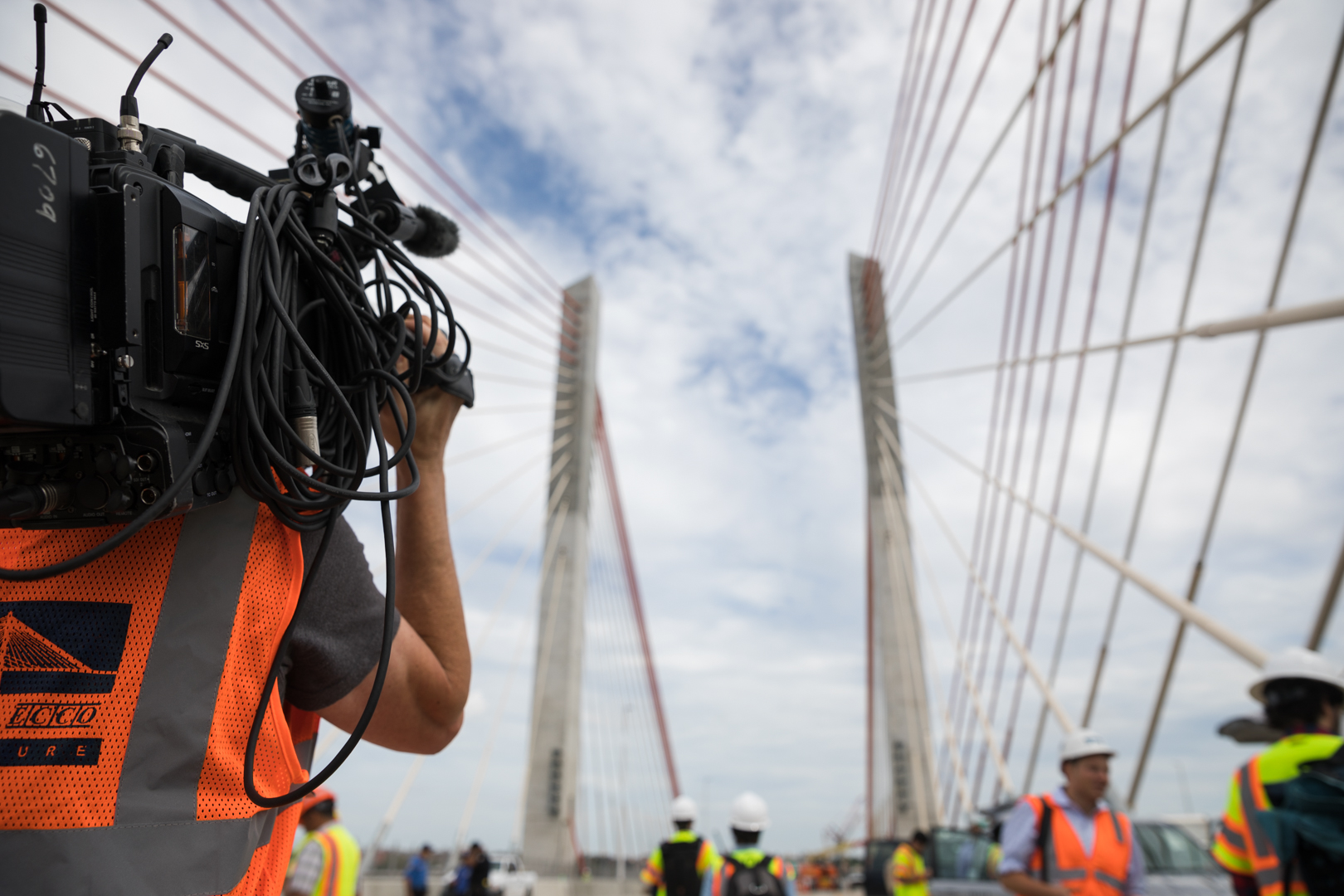
The announcement came during a tour led by Gov. Andrew Cuomo of the new Kosciuszko Bridge span, slated to open to traffic at 5 a.m. on Thursday and to pedestrians and cyclists from 12-6 p.m. on Wednesday.
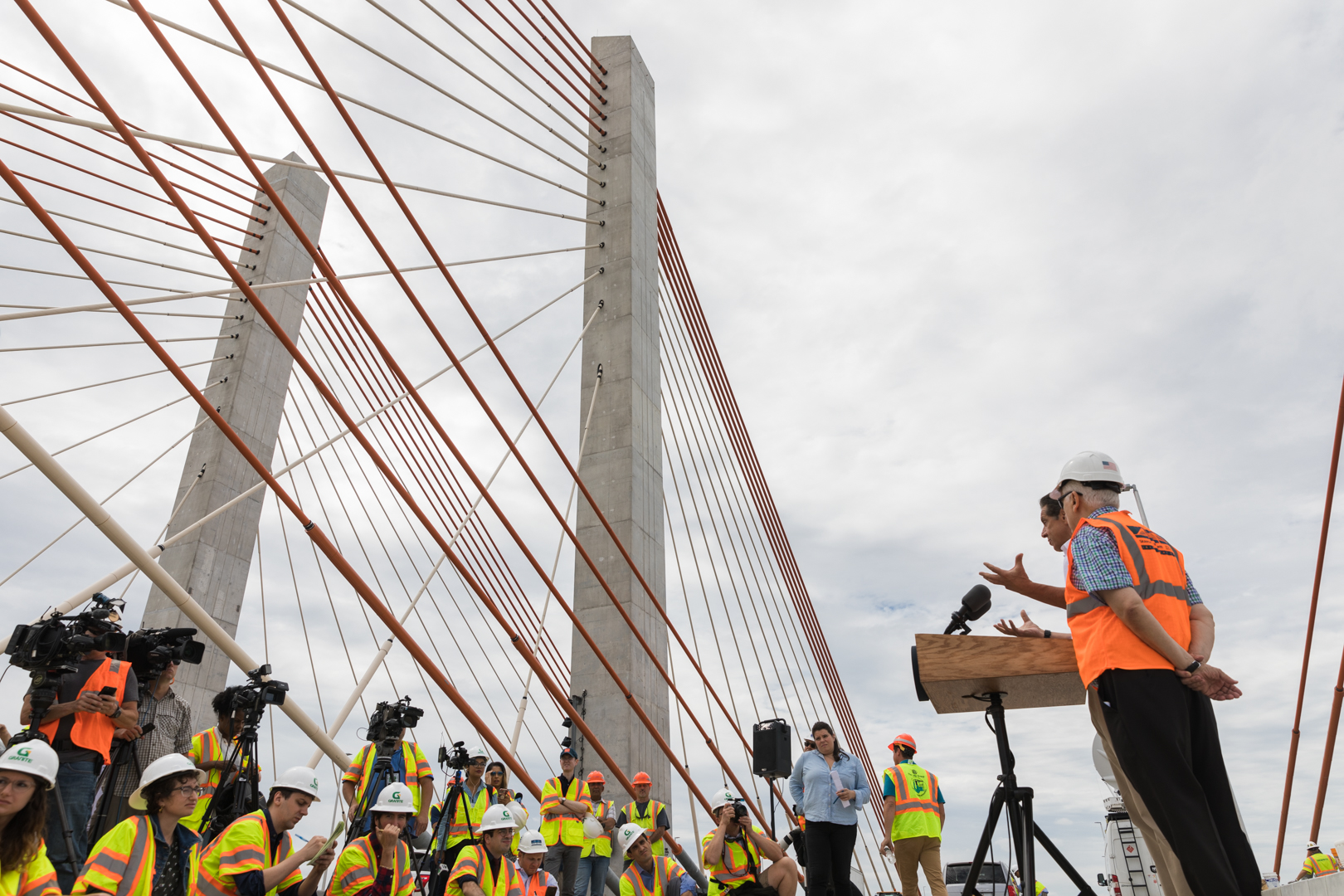
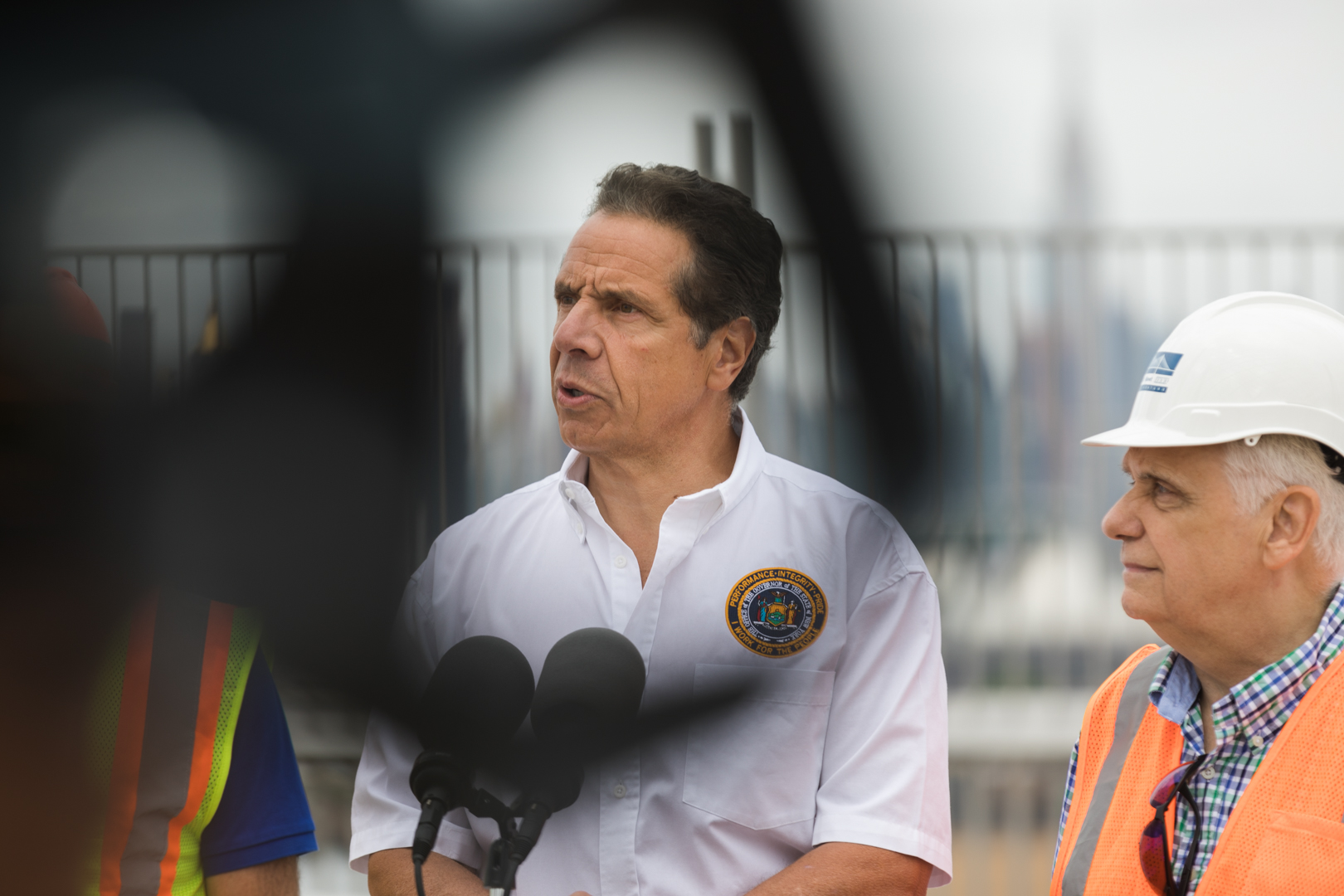
Gov. Andrew Cuomo toured the new bridge span on Tuesday. Eagle photo by Paul Frangipane
The new bridge is expected to reduce traffic delays by 65 percent, accounting for a total 200,000 vehicles crossing daily. The original bridge, opened in 1939, accounted for 10,000 vehicles.
“This was a legendary bottleneck,” Cuomo told reporters. “If you grew up in Queens or Brooklyn, you knew this bridge all too well.”
The new crossing took five years to complete, four years ahead of schedule, and boasts two highway spans, one Brooklyn-bound and one Queens-bound. The Brooklyn-bound span will carry four lanes of traffic and the Queens will carry five.
Pedestrians and cyclists can also look forward to a 20-foot-wide walkway and bikeway on the Brooklyn-bound span.
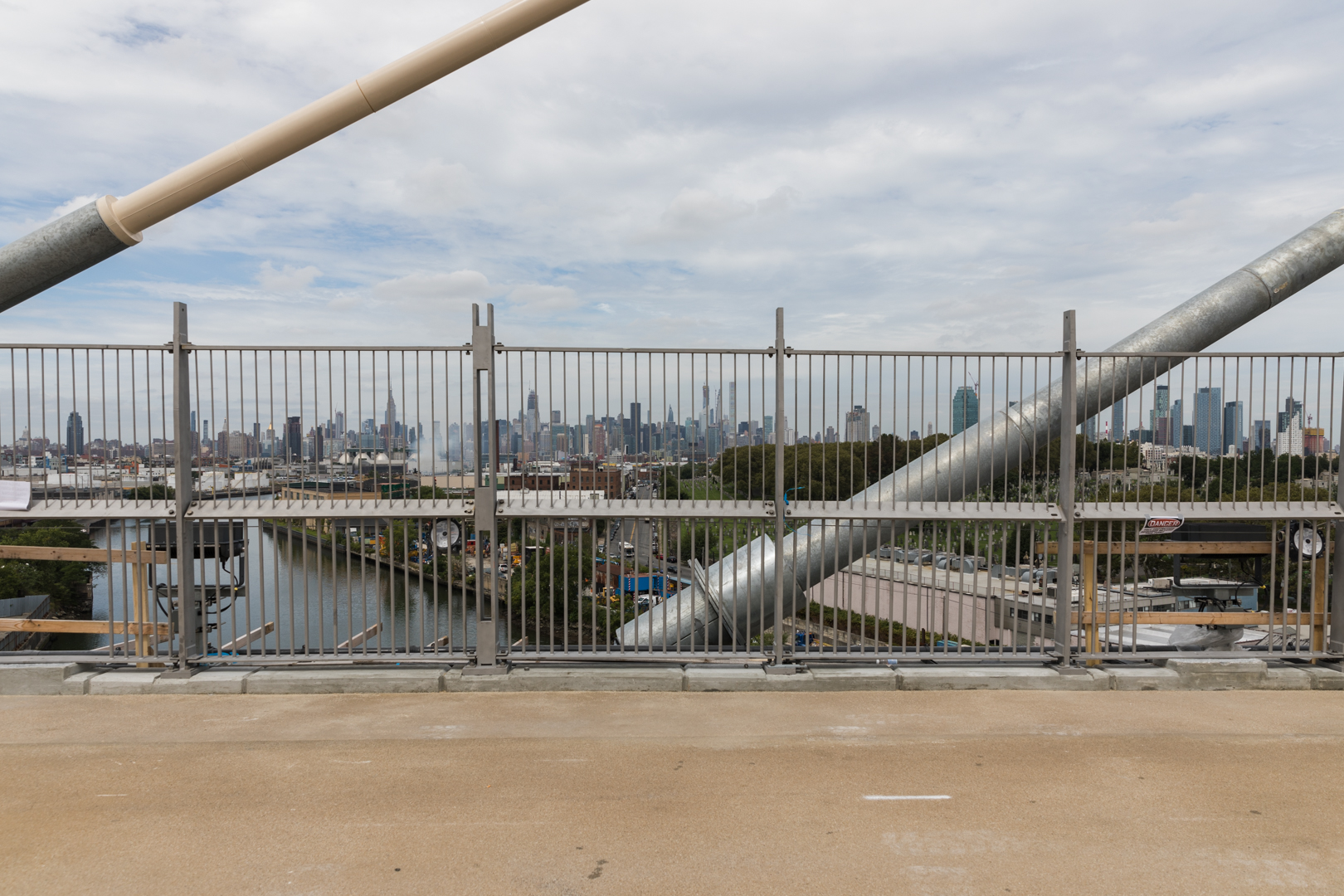
The Brooklyn-bound span of the bridge sports a 20-foot-wide walkway and bikeway. Eagle photo by Paul Frangipane
The governor attributed the speedy construction to a still “controversial” design-build model that contracts private companies to both design and construct infrastructure. Multiple companies can then bid against each other on how long it will take to build.
“Nobody believed this bridge could be completed in under nine years, and we were able to do it in five, and because the local community has everything to do with the construction process, we decided to think outside the box with this new park and open space,” Cuomo said in a statement.
The new Kosciuszko Bridge is the first major new bridge crossing built in New York City since the Verrazzano Bridge in 1964.
The tower of the new span of the Kosciuszko Bridge. Eagle photo by Paul Frangipane
As construction workers finished off some of the last touches of the bridge ahead of the opening, the governor pronounced the new addition a win for Brooklyn.
“If you’re in Manhattan looking at Brooklyn, this is going to be a magnificent addition to the skyline.”
If this bridge could be completed 4 years prior to projected completion, perhaps the Governor may assist NYC with the Brooklyn Heights portion of the BQE.
SUNSET PARK — “As a resident of Marine Park, one of the great surprises I found biking around Industry City and visiting Japan Village was to discover Bush Terminal Park. I continue to be amazed at the serene hideaways that the city offers in some of the busiest places — and, still, with an iconic view.”
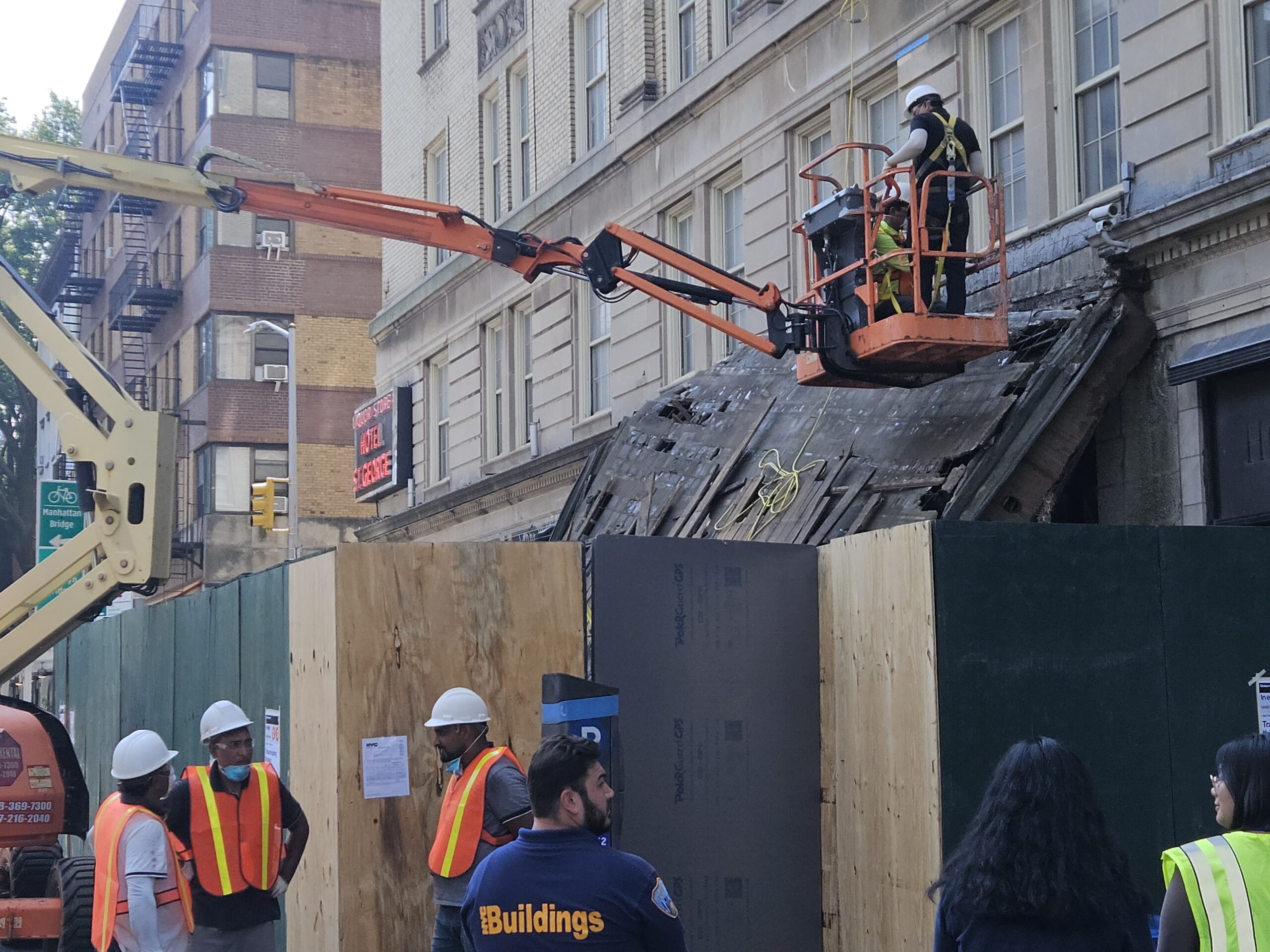
BROOKLYN HEIGHTS — ‘A miracle that no one was killed …’ That’s what neighbors are saying about the collapse of the Hotel St. George marquee. Shown in this photograph are workmen beginning the removal and repair of the historic, old neon sign at the corner, referencing a relic of Brooklyn Heights’ past: the St. George Hotel.
ATLANTIC AVENUE — Exhausted shopper with cluster of bags and goods from mall at Boerum Place stops to look at huge construction site across the street. “Is that REALLY going to be a jail??” Her male companion is reassuring, “Nothing like Rikers … this is 21st Century.”
BROOKLYN HEIGHTS — Overheard in line at one of most popular pastry outlets on Montague Street: “Hope I can get them into a camp …” A mother with two pre-schoolers in tow was showing a friend the Dodge Y flyer for Healthy Kids Day on Saturday, April 18.
















One Response
If this bridge could be completed 4 years prior to projected completion, perhaps the Governor may assist NYC with the Brooklyn Heights portion of the BQE.