Subscribe to Brooklyn this Week:
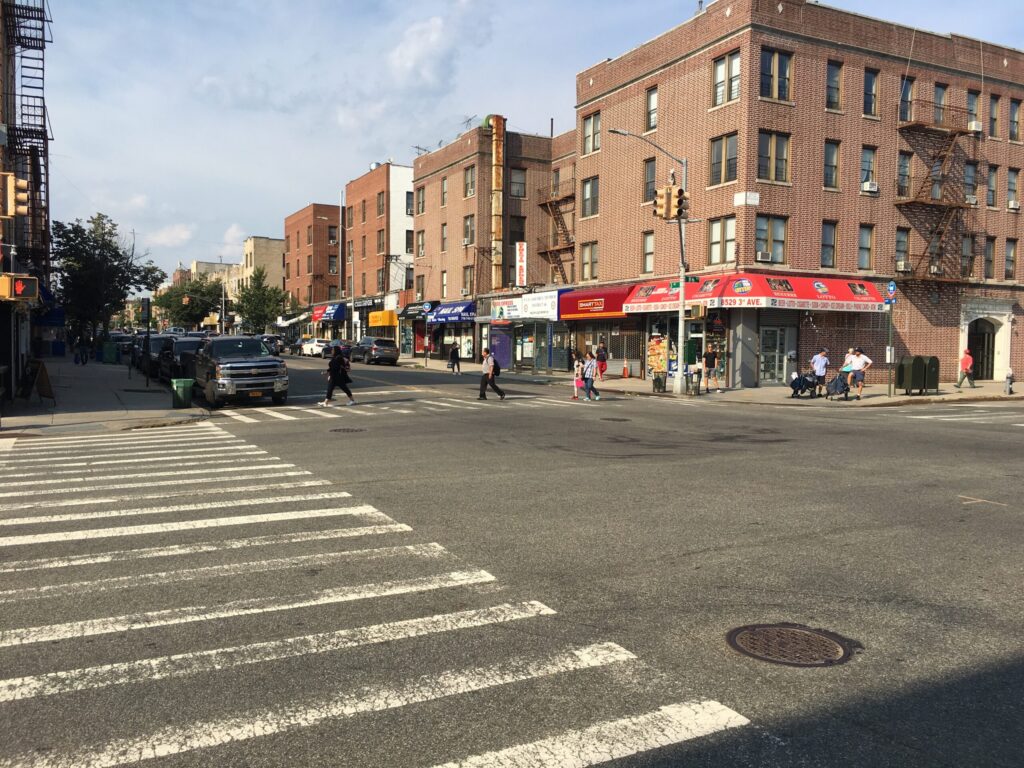
The roadway itself has become notorious for its dangerous conditions.
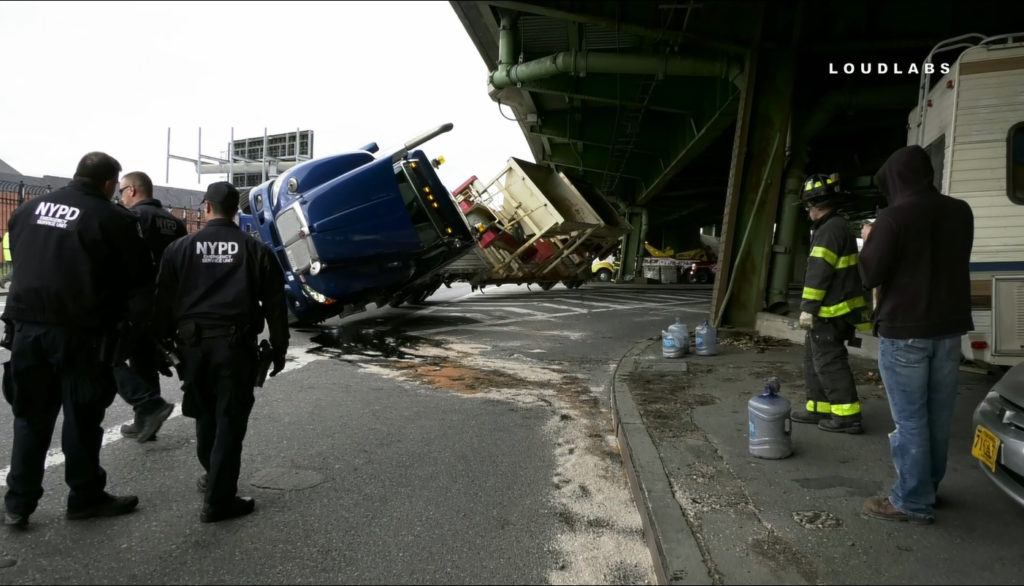
On July 29, a cyclist was fatally struck by a tractor-trailer on Third Avenue and 36th Street after she swerved to avoid a parked car’s opening door. Since August 2011, the avenue has seen 2,000 injuries and eight fatalities in the portion that runs through Sunset Park, according to NYC Crash Mapper.
“Three’s a huge problem with cars that are going too fast, there’s a lot of running red lights, people are doing a lot of dangerous behaviors on there,” said local resident John Delooper. “You can see people drag racing, people are going too fast and there’s not a lot of room for people on foot or on bike.”
At a visioning workshop hosted by Community Board 7 to brainstorm safety improvements on the avenue, some residents expressed the creative solution of transforming the expressway’s underside into a public park and urban trail.
Related: Sunset Park residents are fed up with the safety failures of Third Avenue
Many cities have successfully taken on this model. In Miami, the city is currently turning the underside of its Metrorail into a 10-mile linear park. And in Toronto, the blighted sector underneath the Gardiner Expressway was converted into The Bentway, a collection of urban trails, event spaces and public art installations.
“Not only could [similar projects] happen in other cities, but I think they need to happen in other cities,” said Dave Carey, co-executive director of The Bentway. “We need to look at the spaces that we have and be open to reimaging them and rethinking them in interesting ways.”
Ambitious projects like The Bentway take time and would be met with a vigorous political process in New York, but in the meantime, steps can be made to make the avenue safer, according to Rosalie Ray, a former economist for the U.S. Department of Transportation.
“I am not someone who thinks that incremental is a dirty word. I think that if you look at many of the European capitals … they did not wake up one day and say, ‘we would like to ban all cars from the city center,’” Ray told Brooklyn This Week. “They woke up one day and said ‘we need to have safer streets, we need to have a city that is designed around people.’”
- Interview with Amanda Beltran and John Delooper at 1:54
- Interview with Zachery Jasie at 7:13
- Interview with Rosalie Ray at 10:40
- Interview with Dave Carey at 16:31
Our host Lawrence Madsen is a native New Yorker. He graduated from Columbia University with a B.A. in History, and volunteers with the disaster relief group Team Rubicon.
Subscribe to Brooklyn this Week:




















One Response
Third Avenue used to be a regular commercial avenue, with numerous stores, until the Gowanus Expressway was built overhead. One by one, the stores closed down…