 What happens when the thing you’ve waited your whole life for finally arrives and the responsible thing is to stay home?
When my wife and I first started dating, I remember apologizing in advance for the Knicks.
“Don’t worry,” I told her. “It’s mostly harmless.”
She thought I was confessing an addiction. I was.
For years, though, it didn’t matter. The Knicks were terrible. My obsession was largely theoretical.
Sure, I’d yell at the television. I had jerseys and hats from every phase that survived donation sweeps. I’d spend entire evenings discussing the backup power forward situation with people who looked like they regretted telling me they liked the Knicks, too.
But there were limits to the damage. The Knicks weren’t going anywhere. Nobody was making life-changing decisions because of a Wednesday night game against Miami.
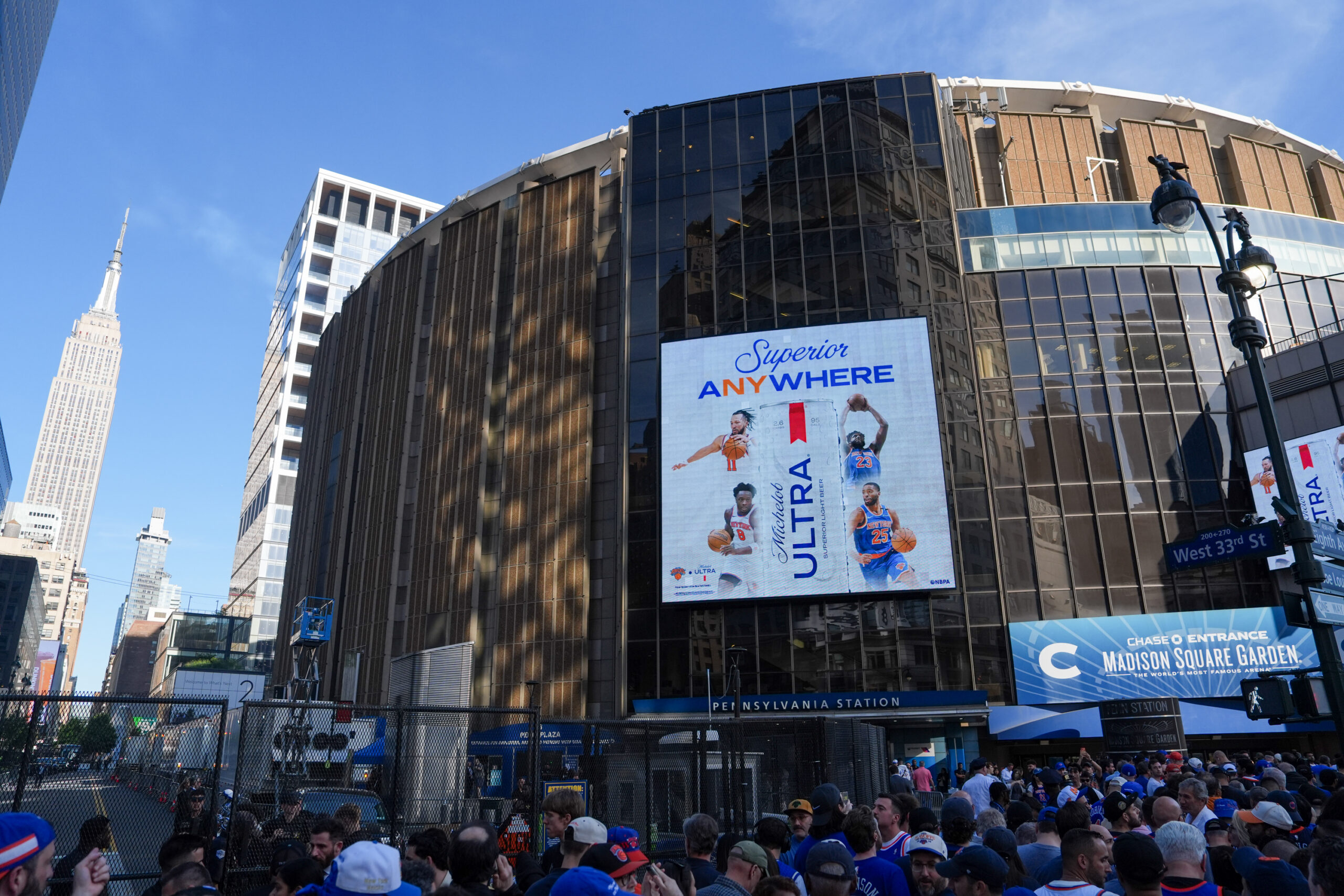
Then something impossible happened: The Knicks made the NBA Finals — the thing Knicks fans have spent decades talking about in the same way children talk about becoming astronauts.
“If the Knicks ever make the Finals, I’ll be there.” That was always the deal, no questions asked, no hesitation, whatever it costs, whatever it takes.
Okay. They’re here.
Will I be there? No. Absolutely not — not because I don’t care, because I’m a grownup. That hurts in a way my 20-year-old self couldn’t have imagined.
The strangest part is that technically almost anyone can afford a Finals ticket.
You could sell blood. You could cash out part of your retirement account and let future you deal with the consequences.
You could sell your car and spend the summer explaining that public transit is actually better for the environment. You could stop going to Dunkin’ for approximately the next 17 years.
There are options — that’s what makes this difficult. The question isn’t whether it’s possible; the question is how insane you’re willing to get.
Every Knicks fan has a number where the dream stops being a dream and starts becoming a financial crime against their future self.
My wife, sensing the magnitude of the moment, even gave me her blessing. “You’re turning 40 this summer. You should go,” she told me, partially unaware of just how hyperbolic the prices had become.
Her blessing somehow made things worse. Now there was no villain, no spouse saying no, no financial emergency, no scheduling conflict, just me staring at ticket prices and trying to explain why a seat in the upper deck of Madison Square Garden costs more than my first car.
By Game 3, the cheapest seats were selling for more than a house cost the last time the Knicks won a championship in 1973. Let that sit.
For decades, Knicks fans imagined the obstacle would be the team, the brass, the owner — anything but common sense.
Meanwhile, a friend of mine who works for the organization told me something that perfectly captures the absurdity of this moment.
I asked whether he’ll get a championship ring (safe to say he’s not a player). “I guess we’ll find out,” he said.
That’s the thing about the Knicks making the Finals. There is almost no modern precedent. Not for the fans, the city, or even for the people working inside the building. Many of the employees weren’t alive the last time this happened. Many fans weren’t either.
We’ve spent so long imagining this moment that nobody bothered to think through the logistics of actually living in it.
The Knicks finally arrived, and now thousands of lifelong fans are discovering that the hardest part isn’t getting here, it’s deciding what this moment is actually worth. But maybe that’s not such a bad question to ask in 2026.
We live in an age where almost anything can be purchased instantly, financed monthly, delivered tomorrow, and justified later. Materialism has been made as frictionless and accessible as possible. If you want something badly enough, there is usually a button to click and a payment plan to make it happen, but every once in a while it’s worth stopping and asking what you’re actually buying.
What is it that would make me happiest about a Knicks championship? Being there? Writing about it afterward? Having the ticket stub? Posting the photo?
What is it, exactly, that I’m trying to purchase? The seat? The memory? The story? The right to tell people I was there?
For weeks I’ve been acting as though these are all the same thing. They’re not.
My kids are still too young to stay up for most of these games. They don’t understand the stakes.
If the Knicks win a championship, they’ll probably sleep through most of it. Yet, years from now, I suspect they’ll remember something.
They’ll remember that something unusual happened in the house, in their neighborhood, on their bus ride home, in their conversations with friends who know equally nothing about the stakes or situation.
But maybe if we’re lucky enough, if the refs stop blowing this, if we stop turning the damn ball over, one night soon my kids will wander into the living room, rub their eyes and ask what’s going on. Maybe I’ll point to the television and say, “You’re too young to understand this now, but you’re watching a piece of history.”
Trust, they will laugh at me, but if we get to have that moment, maybe one day New York will mean something special to them, too.
Being part of a moment isn’t the same thing as being in the building. The real miracle isn’t getting a ticket, it’s living long enough to finally have a chance at becoming an astronaut.