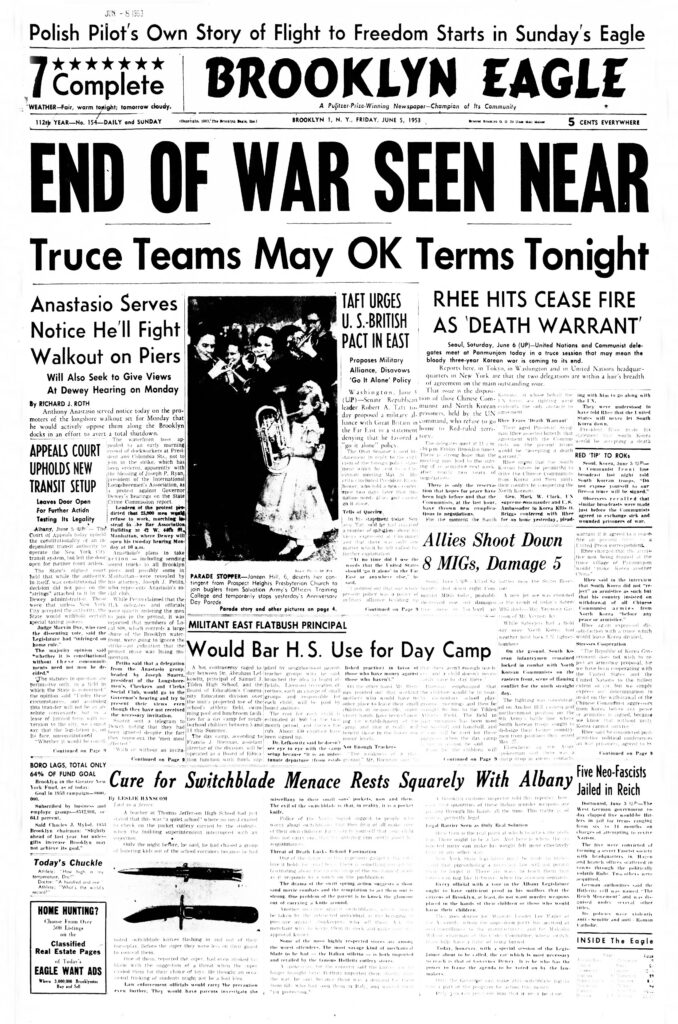
ON THIS DAY IN 1876, the Brooklyn Daily Eagle reported, “WALL STREET — The Centennial Exhibition will doubtless open at Philadelphia on the appointed day — May 10 — and already tradesmen here are prepared for the event. The hotel proprietors look for a large influx of visitors, and expect to get a fair share of Centennial tourists, because of the better accommodations offered here and the short distance to Philadelphia. Railroad companies are extending facilities to people, West and South, for passing through and tarrying here, and it is reasonable to expect that the visitors will combine business with pleasure, and after enjoying the trip to Philadelphia will come here to buy goods. Whether the trade is wholesale or retail, New York will, it is expected, benefit to a larger extent than Philadelphia. But even if this should not prove to be the case, and if the visitors should do their trafficking in the Quaker City, her tradesmen must come here for the majority of their supplies, and thus the wholesaling of goods will be benefitted. All this will undoubtedly give a spurt to trade which will be appreciated and made the most of while it lasts. Of course Brooklyn will derive certain advantages from this state of affairs, for it is unreasonable to expect that visitors to this section will refrain from passing over to Brooklyn, and while there they will contribute something to her prosperity.”
✰✰✰
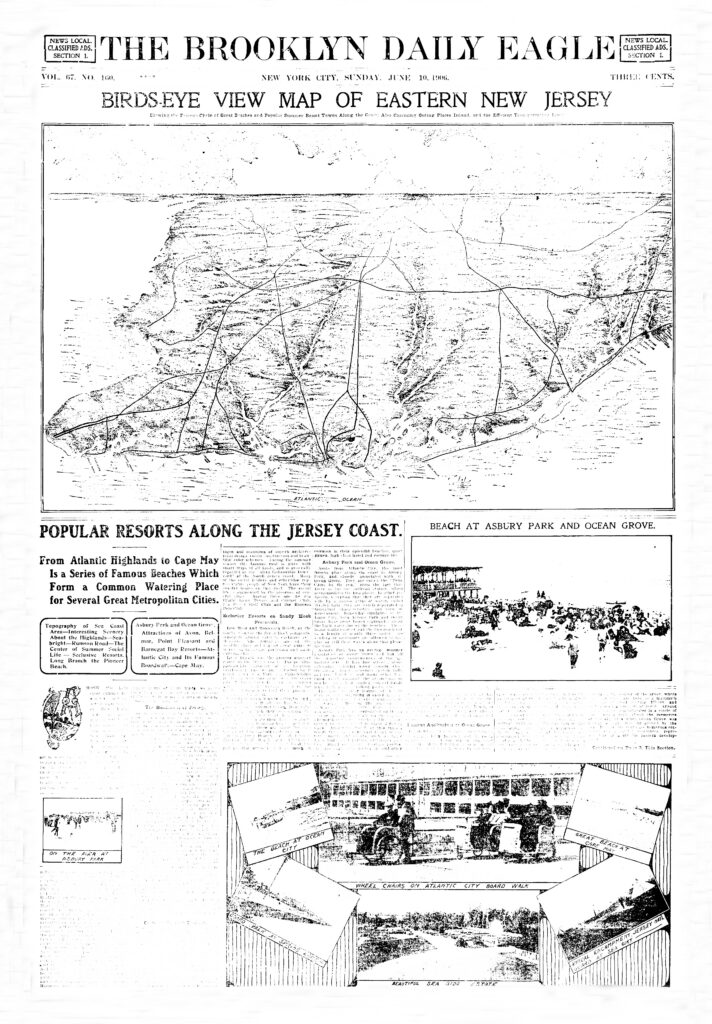
ON THIS DAY IN 1910, Eagle columnist Frederick Boyd Stevenson said, “If one spread a map of Brooklyn before him he will descry a jumble of streets. Nearly all of them had a direct reason in the past as arteries leading to the great roads connecting the marts of trade. They wound around the farm homesteads, and were merged first into the main streets of the village and then the city. They were made without specific plan or device, save to furnish the easiest mode of transportation between the outlying farmlands and the rapidly growing centers of commerce. As the city grew, many of these old roads and lanes were obliterated — some needlessly, at the expense of the picturesque and the beautiful; some foolishly, at the expense of a future utility which an unwise generation could not foresee. When the old ferry routes connecting Brooklyn and Manhattan became practically obsolete — when the bridges were swung across the East River, and the possibility of a more rapid, a more comprehensive means of transportation was brought to view, this old system of streets was found inadequate. The feeders to the great thoroughfares were found wanting. The crooked, narrow and indirect streets blocked the stream of traffic. This is the condition which exists today in Brooklyn, and which, unless the remedy be applied, will become daily more complicated, more perplexing, as the demands of the city’s trade and commerce increase. What is the remedy? Wise men, practical men, say that new thoroughfares must be built, old thoroughfares widened and extended. This applies to all parts of Brooklyn, but especially to the bridge approaches.”
✰✰✰
ON THIS DAY IN 1941, the Eagle reported, “Unseasonably warm weather continued in Brooklyn and the Metropolitan area today despite a brief drop in temperatures last night. The official Weather Bureau forecast was for showers and thunderstorms this afternoon, with the highest temperature about 70; tonight, showers, clearing and cooler, and tomorrow fair with milder temperatures. Normal temperature for this date is 50, with the highest 83, set in 1896, and the lowest 23, set in 1875. Yesterday, the mercury reached a high of 79.3 degrees at 2:50 p.m.”
✰✰✰
ON THIS DAY IN 1963, the Eagle said, “It is regrettable that the conflict between the Cuban exiles and the White House has finally come out in the open at a time when Cuban exile morale is at its lowest because of the Kennedy prohibition against their revolutionary activities. It may be that President Kennedy personally did not promise the Cuban invaders air cover when they made their tragic attempt to overthrow Castro at the Bay of Pigs on April 17, 1961. But the sad fact is the Cubans were promised this air support by someone in authority; it was all ready to take off from an American aircraft carrier. Some of our planes, in fact, had already taken off to help the Cubans, when the President cancelled air cover — evidently because of a call from Adlai Stevenson. This last is conjecture. But American planes were promised; they were there, and ready to participate in the invasion. The White House repeatedly denied then later confirmed parts of this story. For nearly two years, the President steadfastly refused to admit that Americans had taken part in the April 17 invasion. Recently it was confirmed by the attorney general that Americans did take part, they were on the United States government payroll while they were doing it, and that four of them were killed. If, as the President now tells us, the Cuban invaders were not promised American air support, the government is guilty of gross neglect for sending American soldiers with the Cuban invaders, knowing the invasion could not possibly be successful without effective air cover. With some air cover, experts say the invasion would have been a success; Castro would no longer be a menace to the United States.”
✰✰✰
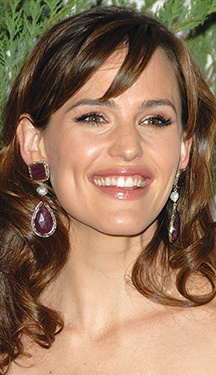
Jennifer Garner. Photo: Peter Kramer/AP
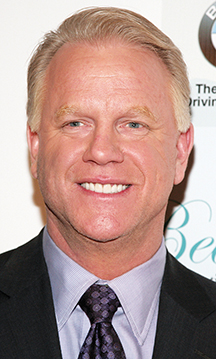
NOTABLE PEOPLE BORN ON THIS DAY include “Maniac” singer Michael Sembello, who was born in 1954; “Fever Pitch” author Nick Hornby, who was born in 1957; former N.Y. Jets quarterback Boomer Esiason, who was born in 1961; “Waiting to Exhale” star Lela Rochon, who was born in 1964; “Lost” star Henry Ian Cusick, who was born in 1967; baseball player Marquis Grissom, who was born in 1967; singer-songwriter Liz Phair, who was born in 1967; “Alias” star
Lela Rochon. Photo: Jordan Strauss/Invision/AP
Jennifer Garner, who was born in 1972; Spice Girl Victoria Beckham, who was born in 1974; “The Girl with the Dragon Tattoo” star Rooney Mara, who was born in 1985; and former Pentatonix member Avi Kaplan, who was born in 1989.
✰✰✰
NEW WORLD MAN: Today is Verrazzano Day. It celebrates Florentine navigator Giovanni da Verrazzano’s discovery of New York Harbor in 1524. The bridge that bears his name opened in 1964 and was once the longest suspension bridge in the world.
✰✰✰
FOUNDER’S DAY: Samuel Chase was born on this day in 1741. The Maryland native signed the Declaration of Independence in 1776 and was an associate justice of the U.S. Supreme Court from
Boomer Esiason. Photo: Andy Kropa/Invision/AP
1796 until his death in 1811. Due to his reddish complexion, he was given the nickname “Old Bacon Face.”
✰✰✰
Special thanks to “Chase’s Calendar of Events” and Brooklyn Public Library.
Quotable:
“Go as far as you can see; when you get there, you’ll be able to see farther.” — financier J.P. Morgan, who was born on this day in 1837.
SUNSET PARK — “As a resident of Marine Park, one of the great surprises I found biking around Industry City and visiting Japan Village was to discover Bush Terminal Park. I continue to be amazed at the serene hideaways that the city offers in some of the busiest places — and, still, with an iconic view.”
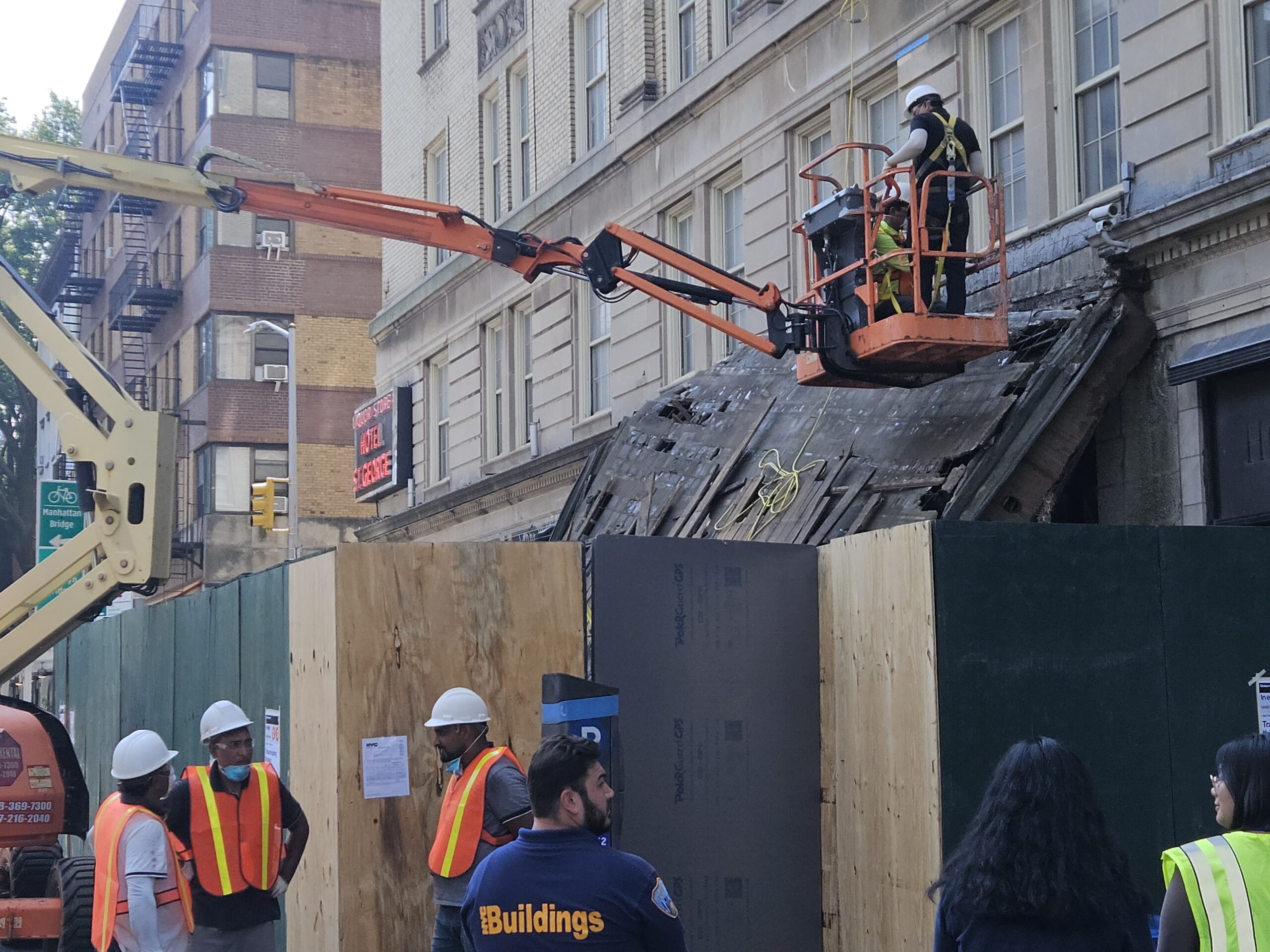
BROOKLYN HEIGHTS — ‘A miracle that no one was killed …’ That’s what neighbors are saying about the collapse of the Hotel St. George marquee. Shown in this photograph are workmen beginning the removal and repair of the historic, old neon sign at the corner, referencing a relic of Brooklyn Heights’ past: the St. George Hotel.
ATLANTIC AVENUE — Exhausted shopper with cluster of bags and goods from mall at Boerum Place stops to look at huge construction site across the street. “Is that REALLY going to be a jail??” Her male companion is reassuring, “Nothing like Rikers … this is 21st Century.”
BROOKLYN HEIGHTS — Overheard in line at one of most popular pastry outlets on Montague Street: “Hope I can get them into a camp …” A mother with two pre-schoolers in tow was showing a friend the Dodge Y flyer for Healthy Kids Day on Saturday, April 18.