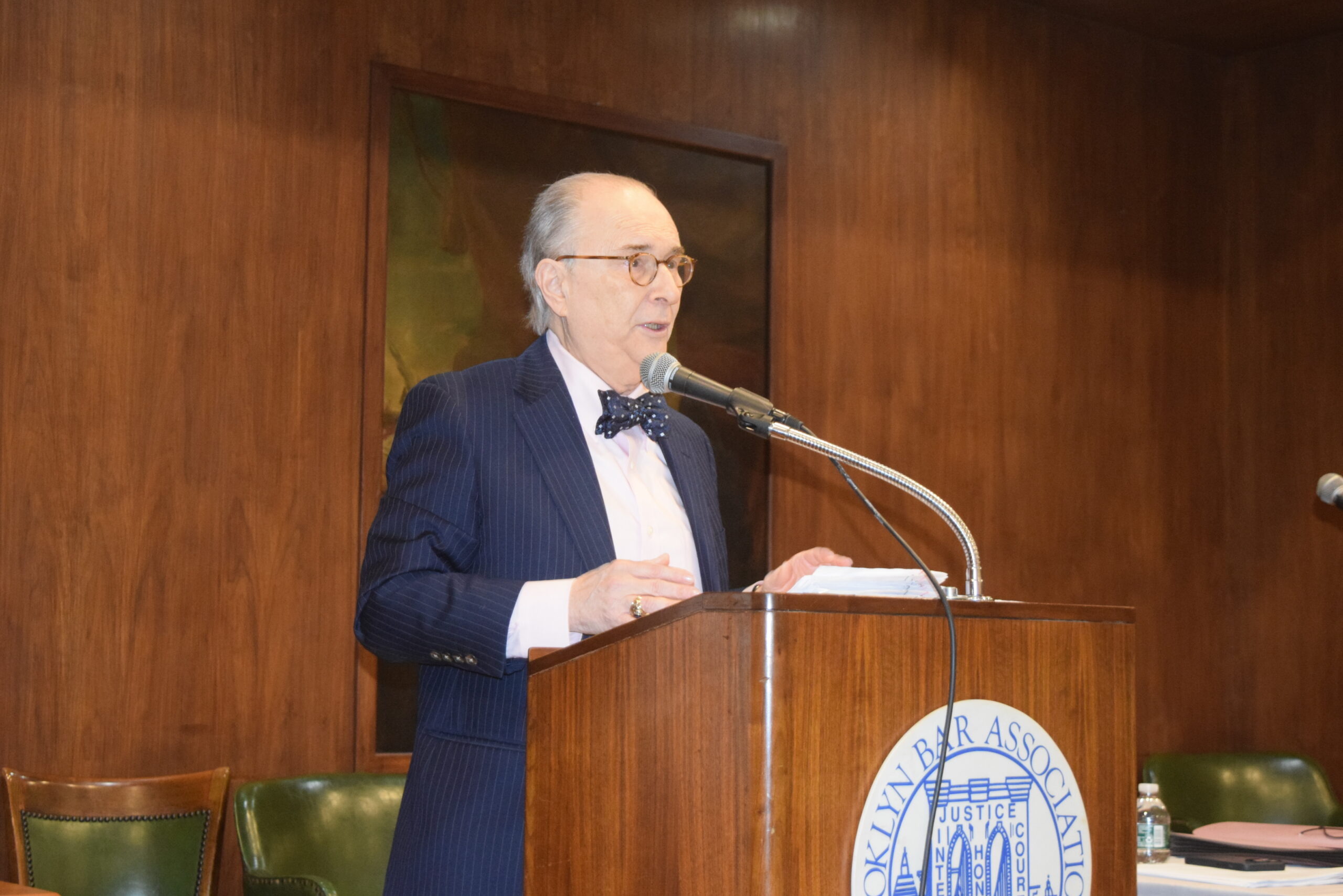
Justice Barry Kamins discusses pivotal legal principles at a Kings County Criminal Bar Association meeting following a major appellate decision on the Weinstein case. Brooklyn Eagle photo by Barry Kamins
By Robert Abruzzese, Courthouse Editor
April 29, 2024
Copy Link
Email
Facebook
X
LinkedIn
WhatsApp
Telegram
Pinterest
Print
In a landmark ruling, the New York Court of Appeals has overturned the conviction of Harvey Weinstein, a decision that hinged on the controversial use of prior bad acts in his trial.
Weinstein, who faced allegations of sexual misconduct from multiple complainants, argued that his defense was compromised by the admission of testimony about unrelated sexual acts. The court concurred, citing that the presented evidence was intended more to paint Weinstein as prone to criminality rather than to substantiate claims of intent or lack of consent pertinent to the charges at hand.
This ruling mandates a new trial for Weinstein and emphasizes the necessity for judicial prudence in distinguishing between evidence that unfairly prejudices a defendant and that which legitimately aids in ascertaining the truth.
“Under our system of justice, the accused has a right to be held to account only for the crime charged, and thus, allegations of prior bad acts may not be admitted against them for the sole purpose of establishing their propensity for criminality,” Justice Jenny Rivera wrote in the decision.
Striking a balance: Sandoval and Molineux in the spotlight
In the case of The People v. Harvey Weinstein, the New York Court of Appeals reviewed Weinstein’s appeal from his conviction for sexual crimes against three complainants. Weinstein argued that his trial was unfair due to the admission of testimony about unrelated prior sexual acts, which he claimed was prejudicial and undermined his defense.
The legal issues centered around whether these testimonies were improperly admitted for showing Weinstein’s propensity for criminality rather than for any legitimate purpose, such as proving intent or knowledge of lack of consent. The Court agreed with Weinstein, finding that the trial court erroneously allowed testimony that served no material non-propensity purpose and further compounded this error by permitting extensive cross-examination about his alleged past misdeeds.
Consequently, the court concluded that these errors significantly prejudiced Weinstein’s defense, necessitating a new trial, although it rejected his claim that the prosecution of third-degree rape was untimely.
In New York case law, there are two pivotal cases, People v. Sandoval and People v. Molineux, that set precedents for the use of prior bad acts in criminal trials.
The Sandoval ruling established a framework that allows prosecutors to use evidence of a defendant’s previous wrongdoings, specifically for impeaching their credibility if they testify. This requires a delicate balance, as courts must weigh the probative value of such evidence against the potential for prejudice towards the defendant, ensuring that the evidence is relevant to the defendant’s truthfulness rather than merely painting them in a negative light.
The Molineux case provides guidelines for when evidence of a defendant’s uncharged crimes or other misconduct can be admitted. Generally, such evidence is not allowed if it only suggests the defendant’s propensity to commit the crime in question. There are exceptions made if the evidence is pertinent to specific issues such as intent, identity, or absence of mistake — crucially, not for demonstrating the defendant’s general criminal character.
The implications of these precedents were recently tested in the Harvey Weinstein ruling, where the Court of Appeals critiqued the lower court’s application of these rules. The Weinstein decision reinforced the principles of Molineux by stressing that prior bad acts cannot be introduced merely to suggest a defendant’s likelihood of committing a crime. It was emphasized that such evidence must have a legitimate purpose beyond indicating a propensity for criminal behavior.
In writing for the majority, Justice Jenny Rivera explained that the Weinstein ruling called for a stricter application of Sandoval and explained the importance of limiting evidence of prior misconduct to matters that genuinely reflect on a defendant’s credibility. The court criticized the expansive use of such evidence to attack the defendant’s character, noting that this undermines the fairness of the trial.
“The erroneous Sandoval ruling allowing the prosecution to cross-examine defendants about allegations of charged and uncharged bad acts was breathtakingly inclusive of behavior that was loathsome but not the type of conduct that would assist the jury in measuring his credibility on the stand,” Rivera wrote.
The recent court decision in the Weinstein case doesn’t change the basic rules set by the Sandoval and Molineux cases, but it clarifies the standard for how to use evidence of a defendant’s past wrongdoings. The ruling explains that such evidence should only be used for specific purposes, like proving intent or credibility, and not just to make the defendant look like a bad person in general. This is meant to ensure that trials are fair and focus only on the actual crimes charged, not on unrelated past behaviors.
Rivera added, “No person accused of illegality may be judged on proof of uncharged crimes that serve only to establish the accused’s propensity for criminal behavior. At trial, a defendant stands to account for the crimes as charged.”
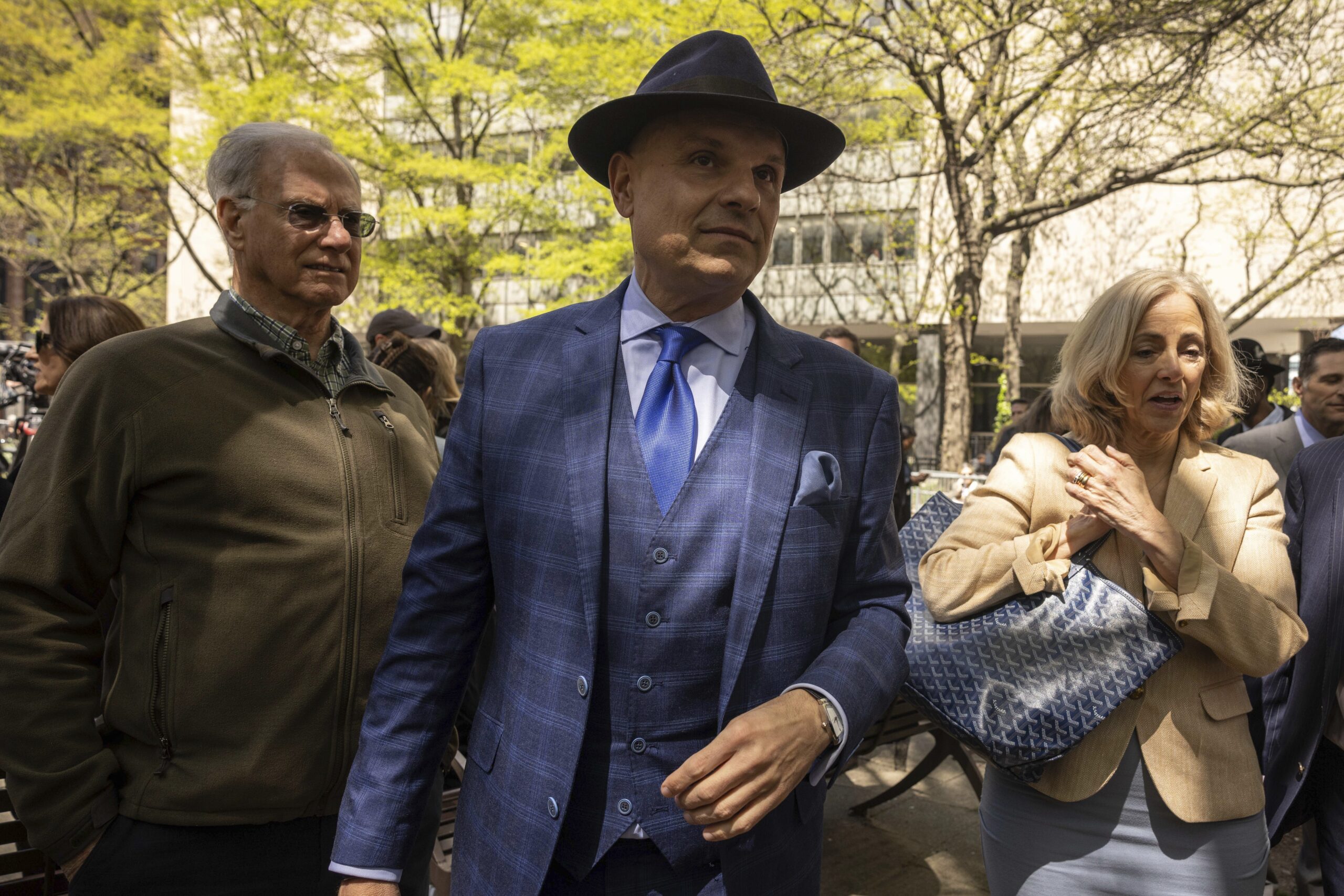
Arthur Aidala, an attorney for Harvey Weinstein, leaves a press conference outside Manhattan Criminal Court, Thursday, April 25, 2024, in New York. Photo: Yuki Iwamura/AP
Implications for legal practice: Kamins speaks on future applications
Justice Barry Kamins, a key figure on Harvey Weinstein’s legal team and former administrative judge for the Kings County Supreme Court, found himself addressing the freshly published appellate decision overturning Weinstein’s conviction during a Continuing Legal Education (CLE) session hosted by the Kings County Criminal Bar Association.
The CLE, initially set to cover different topics, quickly pivoted as Kamins took the podium on Thursday to dissect the significant court ruling. Justice Kamins opened his remarks with a succinct nod to the enduring impact of long-standing legal standards, stating, “Molineux lives.”
He highlighted the appellate court’s decision as a pivotal moment not just for Weinstein but as a crucial clarifier for legal professionals across New York.
“This is a very important decision,” Judge Kamins said. “Obviously, it was important for Mr. Weinstein, but it’s important because lawyers and prosecutors from around the state need a proper template for Molineux and Sandoval.”
Kamins criticized the trial court’s handling of the Sandoval application, noting the prosecutor’s request to admit 38 prior acts of what he termed “boorish behavior,” none of which were convictions. The court allowed 35 of these to be presented.
“Sandoval has become very routine over the last 30 years, and this was not a routine Sandoval application,” Kamins remarked.
Kamins also referenced the broader implications of the decision, hinting at potential reverberations in other high-profile cases, including Donald Trump’s. “I’ve heard, I don’t know if it’s true, but that the lawyers in the Trump case might make an application to have the prosecutor’s Sandoval application in the Trump case revisited,” he said.
Addressing the Molineux rule, which governs the admissibility of evidence of uncharged crimes or misconduct, Kamins noted that the appellate court found the prosecution failed to meet the necessary criteria to justify the use of such evidence against Weinstein.
“What they say in the decision, in the two-part test in Molineaux, the prosecutor failed the first prong, and there was no basis to introduce any Molineaux evidence,” Justice Kamins said. Unlike in the Cosby case, where there was debate over the number of past accusations allowed, the court ruled that no Molineux evidence should be admitted in Weinstein’s potential retrial.
The two-part test in Molineux, as applied in New York, is used to determine the admissibility of evidence of uncharged crimes or prior bad acts in a criminal trial. The first part of the test requires that the evidence of uncharged crimes or prior bad acts must be relevant to some specific issue in the trial other than the defendant’s propensity to commit the crime. This includes proving elements like motive, intent, absence of mistake or accident, a common scheme or plan, or identity.
If the evidence is deemed relevant under the first part of the test, the court then considers whether its probative value (its usefulness in proving something important in the trial) outweighs its potential prejudicial effect on the defendant. The goal is to prevent unfair prejudice that might sway the jury to convict based on character or past behavior rather than the facts of the case at hand.
SUNSET PARK — “As a resident of Marine Park, one of the great surprises I found biking around Industry City and visiting Japan Village was to discover Bush Terminal Park. I continue to be amazed at the serene hideaways that the city offers in some of the busiest places — and, still, with an iconic view.”
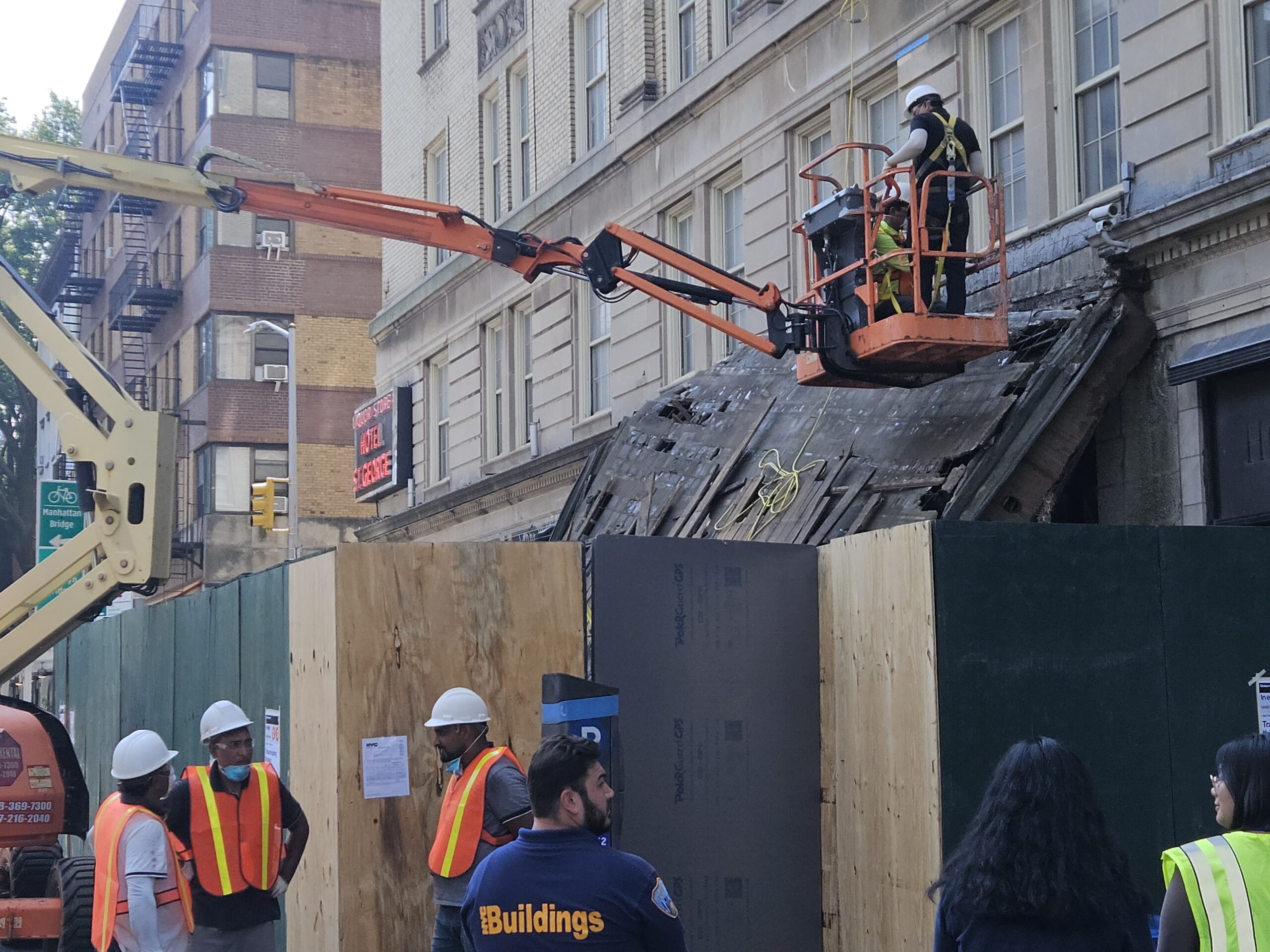
BROOKLYN HEIGHTS — ‘A miracle that no one was killed …’ That’s what neighbors are saying about the collapse of the Hotel St. George marquee. Shown in this photograph are workmen beginning the removal and repair of the historic, old neon sign at the corner, referencing a relic of Brooklyn Heights’ past: the St. George Hotel.
ATLANTIC AVENUE — Exhausted shopper with cluster of bags and goods from mall at Boerum Place stops to look at huge construction site across the street. “Is that REALLY going to be a jail??” Her male companion is reassuring, “Nothing like Rikers … this is 21st Century.”
BROOKLYN HEIGHTS — Overheard in line at one of most popular pastry outlets on Montague Street: “Hope I can get them into a camp …” A mother with two pre-schoolers in tow was showing a friend the Dodge Y flyer for Healthy Kids Day on Saturday, April 18.