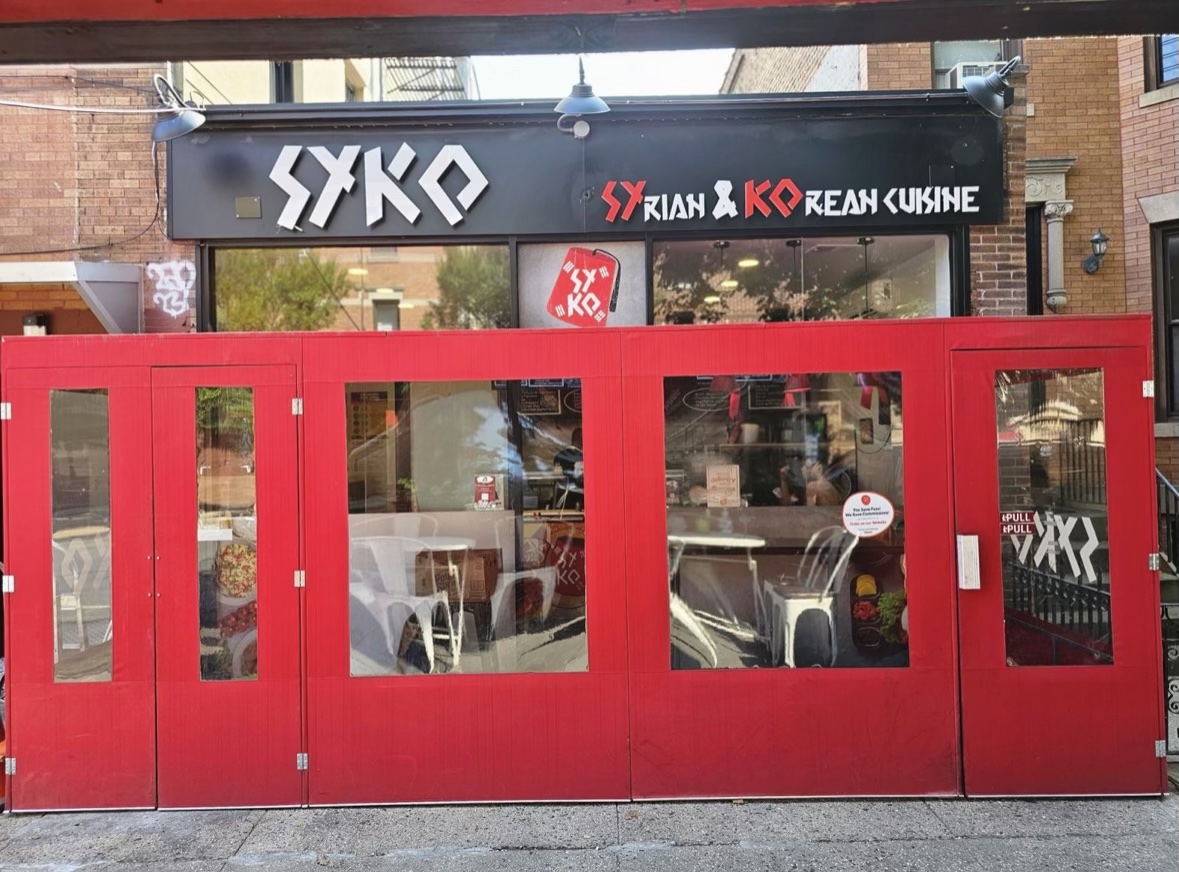
The word “fusion” gets tossed around a lot these days. Whether it’s Japanese food with a French twist or a melding of Latin cuisines, it’s not a new concept to mix and match ingredients and techniques from around the world. But I’d bet you’ve never seen Syrian and Korean foods staring at you from different sides of the same menu, enmeshing themselves in a few dishes in the middle. That is unless you’ve visited Syko in Windsor Terrace. At its helm is Mazen Khoury, the Sy in Syko (Syria+Korea. Get it?), a graduate of Emma’s Torch and a culinary innovator. He’s been busy, but he was able to spend a few minutes telling me what he’s been up to.
Tell me about yourself and Syko.
I came to America in 2013. I used to have my restaurant back home in Syria, which I opened at age 18 with my sister. When I came here, the only thing I did was work in restaurants. I worked in so many Mediterranean restaurants. In 2016, I went to Emma’s Torch, and I graduated from there. Two years ago, my brother-in-law and I decided to open Syko, a Syrian and Korean restaurant. I believe we are the only Syrian-Korean restaurant in the world.
Photo courtesy of Mazen Khoury
You worked alongside your sister in Syria and her husband here. What is it like working so closely with your family members?
My sister always trusts me. She knows that cooking is my passion, and she believes in my skills. The restaurant she and I opened in Syria was very successful. When we came here, we dreamt about having that experience again and opening a restaurant here. It took time, but in the end, we agreed to do it again, this time with her husband. They know a lot about restaurants, and they told me that I could do what I wanted with the business.
What are the similarities between Syrian and Korean cuisines?
We got the idea during the holidays when my brother-in-law would cook Korean food, and we would cook Syrian food, and we used to eat it all together. We noticed that Syrian and Korean foods had similar flavors. We eat a lot of pickles. They eat a lot of kimchi. We start with a small mezze, which are Syrian appetizers. They have banchan. The food clicked together, but it was hard to mix the ingredients. At first, we were going to offer Syrian and Korean separately, but after we’d been open for two or three months, we started messing with the menu and came up with some fusion items.
How did you decide which things to combine and which to keep separate?
Growing up eating Syrian food, I knew which items would work together. For example, with hummus or labneh, we eat a lot of pickles. So, I thought combining kimchi with hummus would work nicely. I tried it, and it was good, so we made hummus with kimchi. For the things that we didn’t fuse, I wanted to keep them authentic.
What does authentically Syrian food mean to you?
Let’s say, for example, the falafel sandwich: here in America, they put a lot of lettuce and onions and make it really big. I try to make it the way we make it back home. Any Syrian people, or Arabic people, or any people who had traveled to Syria and tasted their food should taste it and think, “This is exactly what it was like in Syria.”
Photo courtesy of Mazen Khoury
How did your experience at Emma’s Torch influence your journey?
Emma’s Torch opened a lot of doors for me. It opened my eyes to how to run the front and back of the house, how to store vegetables, how to order and everything you need to be a business owner. Working with Chef Alex was nice. He keeps in touch, even now. He brought a group of students to my restaurant. If I ever needed help from Chef Alex, he would always help me.
Is there anything on the menu that is the most popular?
After The New York Times wrote about the Fatboy and the fusion pizza, those have been popular. The sujuk, or Syrian sausage, sandwich is very popular. Our falafel is the best, and a lot of people order it. I try to keep several vegan options on the menu, which people in this neighborhood love.
What is your favorite menu item?
The falafel bowl.
Tell me about your new grocery store!
We just opened a month ago. It’s a block away from the restaurant. We called it Dukan Syko. Dukan in Arabic means “small shop.” You can find everything you want there. We have a lot of Syrian and Korean groceries. We also have a bakery where we make our pita and manaquish (Syrian pie) with cheese, meat and spinach. I used to have customers ask me, “Where can I buy the pomegranate molasses so I can make your recipes?” I’m trying to bring the old Little Syria from Atlantic Avenue and H Mart to Windsor Terrace.
Photo courtesy of Mazen Khoury
How has it been doing so far?
People in the neighborhood love it. They’re going crazy for it. The pies are selling very well, as are the Syrian and Korean groceries. Hopefully, soon, we will be doing a Syko food truck. It’s the opposite of what people usually do, but we will go from a restaurant to a food truck.
SUNSET PARK — “As a resident of Marine Park, one of the great surprises I found biking around Industry City and visiting Japan Village was to discover Bush Terminal Park. I continue to be amazed at the serene hideaways that the city offers in some of the busiest places — and, still, with an iconic view.”
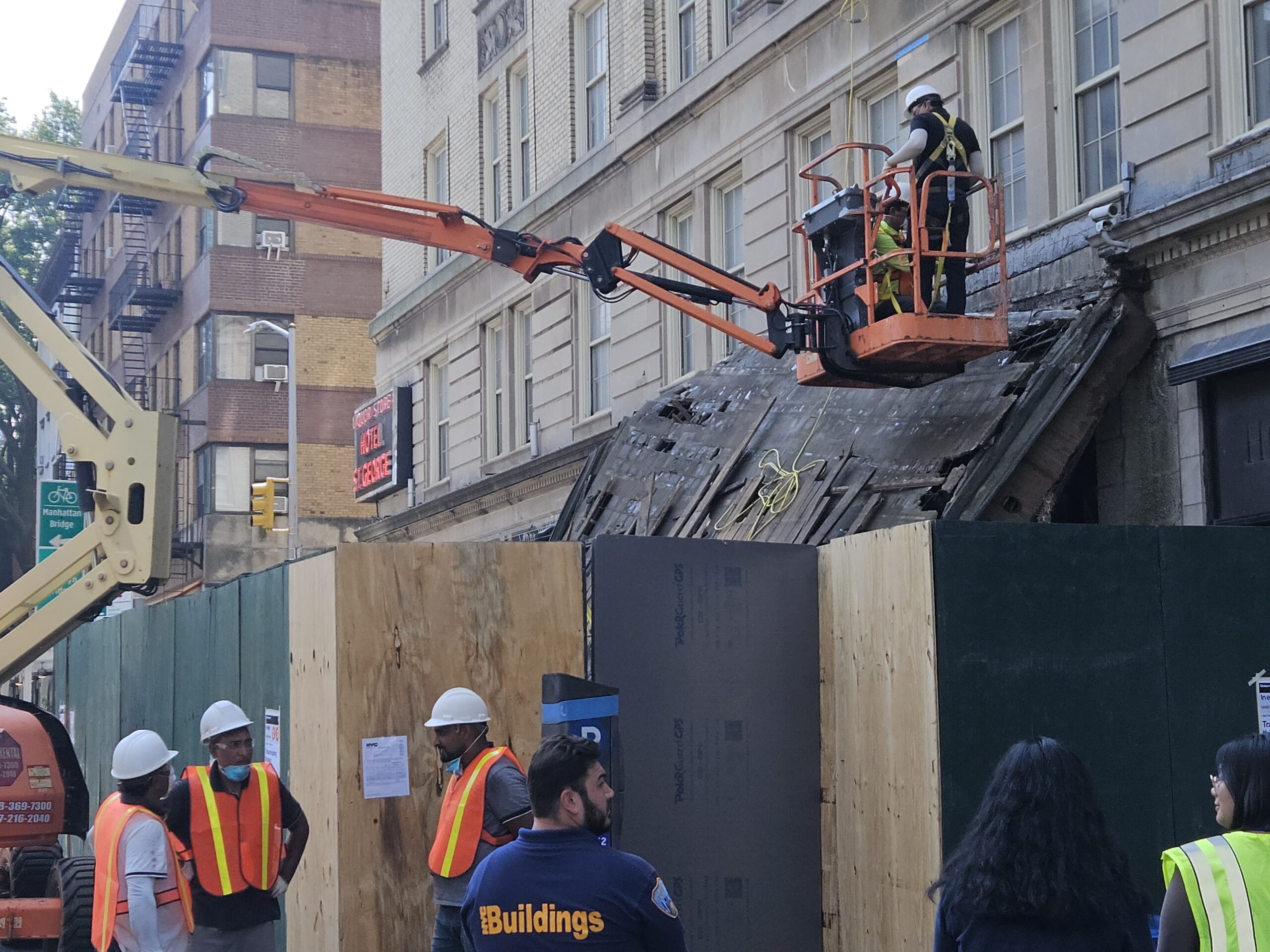
BROOKLYN HEIGHTS — ‘A miracle that no one was killed …’ That’s what neighbors are saying about the collapse of the Hotel St. George marquee. Shown in this photograph are workmen beginning the removal and repair of the historic, old neon sign at the corner, referencing a relic of Brooklyn Heights’ past: the St. George Hotel.
ATLANTIC AVENUE — Exhausted shopper with cluster of bags and goods from mall at Boerum Place stops to look at huge construction site across the street. “Is that REALLY going to be a jail??” Her male companion is reassuring, “Nothing like Rikers … this is 21st Century.”
BROOKLYN HEIGHTS — Overheard in line at one of most popular pastry outlets on Montague Street: “Hope I can get them into a camp …” A mother with two pre-schoolers in tow was showing a friend the Dodge Y flyer for Healthy Kids Day on Saturday, April 18.