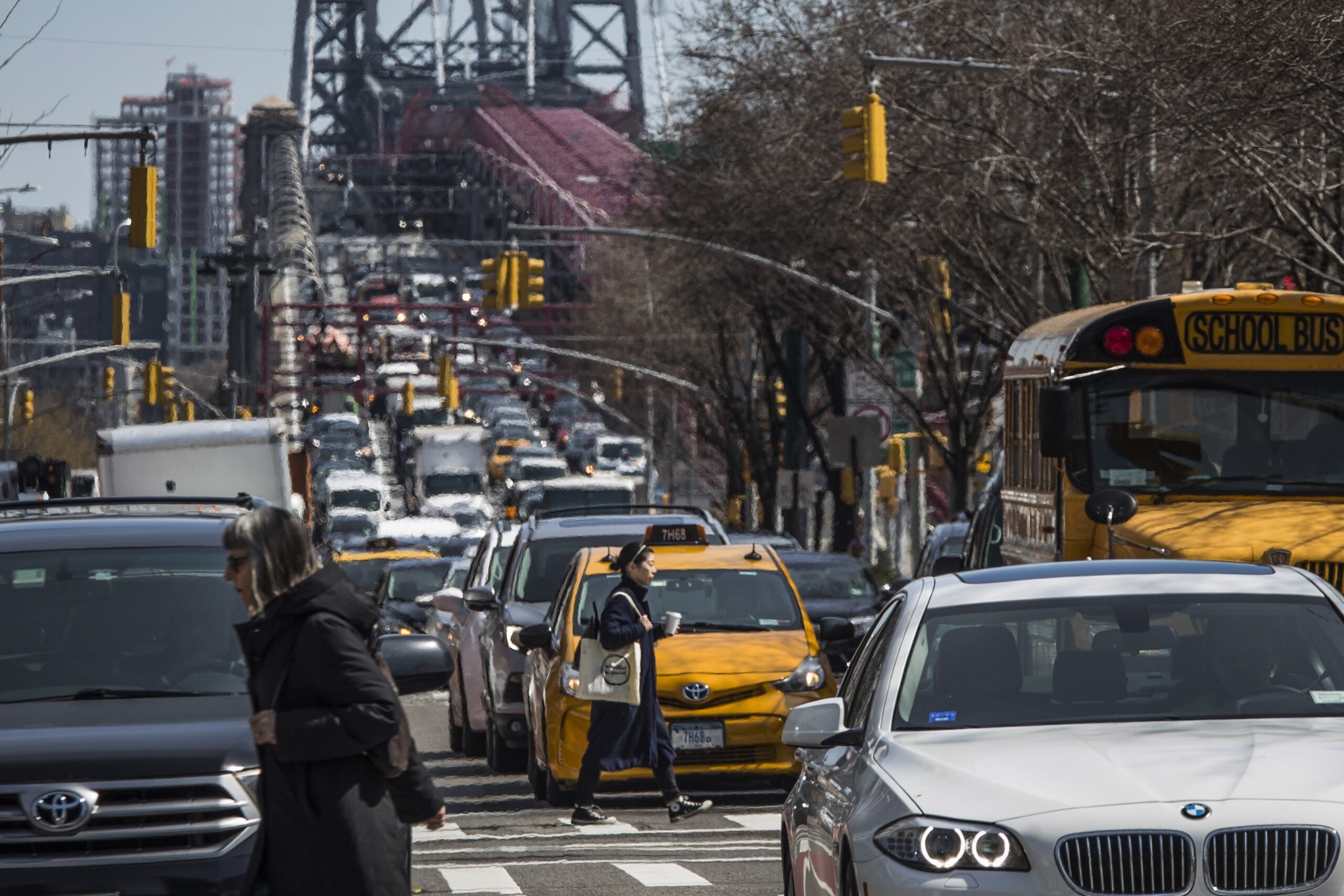
On Wednesday, Gov. Kathy Hochul enraged environmentalists and public transit advocates — but delighted suburban commuters — by putting the brakes on a plan to battle New York City’s traffic by imposing high tolls on Manhattan drivers.
On Thursday, she was scrambling to get support for her proposal to hike a business tax as a way of replacing the $1 billion per year the tolls had been expected to raise for New York’s ailing subway system.
The governor’s behind-the-scenes effort to get legislative approval for the tax hike came a day after she unexpectedly upended the “congestion pricing” toll, a program that was in the works for years and had been scheduled to launch June 30.
The Legislature, which is expected to wrap up its annual legislative session on Friday, would have to approve the tax increase on city businesses, known as a payroll mobility tax.
It did not appear to have much support.
“To tell New Yorkers that you care about the cost of living and then to propose a raise on their taxes, to me, is incomprehensible. It does not make sense,” said Sen. Zellnor Myrie, a Democrat.
Avi Small, a spokesman for Hochul, declined Thursday to provide details on the governor’s proposed tax increase and instead referred a reporter to comments Hochul made a day earlier in a pre-recorded video announcing the indefinite pause of congestion pricing.
“We have set aside funding to backstop the MTA capital plan, and are currently exploring other funding sources,” Hochul said Wednesday, referring to the Metropolitan Transportation Authority, the entity that controls the subway, bus and commuter rail systems that serve the city.
Congestion pricing was signed into law by former Gov. Andrew Cuomo in 2019 after years of advocacy from public transit advocates.
In her pre-recorded statement, the governor said she was blocking the plan because of its financial burden on residents dealing with inflation and high costs of living. She also cited the city’s fragile economic position as it continues to recover from the COVID-19 pandemic.
Drivers entering Manhattan south of 60th Street would have had to pay tolls of around $15, depending on vehicle type, on top of tolls for entering the same area via certain bridges and tunnels.
Sen. Liz Krueger, a Democrat who chairs a legislative finance committee, noted that the proposed business tax would eventually be passed down to workers and said she does not think her chamber would support such a proposal.
“Remember, payroll mobility taxes are actually taxes on the workers. It’s not a corporate tax, it’s a tax on the workers,” said Kruger, adding “I believe the governor did misjudge this.”
The New York City Independent Budget Office said the tolls had been expected to yield $400 million this year and then $1 billion annually. Toll revenues were set to finance $15 billion in capital projects for the Metropolitan Transportation Authority, which runs a vast transportation network in the city and throughout big chunks of the state.
The MTA has already allocated more than $400 million for infrastructure to implement congestion pricing, according to the budget office, and has a contract worth more than $500 million with a private vendor tasked with operating and maintaining the tolling infrastructure.
Before the abrupt reversal, Hochul had been an avid supporter of congestion pricing and had touted the program as recently as two weeks ago. Heavy pushback began to mount as the start date neared, with harsh criticism coming from the city’s suburban commuters.