Holocaust survivors offered DNA tests to help find family
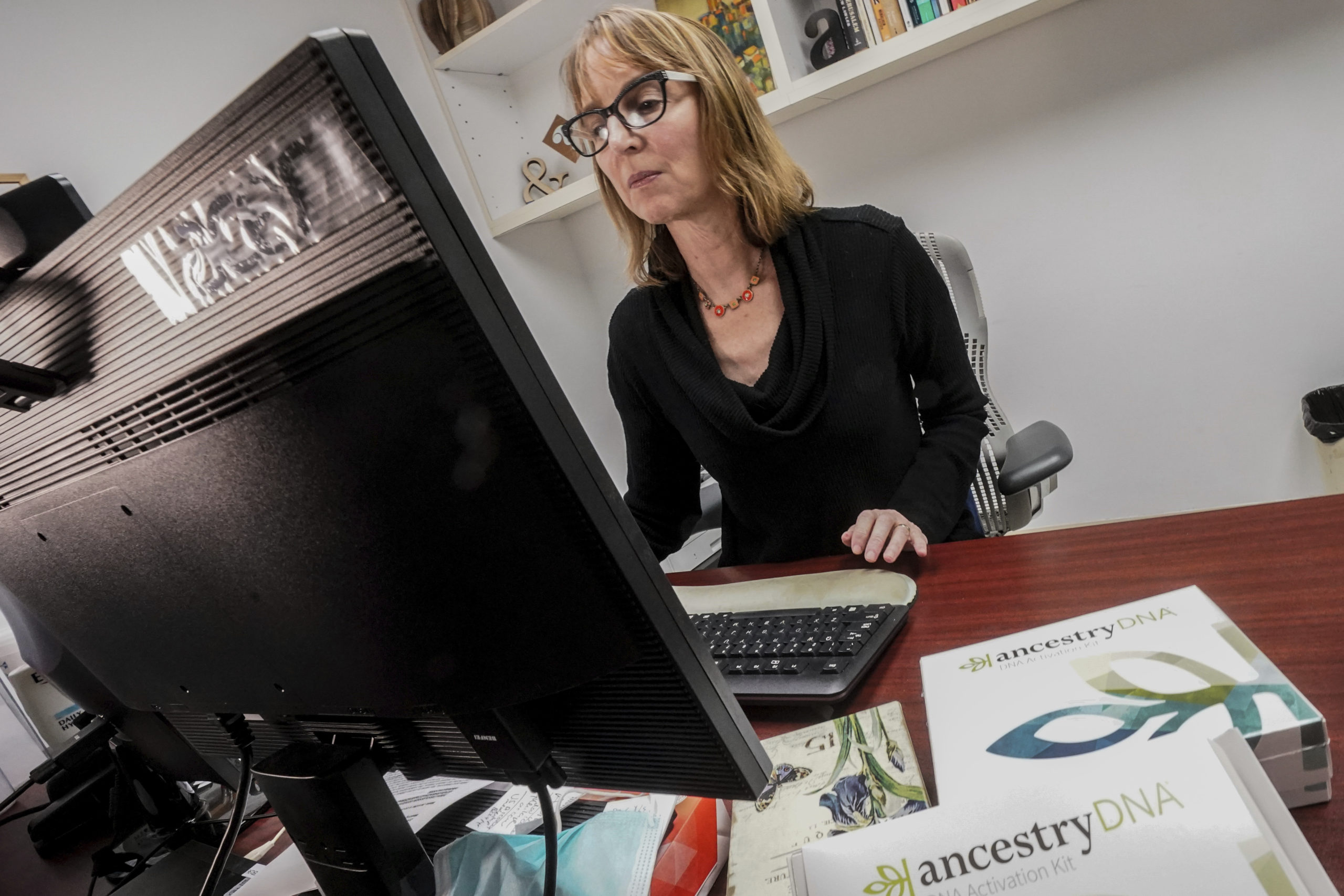
Lauren Gilbert, a senior manager at the Center for Jewish History (CJH), participate in a global online conference to launch genealogy testing for Holocaust survivors, Tuesday, Nov. 29, 2022, in New York. Photo: Bebeto Matthews
By Deepti Hajela, AP
December 1, 2022
Copy Link
Email
Facebook
X
LinkedIn
WhatsApp
Telegram
Pinterest
Print
NEW YORK (AP) — For decades, Jackie Young had been searching.
Orphaned as an infant, he spent the first few years of his life in a Nazi internment camp in what is now the Czech Republic. After World War II he was taken to England, adopted and given a new name.
As an adult, he struggled to learn of his origins and his family. He had some scant information about his birth mother, who died in a concentration camp. But about his father? Nothing. Just a blank space on a birth certificate.
That changed earlier this year when genealogists were able to use a DNA sample to help find a name — and some relatives he never knew he had.
Having that answer to a lifelong question has been “amazing,” said Young, now 80 and living in London. It “opened the door that I thought would never get opened.”
Now there’s an effort underway to bring that possibility to other Holocaust survivors and their children.
The New York-based Center for Jewish History is launching the DNA Reunion Project, offering DNA testing kits for free through an application on its website. For those who use the kits it is also offering a chance to get some guidance on next steps from the genealogists who worked with Young.
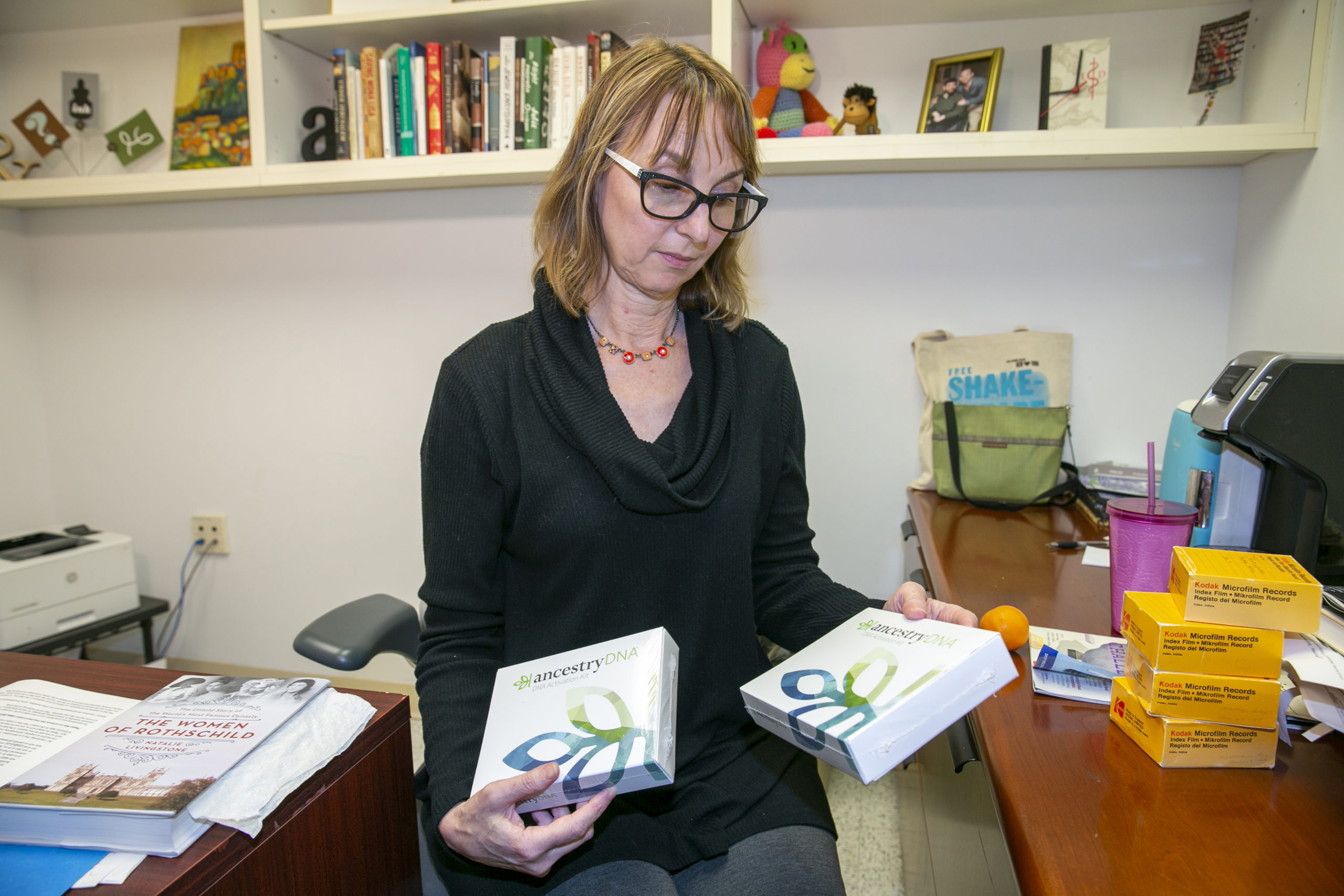
Lauren Gilbert, senior manager for Public Services for the Center for Jewish History, handles Ancestry DNA test kits the center offers free to Holocaust survivors, Tuesday, Nov. 29, 2022, in New York. Photo: Ted Shaffrey
Those genealogists, Jennifer Mendelsohn and Adina Newman, have been doing this kind of work over the last several years, and run a Facebook group about Jewish DNA and genetic genealogy.
The advent of DNA technology has opened up a new world of possibilities in addition to the paper trails and archives that Holocaust survivors and their descendants have used to learn about family connections severed by genocide, Newman said.
“There are times when people are separated and they don’t even realize they’re separated. Maybe a name change occurred so they didn’t know to look for the other person,” she said. “There are cases that simply cannot be solved without DNA.”
While interest in genealogy and family trees is widespread, there’s a particular poignancy in doing this work in a community where so many family ties have been ripped apart because of the Holocaust, Mendelsohn said.
Her earliest effort in this arena was for her husband’s grandmother, who had lost her mother in a concentration camp. That effort led to aunts and cousins that no one in her husband’s family had known about.
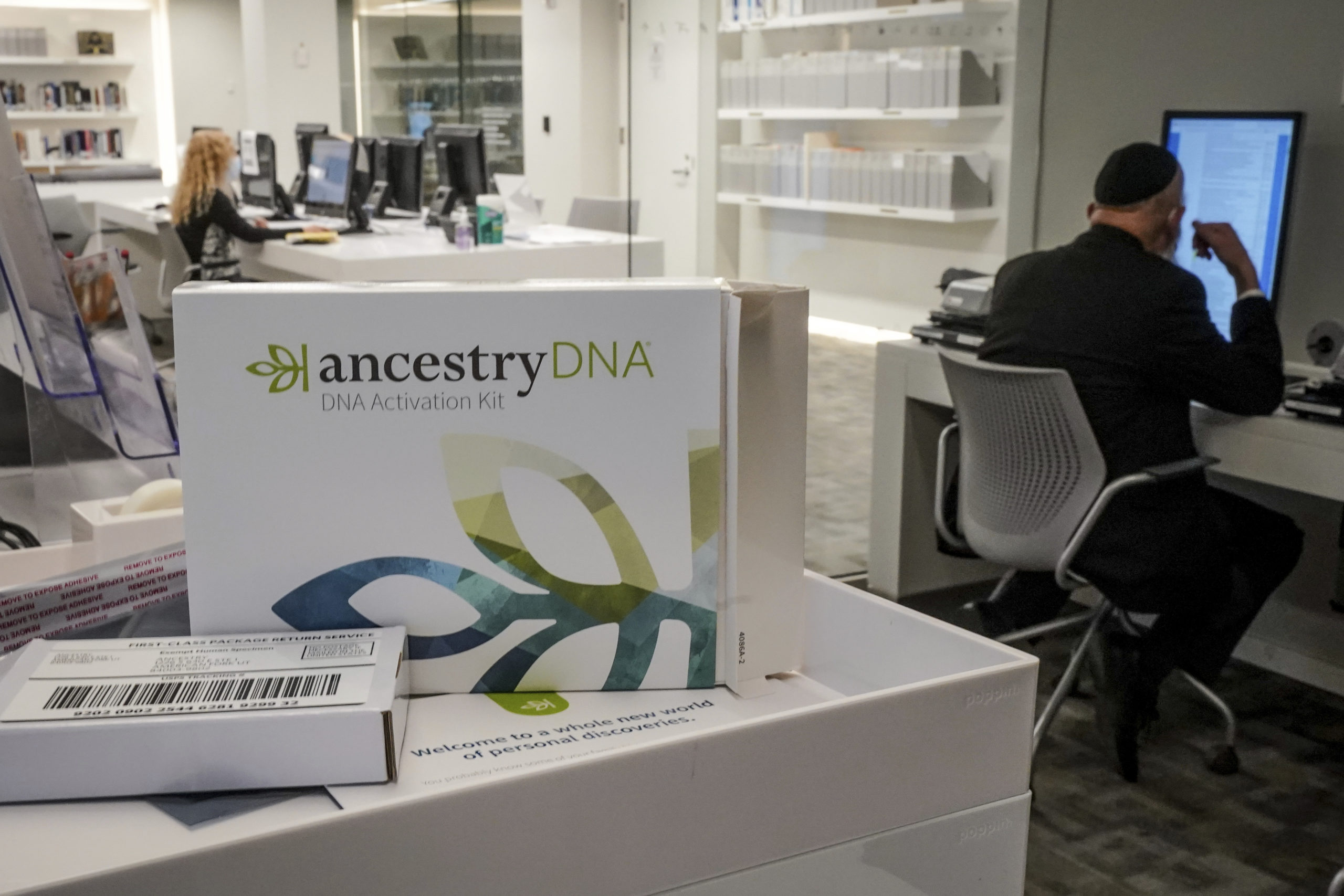
A genealogy testing kit for Ancestry/DNA is displayed in the Ackman and Ziff Family Genealogy Institute research area at the Center for Jewish History (CJH), Tuesday Nov. 29, 2022, in New York. Photo: Bebeto Matthews
Her husband’s uncle, she said, called afterwards and said, “You know, I’ve never seen a photograph of my grandmother. Now that I see photographs of her sisters, it’s so comforting to me. I can imagine what she look like.”
“How do you explain why that’s powerful? It just is. People had nothing. Their families were erased. And now we can bring them back a little bit,” Mendelsohn said.
She and Newman take pains to emphasize that there are no guarantees. Doing the testing or searching archives doesn’t mean a guarantee of finding living relatives or new information. But it offers a chance.
They and the center are encouraging people to take that chance, especially as time passes and the number of living survivors declines.
“It really is the last moment where these survivors can be given some modicum of justice,” said Gavriel Rosenfeld, president of the center.
“We feel the urgency of this,” Newman said. “I wanted to start yesterday, and that’s why it’s like, no time like the present.”
Rosenfeld said the center had allocated an initial $15,000 for the DNA kits in this initial pilot effort, which would cover about 500 of them. He said they would look to scale up further if they see enough interest.
Ken Engel thinks there will be. He leads a group in Minnesota for the children of Holocaust survivors and has already told his membership about the program.
“This is an important effort,” Engel said. “It may reveal and disclose wonderful information for them that they never knew about, may make them feel more settled or more connected to the past.”
Young definitely feels that way.
“I’ve been wanting to know all my life,” he said. “If I hadn’t known what I do know now, I think I would still felt that my left arm or my right arm wasn’t fully formed. Family is everything, it’s the major pillar of life in humanity.”
SUNSET PARK — “As a resident of Marine Park, one of the great surprises I found biking around Industry City and visiting Japan Village was to discover Bush Terminal Park. I continue to be amazed at the serene hideaways that the city offers in some of the busiest places — and, still, with an iconic view.”
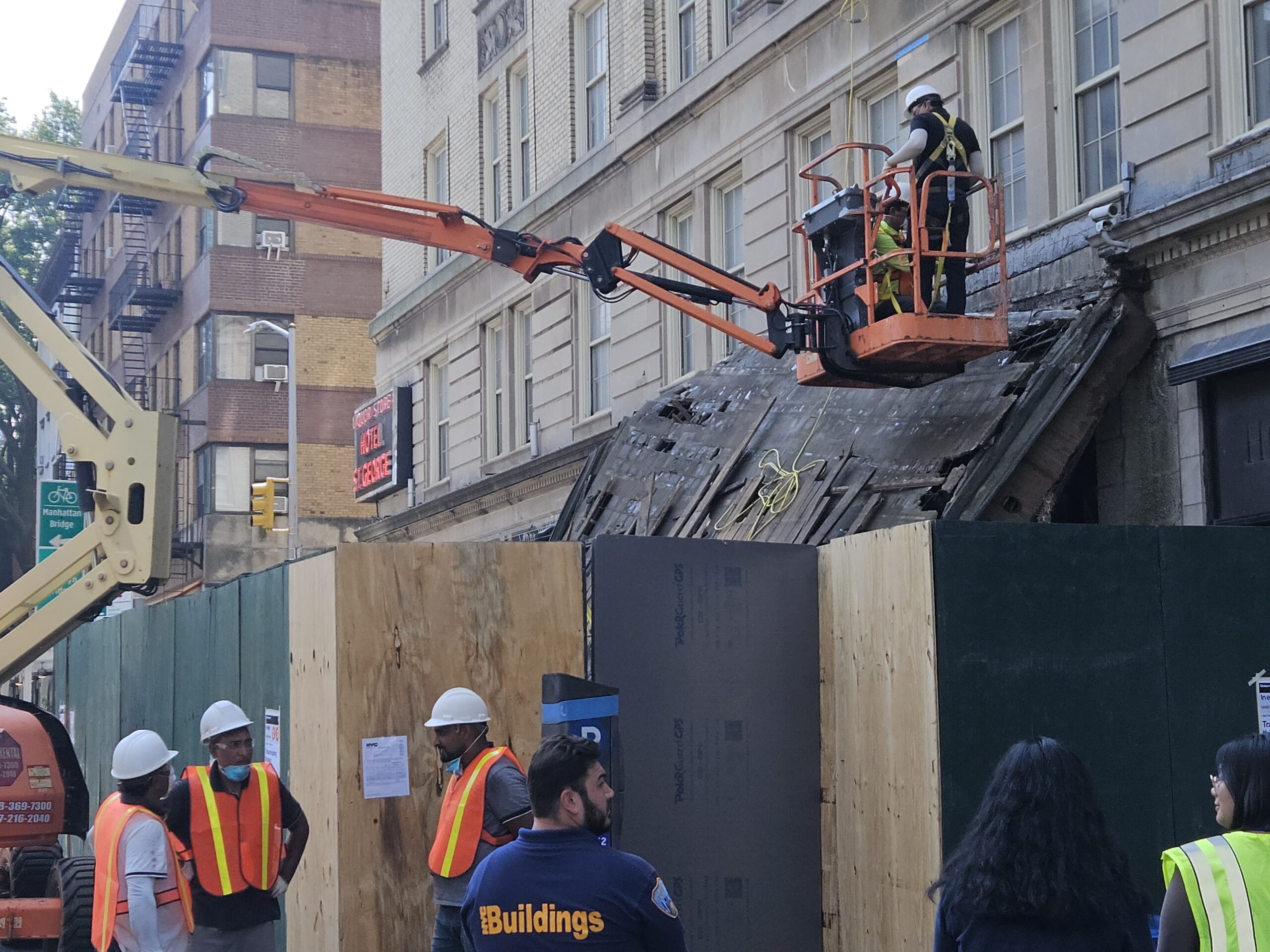
BROOKLYN HEIGHTS — ‘A miracle that no one was killed …’ That’s what neighbors are saying about the collapse of the Hotel St. George marquee. Shown in this photograph are workmen beginning the removal and repair of the historic, old neon sign at the corner, referencing a relic of Brooklyn Heights’ past: the St. George Hotel.
ATLANTIC AVENUE — Exhausted shopper with cluster of bags and goods from mall at Boerum Place stops to look at huge construction site across the street. “Is that REALLY going to be a jail??” Her male companion is reassuring, “Nothing like Rikers … this is 21st Century.”
BROOKLYN HEIGHTS — Overheard in line at one of most popular pastry outlets on Montague Street: “Hope I can get them into a camp …” A mother with two pre-schoolers in tow was showing a friend the Dodge Y flyer for Healthy Kids Day on Saturday, April 18.