A long-planned temporary shutdown of a leaking aqueduct that supplies about half of New York City’s drinking water will be pushed back a year, giving officials more time to prepare for the monthslong closure.
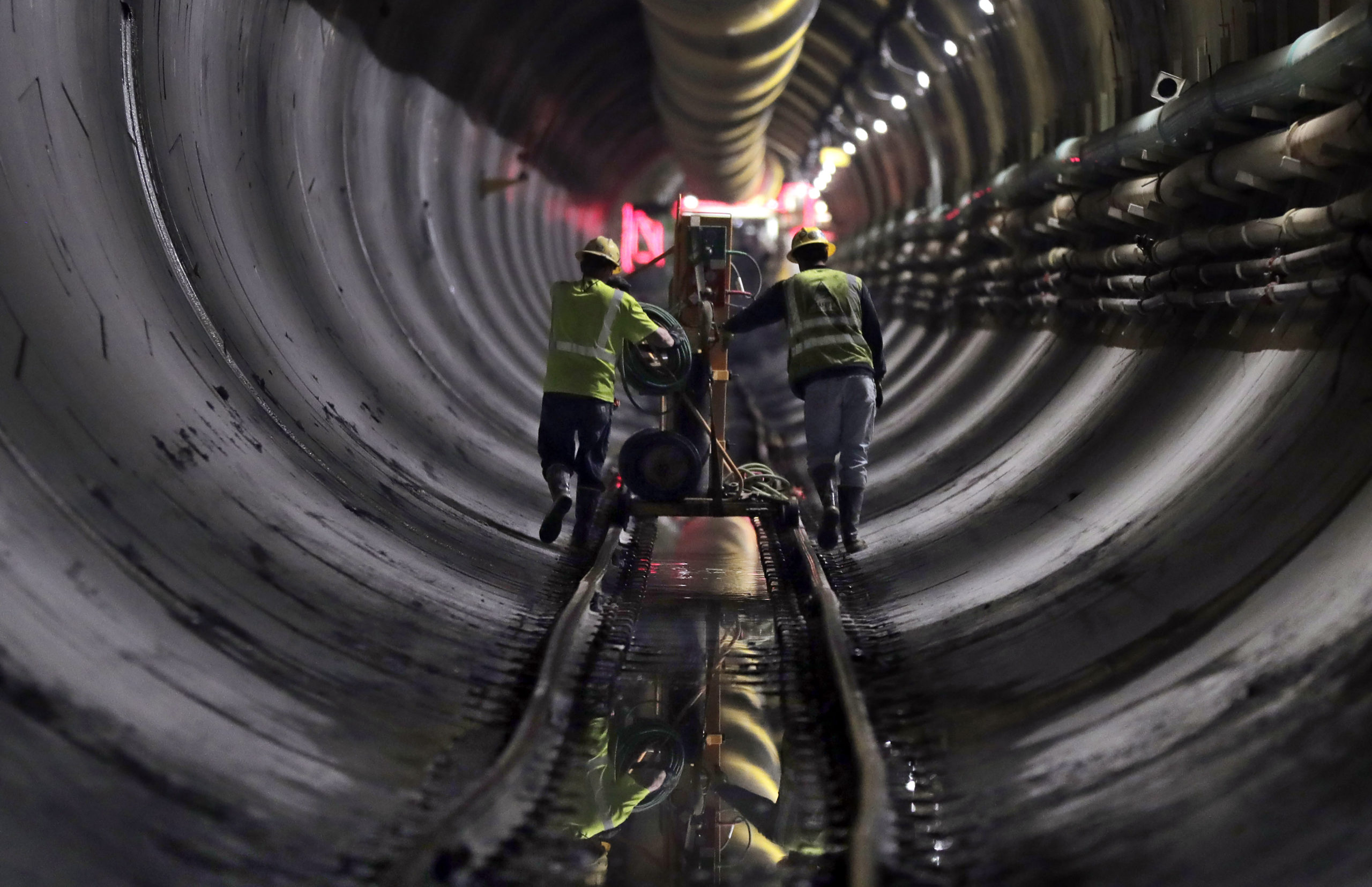
The city has spent nine years working on a $1 billion bypass tunnel far beneath the Hudson River at Newburgh — about 45 miles north of New York City — to replace a profusely leaking section of the Delaware Aqueduct. Connecting the bypass tunnel will require shutting down the aqueduct for five to eight months, increasing reliance on other water sources.
The shutdown had been planned for this fall.
But the city’s Department of Environmental Protection said Thursday it wants more time to make sure its system can reliably deliver sufficient water from other sources. It also wants to provide extra time for several water supply projects in upstate New York, where many communities depend on the city system.
“We want to make sure that everything is spot on, ready to go,” said Paul Rush, deputy commissioner for the city’s Department of Environmental Protection.
The 85-mile (137-kilometer ) aqueduct is crucial part of a sprawling water supply system comprising 19 reservoirs, three lakes and connecting tunnels that is sometimes called an engineering feat as impressive as the aqueducts of ancient Rome.
Built mostly during World War II, the Delaware Aqueduct carries about 600 million gallons a day, entirely by gravity, from four Catskill Mountain region reservoirs to a holding reservoir north of the city.
The environmental department has been working for years to make sure the aqueduct’s shutdown would not be noticed by customers turning on their faucets. The city intends to rely more heavily on water from the complementary Catskill Aqueduct and from reservoirs in suburban Westchester County. The city also has significantly reduced its water usage through conservation efforts.
Rush said the extra time will give the city time to test two pumping stations north of the city. Also, the Croton Filtration Plant in the Bronx is being connected to a third city water supply tunnel, and engineers want times to test the performance new configuration.
The extra year will ensure that local water infrastructure projects related to the shutdown can be completed in the Town of Newburgh, Wawarsing and Bedford Falls.
The agency wants to start the shutdown in the fall, after the peak demand months of summer have passed.