Streets of ‘Old New York’ shine through at new subway exhibit
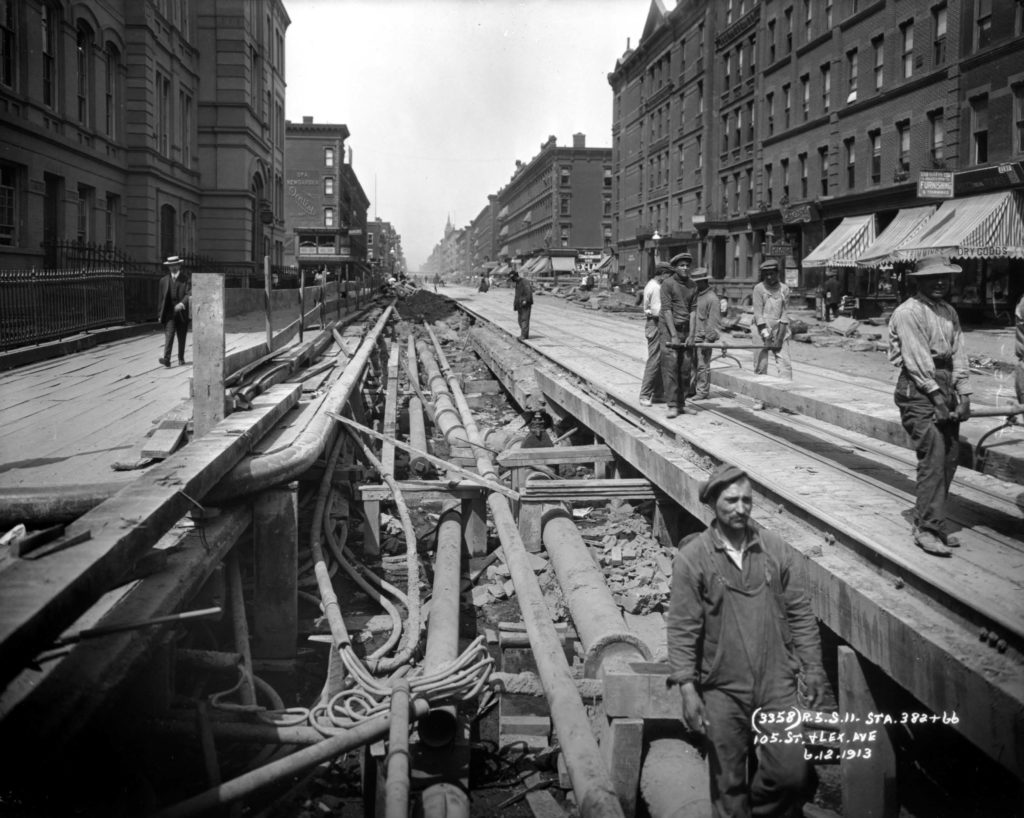
Lexington Avenue, between 105th and 106th Streets, Manhattan, 1913.
Photograph by Pierre P. Pullis. Lundin Collection,
Courtesy of the New York Transit Museum
By Alex Williamson
February 18, 2020
Copy Link
Email
Facebook
X
LinkedIn
WhatsApp
Telegram
Pinterest
Print
When construction of New York City’s subway system first began, transit officials of the early 20th century did what any modern builder would do: They dispatched professional surveyors to measure, photograph and document the areas where tunnels were to be dug.
The resulting photographs gave the city more than it bargained for. Not only did the photographs serve their original purpose by providing precise documentation of the survey area, but the surviving prints, now on display at the Transit Museum, offer a fascinating glimpse at daily life in a city that was changing rapidly alongside its mass transit system.
The museum’s “Streetscapes & Subways” exhibit features photographs by brothers Pierre P. and Granville W. Pullis, who, over a 30-year period in the early 1900s, documented the beginning, middle and end of the subway system’s construction.
The photos not only captured the digging of the tunnels and trenches where trains would later run, but children playing in the streets, shopkeepers vending their wares and old-school architectural elements that have long since been replaced.
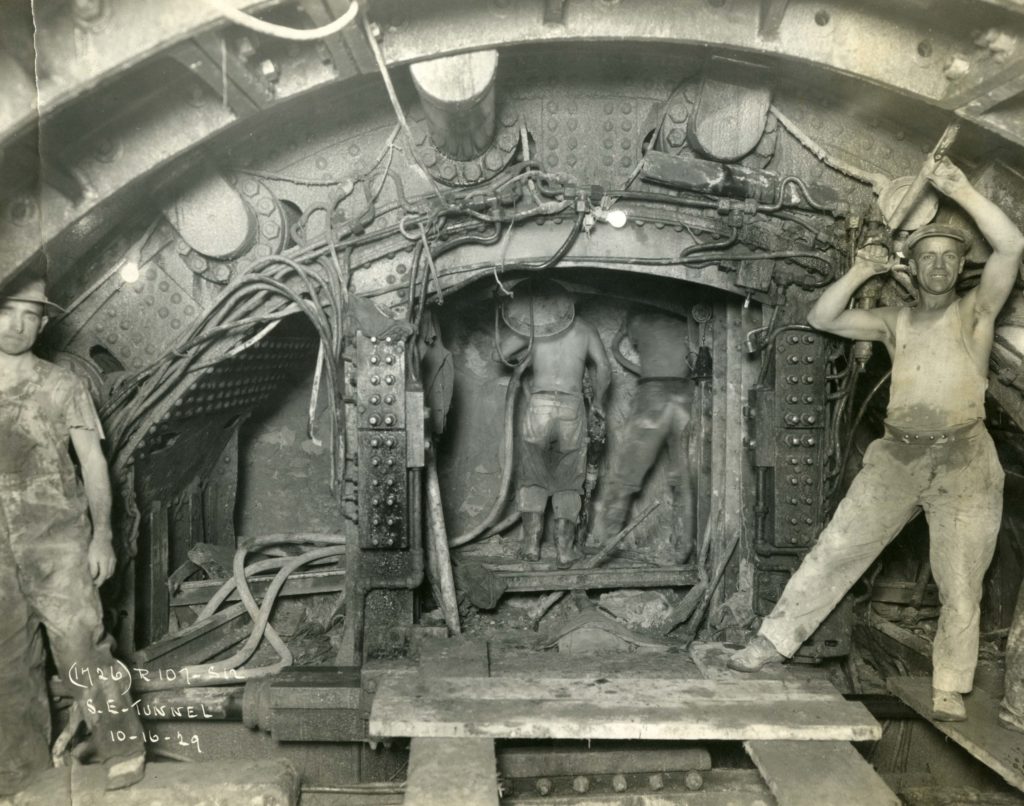
Workers in the Greenpoint Tube, 1929. Photograph by Pierre P. Pullis. Eugene Casey Tunneling Collection, Courtesy of the New York Transit Museum
The Pullis brothers created most of the exhibit’s photos on glass plates using an 8×10 camera — a piece of cutting-edge technology favored by surveyors of the time because, unlike film, the glass plates weren’t susceptible to bending. The plates were often washed for reuse, so that any of the brothers’ photos survived is remarkable, according to museum curators.
“The Transit Museum is incredibly proud to be the stewards of the Pullis collection, which is recognized as one of, if not the, most comprehensive repositories of images related to original subway construction in existence,” said Concetta Bencivenga, director at the Transit Museum.
“Streetscapes & Subways: Photographs by Pierre P. and Granville W. Pullis” is open to the public through January 17th, 2021 at the New York Transit Museum, located in a decommissioned subway station at 99 Schermerhorn St. in Downtown Brooklyn.
SUNSET PARK — “As a resident of Marine Park, one of the great surprises I found biking around Industry City and visiting Japan Village was to discover Bush Terminal Park. I continue to be amazed at the serene hideaways that the city offers in some of the busiest places — and, still, with an iconic view.”
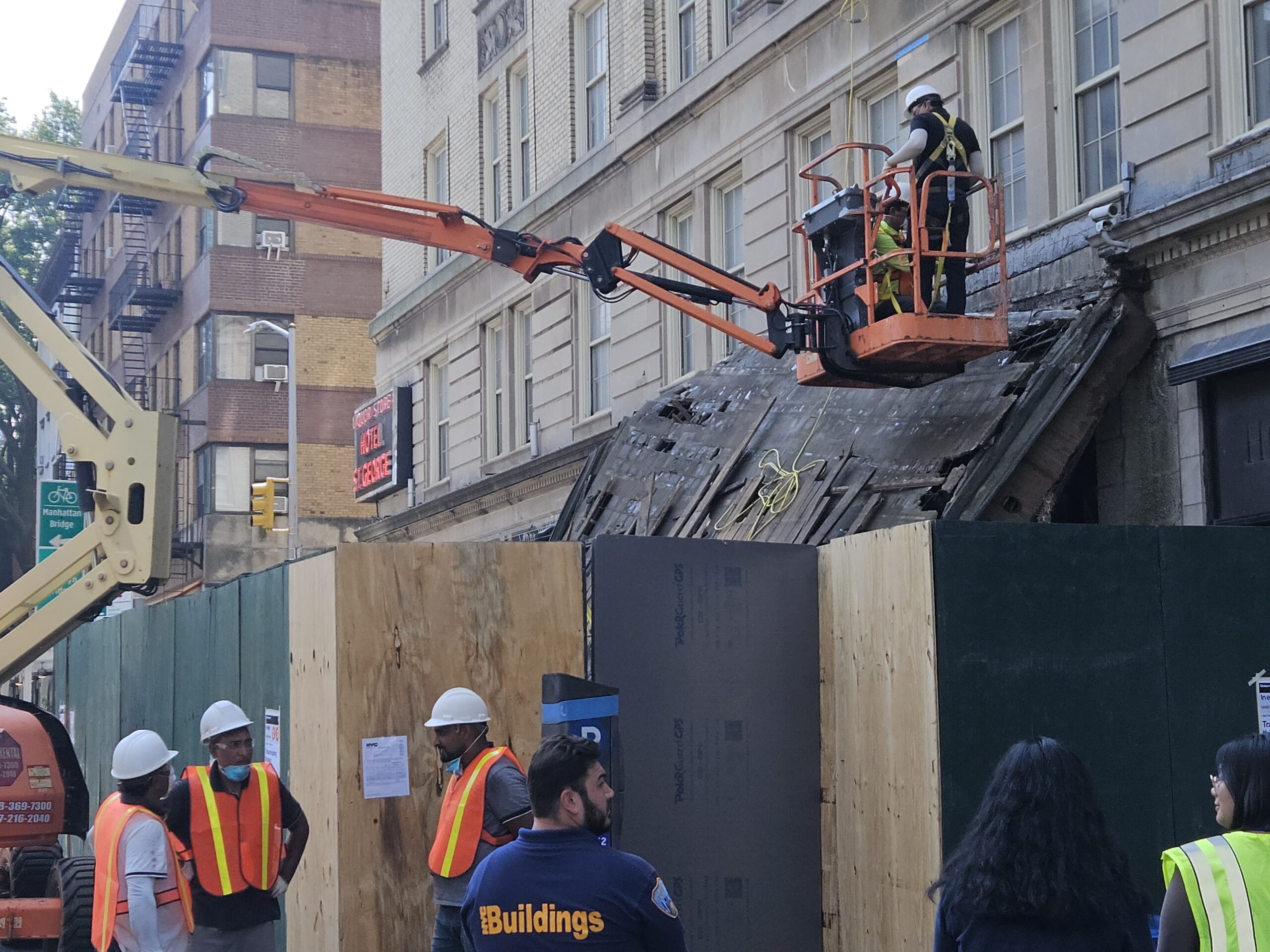
BROOKLYN HEIGHTS — ‘A miracle that no one was killed …’ That’s what neighbors are saying about the collapse of the Hotel St. George marquee. Shown in this photograph are workmen beginning the removal and repair of the historic, old neon sign at the corner, referencing a relic of Brooklyn Heights’ past: the St. George Hotel.
ATLANTIC AVENUE — Exhausted shopper with cluster of bags and goods from mall at Boerum Place stops to look at huge construction site across the street. “Is that REALLY going to be a jail??” Her male companion is reassuring, “Nothing like Rikers … this is 21st Century.”
BROOKLYN HEIGHTS — Overheard in line at one of most popular pastry outlets on Montague Street: “Hope I can get them into a camp …” A mother with two pre-schoolers in tow was showing a friend the Dodge Y flyer for Healthy Kids Day on Saturday, April 18.