Housing Court Bar Association hears from Judge Barany on substantial rehabilitation
Bar leaders have doubts about alternative dispute resolution working in Housing Court
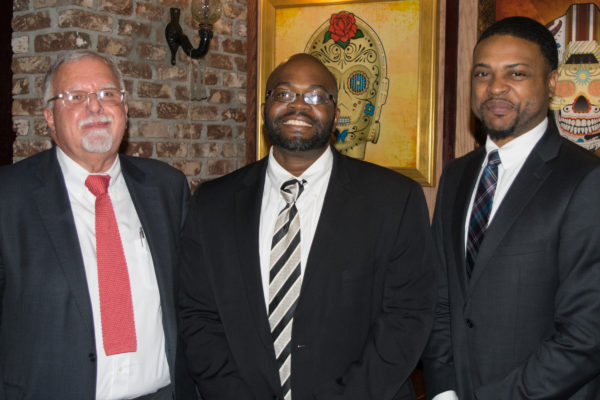
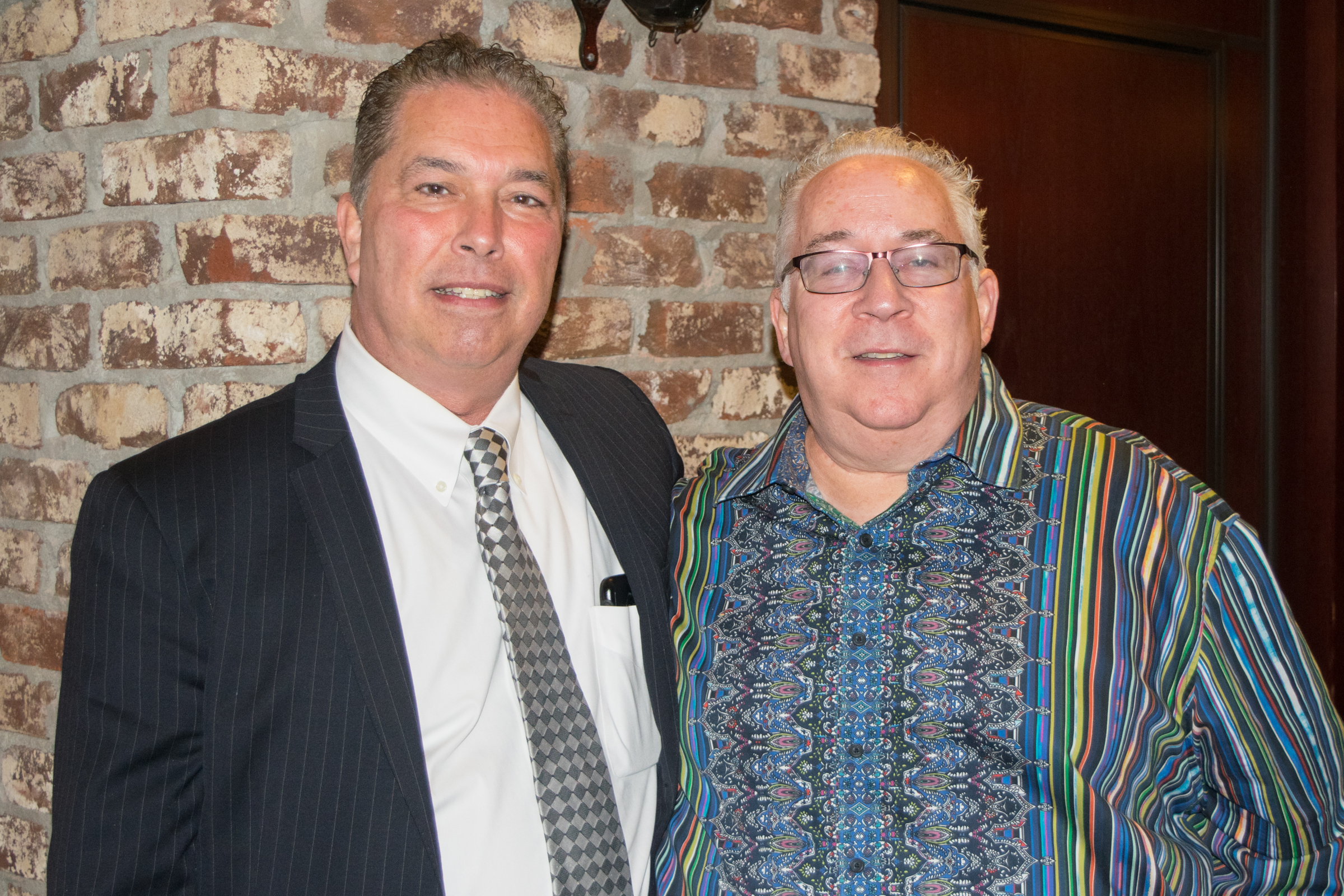
Judge Kenneth Barany (left) joined President Michael Rosenthal and the Kings County Housing Court Bar Association during its monthly meeting to discuss substantial rehabilitation of properties.
Eagle photos by Rob Abruzzese
There have been big changes to the rent laws in New York State in recent months, but Judge Kenneth Barany attended this month’s meeting of the Kings County Housing Court Bar Association to talk about one of the few areas of the law that hasn’t changed — substantial rehabilitation.
The judge explained that substantial rehabilitation of properties in New York City is not merely adding a new room onto a two-family house, but a renovation and replacement of most of a building, at least 75 percent.
“The whole purpose of the statute was to create housing stock from property that was either already dilapidated or being converted from commercial use,” Judge Barany said. “The reward is that if the landlord does that, and does it properly, they’re not subject to any type of rent regulation. The whole purpose is to give them a financial incentive to recoup that investment.”
From left: Hal Rose, Michael Rosenthal, James Kasdon, Michael Guttentag and Charles Wasserman.
The judge explained that prior to 1995, the guidelines for substantial rehabilitation came mostly from case law, but that in 1995 the Department of Homes and Community Renewal (DHCR) adopted an operational bulletin.
“There are two key elements,” Barany said. “The first is if it’s residential in nature, it has to have been in a deteriorated condition. The other is a substantial rehabilitation.”
He explained that under the rent stabilization law, DHCR was allowed to set a guideline that required that 75 percent of building systems be replaced for the work to count as a substantial rehabilitation. He did note that there are exceptions for scenarios in which certain components do not require replacement or if part of a structure is “desirable or required by law because of its aesthetic or historic merit.”
From left: Turquoise Haskin, Inga O’Neale and Judith Aarons.
Judge Barany discussed some of the key issues surrounding the law, including a rule that states that if a one or two tenants stay in a building during an approved substantial rehabilitation, they can remain in the building subsequently as regulated tenants. However, once they move out, their apartments will become deregulated.
The judge explained that the key to proving exceptions is providing a lot of evidence.
“I find that half the times that people are moving, trying to prove or oppose issues of substantial deregulation, they don’t do enough of an investigation,” Judge Barany said. “In the back of my outline, I talk about experts, experts, experts and photos, photos, photos.”
From left: Alan Redner, Terry Hinds and Michael Bailey.
Members of the bar association also had a discussion about alternative dispute resolution (ADR), or mandated mediation, that will be required in all Housing Court cases.
So far, it is only required in the double pro se part of Brooklyn Housing Court, but it will soon be extended to every case in all of New York City’s housing courts. Parties will be able to opt out of the free one-hour required session, but only after attending the initial consultation with mediators.
“This is not without complaints,” said KCHCBA President Michael Rosenthal. “There were about 28 people at the meeting who were from various legal aid or legal service providers and everyone seemed opposed to it for various reasons. We were opposing it for different reasons, but it’s unanimously opposed, basically.”
The biggest issue in Brooklyn is one of space. The current Housing Court situation in the borough is cramped and there is no obvious place even to hold ADR meetings, so there has been some speculation that meetings will take place outside of the courthouse.
“We’re already covering a 9:30, 10:30 and 11:30 a.m. calendar in the morning and a 2 p.m. calendar in the afternoon, so when do you think the attorneys will be free to leave the building, go to another building for mediation and then still be able to cover their cases that are on the calendar?” Rosenthal asked rhetorically. “Do we all have to hire additional people just to send to mediation? This doesn’t seem practical or make any sense.”
SUNSET PARK — “As a resident of Marine Park, one of the great surprises I found biking around Industry City and visiting Japan Village was to discover Bush Terminal Park. I continue to be amazed at the serene hideaways that the city offers in some of the busiest places — and, still, with an iconic view.”
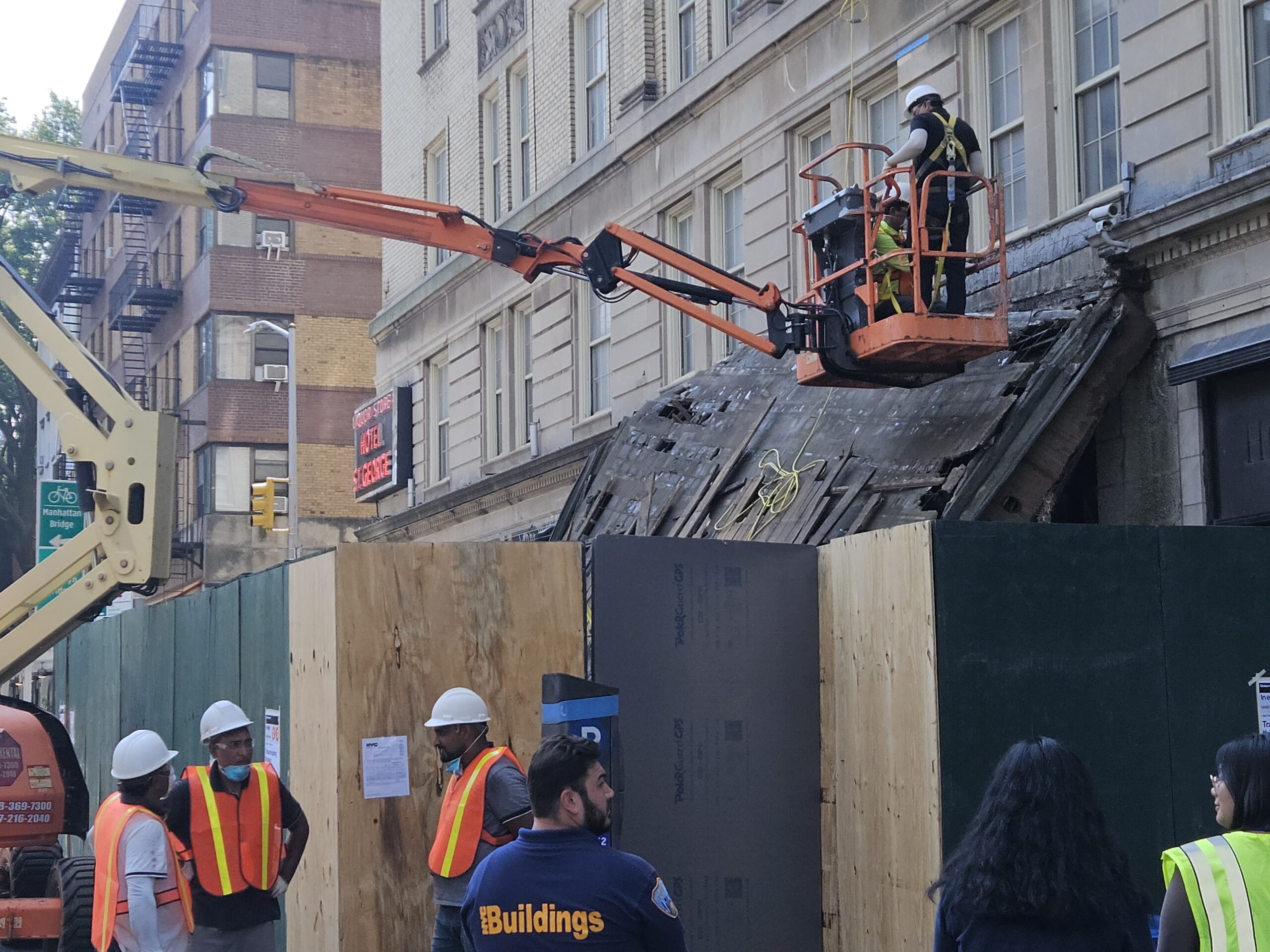
BROOKLYN HEIGHTS — ‘A miracle that no one was killed …’ That’s what neighbors are saying about the collapse of the Hotel St. George marquee. Shown in this photograph are workmen beginning the removal and repair of the historic, old neon sign at the corner, referencing a relic of Brooklyn Heights’ past: the St. George Hotel.
ATLANTIC AVENUE — Exhausted shopper with cluster of bags and goods from mall at Boerum Place stops to look at huge construction site across the street. “Is that REALLY going to be a jail??” Her male companion is reassuring, “Nothing like Rikers … this is 21st Century.”
BROOKLYN HEIGHTS — Overheard in line at one of most popular pastry outlets on Montague Street: “Hope I can get them into a camp …” A mother with two pre-schoolers in tow was showing a friend the Dodge Y flyer for Healthy Kids Day on Saturday, April 18.