Black History Month award named after Justice Thompson at Appellate Division ceremony
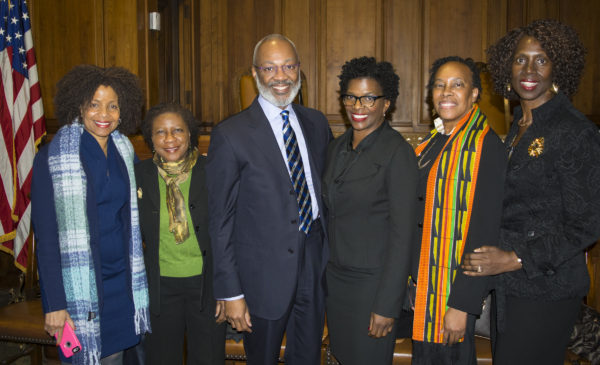
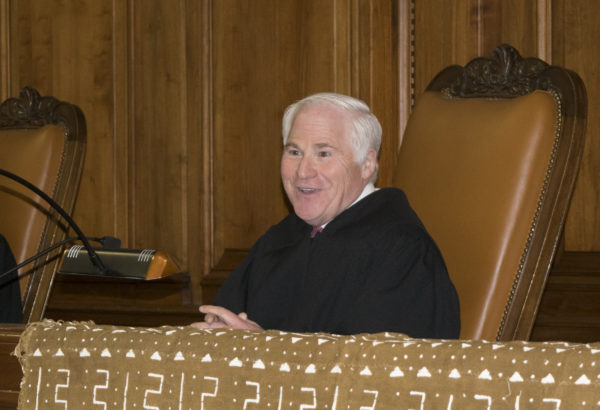
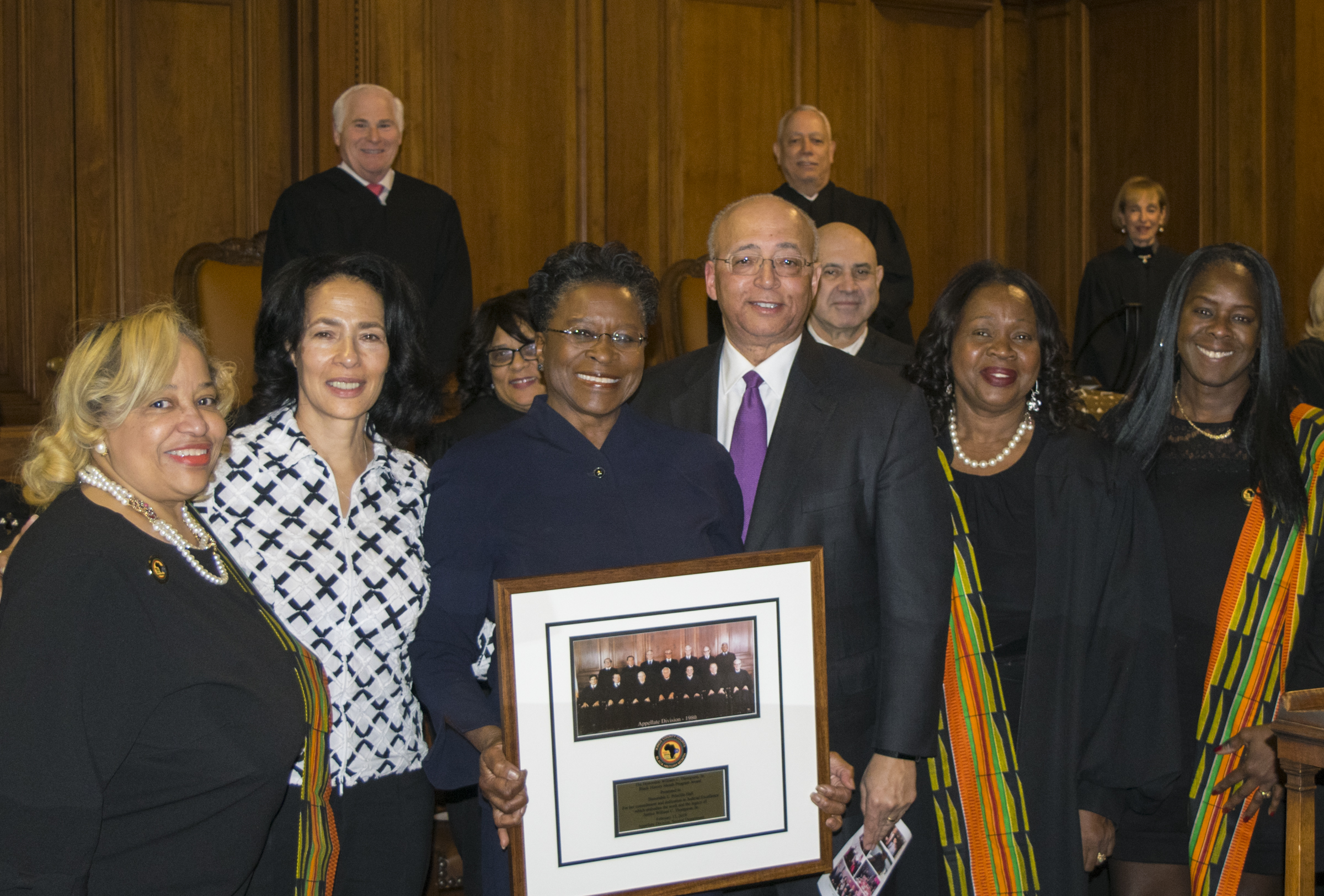
The Brooklyn Black History Month Committee named an award after the late Justice William Thompson during a ceremony at the Appellate Division, Second Department courthouse on Wednesday. The first honoree of the award was Hon. L. Priscilla Hall. Pictured from left: Co-chairperson of the Black History Month Committee Hon. Deborah Dowling; Gail Thompson-Lake; Hon. L. Priscilla Hall; William C. Thompson Jr.; Hon. Sylvia Hinds-Radix; and co-chairperson Leah Richardson. Eagle photos by Rob Abruzzese
By Hannah Grossman
February 15, 2019
Copy Link
Email
Facebook
X
LinkedIn
WhatsApp
Telegram
Pinterest
Print
The Appellate Division, Second Judicial Department, held a Black History Month ceremony on Wednesday that also served as another memorial for the late Justice William C. Thompson, a pioneer politician and judge who fought in the segregated “Buffalo Soldiers” unit during WWII.
Thompson earned a Purple Heart for his time in the Buffalo Soldiers unit. After he returned home, he became a local politician — first as Brooklyn’s first black state senator and then as a member of City Council.
Thompson eventually gave up politics to become a judge. He was the first black administrative judge in the Brooklyn Supreme Court and then the first black judge to sit on the Appellate Division, Second Judicial Department.
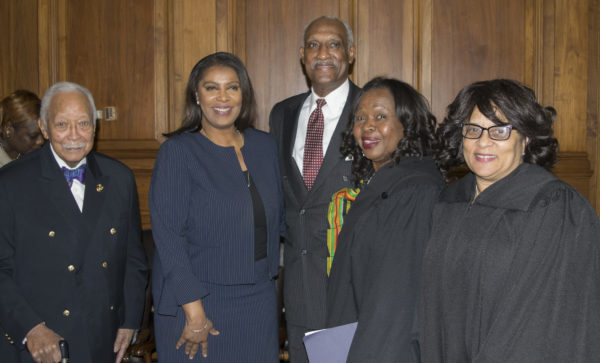
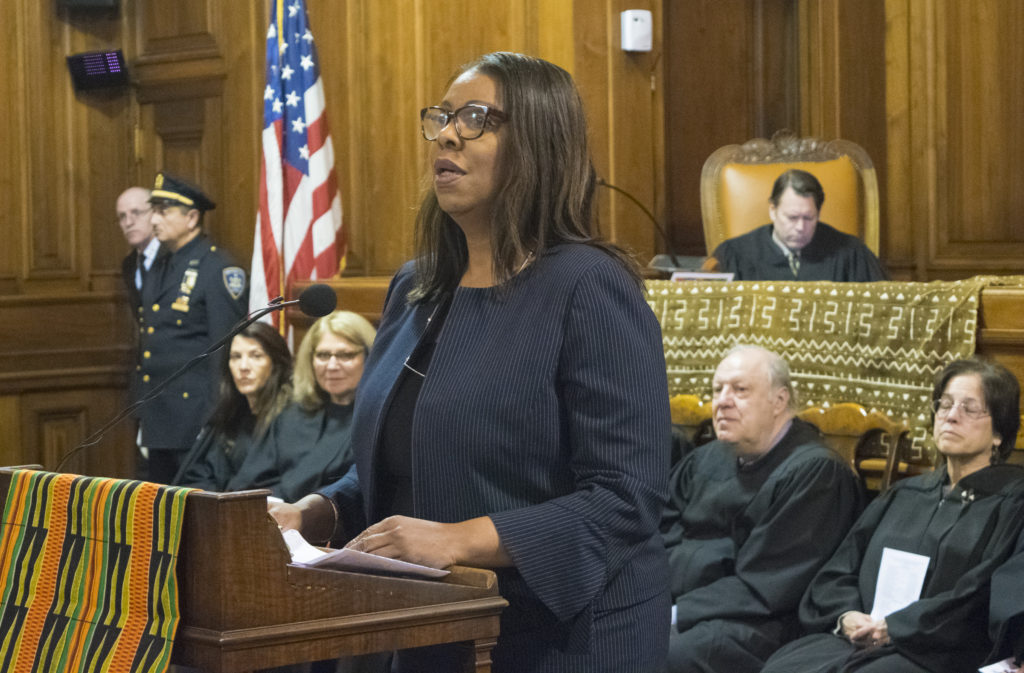
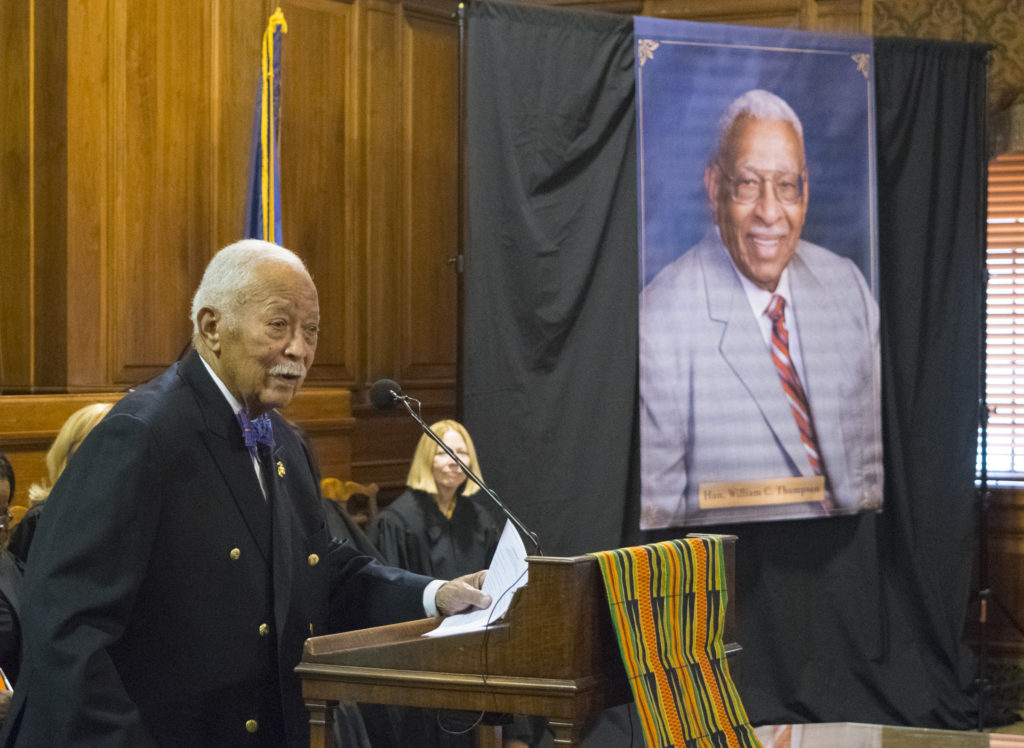
From left: Former Mayor David Dinkins, Attorney General Letitia James, Hon. Plummer Lott, Hon. Sylvia Hinds-Radix and Hon. Cheryl Chambers.
Justice Sylvia Hinds-Radix, a friend of the late judge who helped to organize the event along with Justice Sylvia Ash and members of the Appellate Division, said that she had planned to honor Justice Thompson for BHM prior to his death and that he was really looking forward to it.
“He was very happy to have this program at the Appellate Division,” Hon. Judge Hinds-Radix said. “He told me that he was going to come today even if he needed an ambulance to get here.”
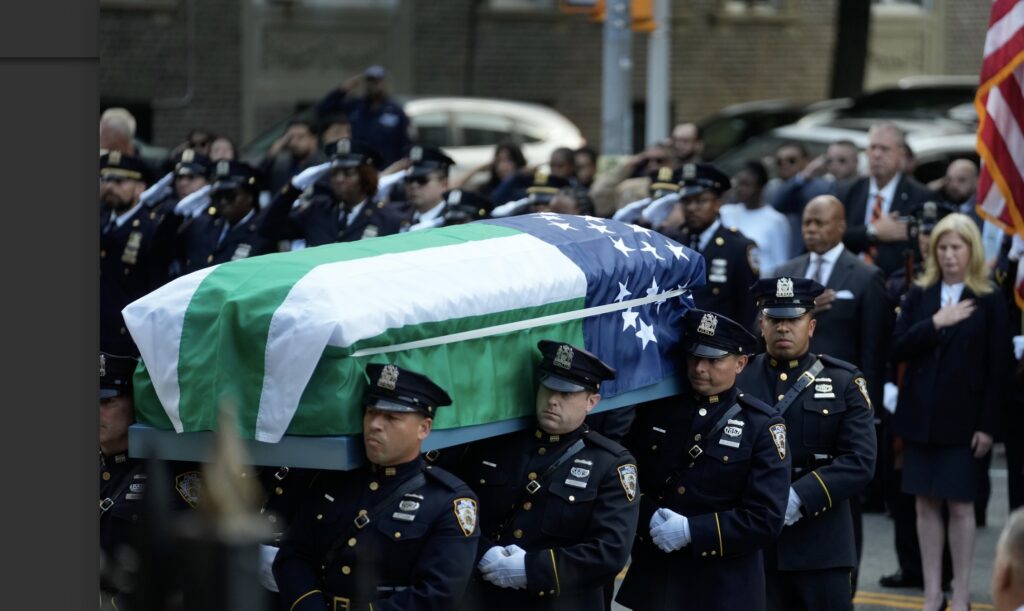
Unfortunately, Justice Thompson died on Christmas Eve, so a long list of his friends, family members and former colleagues showed up to honor him instead.
Former Mayor David Dinkins, the first and only black mayor in the history of New York City, and Attorney General Letitia James, the first black woman elected to a statewide position, were two of the attendees, along with the judge’s son, former mayoral candidate William Thompson Jr. and his sister Gail Thompson-Lake.
From left: Hon. Carolyn Wade, Hon. Ingrid Joseph, Roger V. Archibald, Hon. Dena Douglass, Hon. Wavny Toussaint and Hon. Sylvia Ash.
Thompson Jr. presented the inaugural Justice William Thompson Award to the recently retired Hon. L. Priscilla Hall, who also sat on the Appellate Division, Second Department, bench.
According to the speakers, Justice Thompson and Justice Hall were two people of the same mentality. They both “unboxed” themselves out of the odds posed by segregation and took their futures into their own hands.
“It takes a special kind of woman to refuse to give up or to be sidelined,” James said of Justice Hall. Judge Priscilla Hall “refused to take no for an answer” during a time when people of color, and in particular, women of color, were systemically capped out of rising professionally, James said.
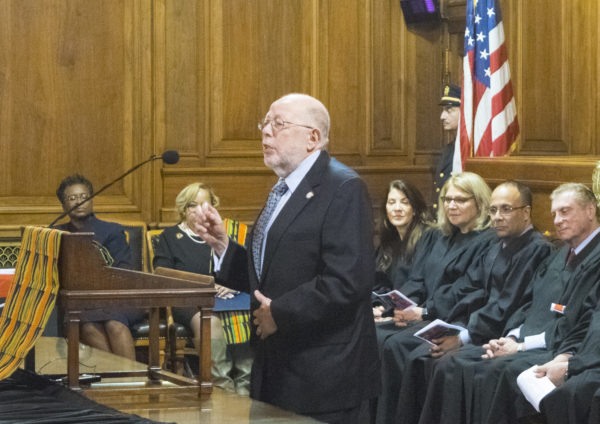
Brooklyn Bar Association President David Chidekel.
The other speakers included Hon. Alan Scheinkman, the presiding justice of the Appellate Division, Second Department; Hon. Cheryl Chambers; Hon. Plummer Lott; Hon. David Chidekel, president of the Brooklyn Bar Association; and Hon. Ruth Shillingford, president of the Judicial Friends Association; and Hon. Deborah Dowling, co-chairperson of the Brooklyn Courts’ Black History Month Committee.
In his speech, Justice Scheinkman talked about the history of Black History Month and how it started as “Negro History Week” in 1926. He explained that when it first started, BHM fell between the birthday of Abraham Lincoln on Feb. 11 and the birthday of Frederick Douglass on Feb. 14.
“If a race has no history, then it has no worthwhile tradition,” said presiding Justice Scheinkman. “If we don’t remember our history, we don’t know where we came from, we don’t know how we got here, and we will certainly will have less regard going forward.”
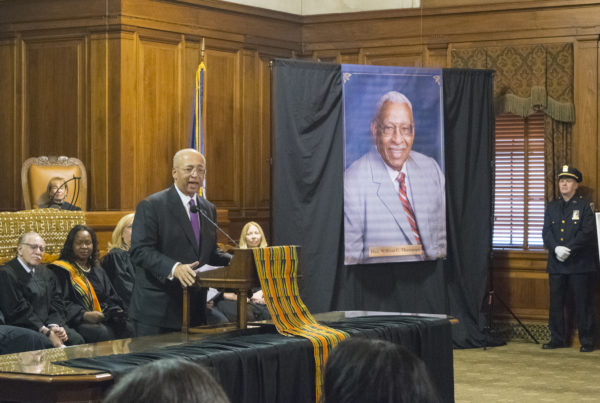
William Thompson Jr. speaks about his dad, a true trailblazer of Brooklyn.
Just as much of Justice Thompson’s career was galvanized by the racism he saw in the army and in New York City after he returned home from the war, Justice Hall recounted her experience with racism while living in Texas before she moved to Chicago and how it spurred her into action.
She also recalled a story of her father, who marched alongside Martin Luther King Jr. in Alabama.
Hon. Alan Scheinkman, presiding justice of the Appellate Division, Second Department, said, “We can feel Justice Thompson’s presence here in the courtroom today.”
On Justice Thompson, Hall recalled that he was never bitter, and despite having lived through the segregation era he stuck to his belief that “if you treat people well they will treat you well.”
In her final thoughts before she accepted the award she said, “Thanks to you, [Justice Thompson], I am living the dream.”
SUNSET PARK — “As a resident of Marine Park, one of the great surprises I found biking around Industry City and visiting Japan Village was to discover Bush Terminal Park. I continue to be amazed at the serene hideaways that the city offers in some of the busiest places — and, still, with an iconic view.”
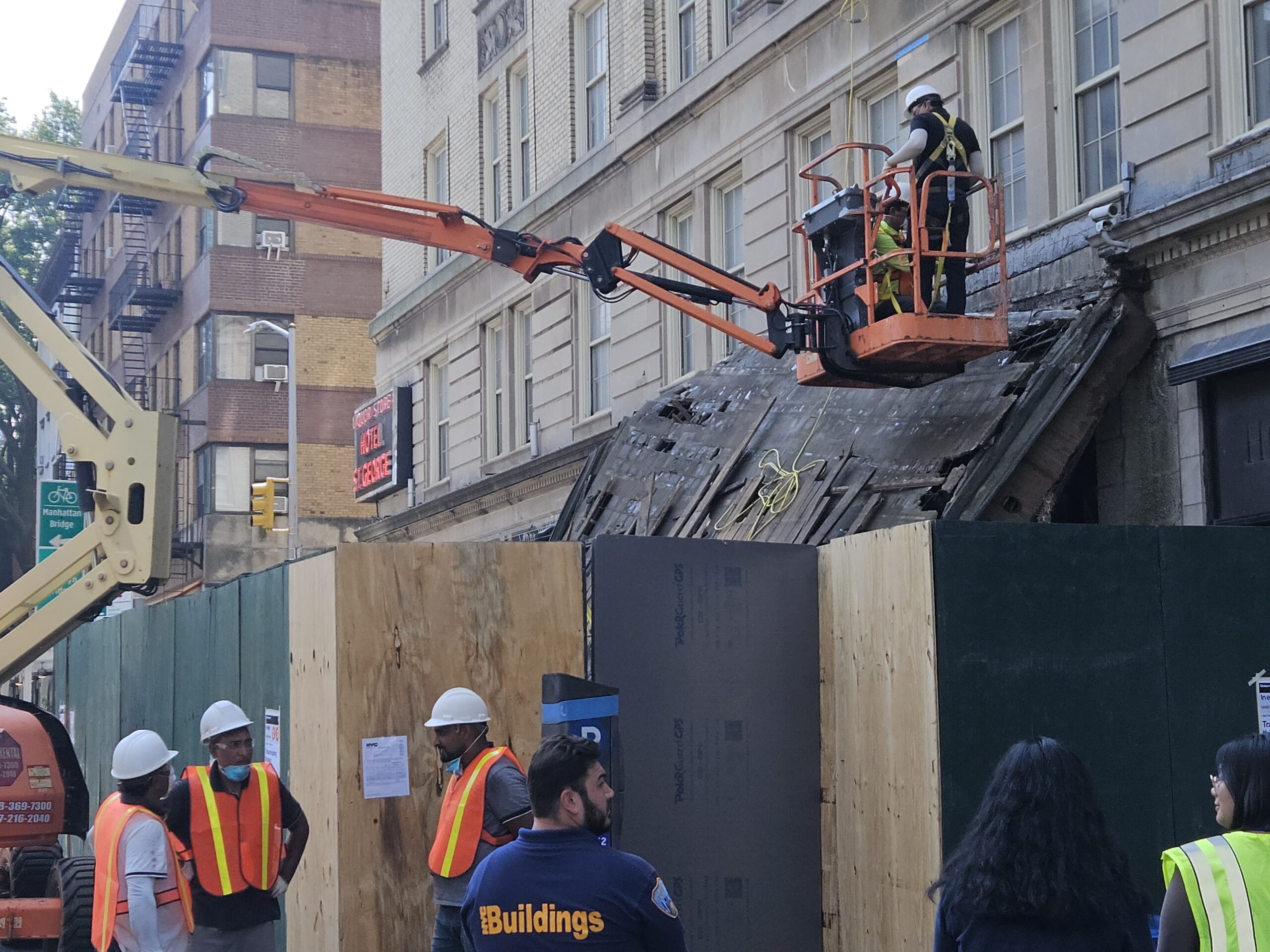
BROOKLYN HEIGHTS — ‘A miracle that no one was killed …’ That’s what neighbors are saying about the collapse of the Hotel St. George marquee. Shown in this photograph are workmen beginning the removal and repair of the historic, old neon sign at the corner, referencing a relic of Brooklyn Heights’ past: the St. George Hotel.
ATLANTIC AVENUE — Exhausted shopper with cluster of bags and goods from mall at Boerum Place stops to look at huge construction site across the street. “Is that REALLY going to be a jail??” Her male companion is reassuring, “Nothing like Rikers … this is 21st Century.”
BROOKLYN HEIGHTS — Overheard in line at one of most popular pastry outlets on Montague Street: “Hope I can get them into a camp …” A mother with two pre-schoolers in tow was showing a friend the Dodge Y flyer for Healthy Kids Day on Saturday, April 18.