Mamdani floats insurance fix for rent-stabilized buildings
The effort will leverage taxpayer funds to curb runaway insurance costs for landlords managing tens of thousands of apartments
Tenement buildings line a residential block in the North Bronx, Nov. 17, 2025. Photo: Ben Fractenberg/THE CITY
By Samantha Maldonado, THE CITY
April 16, 2026
Copy Link
Email
Facebook
X
LinkedIn
WhatsApp
Telegram
Pinterest
Print
Mayor Zohran Mamdani on Thursday will unveil a city-backed insurance program for subsidized and rent-stabilized buildings across the five boroughs.
The privately run, not-yet-launched program — which Mamdani will announce at the Citizens Housing and Planning Council’s annual luncheon in the afternoon — aims to issue property and liability insurance policies for buildings covering 20,000 apartments starting in 2027, scaling up to five times that size by 2030.
The effort, which will leverage an unknown amount of taxpayer funds, aims to bring down insurance costs for landlords who own subsidized buildings with regulated apartments.
Insurance costs are a huge driver of increasing expenses for landlords. Premiums doubled in four years for subsidized housing in New York City owned by community development corporations and nonprofit entities, according to multiple reports, while another analysis of subsidized housing found insurance costs more than doubled over a six year period.
“The risk profile of projects hasn’t gone up threefold since 2018, but the costs have,” Deputy Mayor for Housing and Planning Leila Bozorg said on a briefing call Wednesday. “We’re not trying to replace the entire insurance market. We want to create a program that can compete in it by operating much more efficiently.”
The move comes amid Mamdani’s signature push to lower rents amid the city’s housing crisis.
Deputy Mayor for Housing and Planning Leila Bozorg speaks at a press conference alongside Mayor Zohran Mamdani about installing electrical heat pumps at a Far Rockaway NYCHA complex, Feb. 4, 2026. Photo: Ben Fractenberg/THE CITY
Nationally, homeowners and landlords have faced rising insurance rates, loss of coverage and limited choices. Those trends threaten New Yorkers’ abilities to afford their homes and the financial feasibility of operating affordable housing. Out-of-control insurance costs come thanks to worsening disasters fueled by climate change, increased rates that insurance companies have to pay to insure themselves and rising inflation, as THE CITY previously reported.
Bozorg said the city’s program will not be “an insurer of last resort” and that landlords would have to apply to the program. They would have to meet a certain, to-be-determined criteria to be eligible, she said.
Big savings for landlords
This would make New York’s attempt to create a publicly funded, privately managed insurance provider different from some other insurance programs created elsewhere in the U.S., including in Florida, where a government entity stepped in to offer insurance to property owners who were unable to obtain policies.
Bozorg said she expects insurance costs to come down between 20% to 30% through the program — allowing landlords to save money and invest the savings into their buildings.
She said the program would also allow the city to use its own funds — particularly capital funds, which are used on large projects and infrastructure — to subsidize more housing. The more landlords must pay in insurance premiums, the more the city is forced to spend to shore up their finances, she said.
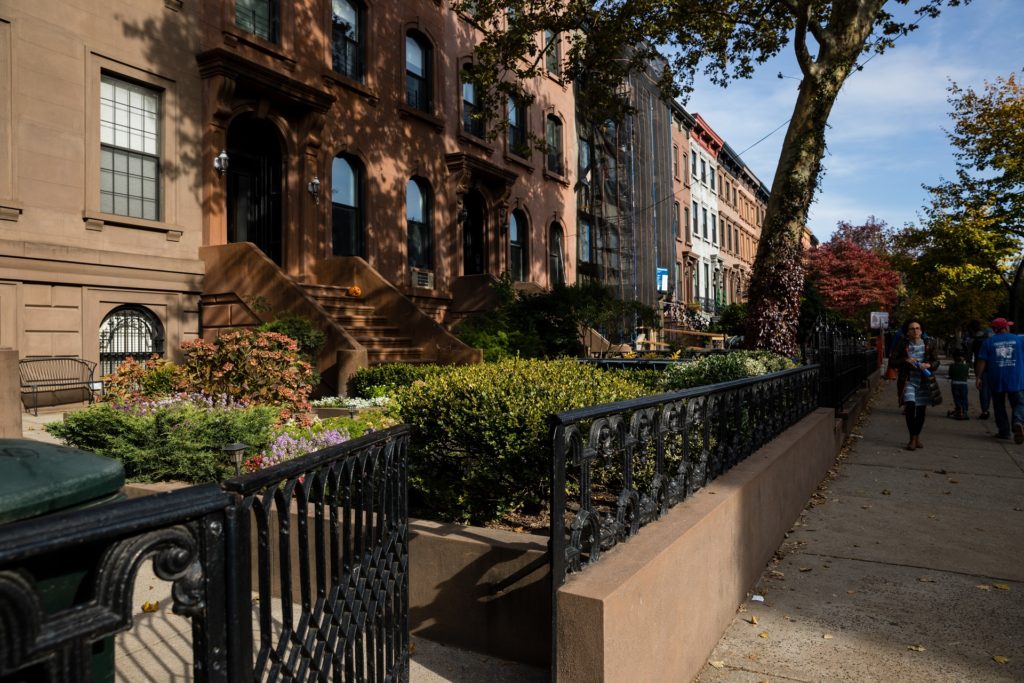
New and old residential buildings sit on the border of Downtown Brooklyn and Fort Greene, April 15, 2026. Photo: Ben Fractenberg/THE CITY
“Over time and even over the first five years, we expect to save $500 to $700 million in capital through this investment,” she said.
The amount of the city’s investment in the proposed insurance idea will be determined through budget negotiations.
In rent-stabilized housing, insurance costs rose 10.5% — the second-highest expense category after fuel — between 2025 and 2026, according to research from the Rent Guidelines Board.
The city Housing Development Corporation will hire an actuary or consultant to help create the insurance program, and the city Economic Development Corporation will call for proposals for how to design and operate it.
This new city-backed insurance program is not the first time a government entity has tried to step in to help landlords afford their premiums. Empire State Development last year issued a $2 million loan to a group of landlords to fund their own liability insurance in order to avoid the costly options of the private market.
SUNSET PARK — “As a resident of Marine Park, one of the great surprises I found biking around Industry City and visiting Japan Village was to discover Bush Terminal Park. I continue to be amazed at the serene hideaways that the city offers in some of the busiest places — and, still, with an iconic view.”
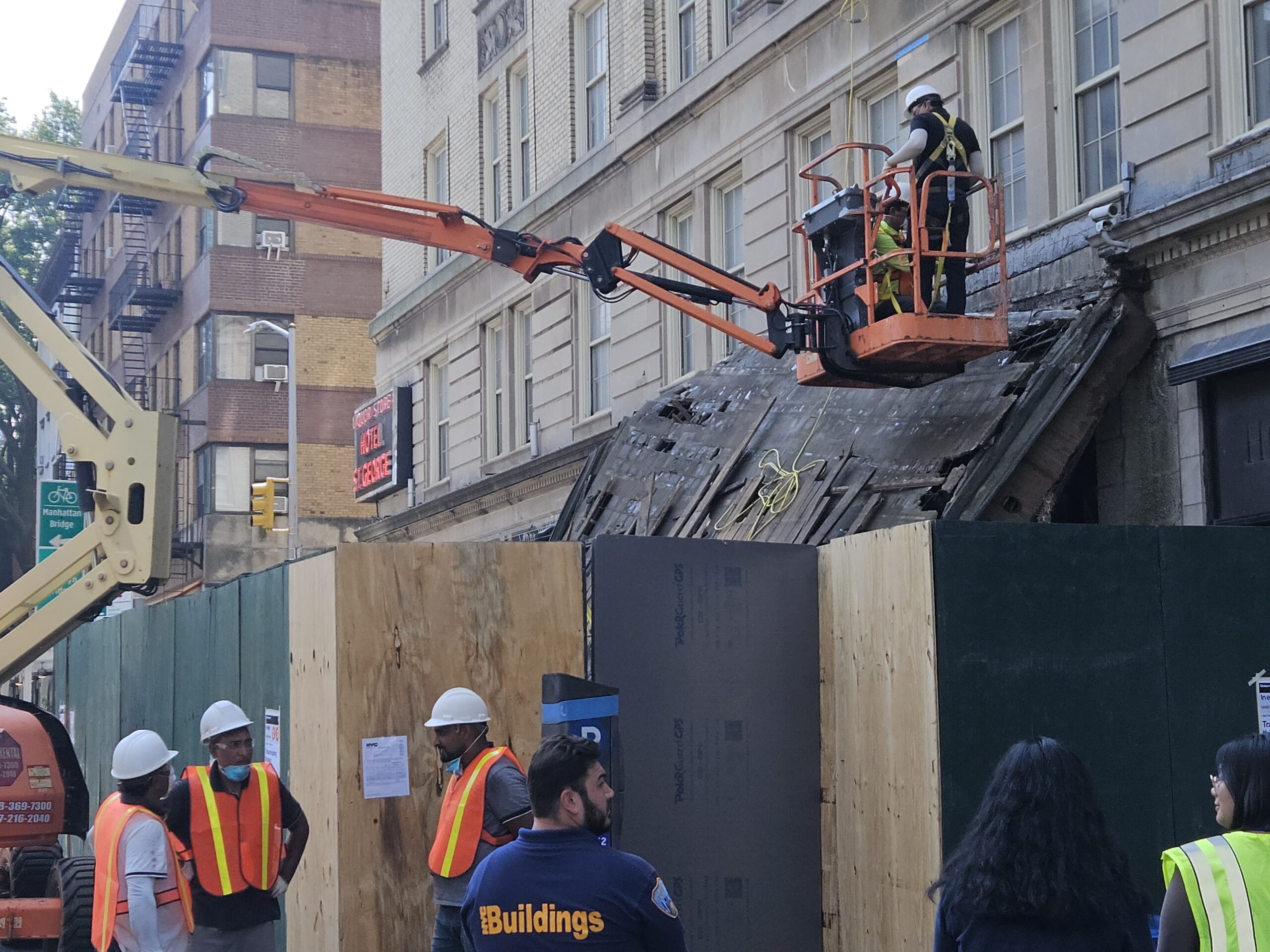
BROOKLYN HEIGHTS — ‘A miracle that no one was killed …’ That’s what neighbors are saying about the collapse of the Hotel St. George marquee. Shown in this photograph are workmen beginning the removal and repair of the historic, old neon sign at the corner, referencing a relic of Brooklyn Heights’ past: the St. George Hotel.
ATLANTIC AVENUE — Exhausted shopper with cluster of bags and goods from mall at Boerum Place stops to look at huge construction site across the street. “Is that REALLY going to be a jail??” Her male companion is reassuring, “Nothing like Rikers … this is 21st Century.”
BROOKLYN HEIGHTS — Overheard in line at one of most popular pastry outlets on Montague Street: “Hope I can get them into a camp …” A mother with two pre-schoolers in tow was showing a friend the Dodge Y flyer for Healthy Kids Day on Saturday, April 18.