




 BOROUGHWIDE — Few New Yorkers would expect to find a thriving taxidermy scene under their noses, yet taxidermy is taking on a life of its own in Brooklyn.
The ancient and often misunderstood practice of preserving dead animals has evolved and thrived through events, workshops and internationally acclaimed artists based in the city. Local artists combat the taboo around taxidermy in classic New Yorker fashion: they create community.
Divya Anantharaman, founder of Gotham Taxidermy, noted that “there’s a stereotype of it being this hunter, colonial sportsman, Teddy Roosevelt-type cowboy — whatever male-dominant stereotype we have,” which tends to exclude people from participating.

As she grew her business and reputation, Anantharaman was often the only woman, queer person and person of color at conventions and competitions. The homogenous demographic reinforced misconceptions that the craft is masculine or morbid.
Amber Maykut of Brooklyn Taxidermy added that people are often surprised by the simplicity of taxidermy, and the best way to combat the taboo is to try it. “It’s not going to be a dissection class. It’s not going to be like ‘Dexter,’ with blood and guts everywhere. It’s working on a semi-frozen animal,” said Maykut, adding that anyone who can cook raw meat can easily approach taxidermy without feeling squeamish.
“If you think of the root of taxidermy, it’s preservation,” explained Anantharaman. “If you look at history and who the caretakers of the dead were, it was women, queer people and trans people; it was always the people who are marginalized by society now but at one point were seen as oracles, caretakers or reverent, sacred people with specialized knowledge. That’s part of the resurgence that we’re seeing with taxidermy amongst a more diverse group.”
To challenge the stereotypes and expand access to the taxidermy community, Anantharaman organized Wunderkammer in 2018.
Wunderkammer is a taxidermy showcase primarily for queer artists and people of color to engage in the craft in an authentic, safe space. The name translates to “cabinet of curiosities,” which Anantharaman chose because curiosity is imperative for taxidermy.
“With Wunderkammer and taxidermy in general, there is this taboo. Taxidermy centers death, and Western culture is extremely anti- any nuanced conversation about death,” said Anantharaman. “I think that a lot of what we fear, we can replace with curiosity.”

Building a community around taxidermy means taking on nuanced conversations about death and the cultural significance of taxidermy. “Something unique about Wunderkammer is that it recontextualizes taxidermy as this larger art form that not only deals with death but deals with the body and animals, these ideas of conservation and environmental stewardship and identity,” said Anantharaman. “It puts it in this much broader perspective as opposed to a rustic deer on a plaque or something like that.”
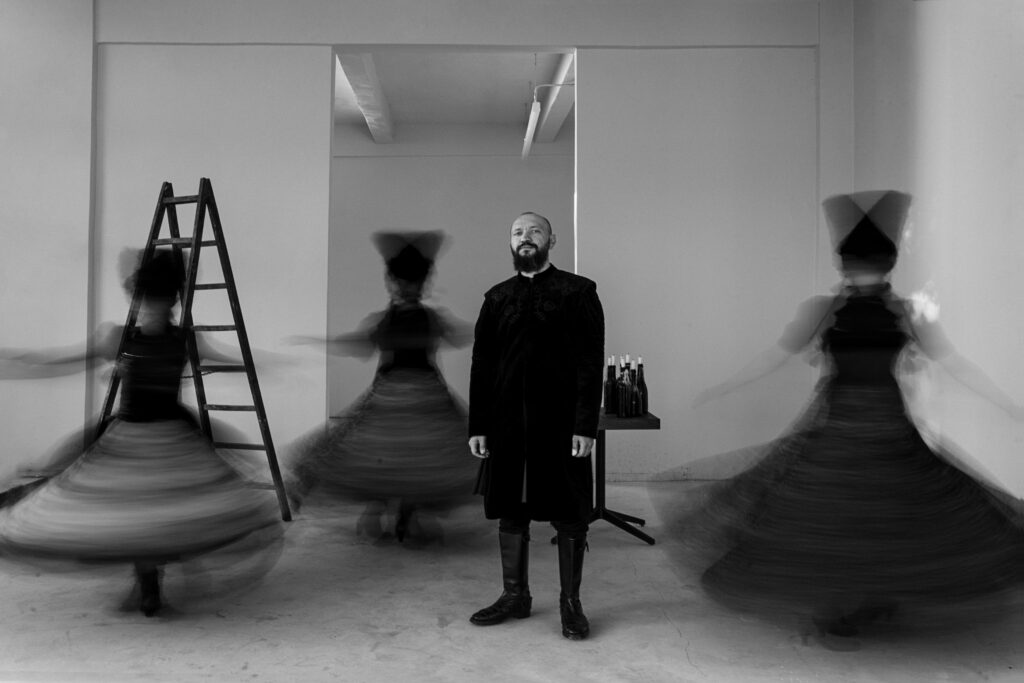
Wunderkammer has become an annual event that takes place around October each year in Brooklyn. Contrary to most taxidermy competitions and conventions, the event features performance art such as drag and burlesque along with showcases that highlight outside-the-box, fantastical approaches to taxidermy.
“I was seeing so much talent among my peers. I was like, we’re missing out by not giving these folks a platform,” said Anantharaman. “I really wanted this show to be something that brings people up and shines a positive light on parts of this already overlooked field. Taxidermy itself is already very niche, and fantasy work is even more niche among that.”
Brooklyn Taxidermy originated in Greenpoint but has since expanded to Sugar Loaf, NY. Brooklyn Taxidermy offers high-end taxidermy services and workshops, which evolved from Maykut’s passion to push the boundaries of what she could do with the art form.

“Taxidermy is interesting to me because it’s art, but it’s science. It’s sculpture, but it’s anatomy. It’s dark, but it’s light. It’s morbid, but it’s cute. It’s dead, but it looks alive,” Maykut said. “It’s very loaded and provocative. It provokes feeling in you because it’s complicated.”

Maykut is also involved with the Oddities Flea Market in Manhattan, where taxidermy artists sell their work and offer demonstrations. At the annual event held at Metropolitan Pavilion, one can find exhibitions such as “The Bone Museum,” where taxidermists display preserved bones left from their projects, as well as displayable creations and gifts.
Food offerings are also on theme: Solid Wiggles offers Jell-O shots with faux eyeballs preserved between layers of translucent, blood-red gelatin. Along with taxidermy, mystical activities include oracle readings, custom microscopic photography of visitors’ irises and flash tattoos. The event takes place each December in New York City and has expanded to other cities as well.

In October, Gotham Taxidermy collaborated with New York City-based jewelry brand Kil NYC to produce a line of wearable artifacts. The collaboration was celebrated with a launch party at Thea Grant in DUMBO.
“We have been longtime friends and colleagues and both have bought each other’s work,” Anantharaman said of working with Kil NYC. “The collaboration came from a mutual interest in animals, art and making wearable art that embodies glamour, mortality and fine craftsmanship.”
The success of the collaboration is a testament to taxidermy’s trendiness in Brooklyn.

Maykut has received international recognition for her work and hopes to preserve the tradition by sharing her knowledge with aspiring taxidermists. Maykut regularly hosts workshops centered around specific projects such as rodents, foxes or butterflies, with an average capacity of six.
The classes are not so different from other art events. At one of Maykut’s beginner workshops, a group of first-time taxidermy students gathered in Greenpoint to learn the basics of taxidermying rodents. Maykut provided a few bottles of wine, and the students bantered and provided feedback on each other’s projects.
Masha and Monica chose to taxidermy chipmunks, giggling as they made the inanimate creatures kiss as the glue dried.

Months before, the pair likely wouldn’t have been caught molding an animal to clay and wire with pins and glue. Self-defined “crafty girls,” Monica and Masha started taking pottery classes together in 2023. Since then, they’ve tried other hobbies like weaving, embroidery, crochet and flower arranging.
“I’ve always been curious about taxidermy, and when I found that [Maykut] was teaching classes, I was like, let’s do it. Why not?” said Monica.
“The class demystifies the entire idea of taxidermy,” added Masha. “It’s an intimidating or daunting idea for people, and it seems like it’s gonna be a lot scarier, but it’s not. It’s shockingly accessible and very educational.”

Maykut emphasizes accessibility and encourages artists of all ages and skill levels to engage with the art form. The only requirement to attend one of her workshops is genuine interest.
Genia, an artist from upstate New York, traveled to take the rodent class, hoping to incorporate her newfound skills in her art. “I was interested in doing taxidermy for a while because I see different critters killed by cars where I live upstate,” said Genia. “I want to try to do small things on my own, just at home. I’m an artist, too, so I’m interested in the way the car smashes them. I would probably recreate something where it would be taxidermy, but it would look dead.”
As taxidermy becomes a more widely accepted art form, artists like Maykut and Anantharaman promote values like sustainability, open-mindedness and inclusivity. Anantharaman’s background in fashion led her to emphasize sustainability and slow-made art through Gotham Taxidermy, and Maykut’s beginnings at the American Museum of Natural History’s special exhibitions department informed her emphasis on responsible sourcing and creative freedom.
Maykut and Anantharaman also emphasized the logistical responsibilities that come with taxidermy, such as sourcing animals and choosing the kind of work they’re willing to do for clients.

“There’s a lot of misconception that taxidermy is only hunting, but it’s actually way easier to obtain specimens that are from other sources,” Maykut explained. “For instance, pest control companies in New York City are forced to destroy nuisance animals. They’re not allowed to catch and release in New York City. I work with them to have freezers for them where they collect it. They’re gonna destroy it anyway, and we’re just taking the skin off.”
Maykut freezes the insides of these animals to give to zoos and other sources for animal food, mitigating waste and ensuring that animals are cared for rather than harmed in the taxidermy process.

Though it remains niche, the city’s increased interest in taxidermy makes sense. “Even though New York is this concrete jungle, it’s also very biodiverse and very human diverse. All taxidermy is preservation of nature, but it’s also this perfect combination of art and science, and New Yorkers love art and science,” said Anantharaman. “With taxidermy, it connects us to nature; it gives us the opportunity to slow down. I think most New Yorkers really want something like that.”













SUNSET PARK — “As a resident of Marine Park, one of the great surprises I found biking around Industry City and visiting Japan Village was to discover Bush Terminal Park. I continue to be amazed at the serene hideaways that the city offers in some of the busiest places — and, still, with an iconic view.”

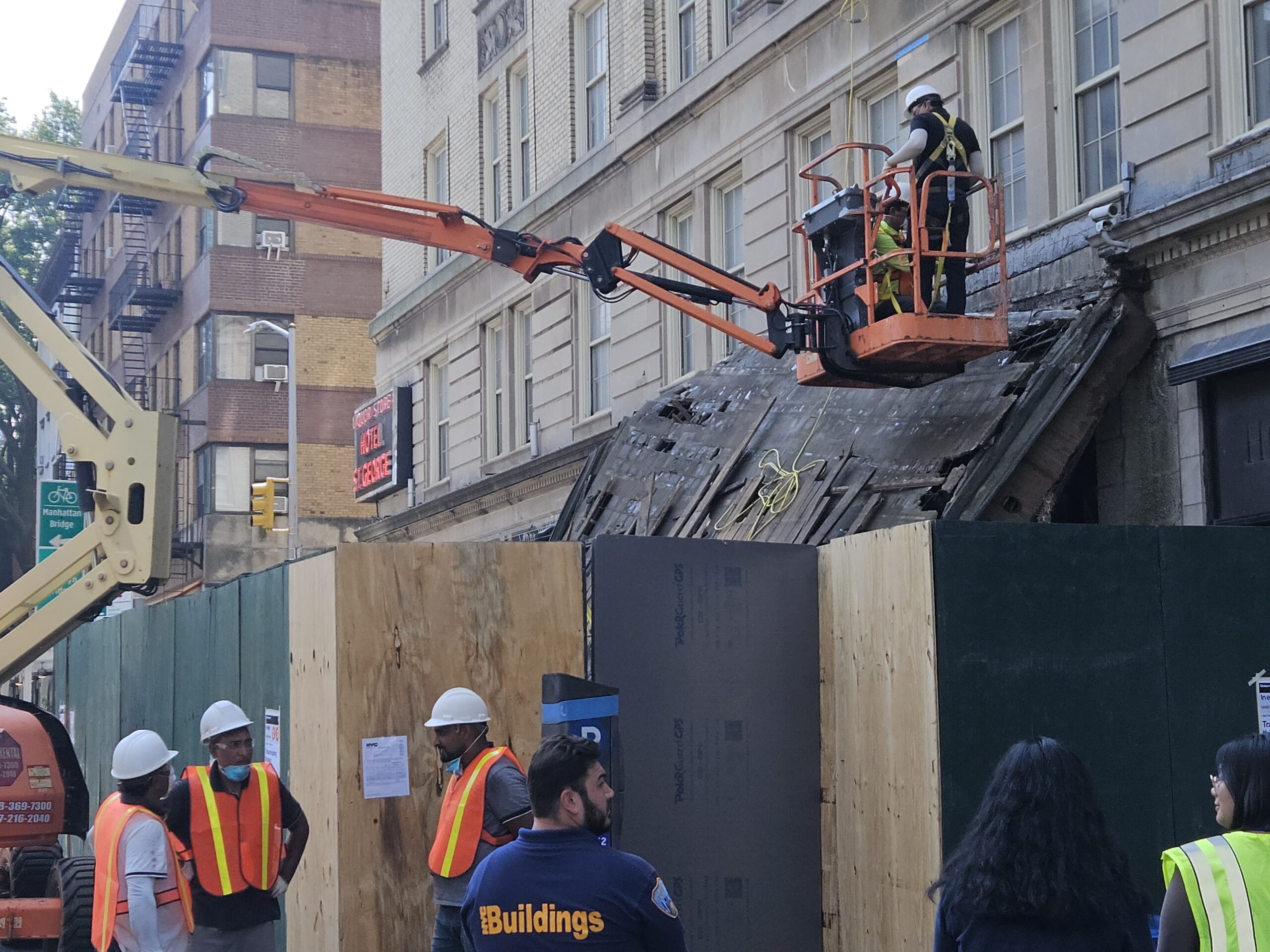
BROOKLYN HEIGHTS — ‘A miracle that no one was killed …’ That’s what neighbors are saying about the collapse of the Hotel St. George marquee. Shown in this photograph are workmen beginning the removal and repair of the historic, old neon sign at the corner, referencing a relic of Brooklyn Heights’ past: the St. George Hotel.
ATLANTIC AVENUE — Exhausted shopper with cluster of bags and goods from mall at Boerum Place stops to look at huge construction site across the street. “Is that REALLY going to be a jail??” Her male companion is reassuring, “Nothing like Rikers … this is 21st Century.”
BROOKLYN HEIGHTS — Overheard in line at one of most popular pastry outlets on Montague Street: “Hope I can get them into a camp …” A mother with two pre-schoolers in tow was showing a friend the Dodge Y flyer for Healthy Kids Day on Saturday, April 18.