ALBANY — Gov. Kathy Hochul on Dec. 19 vetoed the “Local Input for Community Healthcare Act,” better known to Brooklynites as the LICH Act, named in honor of Cobble Hill’s now-shuttered Long Island College Hospital.
The veto — the second by Hochul — dismayed Brooklyn Assemblymember Jo Anne Simon, who has been working to pass the legislation for a decade.
Simon, who represents the area once served by LICH — including Cobble Hill, Carroll Gardens, Gowanus, Downtown and Brooklyn Heights — first introduced the bill with former state Sen. Daniel Squadron in 2015. Senate co-sponsor in 2024 and 2025 was state Sen. Gustavo Rivera of the Bronx, chair of the Senate Health Committee.
The bill is meant to ensure that what happened to LICH won’t play out at other hospitals across New York.
Health care workers and community members rallied to save Long Island College Hospital in July 2013. Photo: Mary Frost, Brooklyn Eagle
LICH closure inflamed Western Brooklyn
The 155-year-old LICH had been stripped of its assets, closed and sold to a developer by former Gov. Andrew Cuomo in 2014 amid protests, arrests, lawsuits and allegations of financial misrepresentations on the part of the State University of New York. (The Brooklyn Eagle provided in-depth coverage of these events.)
The hospital closure inflamed communities from Brooklyn Heights to Red Hook. Simon, a district leader at the time, was one of numerous elected officials, residents and health care workers arrested during acts of civil disobedience. (Others arrested included then-Public Advocate and mayoral candidate Bill de Blasio, then-Councilmember Brad Lander and Rep. Nydia Velazquez. Simon and Velazquez were arrested as part of a human chain blocking traffic across Atlantic Avenue.) Attorney Jim Walden, a mayoral candidate in 2025, donated his legal services to LICH advocates pro bono in a long-running lawsuit.
Ultimately, LICH was sold to the developer Fortis Property Group for $240 million in a troubled RFP process.
As part of the deal, NYU Langone opened an ambulatory care center and emergency department at the site of a main LICH building at 70 Atlantic Ave.
Assemblymember Jo Anne Simon (center) and other advocates gathered in Albany in 2024 to urge Gov. Kathy Hochul to sign the LICH Act. They were unsuccessful. Photo: Office of Jo Anne Simon
Shuttering hospitals ‘should not happen behind closed doors’
Before a planned hospital or unit closure, the LICH Act would require advance notice to local officials and the public; a community forum 150 days in advance of the proposed closure date; a final closure plan that addresses concerns raised at the forum; and public disclosure of all submitted plans by the Department of Health. The act has passed the legislature twice so far with bipartisan support.
“It’s a real shame that the Governor vetoed this bill,” Simon said in a release. “Hospitals are closing with very little state oversight or community input, leaving vulnerable communities with reduced access to essential healthcare. When a hospital or unit closes, it is more than a building shutting down – it is cutting off a lifeline, and these decisions should not happen behind closed doors.”
Then-Councilmember Brad Lander was arrested with others in July 2013 following a protest to save Long Island College Hospital. Photo: Mary Frost, Brooklyn Eagle
Currently, the state Health Department relies entirely upon the analysis of the hospitals seeking to close before it makes its decision, “while communities and healthcare professionals have little to no opportunity to correct the record,” Simon said.
More than 70 hospitals in New York are currently at risk of closure due to upcoming federal cuts, she said. “With the Trump administration putting a torch to New Yorkers’ healthcare, the state should be creating more avenues to improve our communities’ access to healthcare, not limit it.”
“We cannot continue to make closure decisions behind closed doors without assessing the impacts on the overall system, vulnerable patient communities and healthcare workers,” Rivera said.
Assemblymember Jo Anne Simon introduced the LICH Act with former state Sen. Daniel Squadron (at podium) in 2015. Photo: Mary Frost, Brooklyn Eagle
Hochul: Doesn’t reflect ‘financial realities’
In a written explanation of her veto, Hochul said that the bill would require 270 days prior notice to affected stakeholders before closing an entire hospital, and 210 days for the closure of a unit. “This legislation does not appropriately reflect the financial realities that struggling hospitals face, which are only expected to increase under the current federal administration.”
Hochul said that she directed the state Department of Health last year to develop and propose reforms to the hospital closure process. The DOH “examined their current guidance, identified improvements, updated the guidance and circulated it to hospitals in December,” Hochul said.
Then-Public Advocate Bill de Blasio was arrested at a LICH protest in July 2013. Photo courtesy of the Office of Bill de Blasio
Simon counters that the state guidance “was only recently issued and is woefully inadequate as it only addresses the closure of hospital and certain units.” DOH’s new guidance does little to protect New Yorkers from the current “opaque” hospital closure process, and state legislation is necessary because agency guidance is less enforceable than regulations or statutes.
Despite the veto, Rivera said he was committed to working with the governor and stakeholders “to meet our responsibility to ensure local residents and hospital workers have a voice in the process.”
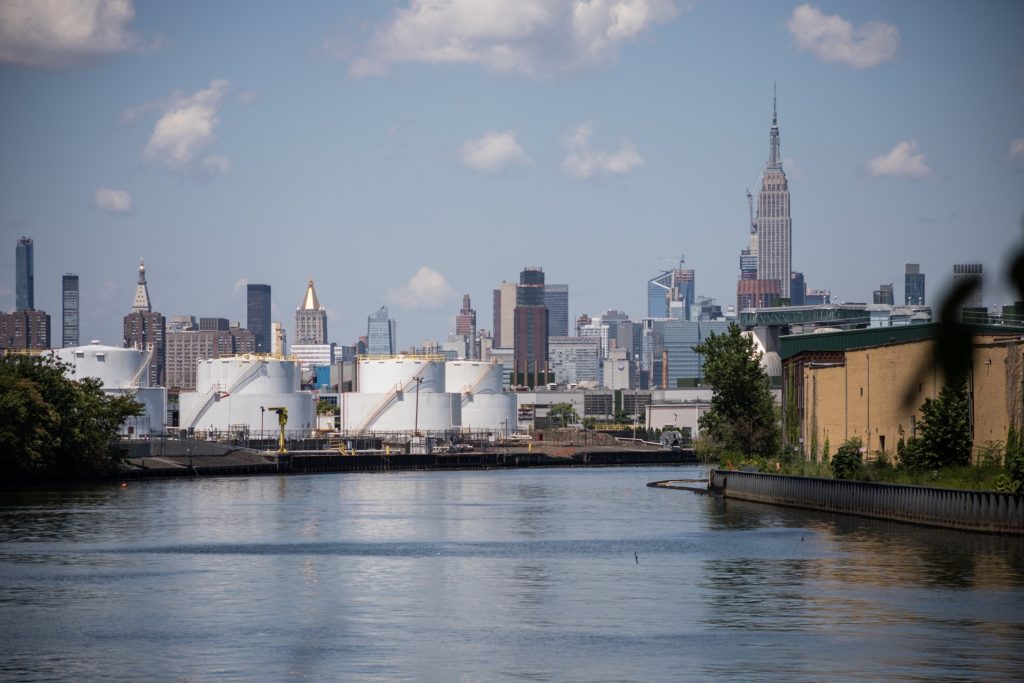
SUNSET PARK — “As a resident of Marine Park, one of the great surprises I found biking around Industry City and visiting Japan Village was to discover Bush Terminal Park. I continue to be amazed at the serene hideaways that the city offers in some of the busiest places — and, still, with an iconic view.”
BROOKLYN HEIGHTS — ‘A miracle that no one was killed …’ That’s what neighbors are saying about the collapse of the Hotel St. George marquee. Shown in this photograph are workmen beginning the removal and repair of the historic, old neon sign at the corner, referencing a relic of Brooklyn Heights’ past: the St. George Hotel.
ATLANTIC AVENUE — Exhausted shopper with cluster of bags and goods from mall at Boerum Place stops to look at huge construction site across the street. “Is that REALLY going to be a jail??” Her male companion is reassuring, “Nothing like Rikers … this is 21st Century.”
BROOKLYN HEIGHTS — Overheard in line at one of most popular pastry outlets on Montague Street: “Hope I can get them into a camp …” A mother with two pre-schoolers in tow was showing a friend the Dodge Y flyer for Healthy Kids Day on Saturday, April 18.