Judge Javier E. Vargas was appointed the new downstate co-chair of the Richard C. Failla LGBTQ Commission, Chief Judge Rowan Wilson announced on Tuesday.
Judge Vargas, a judge of the New York State Court of Claims, former Brooklyn Family Court judge and the first openly gay Latino appointed to that bench, will serve alongside Justice Grace M. Hanlon of the Eighth Judicial District. He succeeds Judge Karen Lupuloff, who is retiring from the bench and will remain a member of the Commission.
The leadership change comes at a moment when the courts are putting greater focus on how judges interact with the people who appear before them.
Chief Judge Wilson said the appointment is a part of the Commission’s mission to ensure that “all persons, regardless of sexual orientation, gender identity or gender expression, are treated with fairness and dignity in our courts.”
The Commission’s work is visible in the everyday practices it promotes.
One example is its bench card on trans-inclusive language, which guides judges on how to address litigants and lawyers accurately and respectfully.
The card instructs judges to ask individuals how they would like to be addressed, use the pronouns given and correct mistakes briefly when they occur. It also explains terminology that court attendees may identify with, in an effort to convey that accurate language is core to treating people with respect.
For Judge Vargas, this emphasis on dignity aligns with his more than two decades of work across New York’s courts.
A native of Arecibo, Puerto Rico, he came to New York to pursue higher education and has held roles in Family Court and Civil Court. He is a frequent lecturer on domestic relations law, housing law, diversity and the Child Victims Act. Currently, he serves in leadership positions with the Hispanic National Bar Association and the Latino Judges Association.
“I want to extend my sincere gratitude to Chief Judge Wilson for this tremendous honor and for his confidence in my ability to serve as Commission co-chair, alongside Justice Grace Hanlon, with our dedicated commissioners who share my deep commitment to equity, dignity and meaningful inclusion of LGBTQ+ individuals within the judiciary and throughout our courts,” Judge Vargas stated.
“I hope to use my life and professional experiences to offer a new perspective, working collaboratively to advance the Commission’s urgent, impactful work and am eager to contribute my knowledge, energy and steadfast commitment to ensuring that our courts continue to be humane places for all people,” he added.
“I know I have big shoes to fill, as my dear colleague Judge Karen Lupuloff co-chaired the Commission with great earnestness and fortitude.”
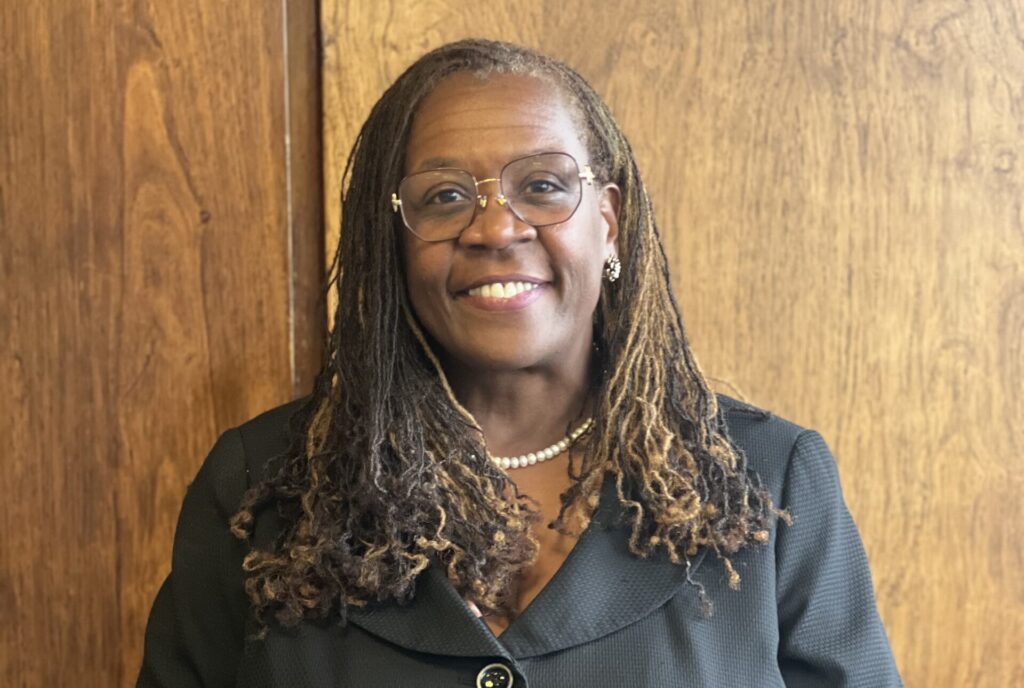
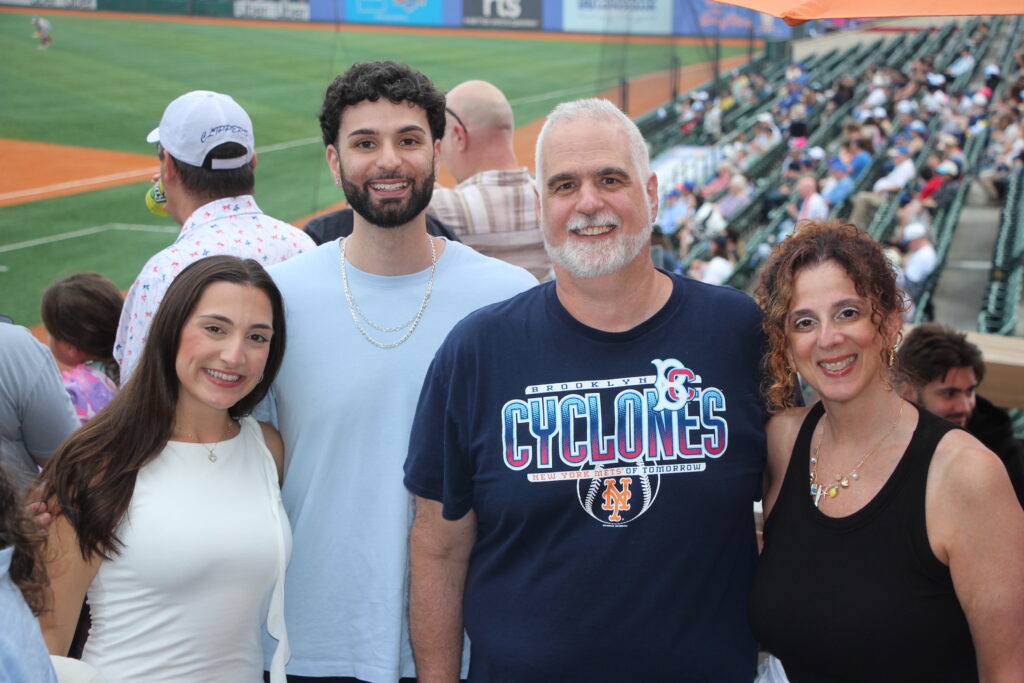
Judge Javier E. Vargas, the newly appointed downstate co-chair of the Richard C. Failla LGBTQ Commission, is drawing renewed attention as he steps into a leadership role that will help guide statewide efforts to ensure dignity and equitable treatment for LGBTQ litigants, court employees and the public. Brooklyn Eagle photo by Robert Abruzzese
Chief Judge Wilson acknowledged Judge Lupuloff’s work as co-chair over the past year and said that the Commission expanded its reach through her “perseverance, sensitivity and collaborative approach.”
Founded in 2016, the Failla LGBTQ Commission advises New York’s court system on issues affecting LGBTQ litigants, employees and court users.
Its work includes training programs for judges, non-judicial staff and court partners; policy development; and collaborations with advocacy organizations, bar associations and community groups.
The Commission promotes equal access to the courts, supports efforts to improve judicial and workforce diversity and develops tools such as its trans-inclusive language bench.
Recent initiatives include mentoring programs, cultural competency education, participation in statewide Pride Month events and work on rules that provide for presumptive sealing of name and sex-designation change proceedings.
The Commission also engages in broader public education, hosting conferences and programs with legal and academic institutions to examine emerging issues affecting LGBTQ people in the justice system.
The Legacy of Justice Failla
The Commission is named for Justice Richard C. Failla, a New York State Supreme Court justice and early advocate for LGBTQ rights within the legal system.
Born in Queens in 1940, Failla graduated from the University of Florida and Columbia Law School before serving five years as a lieutenant in the Navy’s Judge Advocate General’s Corps, where he often defended sailors who faced discharge because of their sexual orientation.
After returning to New York, he worked as an Assistant District Attorney in Manhattan and later served as Chief Administrative Law Judge in the newly formed Office of Administrative Trials and Hearings.
In 1985, he became the first openly gay person appointed to the New York City Criminal Court, and three years later, the first openly gay person elected to the New York State Supreme Court.
During the height of the AIDS epidemic, he joined the board of Gay Men’s Health Crisis and served on the State Health Department’s Advisory Council on AIDS.
Justice Failla, who died in 1993 at age 53, is remembered for his work on behalf of LGBTQ litigants, court employees and New Yorkers seeking fair treatment in the courts.
The Commission’s work is carried out by judges, attorneys and court professionals from across the state.
Its executive director, Matthew J. Skinner, oversees the Commission’s programs and statewide initiatives.
Several members play central roles in outreach and education efforts, including Civil Court Judge Norma Jennings of Brooklyn, Albany Law School professor Meredith R. Miller and Supreme Court Justice Franc Perry of New York County.
With their colleagues, they help guide the Commission’s training, policy development and community partnerships as it continues its work to expand access and support for LGBTQ court users throughout New York.
SUNSET PARK — “As a resident of Marine Park, one of the great surprises I found biking around Industry City and visiting Japan Village was to discover Bush Terminal Park. I continue to be amazed at the serene hideaways that the city offers in some of the busiest places — and, still, with an iconic view.”
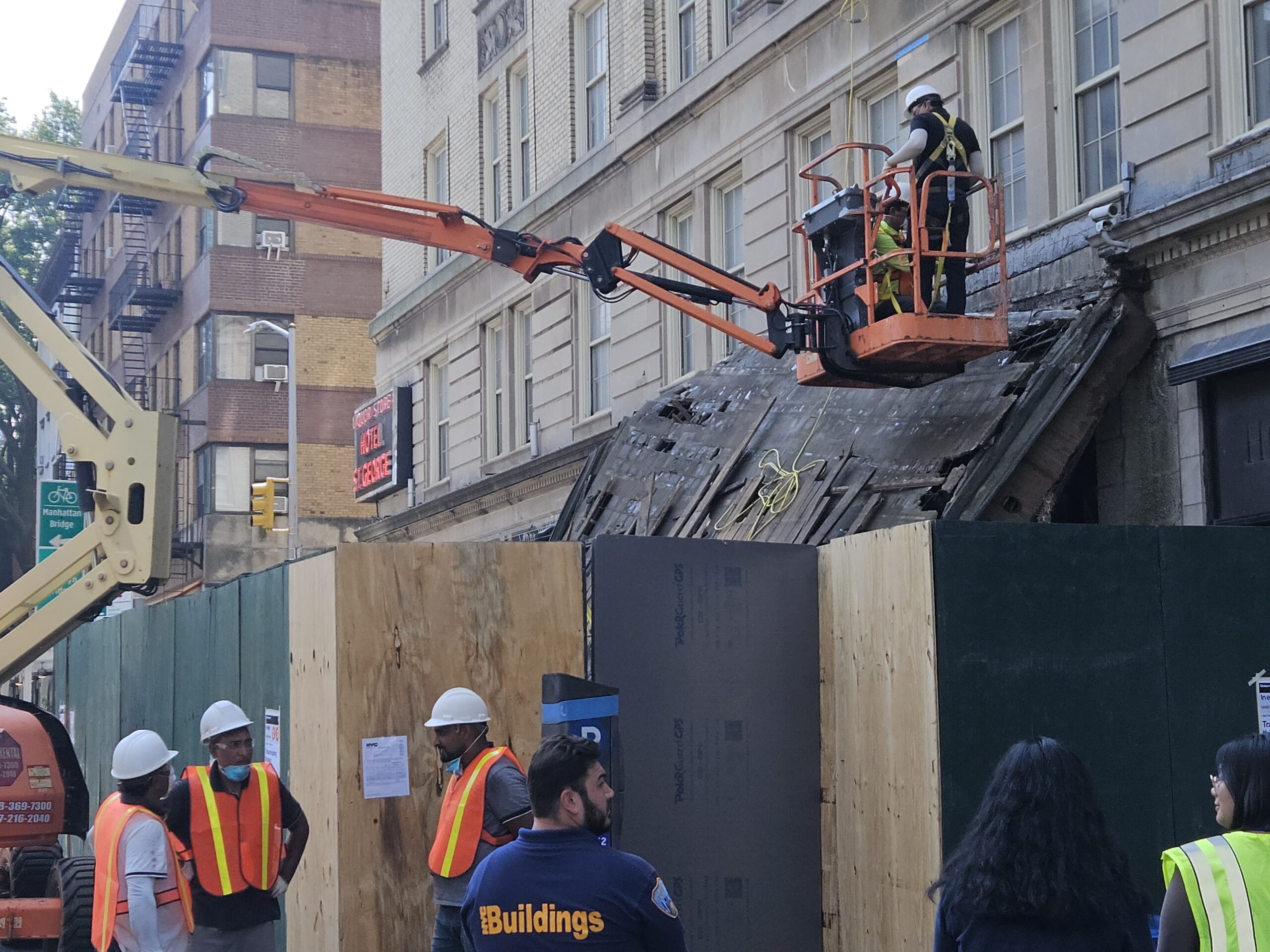
BROOKLYN HEIGHTS — ‘A miracle that no one was killed …’ That’s what neighbors are saying about the collapse of the Hotel St. George marquee. Shown in this photograph are workmen beginning the removal and repair of the historic, old neon sign at the corner, referencing a relic of Brooklyn Heights’ past: the St. George Hotel.
ATLANTIC AVENUE — Exhausted shopper with cluster of bags and goods from mall at Boerum Place stops to look at huge construction site across the street. “Is that REALLY going to be a jail??” Her male companion is reassuring, “Nothing like Rikers … this is 21st Century.”
BROOKLYN HEIGHTS — Overheard in line at one of most popular pastry outlets on Montague Street: “Hope I can get them into a camp …” A mother with two pre-schoolers in tow was showing a friend the Dodge Y flyer for Healthy Kids Day on Saturday, April 18.