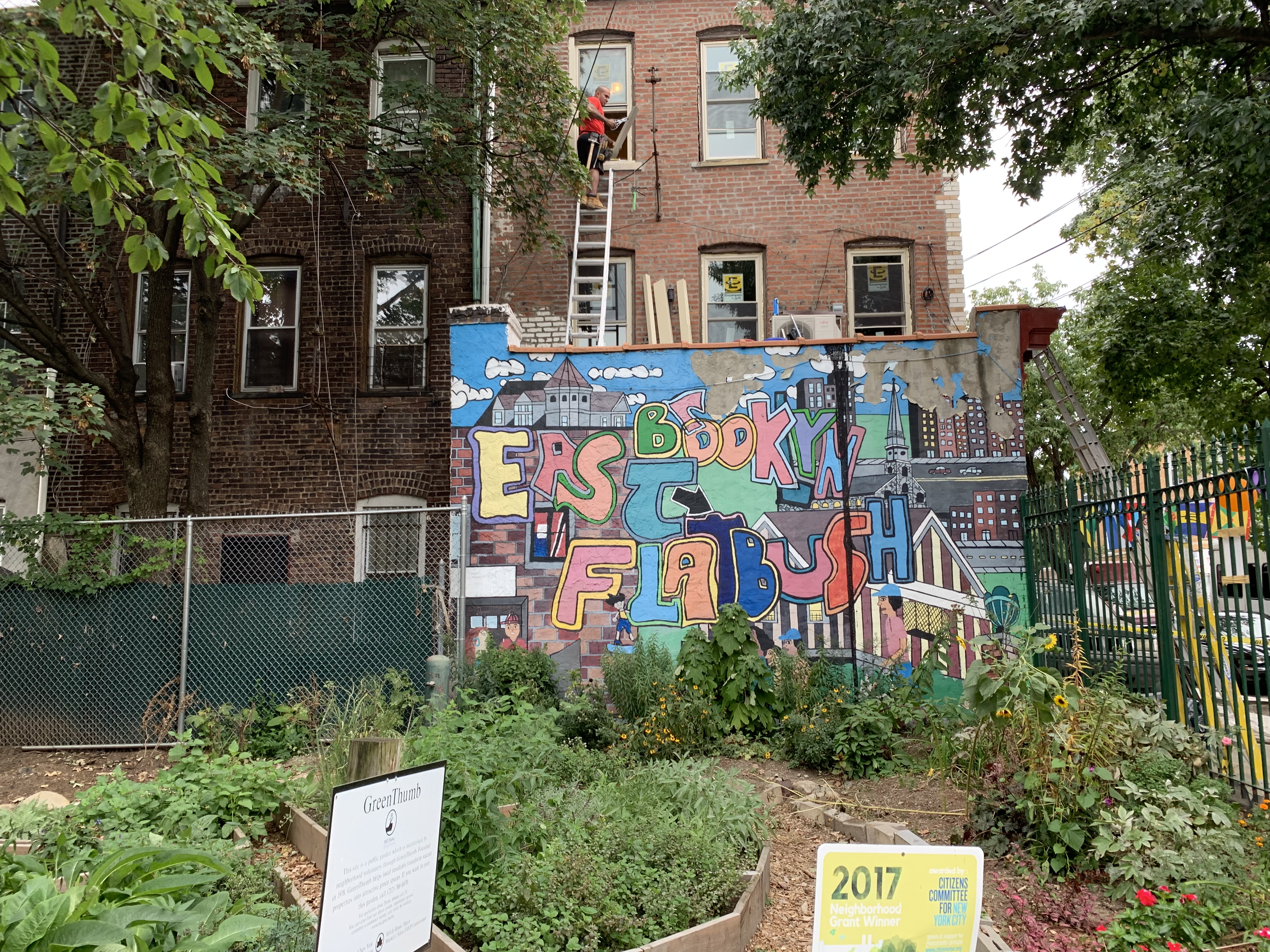
When the industrious Dutch came to settle New Netherlands in the 1600s, they acquired much of the land — especially in Brooklyn — in trades or purchases from the Indigenous peoples. One of the areas thus acquired was then known as Midwout (Middle Woods) or Vlacke Bos, which translates from the Dutch as “wooded plain” or “flat bush.”
Today’s neighborhoods of East New York and New Lots, as well as Cypress Hill, were all within Midwout at the time, but were considered Ostwout (East Woods).
In 1652, Midwout was granted a town charter by Peter Stuyvesant, then Director-General of New Netherland, but the area was little more than a frontier outpost, and few Dutch families took advantage of the fertile land to make their homes there.
One of the more adventurous was Pieter Janse Hagewout, a farmer and cobbler who sailed to New Netherland aboard “De Bonte Koe” (The Spotted Cow) in 1660. He got a land deed from Stuyvesant, and his family was among the first to settle Midwout.
In 1687, Hagewout’s son Leffert Pietersen bought 58 acres in the area now known as Prospect Lefferts Gardens.
Midwout’s other name gained popularity over time, after the English took over the area from the Dutch in 1664, and during the Revolutionary War, Flatbush became the site of bloody skirmishes in the 1776 Battle of Brooklyn.
The arrival of the Brooklyn, Flatbush and Coney Island Railroad in 1878 made the land attractive to developers and when Flatbush was incorporated into the City of Brooklyn in 1894, the area changed from farmland to suburban developments. These enclaves included Vanderveer Park, Manhattan Terrace, Matthews Park, Slocum Park and Yale Park. As a whole, they were popularly known as Victorian Flatbush.
Smaller neighborhoods in Flatbush today include the planned communities of Prospect Park South, the Beverley Squares, Prospect Lefferts Gardens, Ditmas Park, Fiske Terrace and Albemarle-Kenmore Terraces, as well as Caton Park and the Midwoods (South, West and Fiske Terrace-Midwood Park).