Premium Content: Shana Tovah! Diverse north Brooklyn crowd witnesses Rosh Hashanah up close
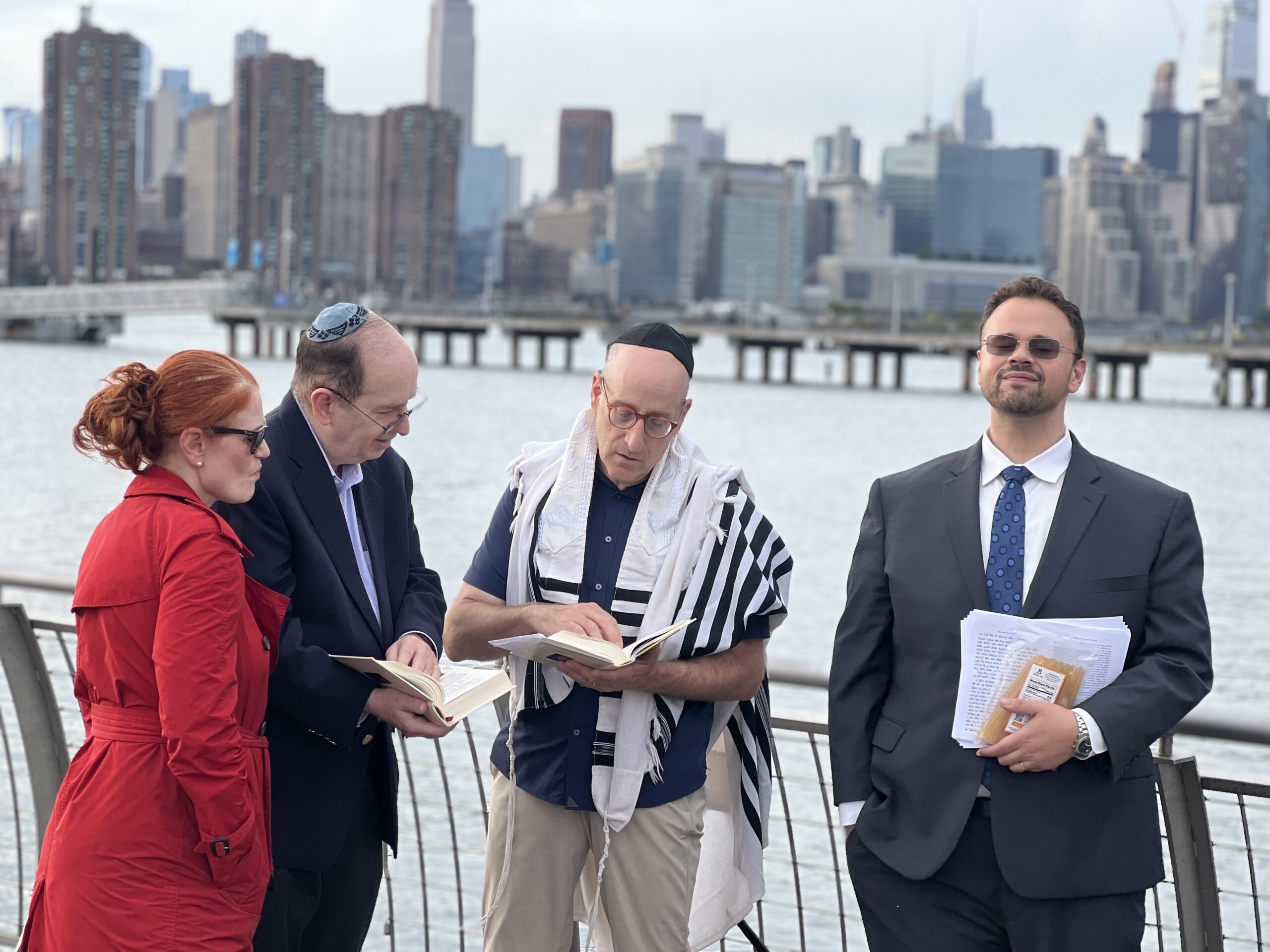
Adam Perlmutter (center), alongside Isaiah Rothstein (right), Rabbi of the Greenpoint Shul, and community members. Photo by Wayne Daren Schneiderman
By Wayne Daren Schneiderman
October 8, 2024
Copy Link
Email
Facebook
X
LinkedIn
WhatsApp
Telegram
Pinterest
Print
GREENPOINT — Dozens of community members congregated in Greenpoint’s Transmitter Park on Oct. 4 to witness a years-long tradition, the first of the High Holy Days, Rosh Hashanah, and were treated to an experience that likely left an indelible mark on them.
Rosh Hashanah, meaning, literally, “head of the year” or “first of the year,” is a two-day observance and celebration, marking the beginning of the civil year, according to the teachings of Judaism. It begins 10 days of penitence culminating in Yom Kippur, the Day of Atonement.
Observing the ritual of Tashlich. Photo by Wayne Daren Schneiderman
The Greenpoint Shul (Congregation Ahavas Israel), located at 108 Noble Street, is the oldest continually operating synagogue in Brooklyn since 1904 and is where the get-together began. After the obligatory exchange of pleasantries, the group then took a short walk to Transmitter Park.
The late afternoon gathering, which boasted picture-perfect weather, included prayer, song and perhaps the best-known ritual of Rosh Hashanah, the blowing of the shofar, a musical instrument made from an animal horn. This serves as a symbolic “wake-up call,” stirring Jews to mend their ways and repent.
Handing out pieces of bread for Tashlich. Photo by Wayne Daren Schneiderman
“While there are so many layers to the holiday, the central mitzvah is the shofar blowing,” explained Isaiah Rothstein, Rabbi of the Greenpoint Shul, noting that it symbolizes a desire for justice in the world, the want for people to live lives of integrity and also for them to be free.
“These are all the deeper meanings behind the blowing of the shofar,” he continued.
Rabbi Isaiah Rothstein giving a honey stick to an eager child. The honey stick symbolizes sweetness to evoke a sweet new year. Photo by Wayne Daren Schneiderman
Then came the ritual of Tashlich, whereby prayers are recited near natural flowing water, and one’s sins are symbolically cast into the water via the throwing of bread into it to symbolize the “casting off” of sins.
“The throwing of bread into the water signifies us letting go, releasing everything from our past and recognizing that we want to move forward into a greater level,” Rothstein said. “The water serves to cleanse us.”
The exterior of Greenpoint Shul (Congregation Ahavas Israel). Photo by Wayne Daren Schneiderman
Transmitter Park, a local waterfront destination with a spectacular view of the Manhattan skyline, served as the ideal destination for hurling chunks of bread into the East River.
Rabbi Rothstein in conversation. Photo by Wayne Daren Schneiderman
Rosh Hashanah is the time when we reflect on our actions, our behaviors, our relationships and work to become the best version of ourselves, according to Rothstein.
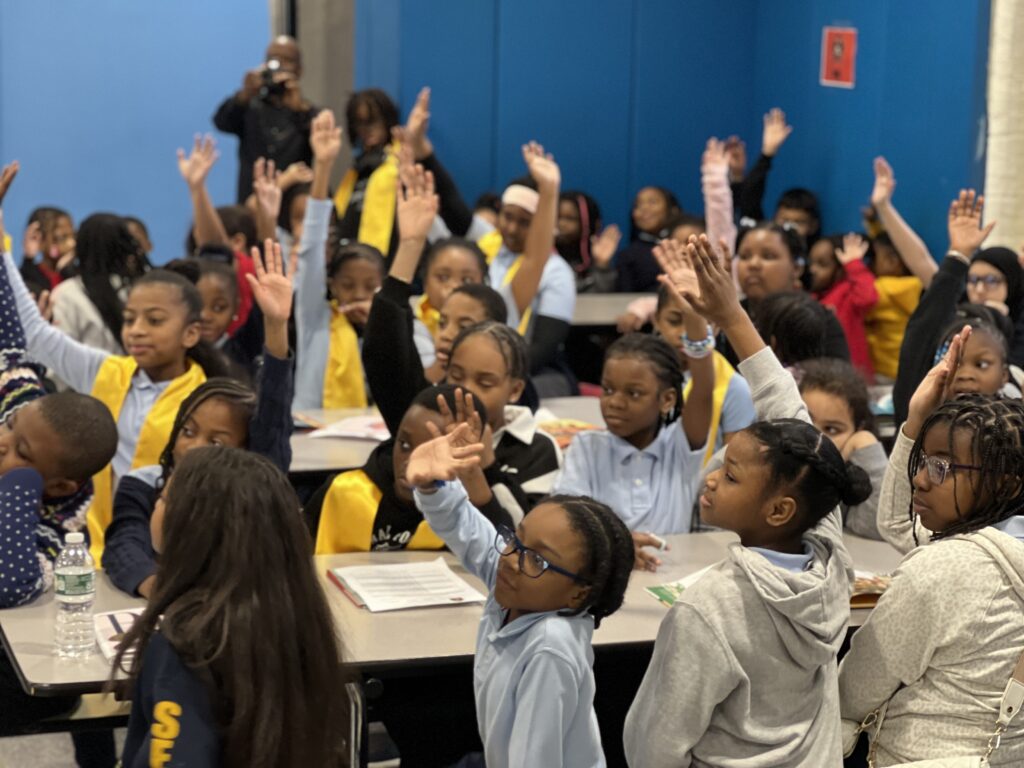
Spectators of the event varied both in age and gender, as well as religious beliefs. There were those of Jewish descent and others that were simply curious.
The Rabbi addressing the crowd. Photo by Wayne Daren Schneiderman
“Judaism was never meant to be an institutional religion, it was actually meant to be a way of life,” Rothstein said. “We see our neighbors as part of our community, Jewish or not. In this world, where things are so volatile and fragmented, it’s important that people know that they are cared for. It’s a universal message, a holiday of peoplehood, a holiday of coming together, community and reminding ourselves that we are connected to something greater.”
This article is dedicated to my father, Richard Schneiderman (1936-2021). The High Holidays and his Jewish heritage were both extremely important to him.
Adam Perlmutter blowing the shofar alongside Rabbi Rothstein. Photo by Wayne Daren Schneiderman
SUNSET PARK — “As a resident of Marine Park, one of the great surprises I found biking around Industry City and visiting Japan Village was to discover Bush Terminal Park. I continue to be amazed at the serene hideaways that the city offers in some of the busiest places — and, still, with an iconic view.”
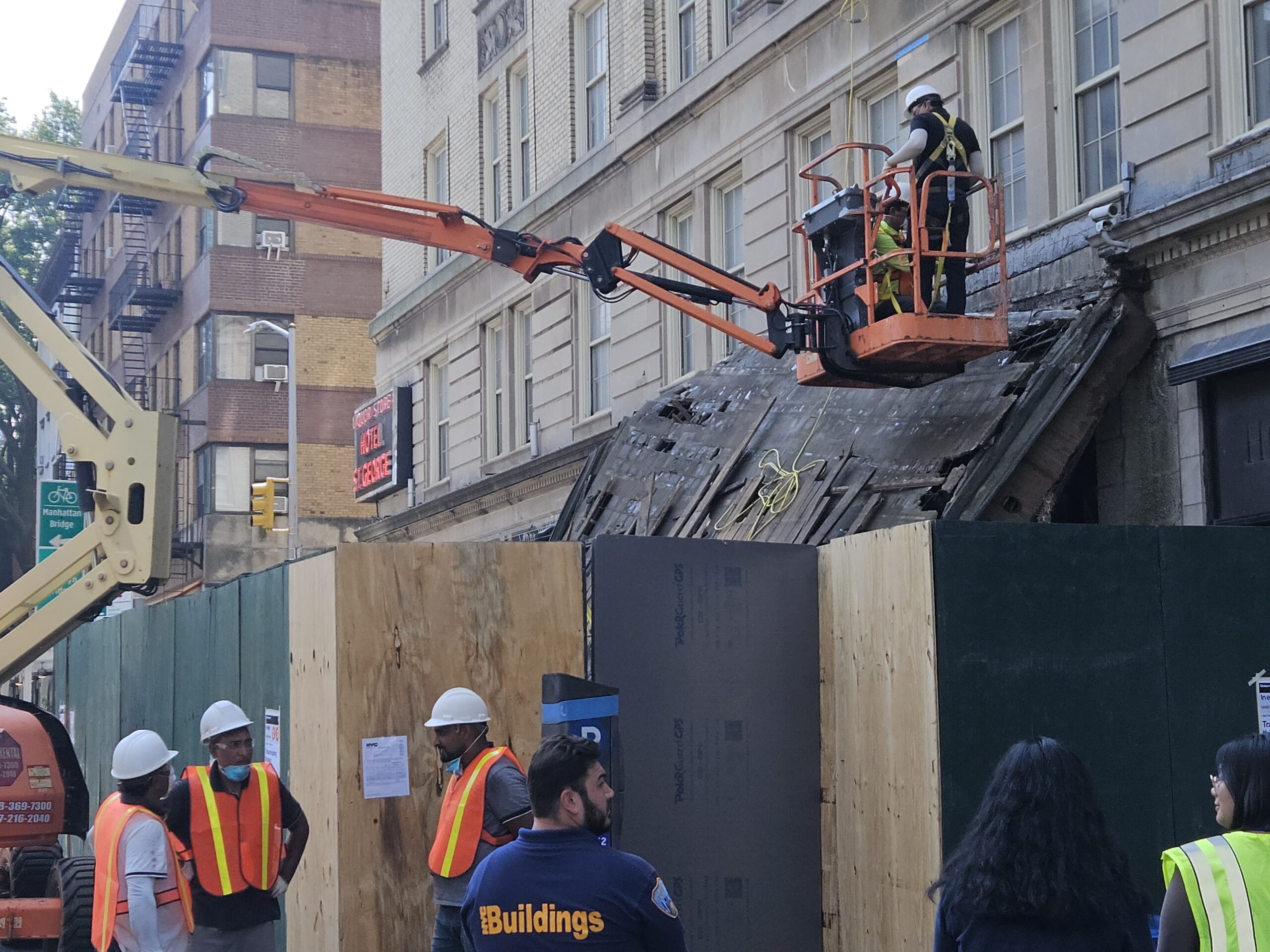
BROOKLYN HEIGHTS — ‘A miracle that no one was killed …’ That’s what neighbors are saying about the collapse of the Hotel St. George marquee. Shown in this photograph are workmen beginning the removal and repair of the historic, old neon sign at the corner, referencing a relic of Brooklyn Heights’ past: the St. George Hotel.
ATLANTIC AVENUE — Exhausted shopper with cluster of bags and goods from mall at Boerum Place stops to look at huge construction site across the street. “Is that REALLY going to be a jail??” Her male companion is reassuring, “Nothing like Rikers … this is 21st Century.”
BROOKLYN HEIGHTS — Overheard in line at one of most popular pastry outlets on Montague Street: “Hope I can get them into a camp …” A mother with two pre-schoolers in tow was showing a friend the Dodge Y flyer for Healthy Kids Day on Saturday, April 18.