Walking tours are a staple of New York City life eagerly patronized by both city residents and tourists. You can find tours of outdoor food markets, architectural landmarks, the subway system, sites with organized-crime history and much more.
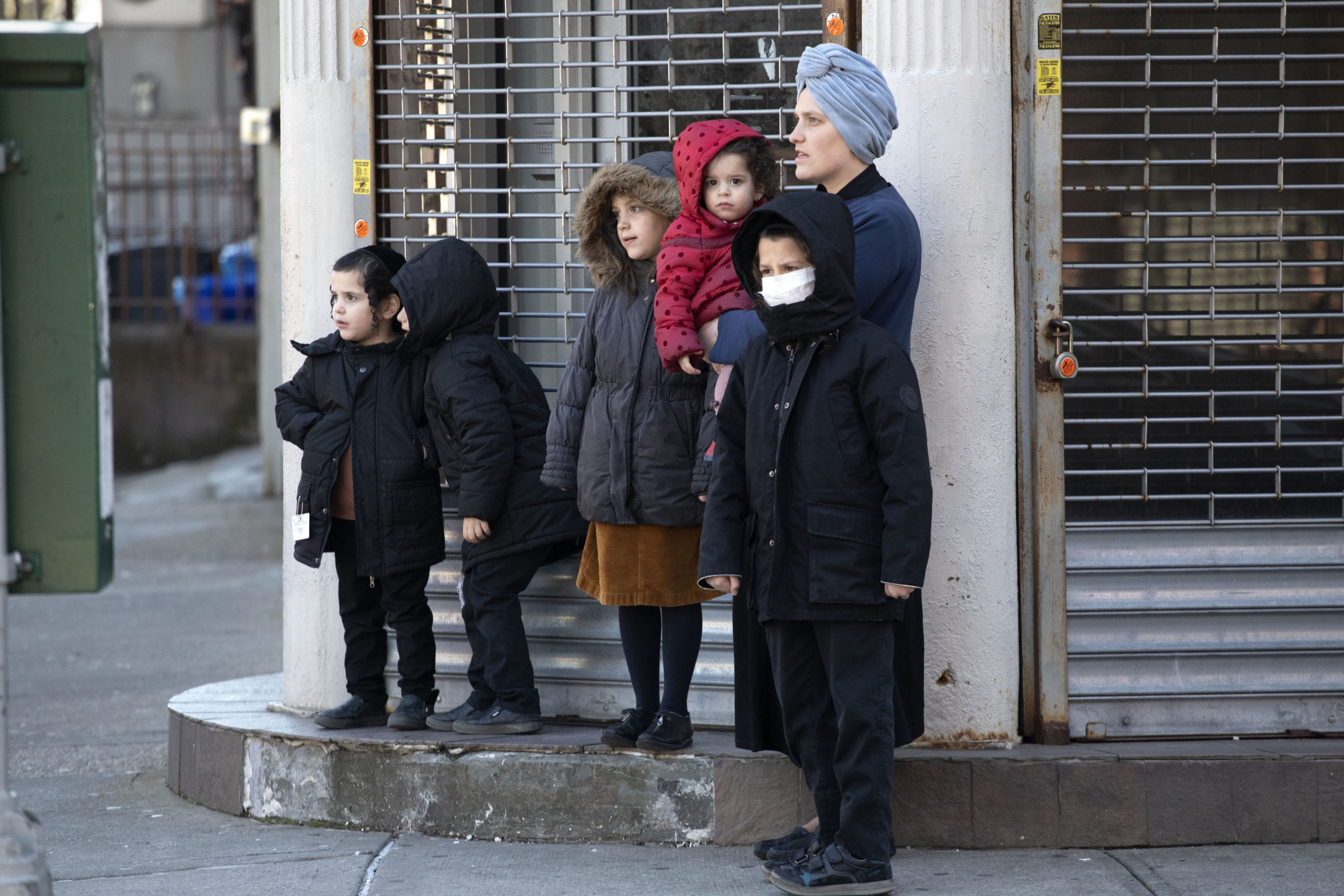
However, you’ll only find one tour of Hasidic Williamsburg. The Hasidic Jews of that area, mainly Satmar Hasidim and members of allied rabbinic sects, are suspicious of outsiders and want, more than anything else, to keep to themselves and to protect their way of life from outside influences.
One person who does give tours of Hasidic Williamsburg is Frieda Vizel, who grew up in the Satmar community, first in upstate Kiryas Joel and then in Williamsburg, and left it at the age of 25.
“A number of things made [life in the community] hard for me,” she said. “I’m not a rule follower in the first place. If I have a feeling that rules don’t make sense, I don’t follow them.” She divorced her husband and went to graduate school, although she continued to work for a Hasidic entity for a while.
Those who are familiar with another nearby Hasidic community, the Lubavitcher Hasidim in Crown Heights, may be aware that the Lubavitch community has a lively tour industry and a much more open attitude toward outsiders. In fact, tours of the Lubavitch neighborhood are given by community members themselves. However, says Vizel, “the Williamsburg attitude is that there is nothing beneficial in doing this type of work.”
In her tours, which are given under the name of “Tours by Frieda,” she takes people to a Hasidic toy store, a bakery, a “kosher technology” shop (for example, a kosher cellphone has been modified so that only specific apps can be accessed and not the full internet), and Gottlieb’s deli (where women are cautioned to wear “modest attire”). “We see the synagogues, a lot of street activities,” she says.
While most of the tour takes place around Lee Avenue, the Satmar community’s main street, Vizel also takes people to Bedford Avenue. “On the waterfront, at South 8th Street, you’ll see that on one side of the street there’s hipster housing, on the other side, Hasidic housing.”
Hasidic housing is easy to spot, she says, because the buildings have staggered balconies. The balconies are used to support the building of sukkot, or huts covered with branches and leaves, during the holiday of Sukkot in the fall. However, the huts can’t be on top of each other. “If they are, they’re not kosher,” she says.
When Vizel started the tours as a grad student in 2013, she says, “I was nervous. Many people who knew me said, ‘Let’s see how long you last until you’re run out of town.’ To my surprise, [hostile] incidents were few and far between.”
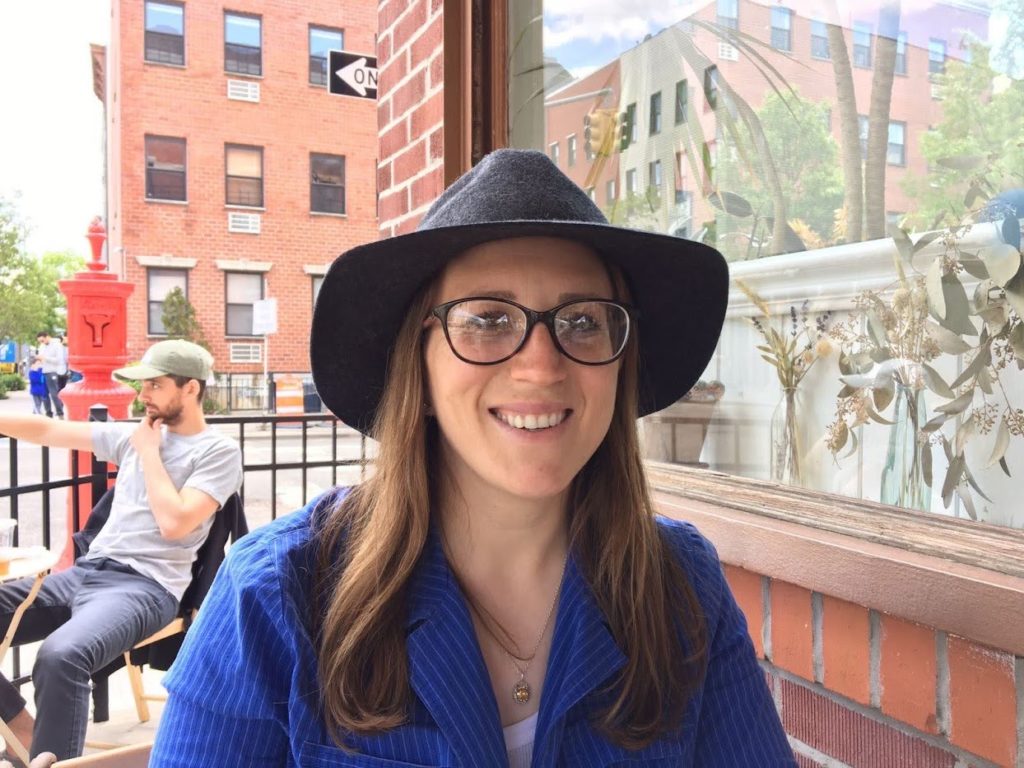
Frieda Vizel, the ex-Satmar Hasidic woman who leads tours of Hasidic Williamsburg. Photo courtesy of Frieda Vizel
When she gives her weekly tours, which are mentioned on TripAdvisor but not directly advertised, she also does some “street anthropology.” The Hasidic community is growing fast in Williamsburg, and there are changes under way, but outsiders aren’t tuned in to them. “The tours are the way for me to be in the neighborhood and keep a finger on the pulse.”
What happens to others who, like Vizel, leave the Hasidic community? She remembers going to a retreat for other ex-Hasidim after she herself left. Over the years, she says, there’s been a change in their attitude. At one time, she recalls, most wanted very little to do with Jewish spirituality, Jewish culture. Nowadays, it’s more diverse – former Hasidim can range from Modern Orthodox to totally secular. In addition, some may live a “double life.”
Vizel sees the tours as only part of her work. She also has a YouTube channel, a blog and more. “My plans,” she says, “are to give once-a-week tours and to become so integrated into the community that I can go into synagogues, find people who can invite me into homes. I want to give a more nuanced story than people see in the general media.”
SUNSET PARK — “As a resident of Marine Park, one of the great surprises I found biking around Industry City and visiting Japan Village was to discover Bush Terminal Park. I continue to be amazed at the serene hideaways that the city offers in some of the busiest places — and, still, with an iconic view.”
BROOKLYN HEIGHTS — ‘A miracle that no one was killed …’ That’s what neighbors are saying about the collapse of the Hotel St. George marquee. Shown in this photograph are workmen beginning the removal and repair of the historic, old neon sign at the corner, referencing a relic of Brooklyn Heights’ past: the St. George Hotel.
ATLANTIC AVENUE — Exhausted shopper with cluster of bags and goods from mall at Boerum Place stops to look at huge construction site across the street. “Is that REALLY going to be a jail??” Her male companion is reassuring, “Nothing like Rikers … this is 21st Century.”
BROOKLYN HEIGHTS — Overheard in line at one of most popular pastry outlets on Montague Street: “Hope I can get them into a camp …” A mother with two pre-schoolers in tow was showing a friend the Dodge Y flyer for Healthy Kids Day on Saturday, April 18.