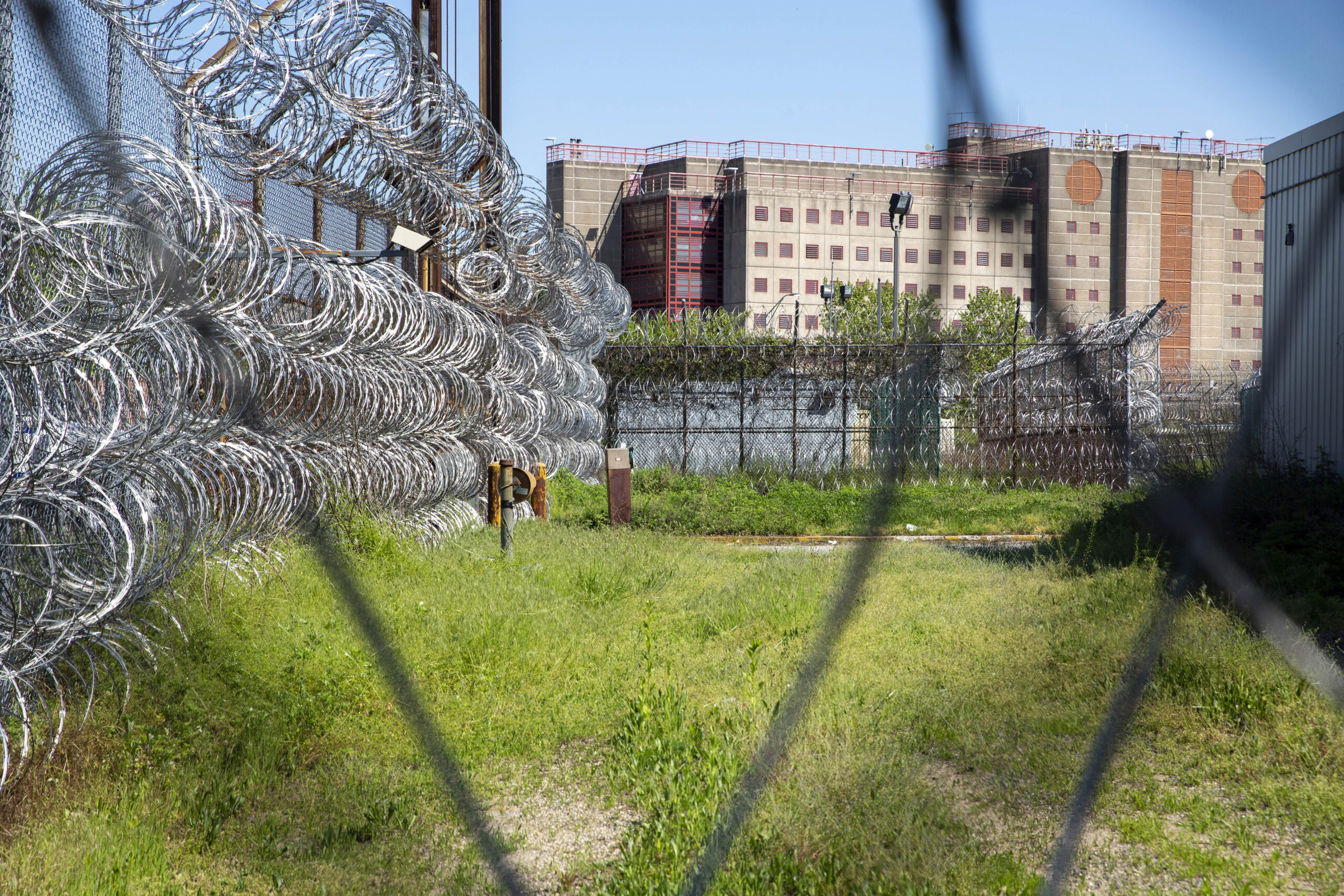
A judge on Wednesday found New York City in contempt for failing to staunch violence and brutality at its jails, a scathing ruling that puts the troubled Rikers Island jail complex on the verge of a federal takeover.
In a written ruling, U.S. District Judge Laura Taylor Swain in Manhattan said the city had failed to comply with 18 separate provisions of court orders pertaining to security, staffing, supervision, use of force and the safety of young detainees.
Swain found that “unconstitutional conditions” have worsened significantly in the nine years since the city settled abuse and violence claims, exacerbated by jail leadership’s “unwillingness or inability” to implement ordered reforms.
Swain ordered the city and lawyers suing on behalf of inmates and detainees to confer with a court-appointed monitor on a proposed framework for a federal receivership — an extraordinary intervention that would city control of one of the nation’s largest, most notorious jail systems.
Swain wrote that the current management structure and staffing at Rikers Island and other city jails “are insufficient to turn the tide within a reasonable period.” The city appears to have acted in bad faith at times in its failure to comply with court orders, she wrote, and that continuing on the same path — with the city remaining in charge of the jails — would lead to further “confrontation and delay.”
“The Court is inclined to impose a receivership: namely, a remedy that will make the management of the use of force and safety aspects of the Rikers Island jails ultimately answerable directly to the Court,” Swain wrote, ordering the sides to provide her by Jan. 14 a plan for an “efficient, effective receivership.”
The 65-page ruling stemmed from litigation that started more than a decade ago with allegations by a public defender organization, the Legal Aid Society, and others that the city’s Department of Correction had engaged in a pattern of excessive and unnecessary force.
The Legal Aid Society and law firm Emery Celli Brinckerhoff Abady Ward & Maazel LLP hailed the “historic decision” and said it “will finally create a pathway for reform that can protect those who have been failed” by jail leadership.
“The court’s recognition that the current structure has failed, and that receivership free from political and other external influences is the path forward, can ensure that all New Yorkers, regardless of incarceration status, are treated with the respect and dignity guaranteed to them under the law,” they said.
For now, barring further action from Swain, the city remains in control of its jails.
In a statement, the city said it “has made significant progress towards addressing the decades-long neglect and issues on Rikers Island” and praised Department of Correction Commissioner Lynelle Maginley-Liddie “as the necessary steady hand” to protect inmates and staff.
“We are proud of our work, but recognize there is more to be done and look forward to working with the federal monitoring team on our shared goal of continuing to improve the safety of everyone in our jails,” the city said.
A message seeking comment was left for the union representing correction officers, which has vehemently opposed a federal takeover.
Rates of violence, use of force, self-harm, and deaths in custody in city jails have gotten “demonstrably worse” since the city and parties agreed in October 2015 to a settlement, consent decree and the appointment of a federal monitor, Swain said.
“Worse still, the unsafe and dangerous conditions in the jails, which are characterized by unprecedented rates of use of force and violence, have become normalized despite the fact that they are clearly abnormal and unacceptable,” Swain wrote.
Nineteen people died in custody at Rikers Island in 2022. Nine more died in 2023, and five died in the first eight months of this year. At the same time, rates of stabbings and slashings, fights, assaults on staff “remain extraordinarily high,” Swain said.
There has been “no substantial reduction in the risk of harm currently facing those who live and work in the Rikers Island jails,” the judge wrote.
Advocates for inmates and detainees first asked the judge to hold the city in contempt and place it under receivership about a year ago. They said correction officers still use head strikes on inmates and prohibited techniques such as chokeholds, body-slamming and inflicting force on people in restraints.
The advocates also argued that the agency’s leadership has consistently ignored the recommendations of a monitor and have failed to take steps to curb abuses. In September, Swain directed city officials to begin developing a plan for a possible federal takeover.