Luke from Bushwick asks: “Is Maria Hernandez Park built on former circus land?”
Yes, Luke. But that was long ago and far away.
Today’s Maria Hernandez Park, between Knickerbocker and Irving avenues, is very significant to Bushwick’s history because it’s named after a local hero. As the largest community park in the neighborhood described by the Parks Department as a “plaza with a wild undulating design” and with a baseball diamond, it had been named Bushwick Park in 1896 and later, Knickerbocker Park.
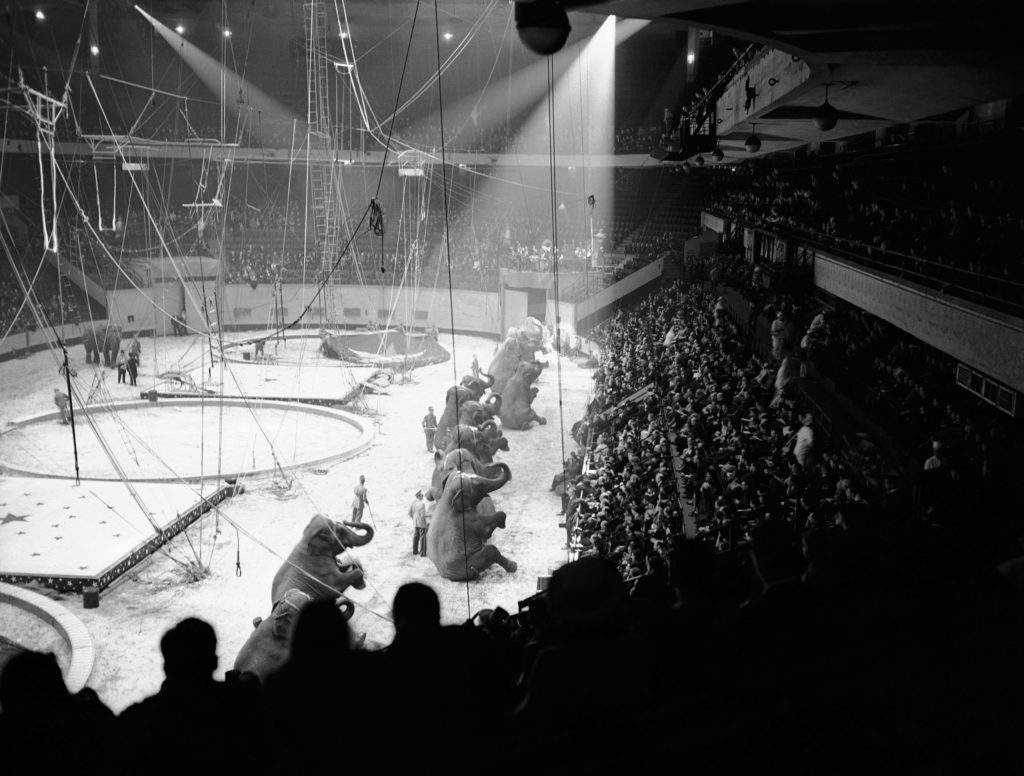
The land was purchased from local landowners by the City of Brooklyn just before the consolidation of Greater New York. One of the landowners was indeed P. T. Barnum of circus fame.
The Barnum circus used the land for storage and to set up its big tent for showtime after the elevated train appeared in 1888. Barnum, Ringling Brothers and other traveling circuses liked Brooklyn’s wide-open spaces and even used a former golf course in Midwood for performances. In the mid-1930s that site became Brooklyn College. More recently, Marine Park has been a summer stopover for a circus troupe.
But back to Bushwick. By the 1930s, the park added a playground with swings and slides that replaced the croquet and dancing areas. By the 1980s, the neighborhood changed and became gang ridden. Brooklyn-born Maria Hernandez and her husband fought the drug dealers by confronting them, organizing block parties and athletic activities and reporting drug users to the police.
On Aug. 8, 1989, Hernandez died from gunshot wounds and the park was renamed in her memory. Maria Hernandez Park was rehabilitated in 1994 as a neighborhood center, adding a dog run and a performance stage. Sporting events replaced drug sales. Awards were bestowed on the park in 2006 and 2007. The mixed ethnic groups of Scandinavians, Italians, Puerto Ricans, African Americans and Dominicans are now joined by newcomers: millennials, hipsters, artists and Muslims who are surging to freshly revived Brooklyn neighborhoods.
Bushwick, or Bowijck, meaning “town of the woods” as the Dutch named it in 1661, has an interesting history. Initially, it was farmland for the early settlers, former Hessian soldiers from the revolution, according to Neighborhoods of Brooklyn. Then German immigrants moved to Bushwick when the Lower East Side became crowded. They established breweries along Meserole Street, which was called “Brewers’ Row,” with 45 breweries eventually cropping up in Bushwick.
The Village of Williamsburgh seceded from the Town of Bushwick in 1851, incorporating as the independent City of Williamsburgh — until Brooklyn annexed them in 1854 and drew them into the City of Brooklyn. The neighborhoods of Bushwick, Greenpoint and Williamsburg became known as the Eastern District since it lay east of the City of Brooklyn.
With industrialization, Bushwick attracted businesses and factories that manufactured sugar, chemicals, oil and glass. Mansions, hotels and theaters supplemented a blue collar community. The caissons that support the Brooklyn Bridge towers were built in neighboring Greenpoint and floated on the East River to Fulton Street.
Bushwick’s fame declined after World War II. The waterfront was deserted and the breweries closed, with Schaefer and Rheingold being the last to go in 1976. Riots plagued the poverty-ridden section of Brooklyn in the late 20th century. But, with Brooklyn’s current renaissance, the farmers market and the “Bushwick Initiative,” it is being rediscovered and rehabilitated, with Maria Hernandez Park one jewel among Bushwick’s many.
Ask a Historian is written by John B. Manbeck, the former Brooklyn Borough Historian. To find answers to your questions about our fair borough and its history, fill out the form below.