State Bar Association hosts CLE to help lawyers improve their practice by eliminating bias
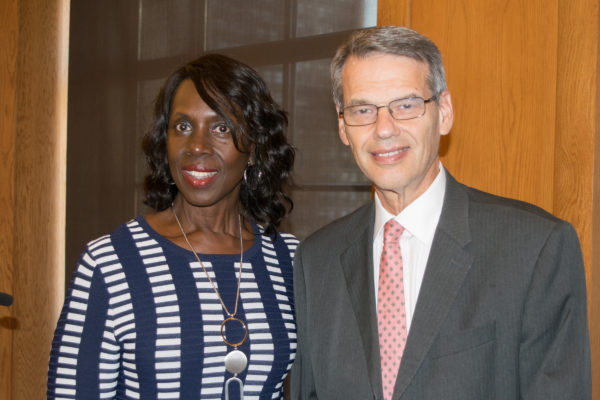
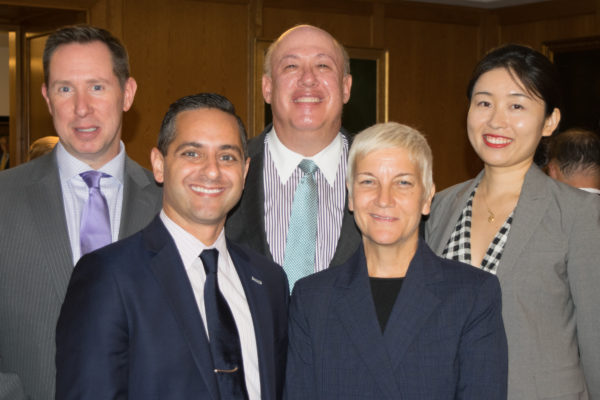
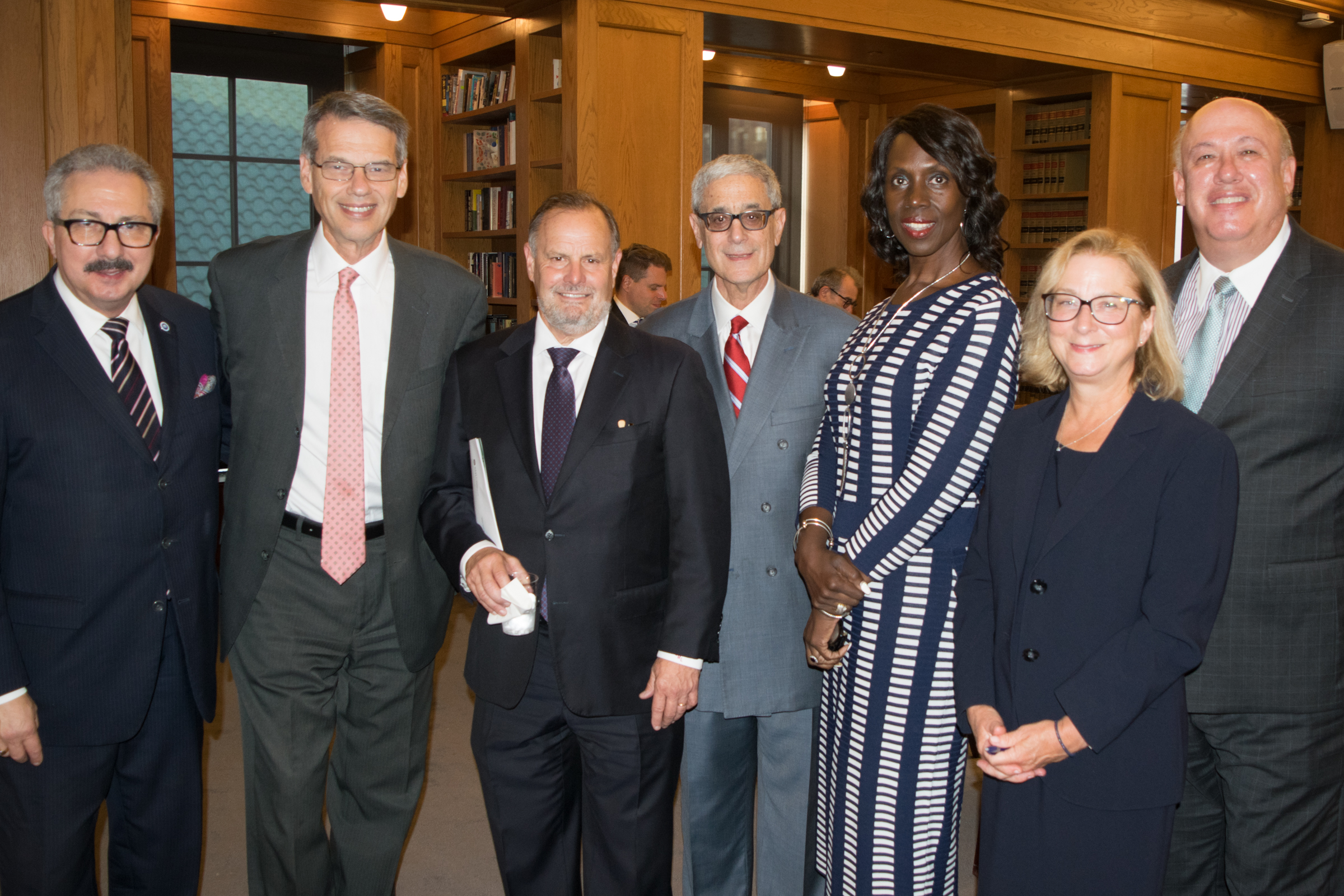
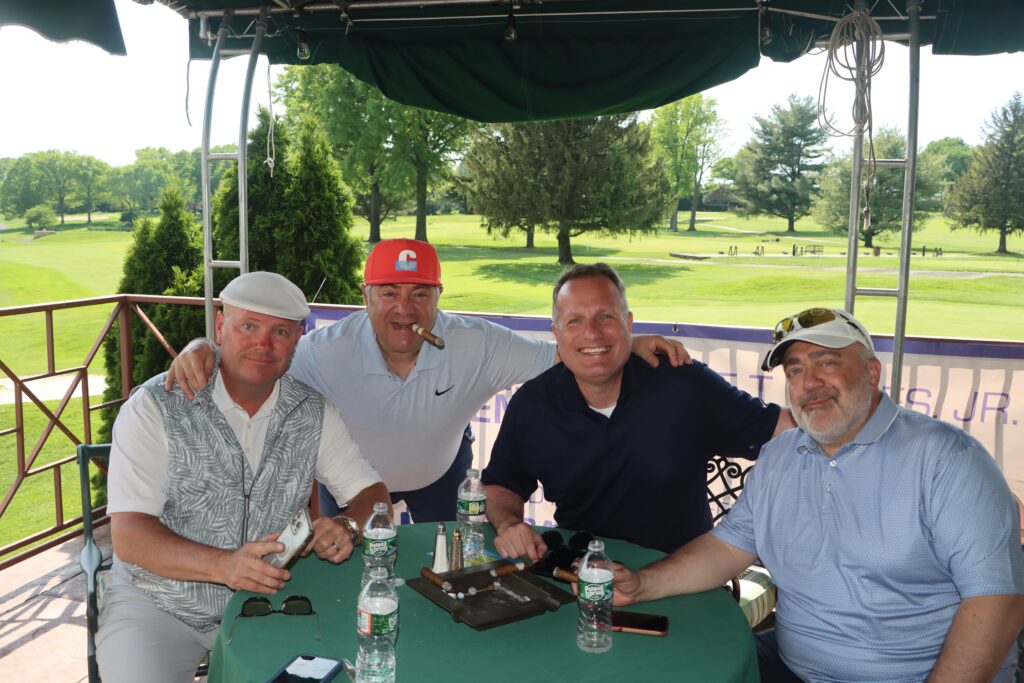
From left: Domenick Napoletano; Hon. Lawrence Knipel, administrative judge of the Kings County Supreme Court, Civil Term; Gregory LaSpina; Steve Cohn; Hon. Sylvia Ash, supervising judge of the Kings County Supreme Court, Commercial Division; Laurel Kretzing and Mark Berman.
The New York State Bar Association continued on a tradition that has been going on for three years now when it hosted a continuing legal education seminar in Brooklyn last month.
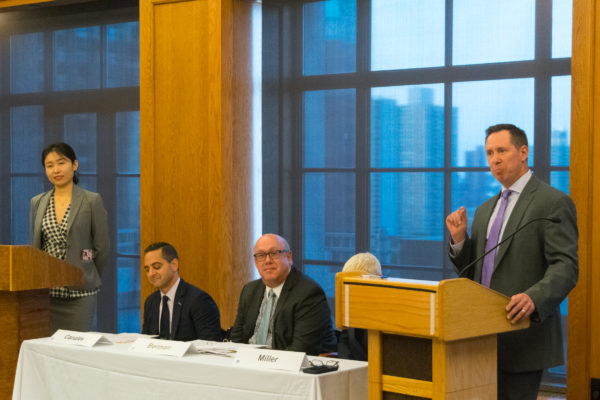
The CLE was titled, “How to Improve your Success in the Courtroom by Understanding Implicit Bias in your Presentation,” and featured five panelists — attorneys Mark Berman, Jason Canales, John Coffey, Patricia Miller and Jennifer Luo.
“This is the third year the section has put on an event in Kings County,” Berman said. “This year we took a different approach and put together a diversity program with a focus on implicit bias in the courtroom.”
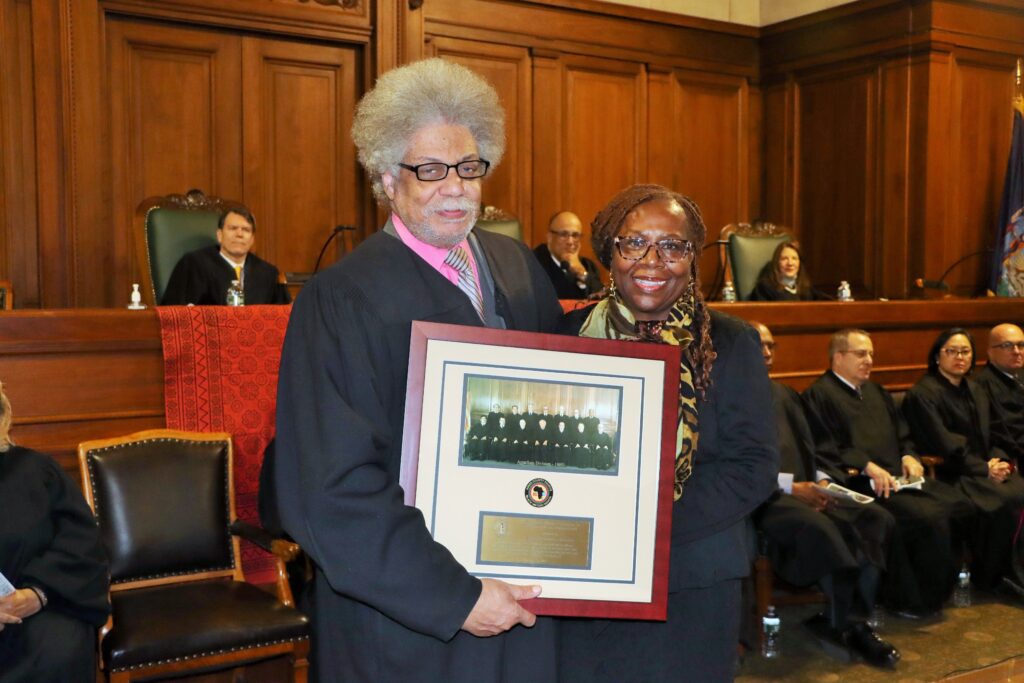
Justice Sylvia Ash and Justice Lawrence Knipel introduced the speakers at a New York State Bar Association continuing legal education seminar entitled, “How to Improve your Success in the Courtroom by Understanding Implicit Bias in your Presentation” that took place at Brooklyn Law School in September. Eagle photo by Rob Abruzzese
The one-hour course was sponsored by the Commercial and Federal Litigation Section, the Law Practice Management Committee and the Committee on Continuing Legal Education of the New York State Bar Association.
“Brooklyn is booming, really, with commercial litigation and we expect more,” Justice Lawrence Knipel, administrative judge of the Kings County Supreme Court, Civil Term, said. “I just looked up our stats and while Manhattan is still the busiest commercial section in the state with approximately 2,100 matters, Brooklyn is catching up with approximately 900 matters and growing.”
The CLE was organized with the help of Justice Sylvia Ash, presiding justice of the Kings County Supreme Court, Commercial Division, who gave a brief introduction at the beginning of the seminar along with Justice Knipel.
From left: John Coffey, Jason Canales, Mark Berman, Patricia Miller and Jennifer Luo.
“We are all conditioned to make assumptions about someone based on the smallest details that we know about them,” Coffey said when explaining bias. “It’s not inherently wrong to do so and, frankly, it’s just part of being human. But is it fair what we do with these assumptions? Does a reaction based on this preconception cause us to make someone uncomfortable, angry or causing them harm?”
After each of the panelists introduced themselves, Coffey and Luo took turns explaining various fact patterns before the rest of the panelists explained what was wrong about a situation and what could be corrected.
Throughout the discussion, the common theme was that by identifying biases, attorneys could give themselves the best advantage in court, whether that means not saying something that could upset a juror, or even exploiting a weakness of a judge or opposing counsel.
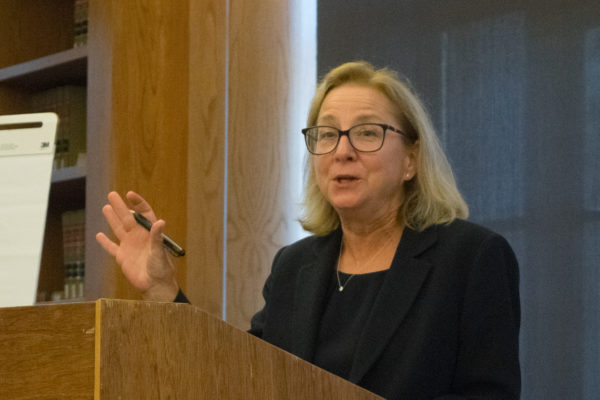
Laurel Kretzing, chair of the NYSBA’s Commercial and Federal Litigation Section.
Miller, the corporation counsel for New York City, explained that in past cases she has used the fact that she is a woman to gain sympathy from a jury when going up against a male adversary. Justice Knipel said that when he worked in the Criminal Court, he often saw scenarios in which women would be harsher on other women in certain cases.
“Sometimes, it’s not always clear if people are acting on implicit bias,” Luo said. “Perhaps we ourselves have assumptions of what their motivations are. How can we initiate a conversation that is conducive to discussing implicit bias without being confrontational?”
Justice Ash pointed out that she has noticed a pattern taking place in her courtroom in which older male partners at law firms often served as the lead in oral arguments despite the fact that their female associates clearly knew the case better. She explained that, rather than being confrontational, she has begun asking a few extra questions that often force the attorneys in front of her to see the situation the way she sees it.
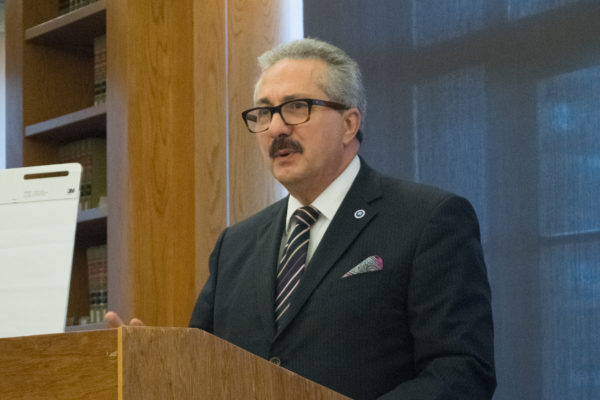
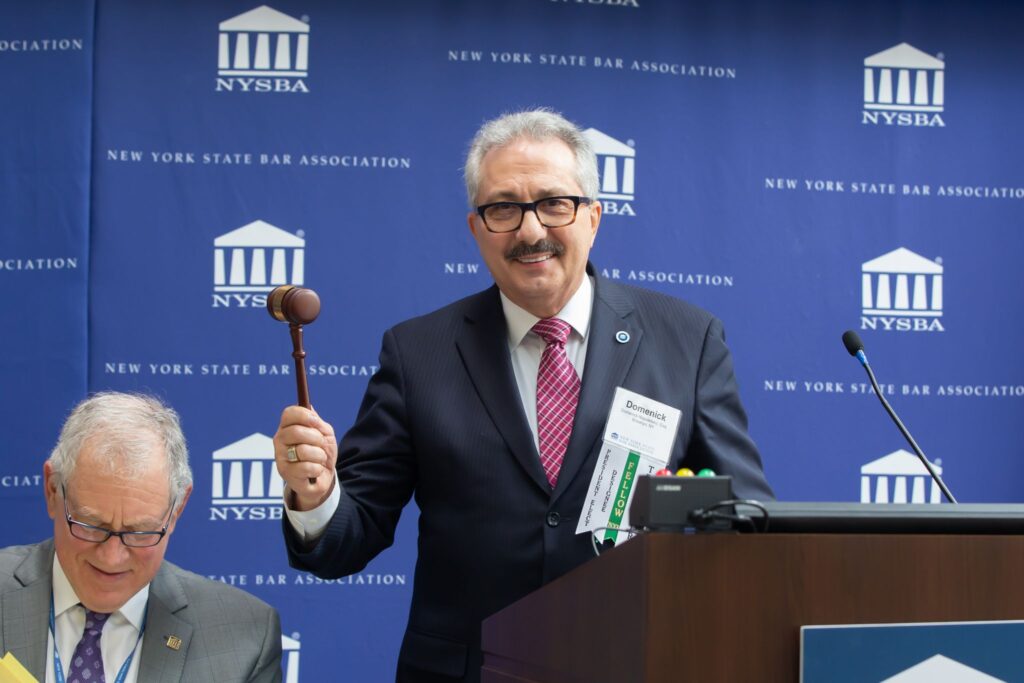
Domenick Napoletano, treasurer of the NYS Bar Association and a past president of the Brooklyn Bar Association.
“I try to now, whenever I see a woman, give them an opportunity to give the oral argument,” Justice Ash said. “I ask them up front who the lead will be, and I ask who did most of the work preparing the case, and sometimes that’s all it takes to make them think. And when the young women get a chance to articulate the issues, nine times out of 10 they do a great job, and the look on their face for getting that opportunity is like they just won the lottery.”
SUNSET PARK — “As a resident of Marine Park, one of the great surprises I found biking around Industry City and visiting Japan Village was to discover Bush Terminal Park. I continue to be amazed at the serene hideaways that the city offers in some of the busiest places — and, still, with an iconic view.”
BROOKLYN HEIGHTS — ‘A miracle that no one was killed …’ That’s what neighbors are saying about the collapse of the Hotel St. George marquee. Shown in this photograph are workmen beginning the removal and repair of the historic, old neon sign at the corner, referencing a relic of Brooklyn Heights’ past: the St. George Hotel.
ATLANTIC AVENUE — Exhausted shopper with cluster of bags and goods from mall at Boerum Place stops to look at huge construction site across the street. “Is that REALLY going to be a jail??” Her male companion is reassuring, “Nothing like Rikers … this is 21st Century.”
BROOKLYN HEIGHTS — Overheard in line at one of most popular pastry outlets on Montague Street: “Hope I can get them into a camp …” A mother with two pre-schoolers in tow was showing a friend the Dodge Y flyer for Healthy Kids Day on Saturday, April 18.