











EDITORS’ NOTE: The word “Luddite” originated during the Industrial Revolution as a reaction to automated production techniques. It comes from Ned Ludd, a mythological apprentice who supposedly smashed two knitting frames in a rage in 1779. English textile workers took inspiration from this folklore and named themselves after “General” or “King Ludd.”
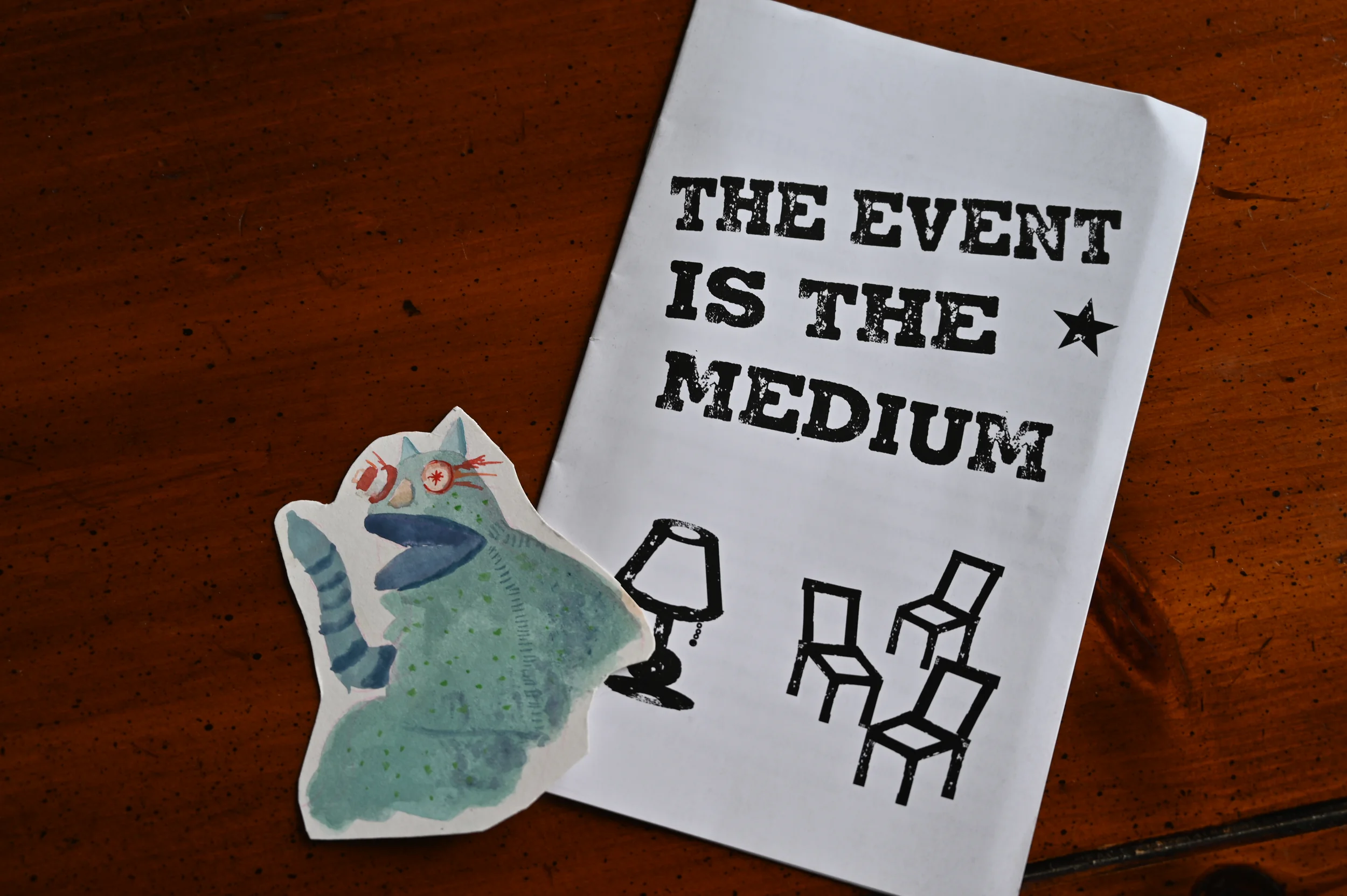
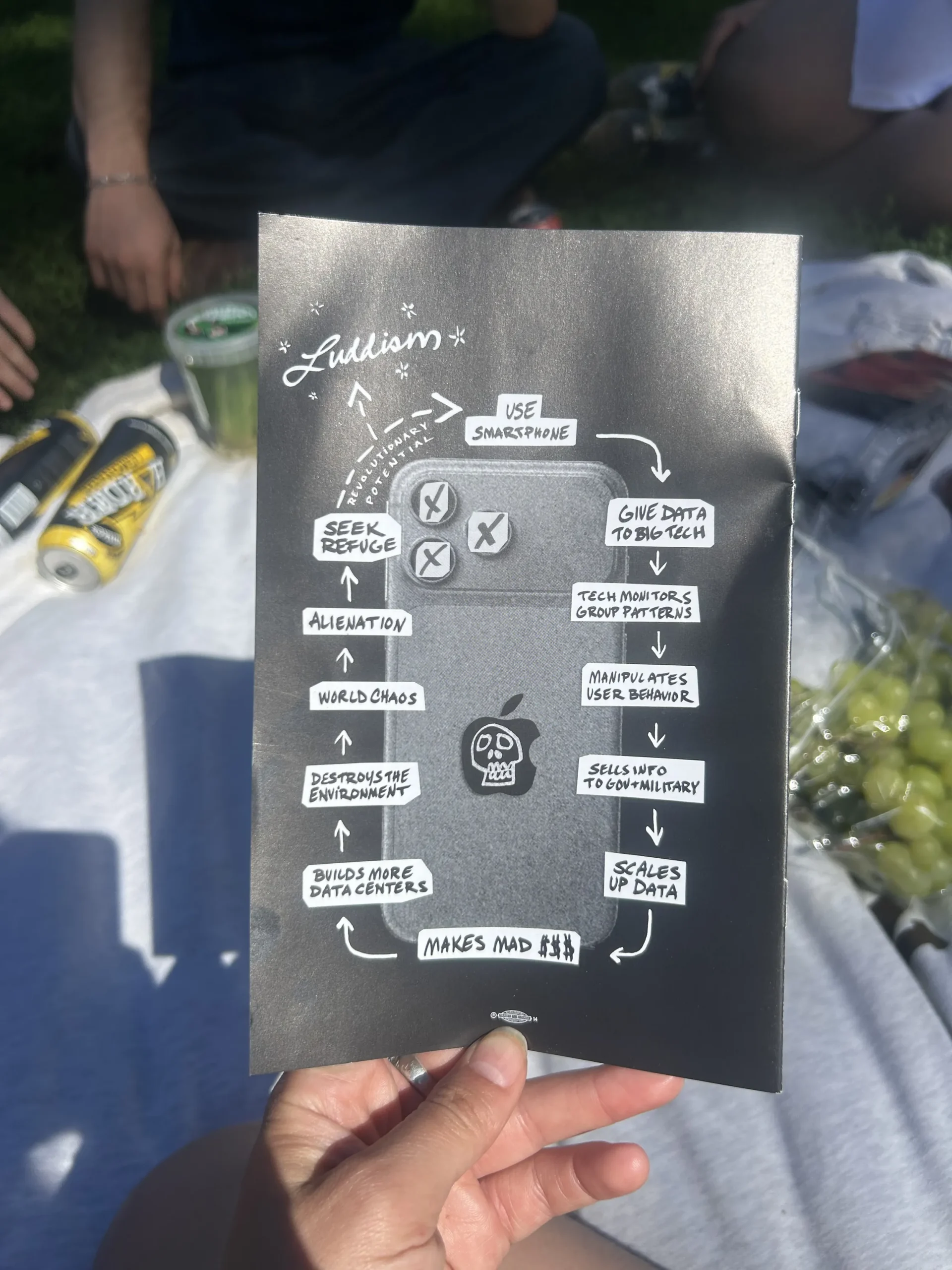
CITYWIDE — Black-and-white pamphlets were passed out at Prospect Park’s entrance and propped up in corners of neighborhood coffee shops. “Summer of Ludd: the Luddite’s Guidebook,” they read. “We ask that you please share this information offline.”
The pamphlets promoted a packed schedule of free, public, participatory events across the city, from June 28th through July 5th, each aiming to lure participants away from their phones and into public spaces.

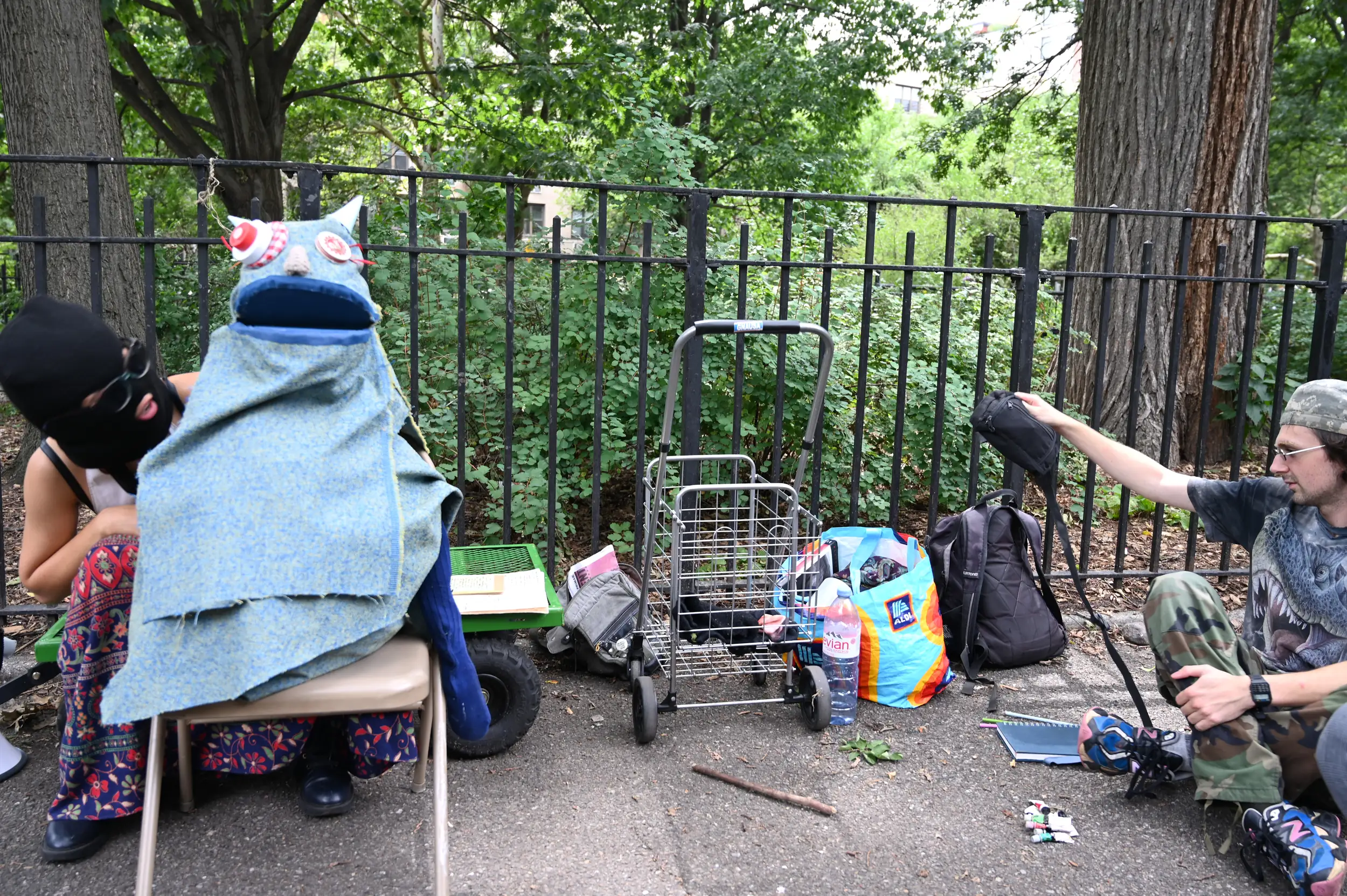
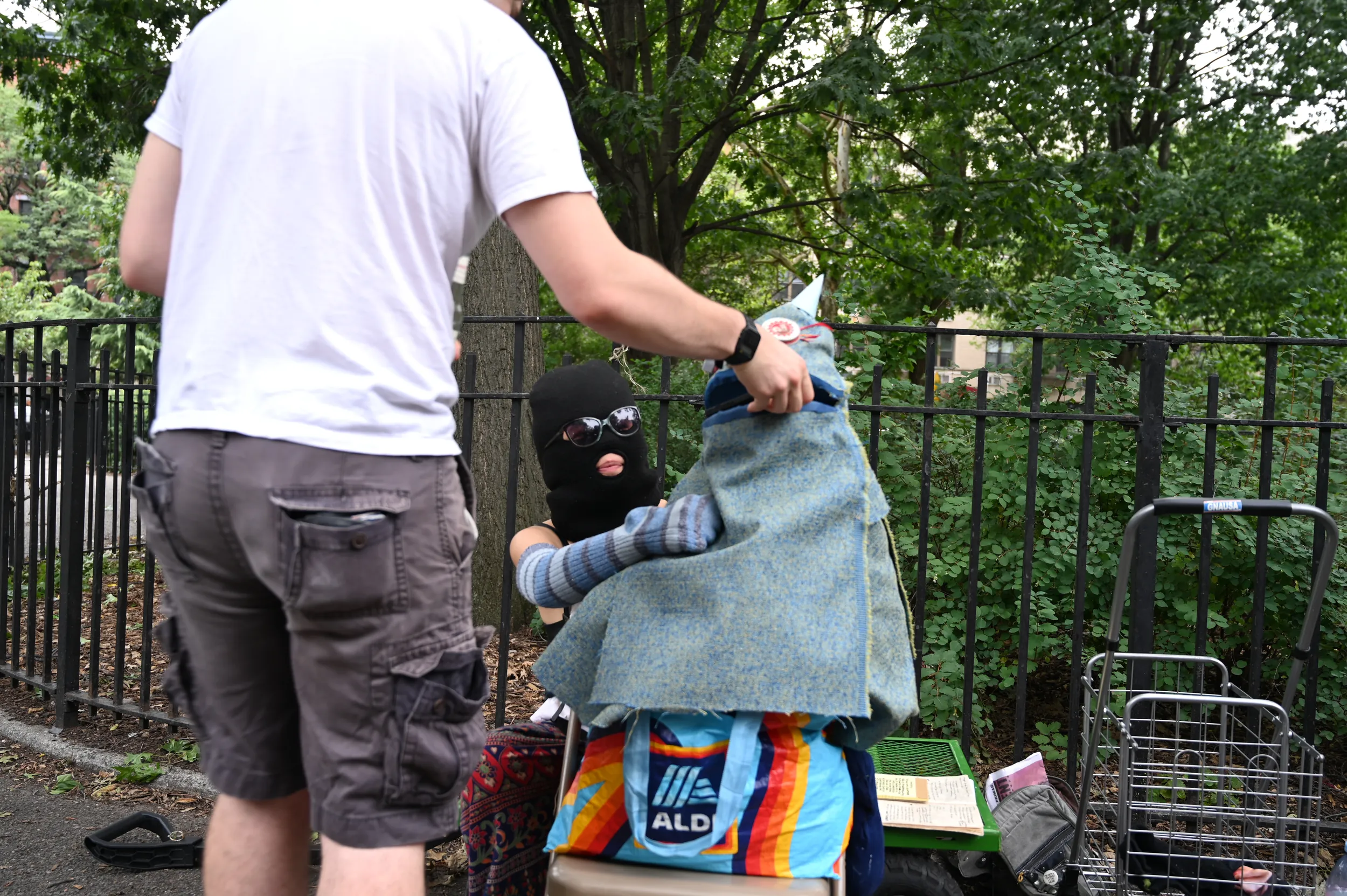
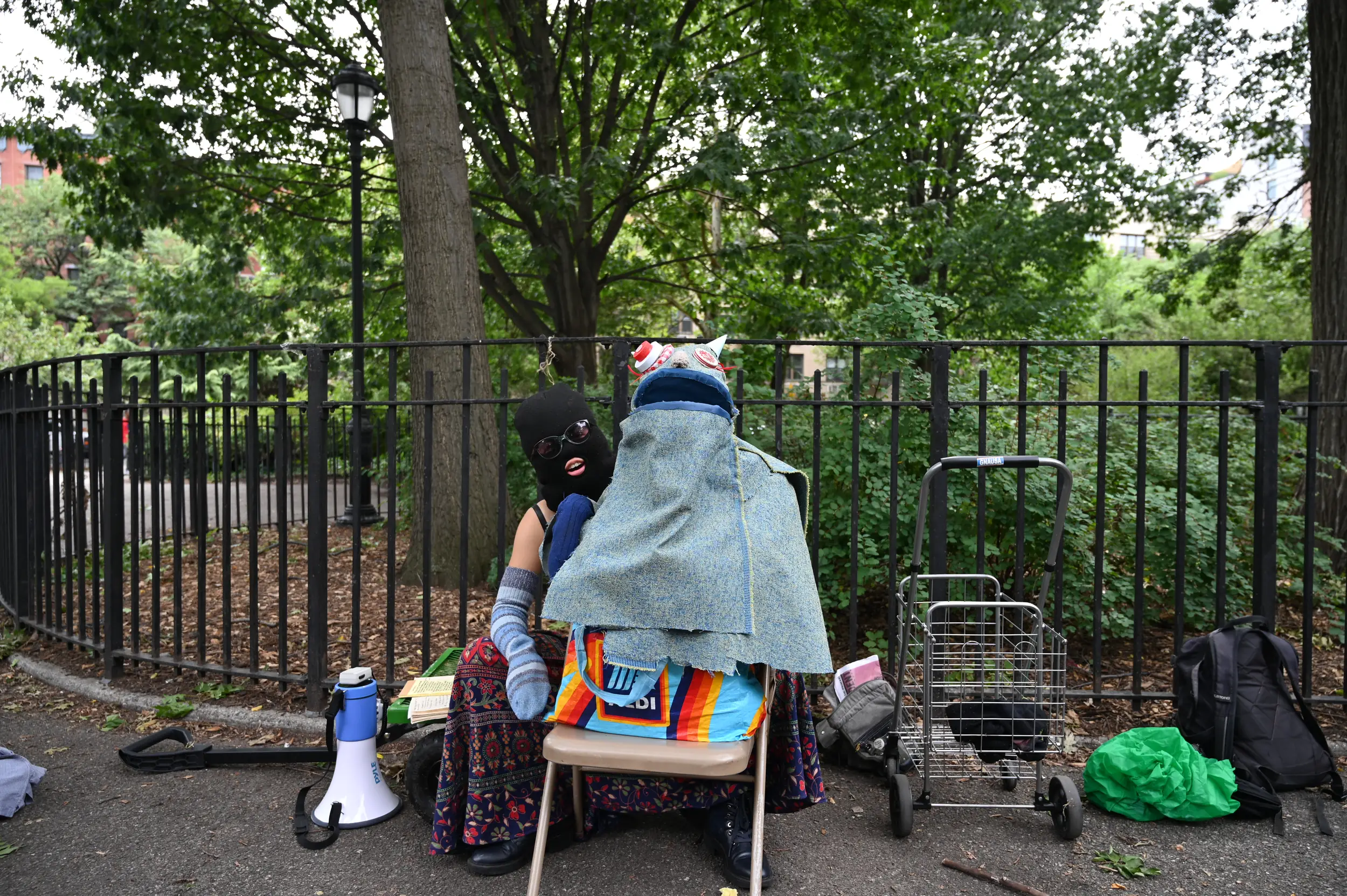
“We pulled off a well-attended week of programming, all promoted off social media, in the age of isolation and AI,” said Gowanus — the handmade puppet that served as the week’s spokesperson, allowing the loose band of organizers behind Summer of Ludd to remain anonymous — at a wrap-up press conference.
According to Gowanus, the event series wasn’t intentionally marketed to Gen Z, but young people comprised much of the audience.
The Summer of Ludd is the latest in a growing movement in New York City and across the country, as the first generation to grow up on social media is pushing back against an industry that they say has commodified their attention for profit.
Within even the last few years, the promise of social media, smartphones and the internet has soured. Tech giants like Meta, Google and TikTok are facing thousands of lawsuits about the addictive nature of their platforms and their impact on youth mental health.
Last year, Governor Kathy Hochul instituted a “bell-to-bell” phone ban in New York schools, joining 25 other states in prohibiting students from using cell phones during the school day.
For some, it’s a question of their personal relationship to technology. Other young New Yorkers have chosen to get off iPhones altogether, hoping to break a cycle of reliance and addiction.
“Now I am much more accustomed to talking to strangers and asking for help, asking for directions or asking to use their phone to call a friend. Tech isn’t the first thing I think about when I have a problem,” said Liv Cohen, a writer and line cook living in Brooklyn who ditched her iPhone last year.
“Dumb phones,” i.e., not smartphones, are gaining in popularity, especially among Gen-Z Americans, approximately 97% of whom owned a smartphone in 2025, according to Pew Research Center.
Though dumb phones may be a trend for Gen-Zers and “digital detoxers,” they are far more common in many countries outside of the United States.
Dumb phones vary, but most lack web browsing and social media, intentionally limited to a few key functions. Most stick to calling and texting. Some slightly more advanced options include GPS, camera, alarm clock, calculator and notes.
While most dumbphones come from classic phone companies such as Nokia and Motorola, newer brands like Light Phone capitalize on the trend with a sleeker, more modern look.
Maverick Mura, a 27-year-old painter living in Manhattan, uses a Cat (as in Caterpillar, the construction equipment manufacturer) S22 Flip phone. He saw his switch from an iPhone as a natural next step after years of trying to be more intentional about phone use for the sake of “preserving silence and just being able to focus.”
Mura is quick to admit that the Cat S22 is “basically a smartphone in a flip phone body.” The phone has a touchscreen, map function and apps. Mura receives tips for his job teaching at an art bar via Venmo and Cash App on the phone.
“I’m less addicted to my phone,” he said. There’s a sense of shame associated with scrolling on Instagram on a flip phone screen that often deters him.
Another popular option is the Jelly Star phone, a miniature Android phone that Cohen describes as “the size of a vape.” While technically a smartphone, it’s slow and the screen is tiny.
An iPhone is highly functional and easy to use, but for low-tech phone users, inconvenience and friction are part of the appeal.
About the flip phone model Nokia 2780, dumb phone influencer and anti-tech activist August Lamm wrote, “It’s awkward and confusing to use, and that’s absolutely fine, because the whole point is to not use it that much.”
Lamm assures readers not to blame themselves for their phone usage: “These machines were designed to addict you … How could you possibly blame yourself for getting caught in it?”
“The interface of the iPhone is so much more addictive than Android in general, [whether] you decide to get a nice Android or a tiny Android,” said Cohen, who switched to a Jelly Star last year after her iPhone broke.
While statistics show that only roughly 58% of smartphone users in the United States own an iPhone, research from 2023 suggests that around 80% of Gen Z smartphone users are loyal to Apple.
Ray George, a 25-year-old arborist from Brooklyn, used a flip phone for nine months before switching to a Motorola Razr 2023, a smartphone with a clamshell design that allows users to close the screen.
“There were definitely moments where I would be in a group, [and] I would notice, wow, everyone’s on their phone right now, and I don’t really have anything to check,” he said. “Not having the option to go on social media and scroll totally made me more present, more aware of my surroundings.”
In 2024, Lamm published a zine/manifesto/guide entitled “You Don’t Need a Smartphone.” Her book of the same name is forthcoming this fall from Penguin Random House. In the 32-page pamphlet, Lamm does some quick math.
“Time adds up,” she writes. Assuming five hours of screen time a day: “Even subtracting the hour or two of essential digital tasks (emails, bills, etc.), you are still on track to spend ten years of your waking life on your phone.”
Though the friction of dumb phones may break technology addiction, the inconvenience of not having a smartphone in a world built for and around smartphones is why so few people make the switch.
Max Karpawich, a 24-year-old software engineer living in New York City, switched to a Nokia flip phone after realizing how much time he was spending on social media.
But he kept going back.
“Inevitably something [would] pull me back to the smartphone. Not for social media or anything like that, often some kind of other function — maps, for work I need to be on call and have a reliable data connection, Slack, things like that,” Karpawich said.
After a year of flip-flopping, he switched back to an iPhone, albeit with a custom app he built to block his access to addictive apps.
“There’s a lot of really, really smart people who have dedicated their careers to building an ecosystem around the smartphone that is designed from the top down to maximize the time you spend on it, to get out more advertising revenue, to get more money,” he said.
Many ditch smartphones, looking to be more attentive and present in their social lives, but some young people also find that being less available online in a social world built around smartphones can lead to isolation.
Summer of Ludd, with its performances, teach-ins, protests, workshops on mending, self-defense, radios and how to flirt offline (“Luddite Rizz”), casts itself as both resistance and antidote to Big Tech.
Some events, like a teach-in about the burgeoning attention activism movement or a protest at Palantir’s office, took on the issue directly, identifying those companies profiting off attention and data.
However, the vast majority of the events took a broader approach, aimed at building community and social infrastructure without technology.
Attendees, phones tucked away, danced and played music at a jamboree or attended a mass poetry reading. Others took a self-defense class in Maria Hernandez Park, learned how to mend their old clothes, attended a talk about New York’s rats, or did a ritual gathering to welcome the Strawberry Moon in Fort Greene Park.
To the Luddites, organizing free, public, participatory, low-tech — and fun — events, publicized off social media, is an integral part of their organizing.
“When these hyper-surveillance tools try to keep us all in an isolated box in our rooms, the very opposite of that would be communing in public space,” said Gowanus.
The Summer of Ludd built on a burgeoning ecosystem of anti-tech organizing in Brooklyn; key to that ecosystem is the DUMBO-based Strother School for Radical Attention (SoRA), a leader in the new attention activism movement.
SoRA emerged out of the idea that human attention had become a basic commodity in the world’s biggest industry, specifically that social media platforms — beginning to deform democracy around the world — relied on a profit model that captured, quantified and commodified attention by maximizing our time on these devices, explained SoRA Co-Founder and Program Director Peter Schmidt.
This industry turns a profit by making products addictive, they say. As a result, people have less attention for art, the environment, other people, political action and anything else that requires focus and presence.
Historian D. Graham Burnett and Schmidt launched SoRA in 2023 as a public-facing school that would equip a generation of activists to push back against this exploitation they call “human fracking.”
At the core of their work are “attention labs,” free participatory workshops held in their DUMBO studio that focus on studying attention and how to collectively reclaim it.
While both SoRA and the Luddites behind Summer of Ludd — many of whom are affiliated with the school — urge participants to put their phones away, they don’t believe technology is the issue per se.
“These smartphones could be really helpful tools,” said Schmidt. “The fact is that they’ve developed through a business model that turns human attention into money — that’s what’s really bad for people.”
At a Summer of Ludd event, one participant pulled out her smartphone to get the number of another participant she had met there. When she joked about feeling guilty for using her phone, an organizer jumped in.
“Luddites are against tech that works against connectivity and the collective! This is building connectivity,” she reassured the participant.
At the end of the Summer of Ludd, questions lingered about the next steps for the loosely organized coalition. It’s too early to say whether the movement toward dumbphones is indeed a movement or just a trend, but it’s clear there’s a hunger for offline engagement.
“Most people understand that what’s going on right now with Big Tech and the deterioration of our social and political lives has to do with attention,” said Schmidt.
“This crisis is an opportunity. It’s something that people are looking for because people are burnt out.
Schmidt believes people know something is wrong, but they don’t know what to do.
“As it happens, attention with other people is one of life’s great pleasures,” he added.






SUNSET PARK — “As a resident of Marine Park, one of the great surprises I found biking around Industry City and visiting Japan Village was to discover Bush Terminal Park. I continue to be amazed at the serene hideaways that the city offers in some of the busiest places — and, still, with an iconic view.”

BROOKLYN HEIGHTS — ‘A miracle that no one was killed …’ That’s what neighbors are saying about the collapse of the Hotel St. George marquee. Shown in this photograph are workmen beginning the removal and repair of the historic, old neon sign at the corner, referencing a relic of Brooklyn Heights’ past: the St. George Hotel.

ATLANTIC AVENUE — Exhausted shopper with cluster of bags and goods from mall at Boerum Place stops to look at huge construction site across the street. “Is that REALLY going to be a jail??” Her male companion is reassuring, “Nothing like Rikers … this is 21st Century.”
BROOKLYN HEIGHTS — Overheard in line at one of most popular pastry outlets on Montague Street: “Hope I can get them into a camp …” A mother with two pre-schoolers in tow was showing a friend the Dodge Y flyer for Healthy Kids Day on Saturday, April 18.