Other than the egg cream, no drink screams “Brooklyn!” to me louder than the Cherry Lime Ricky, even though it is not a Brooklyn original. We’ll get to that. That scream echoed through my memory like a pinball bouncing around the bumpers when, in my email, appeared a promotional piece from Dunkin’ Donuts. The drink of the week was going to be a Cherry Lime Ricky. In minutes, I was at the counter ordering one. As I write this, I just finished it, and with every sip came a flashback to the candy store where I would order mine. I was there so often, I can see it in my mind’s eye. Every Brooklynite from my generation has a candy store. This is mine. I hope it helps you remember yours.
I’m sure it had a formal name, like maybe “The Avenue H Shop,” but to us it was “Lou and Al’s.” Lou and Al were real people. They were buddies from the Army. After mustering out, they opened the candy store. One worked the register, the other the counter. The store was on Avenue H. I’d walk up Rugby Road (East 14th Street) and hang a left on “H,” not Avenue H, mind you, just H. Remember, we’re in Brooklyn. It was a two-block walk. There was a five-story, red brick, low-rent apartment house on the corner.
Passing the apartment building, Ebinger’s Bakery was next, and then Lou and Al’s. Across the street was a row of very much looking worse-for-wear private homes. Next to the candy store was the underpass. Saturday nights, that’s where we got the early edition of the Sunday Times. Above it rumbled the BMT, which squealed to a stop at the Avenue H local station. The underpass was an unmarked demarcation line. The other side was understood to be a place where Jews weren’t welcome. It’s odd, looking back on it. Jews went up to Forster Avenue, a longer walk, to shop at Bohacks, later to become Walbaums. Gentiles shopped at the A&P, which was reached by walking through the underpass. Was that an iron-clad fact? No, but to a 10 or 11-year-old, it seemed to be, even though no one ever expressly said it.
The outside of Lou and Al’s was non-descript to say the least. In fact, so was the inside. To the left of the door was the cash register. It was a big one with push buttons, probably now worth a small fortune to collectors. There was an opening, and on the other side of it started the soda fountain counter, which was so-called because of the soda fountains, which makes sense. A customer could also get a variety of sandwiches, mostly tuna or BLTs, iced tea, and hot coffee. Hard to believe that coffee was a dime. That would be $1.37 today. Someone tell that to Starbucks… It was at the soda fountain that you could get a really chocolaty, foamy Egg Cream or a perk-up-your-mouth Cherry Lime Rickey, both served up in tall glasses that bowed out towards the top. And of course, a straw. Everything else faced the counter from across the linoleum aisle.
Directly opposite the register begins the good stuff, good for kids, anyway. In the first bin were the pink, round balls. In some neighborhoods, they were called “Pinkies,” but by us (as we would have said it), they were known as spaldeens. They played their role in an almost infinite number of games: punch ball, stick ball, box ball, and a variety of sub-species of those games. If one were a marbles player, which I was, searching the next bin full of bags was like mining for gold. Everyone had their favorites. Cat’s eyes were the sought-after prize. Also to be had were the balsa wood airplanes. They came in two pieces. With expectant fingers, you slipped the wing through a slot in the body, and it was ready to fly—usually straight into the ground. An easy workaround was to put a paper clip on the nose. It created a smooth, long flight. In a skilled hand, they could do loops. And the Topps baseball cards? They were under the register under the watchful eyes of either Lou or Al. They too played multiple roles. You could flip them or wing them across the cement at a wall, hoping for a winner-take-all leaner, and of course, you traded them. Oh, how easily and cheaply we could be entertained.
Reading matter was above the bins. For me, all that mattered was the latest editions of my favorite comic books. Curses to my mother who threw out my collection. Many of the comics were also comic strips in some of the newspapers. So many still are read today and have become movies—Blondie, Beetle Bailey, Peanuts, the Marvel characters, Superman, Supergirl, and Batman. Above them were the newspapers. Imagine this: the Daily News, the Daily Mirror, The New York Times, The New York Post, the Journal American, The Wall Street Journal, and of course, the Brooklyn Eagle. And there was such a thing as afternoon or evening editions. The Post deserves another word or two.
I drove my mother crazy when I read the Post. The Post’s sports section was in the back of the paper. It was like the paper had two front pages, just that one was in the back. It had a great sports section, so when I picked up the Post to read it, I always read it from the back to the front. Some parents just don’t understand.
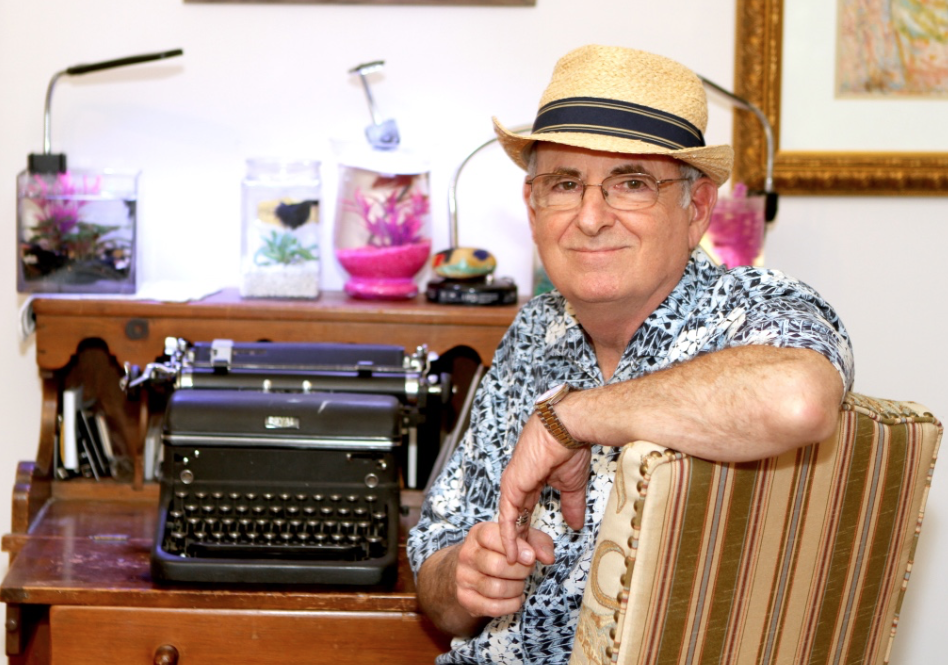
So, that’s my little walk down memory lane. Forgive me a sales moment. There are plenty more memories in my book, The War of the Itchy Balls and Other Tales From Brooklyn. If you’re from the NY Metropolitan area, I don’t have to explain Itchy Balls to you. If you are not, they are not what you’re thinking. Find a picture of an American Sycamore Tree in the Spring, or look at the cover of my book, which, like every other book in the world, can be found on Amazon.
Oops. ‘almost forgot the most important fact—the Lime Rickey. The Lime Rickey is not from Brooklyn. It was originally an alcoholic drink (Bourbon, lime, and seltzer) created in the 1880’s at the she-she watering hole called Shoomaker’s for Colonel Joe Rickey, a big-time lobbyist in Washington, DC. Prohibition turned it into a non-alcoholic favorite. Now I’m done. If I sparked memories, share them, please.