The web isn’t broken. It’s working exactly as designed
Adam L. Penenberg
Image generated using Nano Banana.
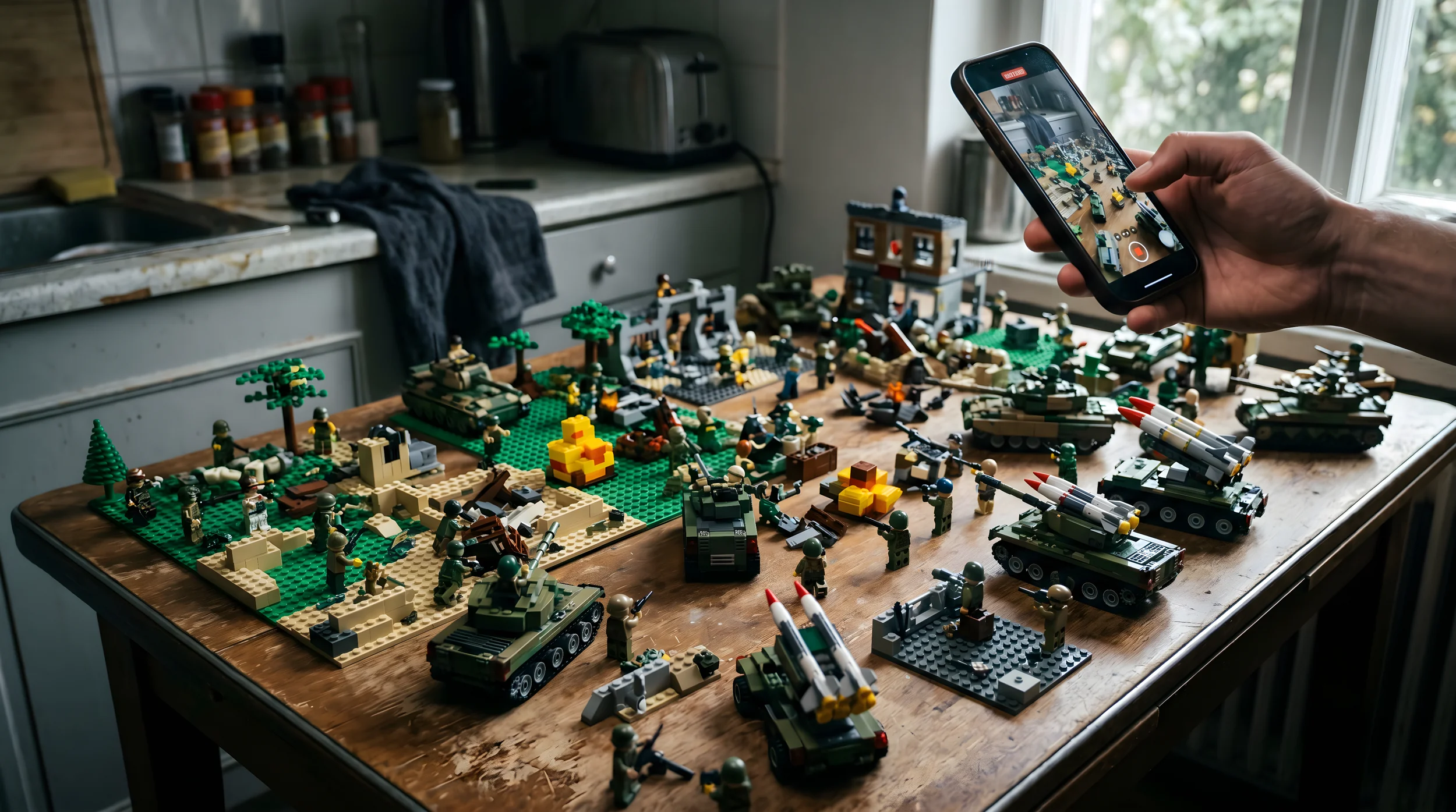
This month, as American missiles were still falling on Iran, apropaganda video went viral. It was animated in the style of The LEGO Movie: bright, blocky, cheerful. President Donald Trump spiraled through a vortex of Epstein files. Iranian commanders rapped. The production quality was slick. The emotional message was clear: America is the aggressor, Iran is the plucky underdog, and this whole war is kind of absurd.
It was made by fewer than ten people. It was live within hours of the first strikes. Millions watched it before a single news organization filed a report.
We tend to think of memes as jokes — the internet’s background noise, cat photos and reaction GIFs, and whatever SpongeBob SquarePants is doing this week. That’s by design. The joke is the delivery mechanism. The ideology is the payload. The cost, negligible. The influence, palpable.
Richard Dawkins invented the word in his 1976 book, “The Selfish Gene.” He borrowed from the Greek mimeme, meaning something imitated, to describe how ideas spread through culture the same way genes spread through populations: replicating, mutating, competing for survival.
He was talking about tunes and catchphrases and fashions. He wasn’t thinking about geopolitics. But the logic was always there.
Memes work because they’re cognitively efficient. They bypass slow, deliberate reasoning and go straight for the gut — fast, automatic, emotional. Psychologist Daniel Kahneman calls this System 1 thinking.
A meme packages a complex argument into a single image with a caption, strips out the nuance and leaves the feeling behind. By the time your analytical brain shows up to evaluate the claim, the emotional verdict has already been delivered. You’ve decided how you feel. The fact-check arrives too late.
That’s not an accident. That’s the architecture.
The history of political memes unfolded in three phases, each absorbing the last.
In 2011, Occupy Wall Street gave us “We Are the 99%,” a single hashtag that reframed economic inequality overnight, moving from protest signs to memes to mainstream media in days. That was organic: humor, outrage, solidarity. Production value was low; authenticity was high.
By 2016, state actors had studied the playbook. Russia’s Internet Research Agency produced over 80,000 pieces of content targeting American voters, not to promote a candidate, but to maximize emotional division.
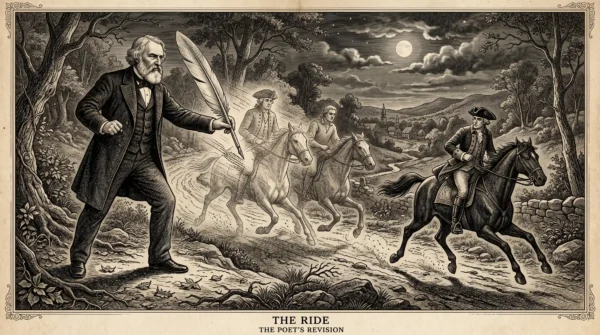
Image generated using Nano Banana.
Precision-targeted by demographic, these posts were algorithmically amplified by the platforms themselves, which had no incentive to stop them. Pepe the Frog got co-opted. The meme became a weapon.
Now we’re in phase three. Generative artificial intelligence has dropped the production cost to nearly zero and the turnaround time to hours. What used to require a media operation now requires a laptop and a prompt.
And here’s what actually stops people cold about Iran’s LEGO videos: They’re good. Not good-for-propaganda good — just good. The animation is fluid and cinematic. The music is original, AI-composed tracks that sound like they belong on Spotify’s New Music Friday, voices cloned from Eminem and other marquee rappers, hooks you find yourself humming before you’ve processed what you just watched.
People didn’t share these videos despite knowing they were propaganda. They shared them because they were better produced than most of what their favorite artists are putting out. The toy aesthetic gives everyone cover: it’s just a cartoon. But the music is the thing that makes it stick.
Here’s the part that should make you uncomfortable: both sides are running the same playbook.
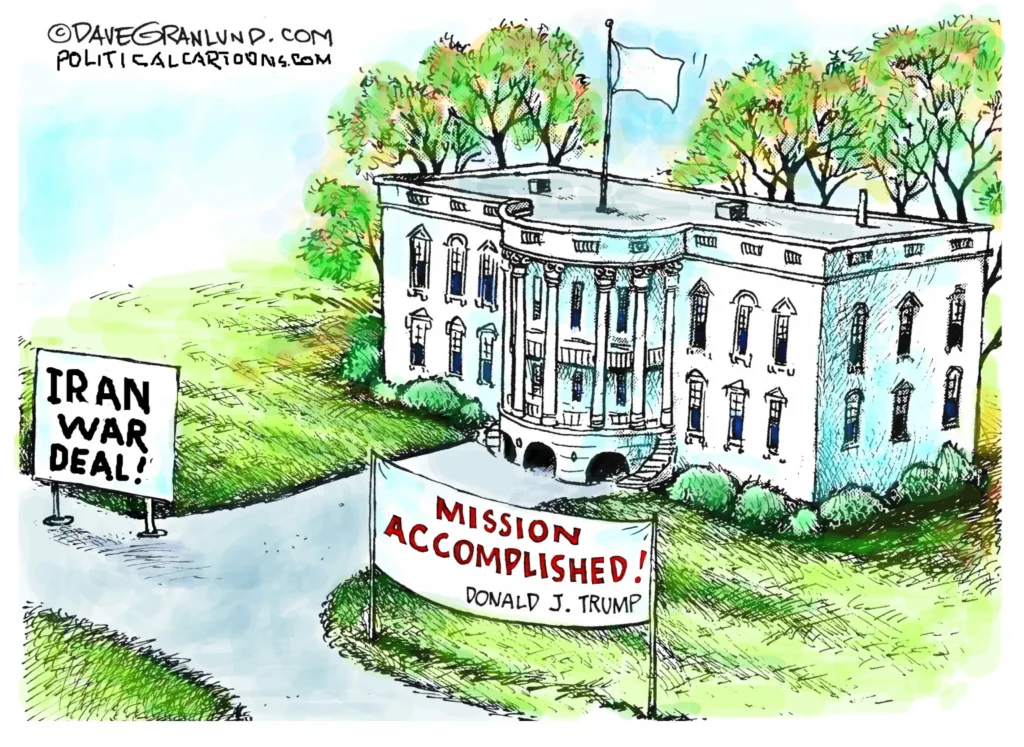
The Trump administration, the same one that blamed video games for domestic gun violence, deployed Call of Duty montages cut with real missile strike footage on official channels. AI images of Trump as a muscular Jedi, as the Pope, as a figure of divine authority, posted from the White House. SpongeBob, Captain America — the aesthetics of childhood weaponized for war.
As Dr. Pamela Rutledge wrote in Psychology Today, “The media, condemned as a driver of violence at home, has become a tool of persuasion when the violence is state-sanctioned and directed at others.”
The law offers no help. Political speech, including deliberately false political speech, receives the highest First Amendment protection.
State laws targeting AI deepfakes in elections keep getting struck down on free speech grounds. Foreign actors are beyond U.S. jurisdiction entirely. The platforms are shielded by Section 230. There is, effectively, no legal architecture governing any of this.
What we’re left with is a democracy whose information environment is being shaped in real time by a tool anyone can use, that no one can regulate, that spreads faster than truth and that normalizes, slowly and cumulatively, whatever it keeps showing you.
The Founding Fathers believed bad speech would be answered by more speech. They designed a system for pamphleteers arguing in a town square. They didn’t imagine a town square where ten thousand AI-generated pamphlets could appear before breakfast, manufactured by a foreign government, indistinguishable from the ones your neighbor made.
The meme isn’t the message. The meme is the war.
And we’re all already in it.
You click a link. Before a single word loads, you dismiss a cookie banner. A newsletter pop-up blocks the screen. An autoplay video starts blaring. The page jumps. You lose your place, scroll back and hit another box that begs you to download the app.
Somewhere beneath all this is supposedly an article.
A developer recently measured a single visit to The New York Times: 422 network requests, 49 megabytes downloaded — roughly the size of a full music album — just to read a few paragraphs. You didn’t load an article. You loaded an advertising machine that happens to contain journalism.
Modern news websites aren’t built to be read. They’re built to be measured.
Every pop-up, every autoplay video, every layout shift traces back to one thing: metrics — time on page, viewability, engagement. The longer you stay, the more ads can be shown, the more revenue flows. So the system nudges you, interrupts you, slows you down, not because anyone thinks it’s a good experience, but because the incentives reward it. Your frustration isn’t the goal; it’s the exhaust.
No print edition would tolerate this. The New Yorker’s pages are clean, restrained, respectful. Open the same organization’s website and videos loop, ads repeat, pop-ups stack. Text gets squeezed into a narrow strip between banners. On mobile, the article fights for space like a rider on the L train at rush hour. Same organization, completely different incentives.
Here’s what most people miss: No one set out to ruin reading. No editor decided to make it miserable. This is what happens when thousands of small, rational decisions accumulate. Boost time on page. Improve ad viewability. Increase newsletter signups. Add one more monetization slot. Each move makes sense in isolation. Together, they produce something almost unrecognizable.
Image generated using Nano Banana.
The system isn’t optimized for comprehension. It’s optimized for interaction: clicks, scrolls, pauses, delays, anything that can be measured and sold. Once you optimize for those signals long enough, the experience turns against the user. It becomes a form of digital hostile architecture — not designed to keep you out, designed to keep you just engaged enough to extract more value.
Readers respond the only way they can. They install ad blockers. They switch to reader mode. They use aggregators. They stop clicking. Or they ask artificial intelligence to summarize the news without the chaos.
Publishers respond by adding more ads, more interruptions, more friction. A feedback loop with only one direction.
The irony is hard to miss. The same industry that built its identity on informing the public has constructed a delivery system that actively interferes with that informing. Not because journalists don’t care. Because the business model doesn’t reward caring. Journalism becomes the pretext, not the point.
The web didn’t turn hostile because designers forgot how to build good experiences. It turned hostile because attention became the product, and once attention is the product, the reader eventually becomes the obstacle.
This won’t be fixed by better pop-ups or more politely timed autoplay videos. The fix requires something more fundamental: media companies willing to stop trying to extract maximum engagement and start building products people actually want to spend time with. Subscription models push in that direction. Reader mode shouldn’t have to exist in the first place.
Until the incentive structure changes, the experience will continue to degrade. And readers will continue to find faster, cleaner ways to leave, including handing the whole mess to AI and asking for the three-sentence version.
At which point, publishers will have optimized themselves out of an audience entirely.