✰PREMIUM The Brooklyn Museum presents ‘Cézanne to Modigliani: Gifts of Modern Art from the Pearlman Collection’
The historic Henry and Rose Pearlman collection, featuring European masterpieces by Cézanne, Degas, Gauguin, Manet, Modigliani, Pissarro, Soutine, Toulouse-Lautrec, Van Gogh and others, comes to the Brooklyn Museum for its final full-collection tour.
On view Oct. 2, 2026 to April 18, 2027

Vincent Van Gogh. Oil on canvas. Gift of the Henry and Rose Pearlman Foundation and Family. Photo: Bruce M. White
Special from the Brooklyn Museum
March 27, 2026
Copy Link
Email
Facebook
X
LinkedIn
WhatsApp
Telegram
Pinterest
Print
PROSPECT HEIGHTS — This fall, the Brooklyn Museum will open “Cézanne to Modigliani: Gifts of Modern Art from the Pearlman Collection.” The exhibition, which follows LACMA’s presentation on view in early 2025, showcases more than 50 modern European works from the late 19th to mid-20th century, drawn from the renowned collection of Henry and Rose Pearlman.
Featuring paintings, sculptures and works on paper, “Cézanne to Modigliani” celebrates the transformative gift of this stellar collection to the Brooklyn Museum, LACMA and MoMA. The Pearlman Foundation’s decision to entrust the stewardship of these treasures to be shared across three institutions is the ultimate manifestation of their family’s generosity and commitment to sharing their prized artworks with a wide public.
This will be the Brooklyn Museum’s sixth exhibition of works drawn from the collection, honoring the museum’s longtime relationship with the Pearlmans. The gift of 29 of the Pearlman artworks to Brooklyn marks one of the most significant gifts of European art in the museum’s history.
Chaim Soutine. Oil on canvas. Gift of the Henry and Rose Pearlman Foundation and Family. Photo: Bruce M. White
“The Pearlman Collection is an exquisite selection of modernist works, and we are thrilled to offer our visitors in Brooklyn a final opportunity to see them all together,” says Lisa Small, senior curator of European Art. “We are particularly excited to spotlight the works that are entering our collection and commemorate a truly momentous gift for our institution.”
The artworks on view exemplify the radical new styles, subjects and art world economies that began to disrupt centuries of academic traditions and hierarchies in the 19th century. It features artists from a range of backgrounds, including several Eastern European immigrants, who explore the complexities of representation, abstraction, materiality and illusion.
Brooklyn’s presentation will foreground narratives of encounter and connection: between Pearlman and the artists he collected (including fascinating provenance and conservation stories); between artists and their subjects; and among the artists themselves.
The exhibition opens with the painting that inspired Pearlman’s passion for modern European art and would guide the rest of his approach to collecting: Chaïm Soutine’s “View of Céret” (1921–22), which is among Brooklyn’s gifts.
Another Brooklyn gift, a notable early canvas by Toulouse-Lautrec that parodies a classicizing Salon painting, emphasizes the tensions between tradition and innovation — in subject and form — that characterize all the artworks Pearlman collected.
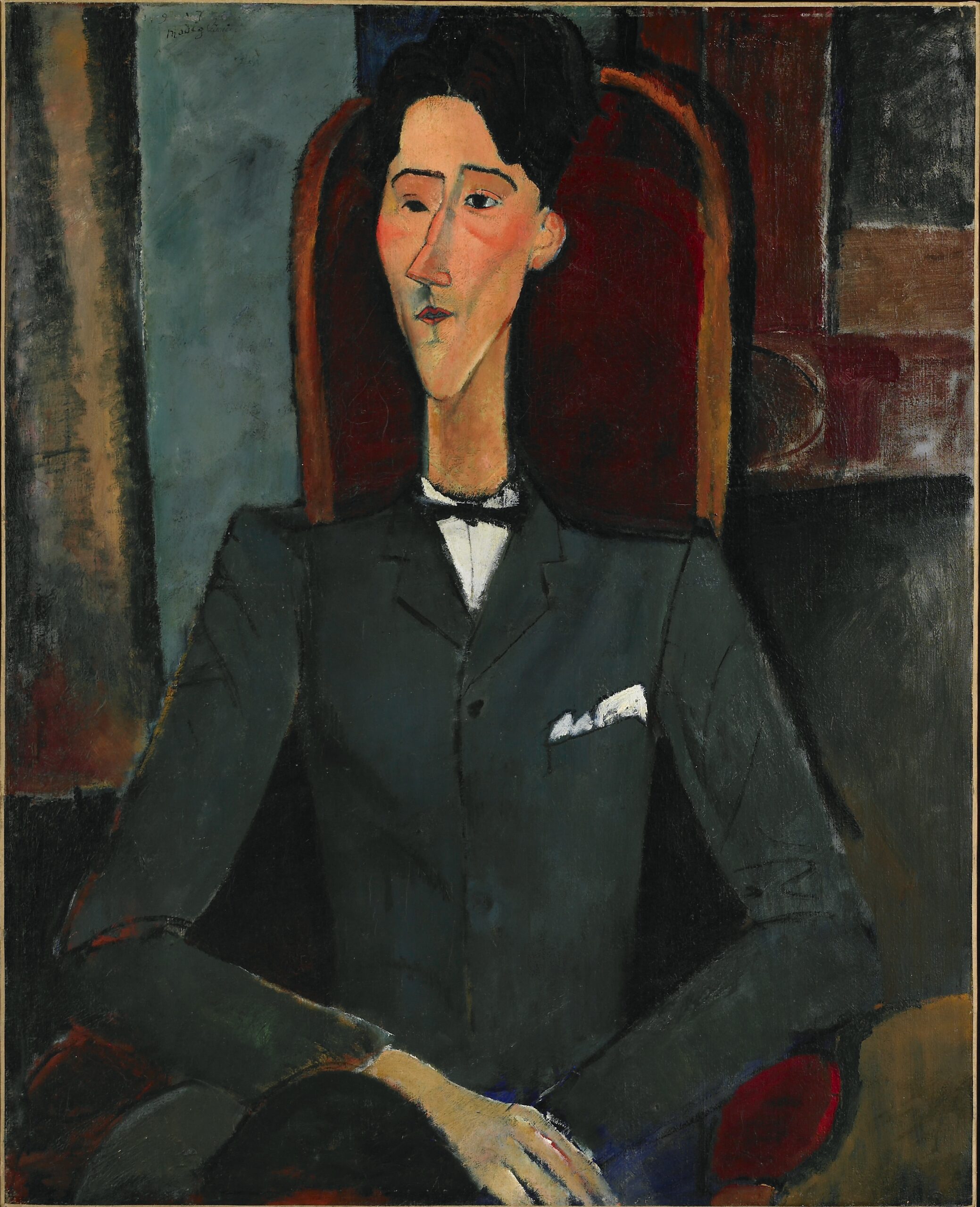
The show also features the first two Amedeo Modigliani paintings to enter the Brooklyn Museum’s collection, portraits of Jean Cocteau (1916) and Léon Indenbaum (1915), as well as a rare limestone bust by the artist. Other works entering the Brooklyn Museum collection that will be on view include paintings, works on paper, and sculptures by Gustave Courbet, Honoré Daumier, Edgar Degas, Paul Gauguin and Camille Pissarro.
The Pearlmans collected Paul Cézanne in depth, including several major landscapes, figural works and a cache of watercolors by the artist. Additional artworks by Édouard Manet, Alfred Sisley and Vincent Van Gogh further reveal the Pearlman collection’s status as an elite grouping of modern European masterworks.
In addition to the artworks, “Cézanne to Modigliani” will have a special focus on the Pearlmans’ personal story, including Henry’s collecting vision and relationships with artists like Oskar Kokoschka and Jacques Lipchitz, each of whom created a portrait of him.
Through photographs, letters and archival documents, Brooklyn’s presentation will also spotlight the Pearlmans’ lasting connection with the borough of Brooklyn and its museum. Henry, the son of Russian-Jewish immigrants, was raised in Park Slope and, with only a high school education, became a successful businessman during World War II, when he founded the Eastern Cold Storage Insulation Company.
Rose immigrated to the United States from Minsk, Belarus, at age four, grew up in Brooklyn, and was a savvy, practical advisor to Henry as he built the collection. Starting in the 1950s, the Pearlmans made many long-term loans to the Brooklyn Museum, and their collection was the focus of six special exhibitions here, the last one of which took place in 1986.
Credits
“Cézanne to Modigliani: Gifts of Modern Art from the Pearlman Collection” is co-organized by the Brooklyn Museum and the Los Angeles County Museum of Art. The Brooklyn Museum presentation is curated by Lisa Small, senior curator of European Art.
Paul Cézanne, “Study of a Skull,” watercolor and graphite on buff wove paper. Gift of the Henry and Rose Pearlman Foundation and family. Photo: Bruce M. White/Brooklyn Museum
About the Pearlman Foundation
For some 50 years, the Henry and Rose Pearlman Collection remained on long-term loan to the Princeton University Art Museum. In the decades since Henry and Rose’s donation of these works to the foundation, there have been three traveling shows of the collection, some 500 individual loans of artworks to exhibitions across the globe and two tour publications, including a recent one offered online and free to the public.
Meanwhile, the foundation created a website that allows high-resolution viewing of works, including those that can’t always be on exhibition. It supported the digitalization of the history of the collection by the Archives of American Art at the Smithsonian Institution and its availability online. And it encouraged proactive lending, offering individual and small groupings of works to museums to exhibit within their permanent collection galleries.
Three generations of Pearlman family members came to the recent decision to donate the family foundation’s collection. In a novel arrangement that reflects the values of Henry and Rose, the Brooklyn Museum, LACMA and MoMA have agreed to share the works on a regular basis, making them available to diverse audiences and in different contexts, always accessible to the public.
Edgar Degas. Oil on canvas. Gift of the Henry and Rose Pearlman Foundation and Family. Photo: Bruce M. White
About the Brooklyn Museum
For 200 years, the Brooklyn Museum has been recognized as a trailblazer.
Through a vast array of exhibitions, public programs and community-centered initiatives, it continues to broaden the narratives of art, uplift a multitude of voices and center creative expression within important dialogues of the day.
Housed in a landmark building in the heart of Brooklyn, the museum is home to an astounding encyclopedic collection of more than 140,000 objects representing cultures worldwide and over 6,000 years of history, from ancient Egyptian masterpieces to significant American works, to groundbreaking installations presented in the only feminist art center of its kind.
As one of the oldest and largest art museums in the country, the Brooklyn Museum remains committed to innovation, creating compelling experiences for its communities and celebrating the power of art to inspire awe, conversation and joy.
SUNSET PARK — “As a resident of Marine Park, one of the great surprises I found biking around Industry City and visiting Japan Village was to discover Bush Terminal Park. I continue to be amazed at the serene hideaways that the city offers in some of the busiest places — and, still, with an iconic view.”
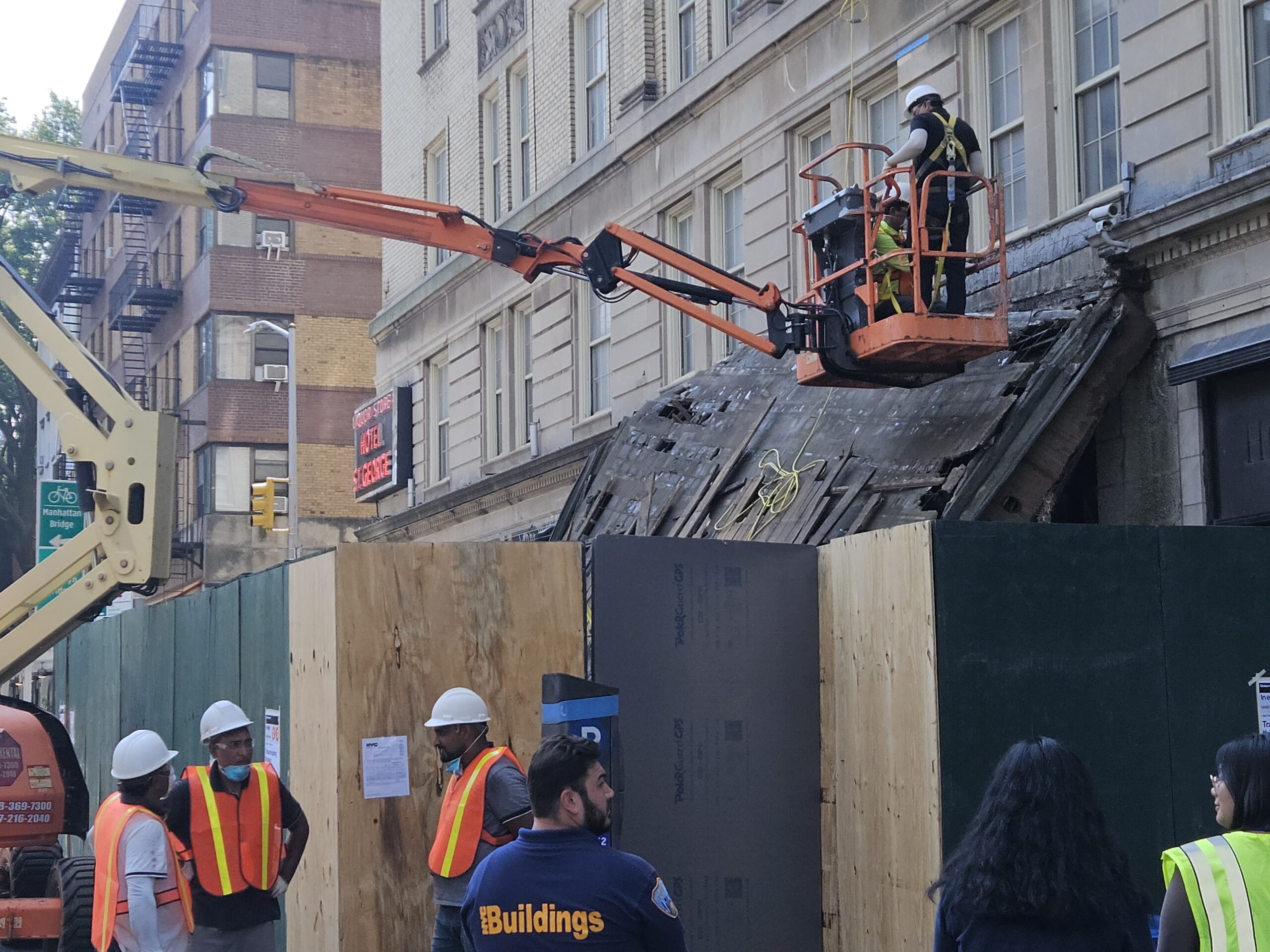
BROOKLYN HEIGHTS — ‘A miracle that no one was killed …’ That’s what neighbors are saying about the collapse of the Hotel St. George marquee. Shown in this photograph are workmen beginning the removal and repair of the historic, old neon sign at the corner, referencing a relic of Brooklyn Heights’ past: the St. George Hotel.
ATLANTIC AVENUE — Exhausted shopper with cluster of bags and goods from mall at Boerum Place stops to look at huge construction site across the street. “Is that REALLY going to be a jail??” Her male companion is reassuring, “Nothing like Rikers … this is 21st Century.”
BROOKLYN HEIGHTS — Overheard in line at one of most popular pastry outlets on Montague Street: “Hope I can get them into a camp …” A mother with two pre-schoolers in tow was showing a friend the Dodge Y flyer for Healthy Kids Day on Saturday, April 18.