✰PREMIUM Brooklyn Ballet’s spring 2026 season reflects Brooklyn’s cultural identity
Season runs from March 12 to March 15 at the Mark O’Donnell Theater
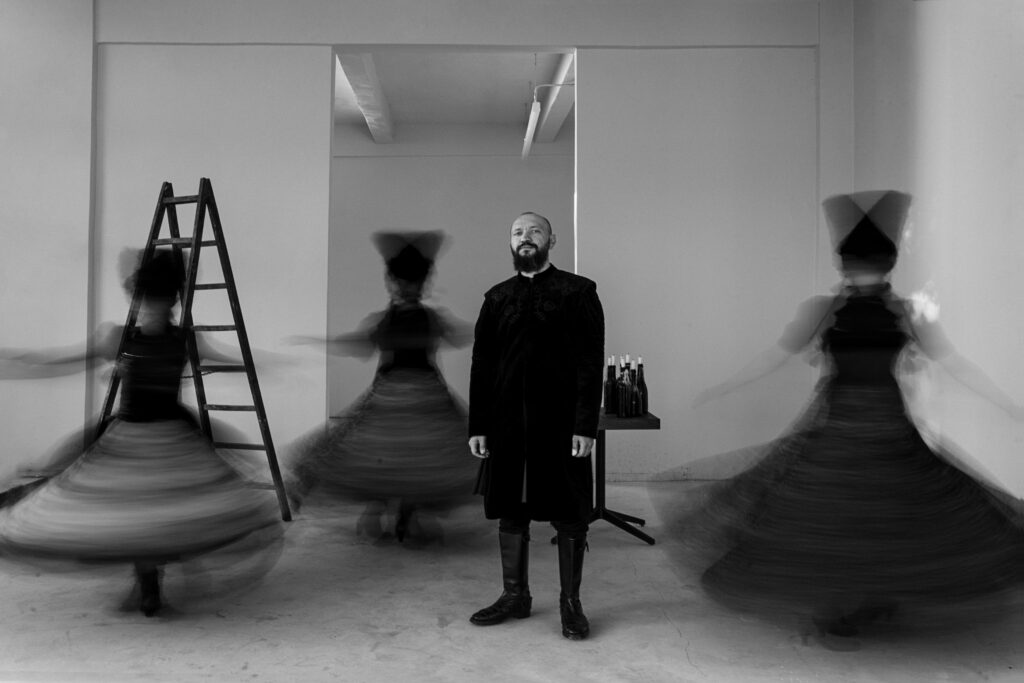
Alexis Diggs in rehearsal. Photo: Brooklyn Ballet
By Mandie-Beth Chau
March 8, 2026
Copy Link
Email
Facebook
X
LinkedIn
WhatsApp
Telegram
Pinterest
Print
DOWNTOWN BROOKLYN — In a borough known for disciplines such as street dance and hip-hop, the traditional form of ballet can feel out of step with Brooklyn’s rhythm. This dissonance is why Lynn Parkerson, founder and artistic director of the Brooklyn Ballet, has spent more than two decades shaping the centuries-old art form to reflect Brooklyn’s unique cultural spark.
Her work proves that ballet doesn’t have to shed its roots to reflect the community.
Parkerson is a classically trained dancer who toured throughout the United States and Europe before returning to New York to dance, choreograph, direct and teach ballet. She moved to Brooklyn in 1998, saying, “At that point, I just was ready to do something.”
Lynn Parkerson, artistic director and founder of the Brooklyn Ballet. Photo: Brooklyn Ballet
Between the lack of women working behind the scenes in ballet and limited funding and support for artists, Parkerson realized the best way to pave a path for ballet was to fill a void. Brooklyn, despite being a burgeoning cultural center at the time, lacked an important, though often inaccessible, dance community: ballet.
“The community and who Brooklyn is became central to the mission and to the work that we do,” Parkerson said. “Whether it’s the creative work or the arts education work, whether it’s our board, whatever it is, it’s really about this place and who the people are here. How do we reflect that in a ballet company?”
In 2002, Parkerson officially founded Brooklyn Ballet. She applied for grants, gained support from local leaders like then-Brooklyn Borough President Marty Markowitz and the New York City Council, and traveled to neighborhoods like Canarsie and Flatlands with ballet programs for schools.
Lynn Parkerson, artistic director and founder of the Brooklyn Ballet. Photo: Brooklyn Ballet
Parkerson described the company as “nomadic,” renting theaters for seasons when the funding and manpower aligned, until it acquired a studio and performance space on Schermerhorn Street in 2009.
“We grew a lot because we had space,” Parkerson said. “The school is thriving, and our arts and education is thriving, and we have a big ‘Nutcracker’ that’s become something we’re committed to because it provides a way into ballet for so many people, and it’s such a popular production.”
The studio space in Downtown Brooklyn also provides the Brooklyn Ballet with access to the Mark O’Donnell Theater. “It’s right in the building we have our studio in,” Parkerson said. “We’re kind of the resident performing arts company in that space, because we’re also tenants in the building. So it’s been a real resource for us. Theaters are extremely expensive to rent, and this one costs too, but not at the same level as others.”
Brooklyn Ballet recently announced its spring 2026 season, which runs from March 12 to March 15 at the Mark O’Donnell Theater. In collaboration with three other artists, Parkerson produced “Soft Power,” a program that blends classical ballet with contemporary dance to explore the dialogue between disciplines, generations, genders and cultures.
Alexis Diggs, one of the four collaborators whose work “Dreams of Tomorrow” will premiere during the season, is a 26-year-old dancer, choreographer and pianist. “My language particularly lives in the contemporary landscape, but it’s really, really deeply influenced by the Black American dance landscape specifically,” Diggs said. “Dreams of Tomorrow” echoes this sentiment, set to live classical music piece “Ondine” while using contemporary dance to communicate themes of resilience, freedom and community.
Alexis Diggs in rehearsal. Photo: Brooklyn Ballet
Despite being a ballet company, it is important for the artists to take an interdisciplinary approach to the program in order to reflect Brooklyn’s diversity and history. Though fans of classical ballet may be hesitant to see Brooklyn Ballet’s approach, Diggs hopes audiences will come with an open mind and leave feeling rewarded.
“I’m always hoping that people who are enjoyers of dance of any kind come to experience my work and are moved by the capacity of the dancers to be invested in something, to work hard together, to move together,” Diggs said. “There’s quite a bit in my language that feels reminiscent and familiar to the dancers and probably to the audience as well, but there will be some really clear departures. That provides audiences with an opportunity to broaden their perspectives and enjoy something a little bit different.”
“Soft Power” includes four world premieres: Parkerson’s “Sub-binary,” Diggs’ “Dreams of Tomorrow,” Mike Fields’ “Let ‘em Cook” and Alexis Zanety’s “Absence.” Parkerson says her work revolves around gender, bodies and movement, while Diggs’ piece resonates with current cultural tones. Fields, a longtime collaborator with Brooklyn Ballet, uses ballet and street dance on a shared stage to reflect on growth and memory. Zanety, former first soloist with Cuba’s National Dance Company, offers a tribute to her mother.
“The program has a lot of different choreographic perspectives on it, and Lynn and the administrative team have such a great eye for creating works and bills that will engage, stimulate and move audiences,” Diggs said. “Coming to experience the entire thing is something for people to be excited about. Watching artists be so committed to a number of ideas and give it their all — that’s always moving to me.”
Despite the ups and downs of running a dance company and working in the arts, Parkerson is optimistic about Brooklyn Ballet’s future. Parkerson emphasized the importance of having the borough represented in donors, board members and the company’s leadership.
Alexis Diggs in rehearsal. Photo: Brooklyn Ballet
Brooklyn Ballet is supported in part by funds from the New York City Department of Cultural Affairs, the New York State Council on the Arts and an award from the National Endowment for the Arts. Notable sponsors also include the Howard Gilman Foundation, the Sills Family Foundation and the Baisley Powell Elebash Fund.
Brooklyn Ballet’s board is chaired by Diarra K. Lamar, and its members include leaders from IBM, Google, Sidley, Rockefeller Philanthropy Advisors and a representative for the Brooklyn Borough President Antonio Reynoso. It is also a member of the Downtown Brooklyn Arts Alliance and the Brooklyn Chamber of Commerce, solidifying its mutually beneficial role in the community: It supports the local arts and commerce sector and receives support in return.
Beyond seasonal programming and arts education, Brooklyn Ballet offers artists opportunities to collaborate and realize their vision, provides dancers with work, and is expanding its resources to areas like Long Island’s North Fork, where the company has a residency.
“We’re exploring different ways to enliven ballet choreography,” Parkerson said. “The fact that [the company’s artists] have different styles definitely speaks to Brooklyn. Since our dancers come from the community, it’s automatic that the work is about the community.”
By drawing from a pool of local artists, the company hopes to inspire a closer relationship between Brooklynites and ballet. “Soft Power” in particular echoes messages and themes that will specifically resonate with the Brooklyn community.
“In a landscape that doesn’t feel like it can be a vessel or a safe space for your ambitions, your dreams, your hopes, we instead can be those vessels for ourselves and one another,” Diggs said. “We are on the precipice of change and we are the facilitators of that change.”
Brooklyn Ballet’s “Soft Power” launches at The Mark O’Donnell Theater at 160 Schermerhorn St. with five performances, including an opening night benefit and reception on Thursday, March 12, a children-friendly matinee on Saturday, March 14, and a post-performance question-and-answer panel after the Saturday evening performance.
SUNSET PARK — “As a resident of Marine Park, one of the great surprises I found biking around Industry City and visiting Japan Village was to discover Bush Terminal Park. I continue to be amazed at the serene hideaways that the city offers in some of the busiest places — and, still, with an iconic view.”
BROOKLYN HEIGHTS — ‘A miracle that no one was killed …’ That’s what neighbors are saying about the collapse of the Hotel St. George marquee. Shown in this photograph are workmen beginning the removal and repair of the historic, old neon sign at the corner, referencing a relic of Brooklyn Heights’ past: the St. George Hotel.
ATLANTIC AVENUE — Exhausted shopper with cluster of bags and goods from mall at Boerum Place stops to look at huge construction site across the street. “Is that REALLY going to be a jail??” Her male companion is reassuring, “Nothing like Rikers … this is 21st Century.”
BROOKLYN HEIGHTS — Overheard in line at one of most popular pastry outlets on Montague Street: “Hope I can get them into a camp …” A mother with two pre-schoolers in tow was showing a friend the Dodge Y flyer for Healthy Kids Day on Saturday, April 18.