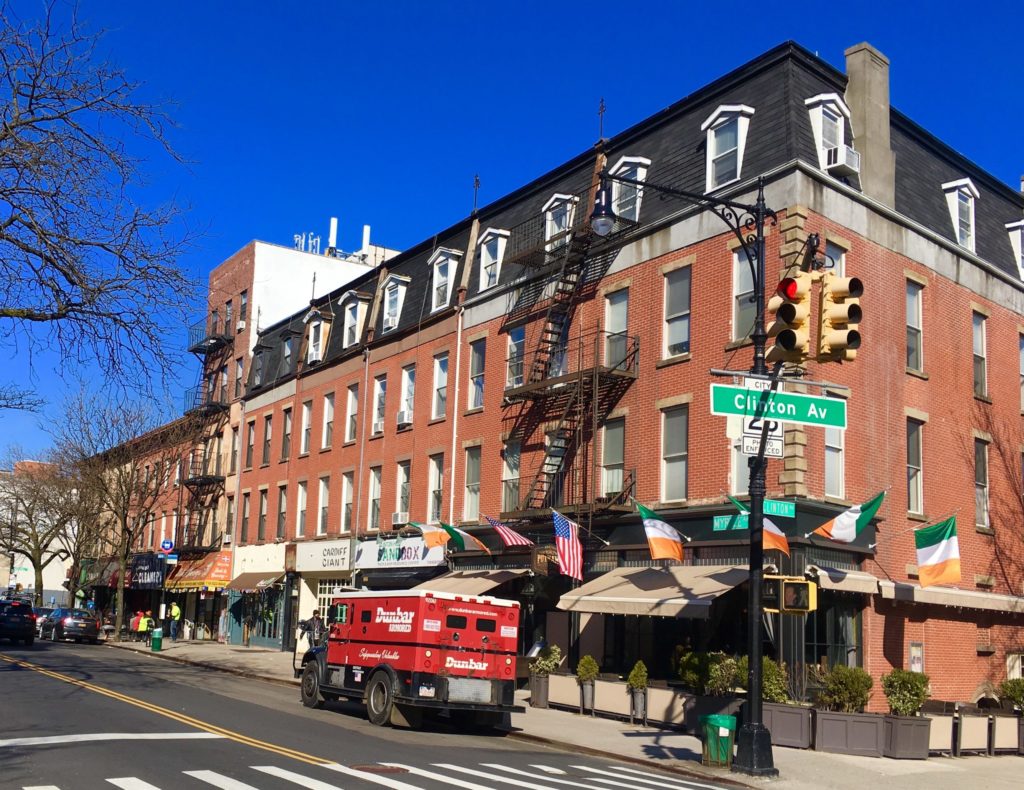
DeWitt Clinton, New York City mayor, governor and senator of New York State, candidate for president (he lost to James Madison), is a name most often associated with the Erie Canal — as well it should be.
President Thomas Jefferson had earlier considered the canal idea “a little short of madness,” and many termed it “Clinton‘s Ditch.” But, as governor of New York, Clinton persisted, sponsored it and saw it through; it opened in 1825.
But for New Yorkers, especially Brooklynites, his legacy goes beyond that.
The area now called Clinton Hill in his name was originally settled by the Dutch in the 1640s, when they cultivated tobacco plantations near Wallabout Bay. Bedford Corners, just southeast of that area, was incorporated in 1663, as the settlers continued to acquire surrounding lands from the Indigenous people.
Situated between Fort Greene and Bedford-Stuyvesant, Clinton Hill is bordered by Vanderbilt Avenue to the west, Classon Avenue to the east, Park Avenue or Flushing Avenue to the north and Fulton Street or Atlantic Avenue to the south. It was the highest ground in the area. It offered great views of the East River and Manhattan and became a fashionable neighborhood for the wealthy after the opening of the Fulton Ferry, which began service in 1814.
In 1832, a tree-lined boulevard was laid out along the crest of a hill and named for DeWitt Clinton, which in turn became the name of the neighborhood.
In the 1840s, grand homes with lawns and stables were built, and the area was still considered a rural retreat until the 1860s, when developers began building row houses.
One of its most famous residents was oil executive and philanthropist Charles Pratt, who in 1875 chose Clinton Avenue as the site for his mansion, then built four more houses for his sons. Many other wealthy industrialists followed his example.
He gave his name to the Pratt Institute, which today occupies 25 acres of Clinton Hill.