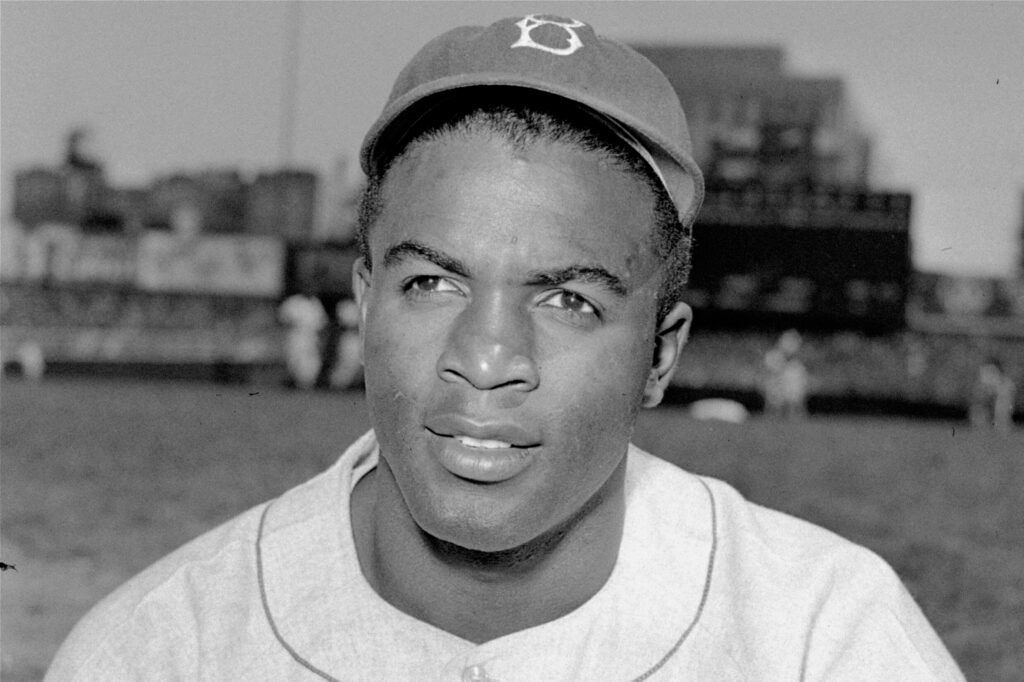
Memory is an interesting thing. It often puts an exclamation point on something in a boy’s mind that might only have deserved a period. While his overall stats don’t deserve an exclamation point, Joe Black is an exclamation point in my mind. Black, a February baby, was an imposing figure who did his best work in relief. He was a star in the Negro Leagues.
From the Negro Leagues Museum we learn that he led the Elite Giants in games and innings pitched in official league games in 1947. He was the staff ace in 1948 with an 8-3 record a 1.91 ERA and was a member of the 1949 Negro League National Champion Elite Giants in 1949. In 1951 Black and teammate Jim Gilliam’s contracts with the Elite Giants were purchased by the Brooklyn Dodgers for $11,000. Black spent the 1951 season pitching for the Dodgers minor league affiliates in Montreal and St. Paul, where he posted a combined 11-12 record with a 3.28 ERA.
The Jackie Robinson Foundation wrote that among major league baseball’s pioneering integrationists, Black was the fifth Black player signed by the Dodgers. Crossing over from the Negro Leagues, Black made his major league debut on May 1, 1952. He was the 25th Black player to make it to the major leagues.
He attended high school in his birthplace of Plainfield, N.J., and won a partial football scholarship to Morgan State College [now an HBCU] in Baltimore, Md.
By the time he came up to the “bigs,” there wasn’t much of the best Black left. He had already pitched parts of six seasons for the Elites, given up 2 ½ years to the military, and pitched a year in the minors before ever taking the mound at Ebbets Field. Still, once he stepped on the rubber, he had a first year that stamped itself forever on the minds of his many fans…” including mine. He “etched his legacy with the team in stone. Pitching predominantly in relief, Black compiled a 15-4 record with 15 saves and a 2.15 ERA in 142 innings pitched, capturing the National League Rookie of the Year Award,” according to The Society for American Baseball Research
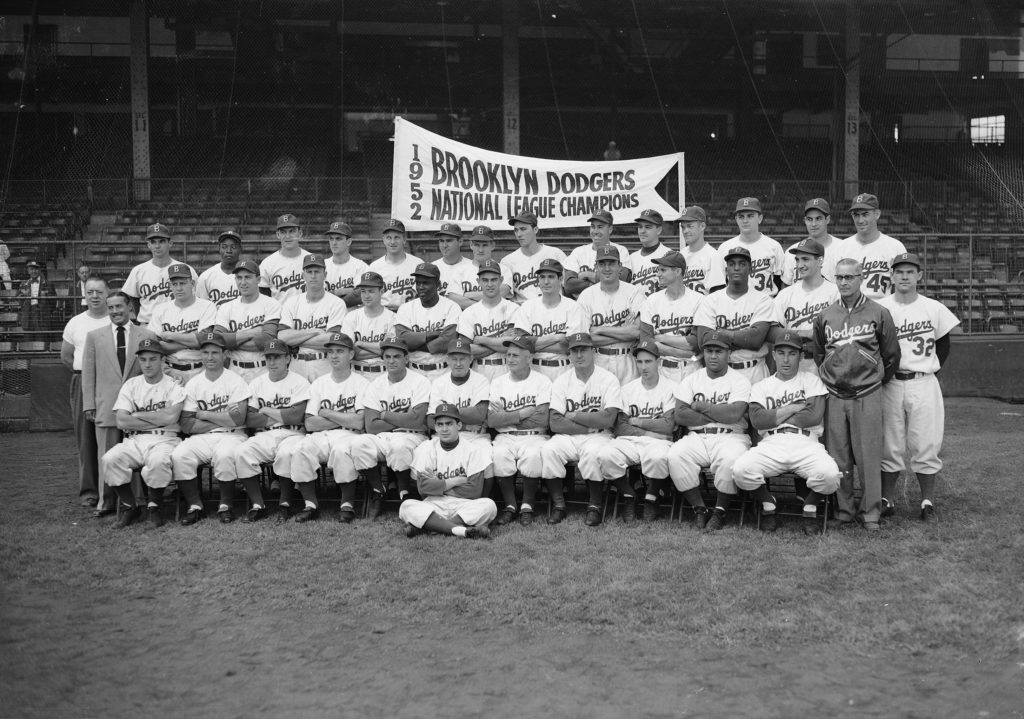
He is best remembered for that magical rookie season of 1952 in Brooklyn, which, according to the Jackie Robinson Foundation, was the impetus for his induction to the New York State Baseball Hall of Fame. I can still see his determined walk from the bullpen to the mound. The Dodgers went to the World Series that year against, of course, the Yankees, and Black, the 5th person of color to be hired by the Dodgers, became the first Black person to win a World Series game.
Another historical note, SABR tells us, from game one is that Jackie Robinson hit his first World Series home run. Black started three but lost the other two. He won the opening game with a 4–2 victory over Yankee ace Allie Reynolds but he pitched well and tough in the other two, his second outing four zip and game six 4-2. These figures were extrapolated from MLB.com’s review of the games.
It was an odd choice, starting Black, the fireman, and using him three times. Black was a rookie who had only started twice in the regular season. Manager Charlie Dressen chose Black to start Game 1 because he felt Black was the only pitcher on the team strong enough to pitch three games. According to MLB.com, Dodger pitching did not match up well against the Yankee’s. The Bronx Bombers had multiple starters with multiple World Series experience. The Dodgers had two. But Dressen liked his man. “If that guy pitches the way he has pitched all season, our chance is as good as theirs,” Dressen said the day before the opener.
According to SABR that first game was something to write home about. Black was ready to go. He seemed “unfazed” saying, “These aren’t the same Yankees I first saw when they had DiMaggio, Henrich, and Keller… They’re wearing the same letters on their shirts, but I don’t believe they frighten anybody.”
The game had everything a packed house could have asked for. There was a “fan interference” dispute on a Gil McDougald squeaker of a home run. Andy Pafko challenged it but lost his protest. It tied the game, but Black rebounded from the homer by striking out the next three batters. Anyone who has ever attended a close game at Ebbets Field can hear the pandemonium as Black walked off the mound.
There was a double-play busting slide into second by Mickey Mantle that injured Pee Wee Reese and a game-saving throw by Carl Furillo described this way by an excited sports writer, “Joe Collins then hit a fly ball to right fielder Carl Furillo, who “fired the blurred white spec (sic) to the plate as Rizzuto reversed course and scampered back to third, just beating catcher Roy Campanella’s throw.” A grounder to Robinson ended the inning. Again, pandemonium.
Brooklyn’s defense, it was said, was sensational in the fifth inning. After McDougald led off with a walk, Billy Martin looped a single into left. Pafko charged it and fired to third. Cox took the throw and slapped the tag on McDougald. There was an argument over the tag.
Pafko’s tremendous throw stood out on the play, as did Cox’s play on the receiving end. “The tag that Cox made after Pafko’s great throw on Martin’s single in the fifth inning was one of the great plays of the game,” Robinson said. Pafko then made his second great play of the inning, a “sliding, sitting catch of Hank Bauer’s… Texas Leaguer” for the final out. Remember how Ebbets Field reverberated with exuberant fans stomping their feet? I can feel it in my bones. It used to scare me. I thought the old building would come down around me.
Another boyhood memory is of Duke Snider’s upper-cut swing and his towering homers over the right-field fence. The Series had several of those. Game one’s was described this way,” He sent “the little white ball arching against the blue sky past snapping flags and billowing bunting” over the scoreboard and onto Bedford Avenue, to give the Dodgers a 3-1 lead. They don’t write sports stories like that anymore.
Again it was Billy Cox’s turn. Black walked Noren to lead off the inning. McDougald hit a groundball to Cox, who made a great stop when it took a bad hop and turned it into an around-the-horn double play. The next batter, Martin, hit a sharp grounder down the third-base line; Cox made a “breath-taking backhand stop” and threw it to first for the out. Reese, who was team captain, said after the game, “You writers call him the best fielding third baseman around.” Listen, he’s the best fielder, period. I don’t care whether he’s playing third, second, or shortstop, he’s the best fielder in the major leagues no matter where he plays.” Then it was Reese who did his part. The light-hitting short-stop poked one into the seats making the score 4-2 and sealing the win.
Black retired the side in order in the ninth, striking out Noren giving the Dodgers a one-game-to-none lead in the series. Ebbets Field was bedlam. I was 8 years old and was now addicted to baseball, Brooklyn, and Black.
In his complete game, Black allowed two runs on six hits and two walks, while striking out six. Campanella noted that Black was effective even though he didn’t have his best stuff. Black admitted that despite his confidence the day before the game, he felt the pressure of pitching on the big stage. “I was nervous before the game and I stayed nervous,” he said. “I’ve been faster and my control wasn’t too sharp but I felt stronger as I went along.”
Black pitched in parts of three more seasons with the Dodgers and two more in the major leagues, retiring after the 1957 season. In those years managers pitched pitchers with little regard to pitch counts or stress factors. By his sophomore season, Black’s stats began to show the wear and tear on him but that first year was memorable. Pitching predominantly in relief, he compiled a 15-4 record with 15 saves and a 2.15 ERA in 142 innings pitched, capturing the National League Rookie of the Year Award. His ERA for the Bums was 3.4 but slipped to 3.9 by retirement. According to Baseball-Reference.com Black appeared in 240 games, pitched 886 innings and recorded 455 strikeouts.
Black had a fulfilling life after baseball. The Negro Leagues Museum records this: “After baseball, Black continued his college education with postgraduate studies at Seaton Hall and Rutgers Universities. While building a successful career with Greyhound Bus Lines, he became well known for “By the Wa,” his nationally syndicated commentary which aired coast-to-coast on Black radio stations and appeared in Black newspapers and JET magazine. He is featured in the book and television movie, “Boys of Summer, “ and appeared as a special guest on the “The Cosby Show.” Black also wrote an autobiography, “Ain’t Nobody Better Than You.” Black retired as senior vice president of Urban Affairs of Greyhound.
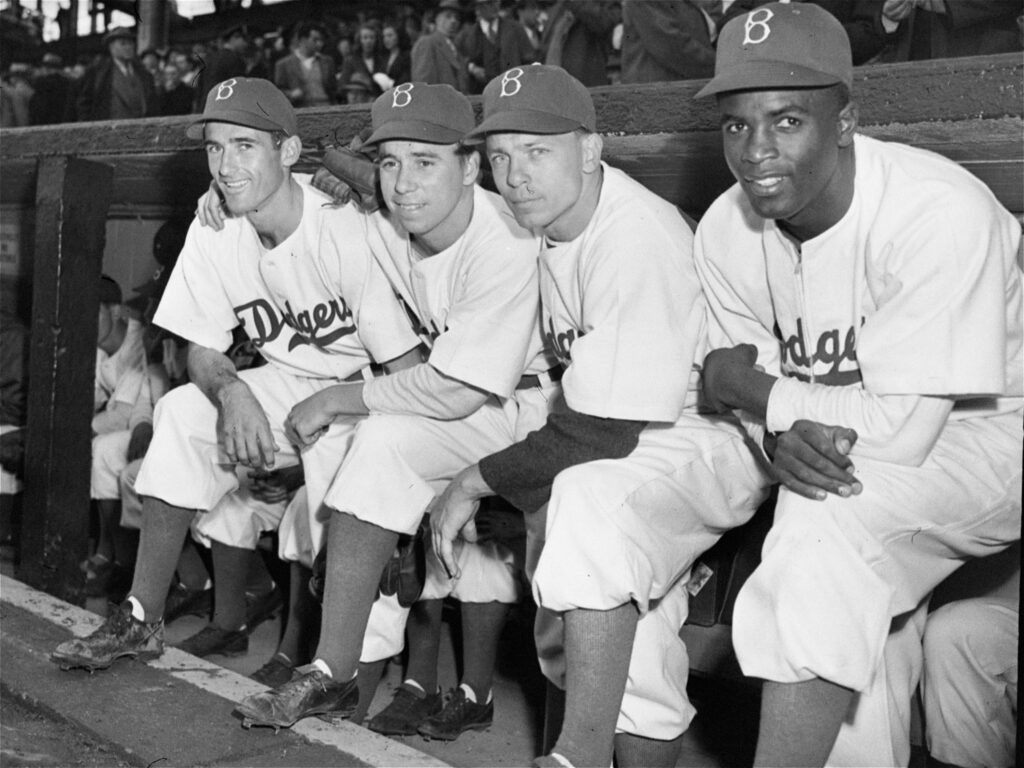
He remained friends with Jackie Robinson, with whom he roomed on the road during his Dodgers days. He served as a Board Member of the Jackie Robinson Foundation from 1979 until his death. The Foundation gave him a glowing tribute when he was elected to the New York State Hall of Fame. He left the eternal mound in 2002 in Arizona at age 78.
Black finished up 49-36. In the twilight of his short career, he had pitched almost half of 175 games for the Reds and a few for the Twins. But his exclamation point year marked him a major memory for me as a Brooklyn Dodger.