Record dryness in US Northeast should change water behavior, experts say
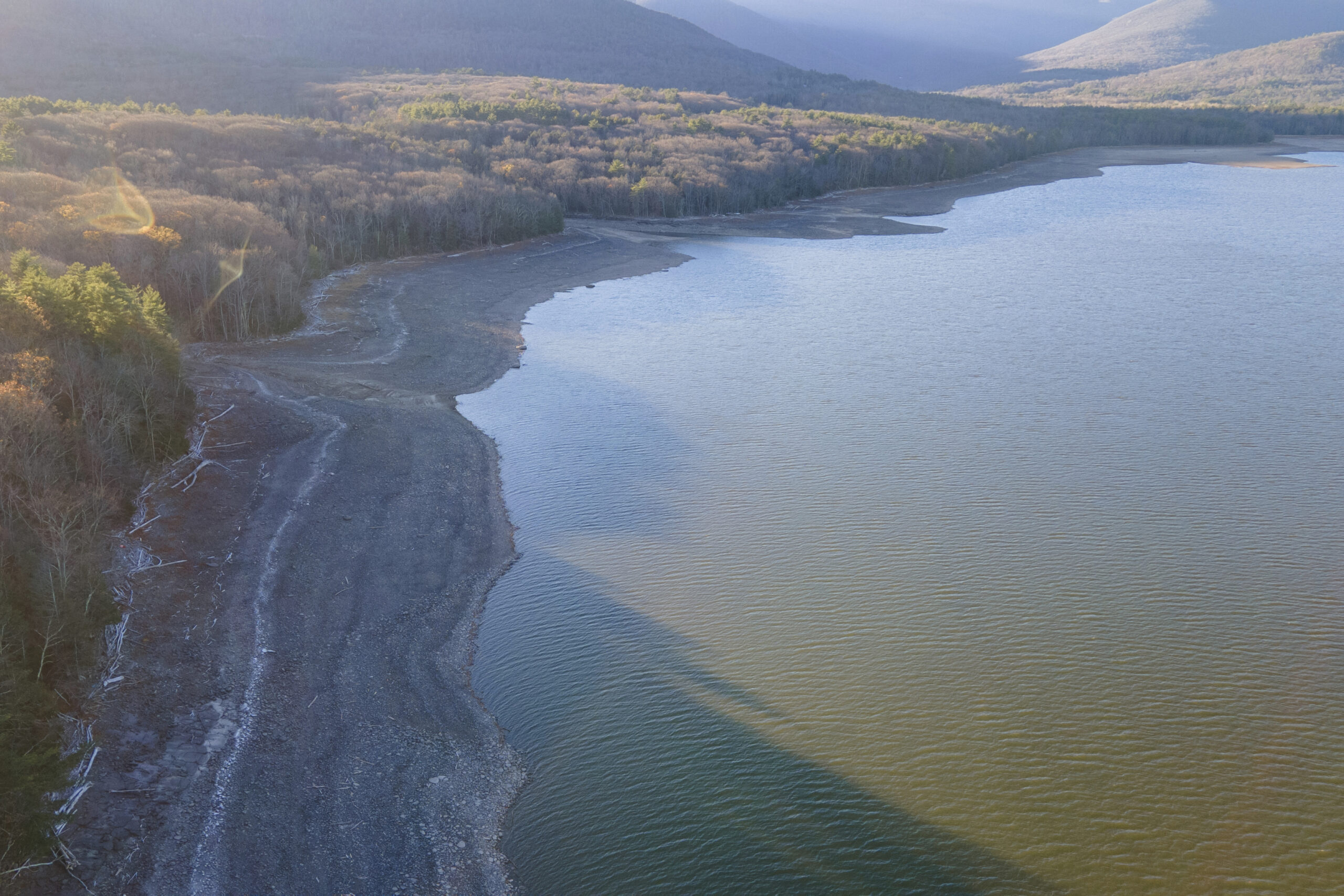
Dropping water levels expose the lake bed at the Ashokan Reservoir in Ulster County, New York, on Wednesday, Nov. 13, 2024. AP Photo/Ted Shaffrey
By Brittany Peterson, Associated Press
November 25, 2024
Copy Link
Email
Facebook
X
LinkedIn
WhatsApp
Telegram
Pinterest
Print
It hasn’t been a typical fall for the northeastern United States.
Fires have burned in parks and forests around New York City. Towns and cities in a stretch from Portsmouth, New Hampshire, to south of Philadelphia had their driest three months on record, according to the Applied Climate Information System. Some reservoirs in the region are near historic lows.
Major changes need to happen to avoid critical shortages of water in the future, even if that future isn’t immediate. As the climate warms, droughts will continue to intensify and communities should use this one as motivation to put in place long-term solutions, experts say.
“This is the canary in the coal mine for the future,” said Tim Eustance, executive director of the North Jersey District Water Supply Commission. “People should stop watering their lawns yesterday.”
Eustance wants New Jersey Gov. Phil Murphy to issue a drought emergency to increase people’s sense of urgency.
Here are some ways to stretch water experts said could become necessary in the Northeast.
Replenishing more water underground
One important place water is stored is under our feet. Groundwater has dropped significantly over the years in parts of Delaware, Maryland, New Jersey and New York.
Groundwater makes up about half of New Jersey’s drinking water. Sprawl and concrete can make it tough for rain to replenish the water underground.
“New Jersey is ‘mall-landia.’ We have these giant parking lots that could be ways to reclaim water instead of having runoff,” Eustance said.
In some other parts of the country there is increasing use of permeable asphalt, concrete and pavers that allow water to percolate into the ground and back into the aquifer. It would be up to municipalities to require that, he said.
A faster way to replenish the aquifer is by injecting highly treated wastewater into it, something Los Angeles has been doing for years. It is dramatically adding to the city’s available water.
Virginia Beach, Virginia, is also pumping highly treated water back into its aquifer, and Anne Arundel County in Maryland is trying to pass legislation that would allow the same.
Paying people to conserve
In some places in the western U.S., getting paid to save water has long been an option. Some cities and counties pay dollars for every square foot of lawn torn out and replaced with native landscaping.
Those policies are not nearly as widespread in the Northeast, said Alan Roberson, CEO of the Association of State Drinking Water Administrators.
“The abundance has created a different perspective,” he said. This can make it hard to get people on board with conservation.
Upgraded water meters can give customers details about their water use and help them see where they can save money when drought doesn’t feel as urgent, said Beth O’Connell, chief engineer for Anne Arundel County, Maryland.
Reusing water could become more common
The concept is simple: capture water from the sink, clothes washer, shower and toilet, treat it to a high standard and use it again for nonpotable purposes: It can be sent back through pipes to flush toilets, cool buildings, water yards or help raise water levels in a river or aquifer.
“One of the crimes I think, in America, is we use drinking water to water our lawns and flush our toilet,” Eustance said.
Zach Gallagher is CEO of Natural Systems Utilities, which designs, builds and operates water recycling systems. He also is the father of three kids and lives in New Jersey, so this drought hits close to home.
“I feel like I’m doing something that is going to be meaningful and leave something beyond for my children, and their children,” he said.
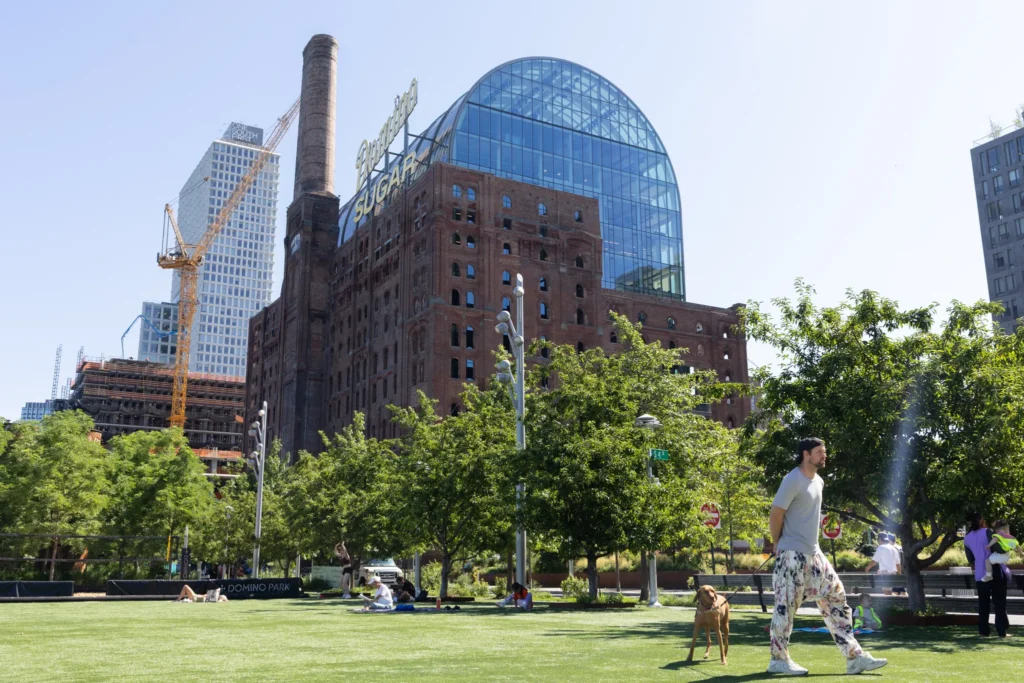
The front of the Domino Sugar Factory 11-acre site in Williamsburg. Photo by Max Touhey
Reuse can be a tool for both drought and flood, he explained. When a building can reuse its own wastewater and discharge it directly into a body of water, it eases stress on a city’s fragile sewer system, which is a common vulnerability in old coastal cities. It also reduces demand on new water.
Once open this summer, the company’s redesign of the old Domino Sugar Refinery in Williamsburg will be able to treat 400,000 gallons (1.5 million liters) of wastewater a day, enough to cover a football field in nearly 15 inches (38 centimeters) of water. The cleaned water will be piped back into the new mixed-use buildings for flushing toilets, cooling and landscaping, with some of it discharged back into the East River.
Nonpotable reuse has a growing footprint in the eastern U.S., but scaling it to a regional level should be the next focus, O’Connell said.
A new mindset
Planning for a future that includes extended drought can be costly. It could also require a shift in mindset from one of abundance to conservation, said Del Shannon, dam engineer and member of the American Society of Civil Engineers.
He has worked on water projects around the world and said many developing countries are focused on getting reliable water for crops and drinking.
“We need to treat our water and guard it as gently as those countries are.”
SUNSET PARK — “As a resident of Marine Park, one of the great surprises I found biking around Industry City and visiting Japan Village was to discover Bush Terminal Park. I continue to be amazed at the serene hideaways that the city offers in some of the busiest places — and, still, with an iconic view.”
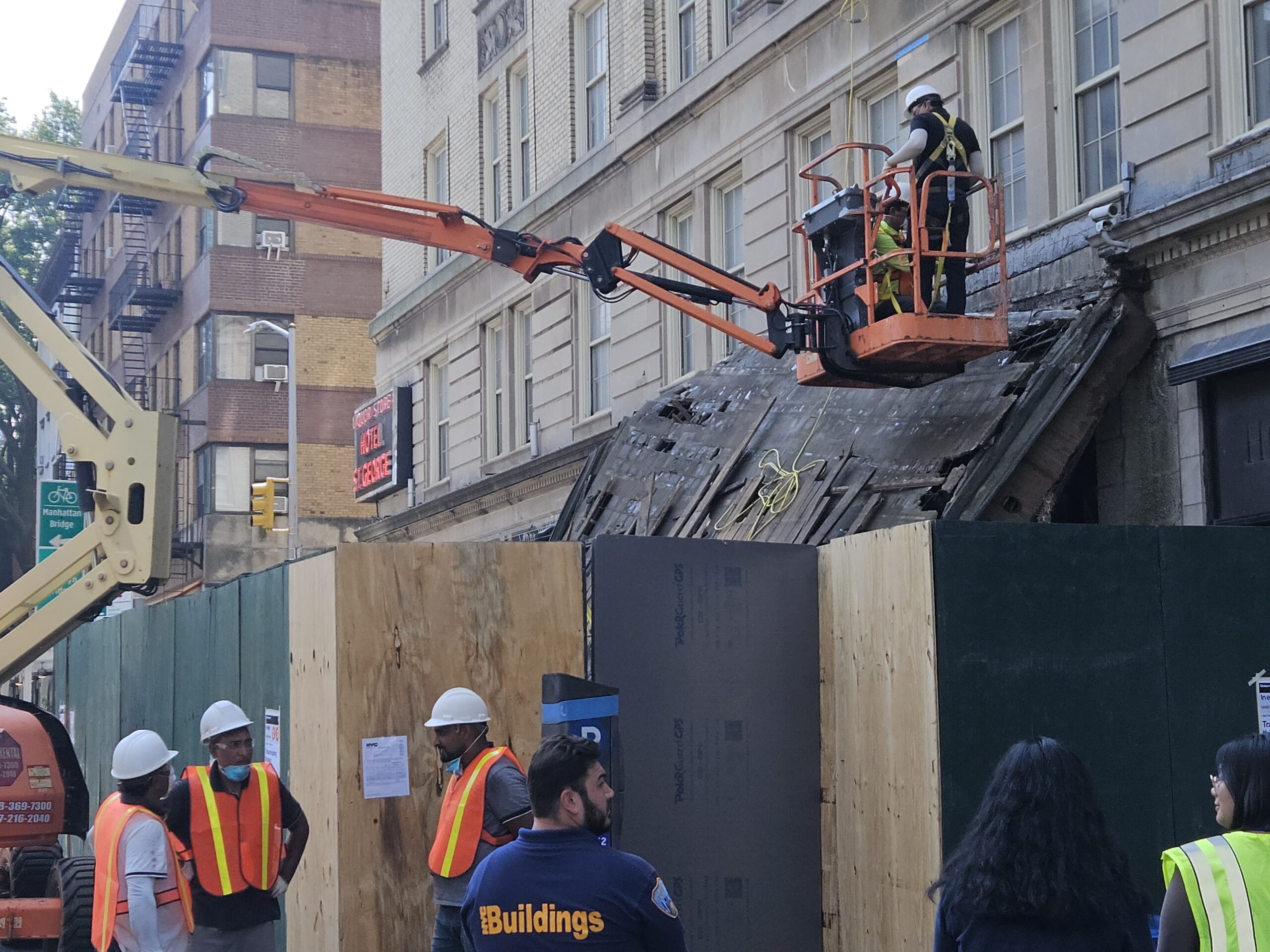
BROOKLYN HEIGHTS — ‘A miracle that no one was killed …’ That’s what neighbors are saying about the collapse of the Hotel St. George marquee. Shown in this photograph are workmen beginning the removal and repair of the historic, old neon sign at the corner, referencing a relic of Brooklyn Heights’ past: the St. George Hotel.
ATLANTIC AVENUE — Exhausted shopper with cluster of bags and goods from mall at Boerum Place stops to look at huge construction site across the street. “Is that REALLY going to be a jail??” Her male companion is reassuring, “Nothing like Rikers … this is 21st Century.”
BROOKLYN HEIGHTS — Overheard in line at one of most popular pastry outlets on Montague Street: “Hope I can get them into a camp …” A mother with two pre-schoolers in tow was showing a friend the Dodge Y flyer for Healthy Kids Day on Saturday, April 18.