Borough President Reynoso hosts deed theft prevention workshop at Medgar Evers College
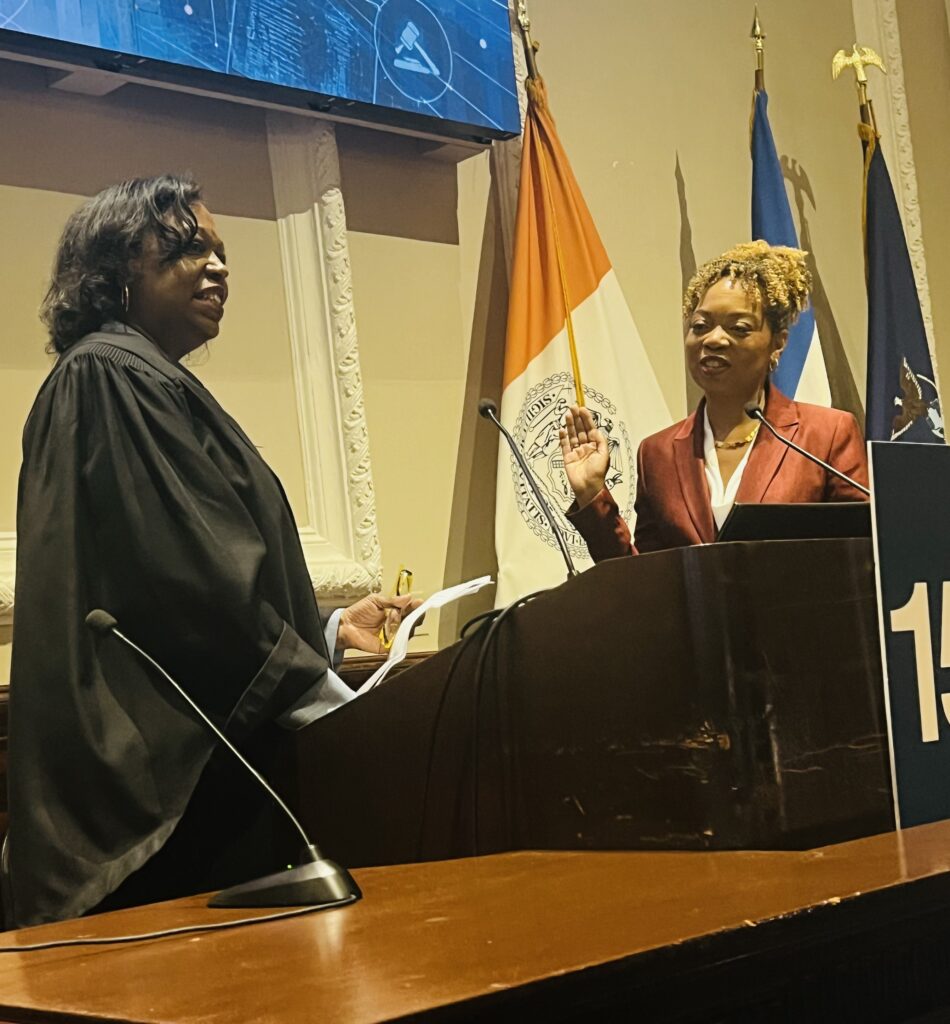
Brooklyn Borough President Antonio Reynoso speaks at a Deed Theft Prevention Workshop at Medgar Evers College, addressing the urgent need to protect homeowners in Central Brooklyn from fraudulent schemes that disproportionately target Black and Brown communities. The event, in partnership with Brooklyn Legal Services and Grow Brooklyn, is part of Reynoso’s broader commitment to tackling deed theft, which has led to more than 1,500 complaints in Brooklyn since 2014. Photo courtesy of the Office of the Borough President
By Robert Abruzzese, Courthouse Editor
October 18, 2024
Copy Link
Email
Facebook
X
LinkedIn
WhatsApp
Telegram
Pinterest
Print
In response to the growing threat of deed theft, Brooklyn Borough President Antonio Reynoso led a Deed Theft Prevention Workshop at Medgar Evers College, aiming to equip homeowners in Central Brooklyn with the knowledge and resources to protect their properties.
The event, attended by approximately 100 Brooklynites, focused on preventing the fraudulent transfer of property ownership without the homeowner’s knowledge or consent — a crime that has disproportionately affected Black and Brown homeowners in Brooklyn’s gentrifying neighborhoods.
“Homeownership is one of the most important pathways to building and sustaining wealth. When deed theft scammers target communities like Central Brooklyn, they are trying to displace our neighbors and lock Black and Brown families out of homes they’ve nourished for generations,” Reynoso said. “Events like our Deed Theft Workshop give homeowners the tools they need to remain in their homes and protect themselves from this predatory practice. Knowledge is power, and I’m thankful to all the partners who made this day possible.”
Deed theft, also known as deed fraud, occurs when con artists file phony documents transferring a homeowner’s property to themselves or a third party. These criminals often sell the home or take out a mortgage without the owner’s knowledge. Brooklyn, particularly Central Brooklyn, has been heavily targeted by these scams, with more than 1,500 complaints filed in the borough since 2014, according to the New York State Attorney General’s Office.
At the workshop, attendees were offered one-on-one consultations with legal experts, as well as information on estate planning, living wills and power of attorney — tools designed to protect property owners from fraudulent schemes. Partnering organizations, including Brooklyn Legal Services and Grow Brooklyn, joined city agencies to provide resources and support.
Brooklyn residents engage with legal experts and city agency representatives at tables, receiving one-on-one consultations and resources on how to protect their homes from deed fraud and navigate estate planning. Photo courtesy of the Office of the Borough President
Deed theft typically begins when a scammer, often targeting elderly homeowners or those without a formal estate plan, files fraudulent paperwork with the city claiming ownership of a property. Once the deed is transferred, the criminal may sell the property or take out a loan against it, leaving the rightful owner in a legal battle to reclaim their home.
Communities of color, particularly Black and Brown homeowners, are at higher risk due to their presence in rapidly gentrifying neighborhoods. Many lack access to legal services or have not formalized property ownership through a will, leaving them vulnerable to scammers. According to the New York City Sheriff’s Office, Brooklyn alone accounts for nearly half of the 3,500 deed theft complaints received citywide since 2014.
A recent case in August highlights the devastating impact of deed theft. Ray Cortez, a 90-year-old Park Slope resident, has lived in his brownstone for more than 50 years but faced eviction due to a decades-old scam. In 2006, Cortez unknowingly signed over the deed to his home while seeking funds for renovations, only to later discover that a con artist had taken out a $700,000 line of credit against the property. The house was eventually sold for $2 million, leaving Cortez to fight for his home in court.
Experts at the workshop advised homeowners to take several steps to protect themselves from deed theft. Homeowners should regularly check property records through the Automated City Register Information System (ACRIS) to ensure no fraudulent documents have been filed. Enrolling in the Recorded Document Notification Program is another key step, as it sends alerts when any changes are made to a property’s records. Maintaining a current will or estate plan is also crucial to clarify property ownership and ensure smooth transfers to heirs.
Borough President Reynoso and workshop partners also urged homeowners to be cautious of unsolicited offers to buy their homes or help with mortgage modifications. Legal professionals are available through organizations like the Office of the Attorney General’s Homeowner Protection Program (HOPP) to assist those who believe they may be victims of fraud.
SUNSET PARK — “As a resident of Marine Park, one of the great surprises I found biking around Industry City and visiting Japan Village was to discover Bush Terminal Park. I continue to be amazed at the serene hideaways that the city offers in some of the busiest places — and, still, with an iconic view.”
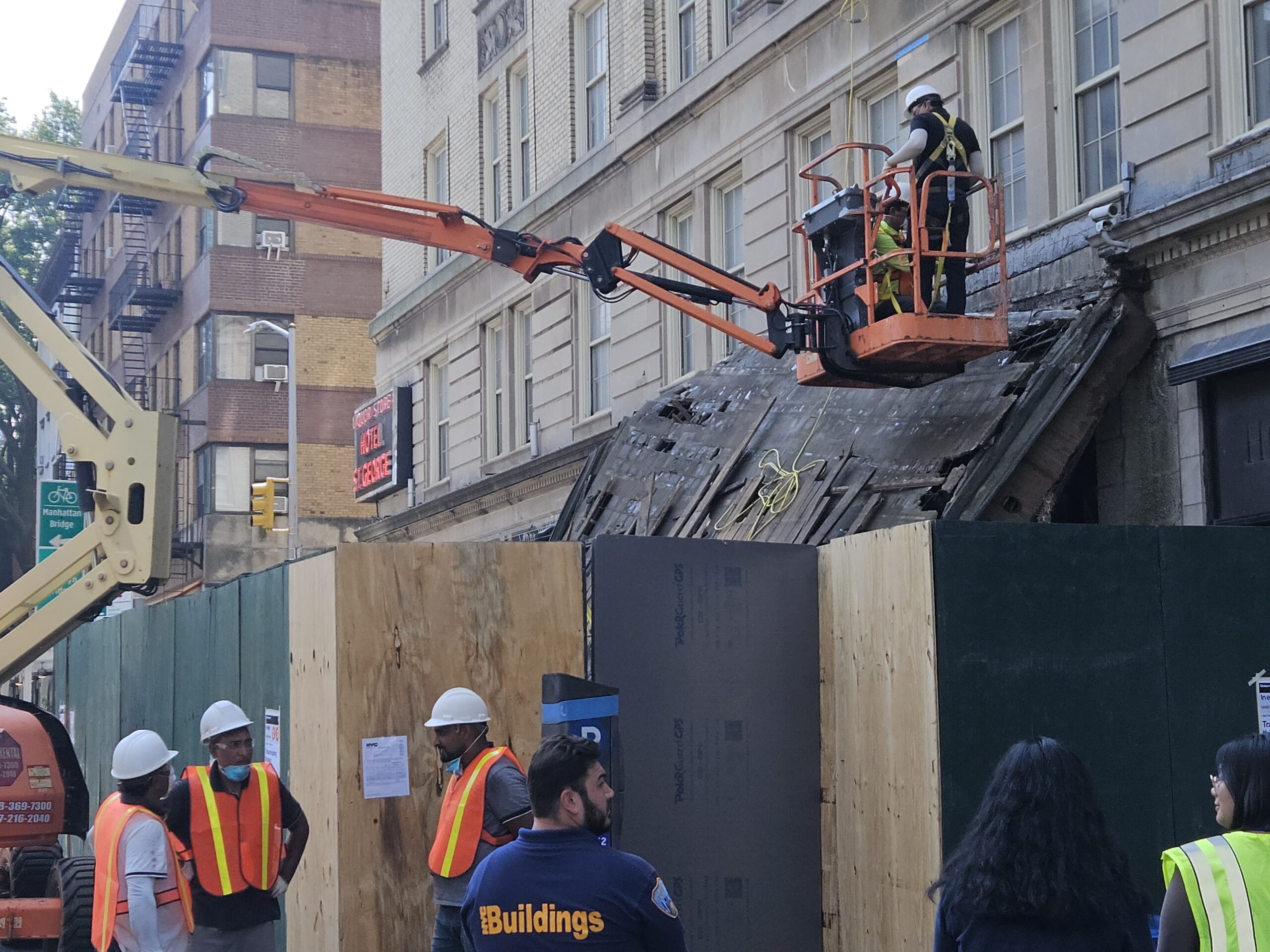
BROOKLYN HEIGHTS — ‘A miracle that no one was killed …’ That’s what neighbors are saying about the collapse of the Hotel St. George marquee. Shown in this photograph are workmen beginning the removal and repair of the historic, old neon sign at the corner, referencing a relic of Brooklyn Heights’ past: the St. George Hotel.
ATLANTIC AVENUE — Exhausted shopper with cluster of bags and goods from mall at Boerum Place stops to look at huge construction site across the street. “Is that REALLY going to be a jail??” Her male companion is reassuring, “Nothing like Rikers … this is 21st Century.”
BROOKLYN HEIGHTS — Overheard in line at one of most popular pastry outlets on Montague Street: “Hope I can get them into a camp …” A mother with two pre-schoolers in tow was showing a friend the Dodge Y flyer for Healthy Kids Day on Saturday, April 18.