Greenpoint’s $68.6M environmental overhaul completed after ExxonMobil settlement
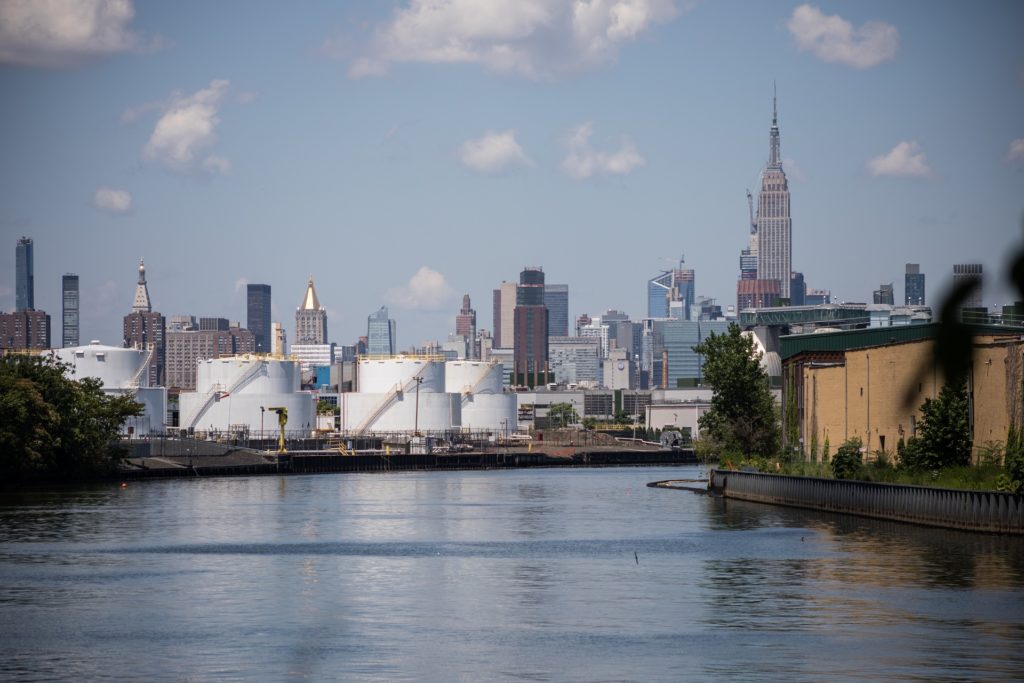
Newtown Creek. Photo: Paul Frangipane/Brooklyn Eagle
By Robert Abruzzese, Courthouse Editor
September 26, 2024
Copy Link
Email
Facebook
X
LinkedIn
WhatsApp
Telegram
Pinterest
Print
In celebration of Climate Week, Attorney General Letitia James and DEC Interim Commissioner Sean Mahar announced on Wednesday the successful completion of the Greenpoint Community Environmental Fund, which invested more than $68.6 million into green infrastructure and environmental programs for the Greenpoint community.
The fund was established as part of the 2010 settlement with ExxonMobil, holding the company accountable for a massive oil spill that contaminated more than 50 acres of soil and groundwater in the Brooklyn neighborhood.
“After we held ExxonMobil accountable for its careless destruction of the Greenpoint environment, the Greenpoint Community Environmental Fund has invested millions of dollars in restoring the neighborhood and bringing residents together,” said Attorney General James.
“From a new public library to vibrant green space improvements, this community-led effort directly supported the initiatives that residents wanted. It has been an honor to work so closely with this community and our partners at DEC to deliver a cleaner, healthier and greener Greenpoint for generations to come,” she added.
The Greenpoint Library and Environmental Education Center on Norman Avenue, a state-of-the-art facility funded by the Greenpoint Community Environmental Fund, serves as a hub for sustainability and environmental education in the community. Opened as part of the $68.6 million environmental investment program, the library features dedicated green space and offers ongoing programming for residents to learn about environmental stewardship. Screenshot via Google Street View
Since its inception, the GCEF has awarded 77 grants to a variety of projects designed to improve Greenpoint’s environmental health. These initiatives included the construction of the Greenpoint Library and Environmental Education Center, tree-planting programs and extensive upgrades to local parks. The fund was created with community input in an attempt to ensure that the investments addressed the specific needs and desires of Greenpoint residents.
“The successful implementation of the Greenpoint Community Environmental Fund is an excellent example of state government working with New Yorkers to hold responsible parties accountable for legacy industrial pollution to benefit both community residents and the environment,” said DEC Interim Commissioner Mahar.
One of the major projects funded was the $5 million state-of-the-art Greenpoint Library, which also received $100,000 in ongoing support for environmental education. Other key investments included the Greening Greenpoint initiative, which planted more than 1,000 new trees and 27,000 plants across the neighborhood, and the restoration of Msgr. McGolrick Park. These projects have transformed the area, promoting sustainability and environmental stewardship for generations to come.
“Four years after opening the Greenpoint Library and Environmental Education Center, I am thrilled to report it is one of the busiest branches in the borough,” said Linda Johnson, president and CEO of the Brooklyn Public Library. “Working together with the community, and with the generous support of GCEF, we were able to turn the tragedy of an oil spill into a modern, green library which will serve the community for generations to come.”
SUNSET PARK — “As a resident of Marine Park, one of the great surprises I found biking around Industry City and visiting Japan Village was to discover Bush Terminal Park. I continue to be amazed at the serene hideaways that the city offers in some of the busiest places — and, still, with an iconic view.”
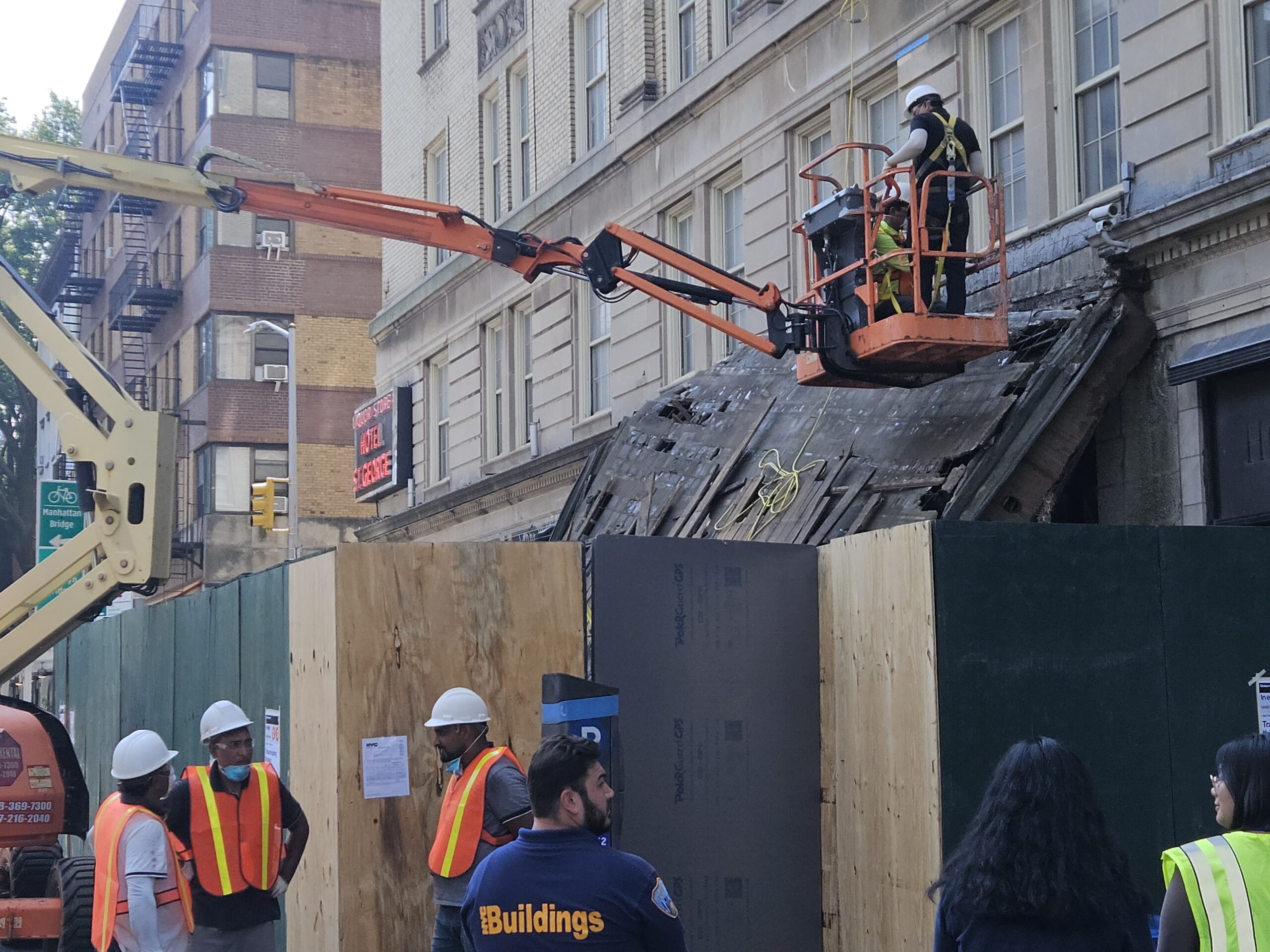
BROOKLYN HEIGHTS — ‘A miracle that no one was killed …’ That’s what neighbors are saying about the collapse of the Hotel St. George marquee. Shown in this photograph are workmen beginning the removal and repair of the historic, old neon sign at the corner, referencing a relic of Brooklyn Heights’ past: the St. George Hotel.
ATLANTIC AVENUE — Exhausted shopper with cluster of bags and goods from mall at Boerum Place stops to look at huge construction site across the street. “Is that REALLY going to be a jail??” Her male companion is reassuring, “Nothing like Rikers … this is 21st Century.”
BROOKLYN HEIGHTS — Overheard in line at one of most popular pastry outlets on Montague Street: “Hope I can get them into a camp …” A mother with two pre-schoolers in tow was showing a friend the Dodge Y flyer for Healthy Kids Day on Saturday, April 18.