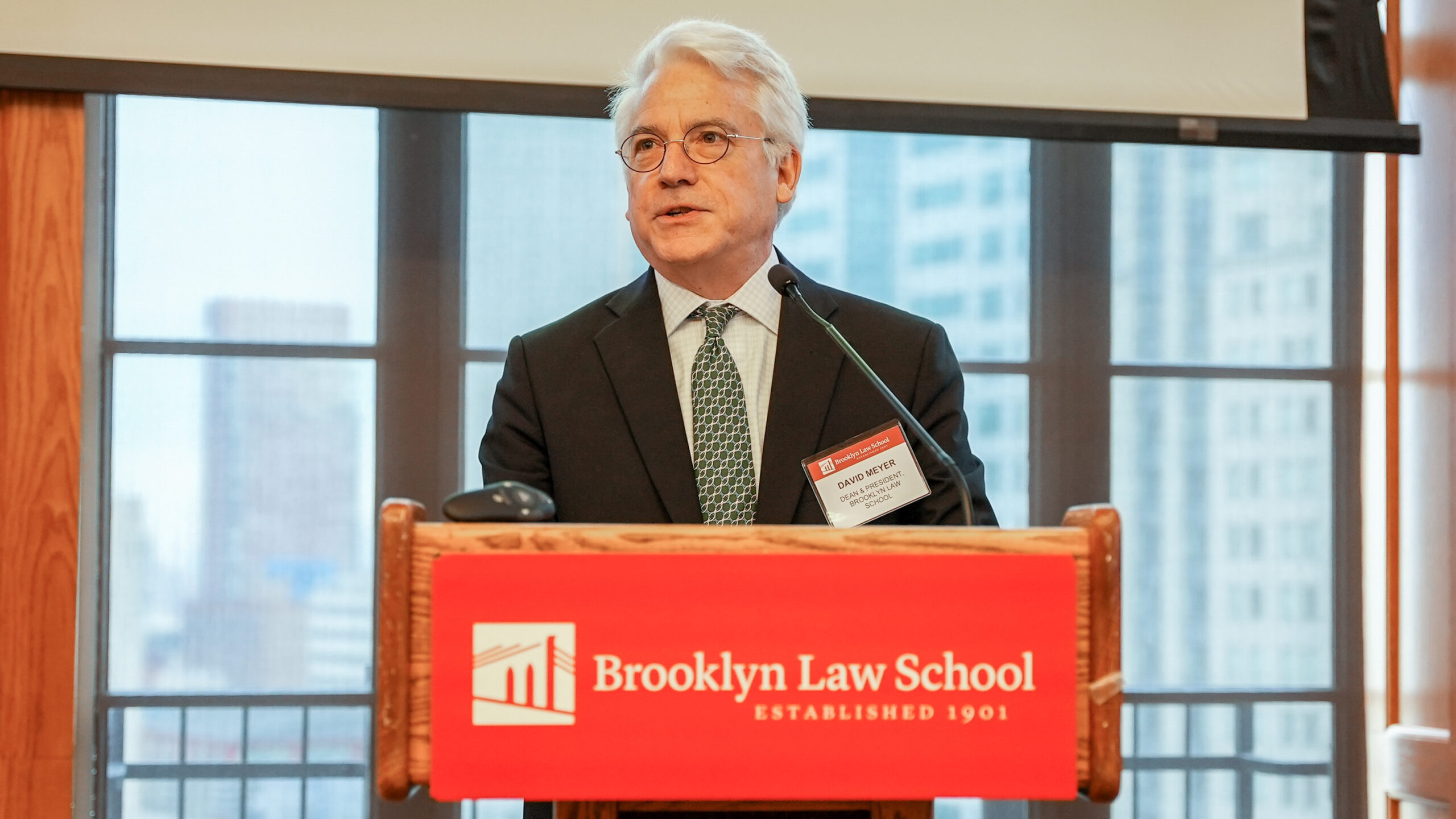
David Meyer, the new president and dean of Brooklyn Law School, brings a wealth of experience and an innovative vision to his role. His appointment marks a significant moment in the school’s history, as he becomes the 10th dean since its founding in 1901.
Meyer, who previously served as the dean of Tulane Law School for 13 years, is recognized for his impressive tenure which ranked him as the seventh-longest-serving law school dean in the United States.
Meyer’s connection to Brooklyn Law School began in 2008 when he and his wife, Professor Amy Gajda, taught there as visiting professors. This experience left a lasting impact on them both professionally and personally, drawing them to the school’s inclusive mission and progressive ethos. Meyer’s teaching experience at Brooklyn Law School, particularly his interaction with students with diverse professional backgrounds, significantly influenced his decision to return.
His journey to becoming a lawyer was inspired by his childhood experiences in Tallahassee, Florida, during a time of significant civil rights activism and school desegregation. These formative years awakened him to issues of inequality and injustice, sparking his interest in the role of lawyers in addressing these societal problems.
Meyer’s legal career is marked by prestigious clerkships, first with Judge Harry T. Edwards on the U.S. Court of Appeals for the D.C. Circuit and then with Justice Byron R. White on the U.S. Supreme Court. These experiences deepened his appreciation for the impact of quality legal representation and the crucial role of courts in shaping lives and businesses.
His scholarly focus on family and constitutional law stems from his interest in the intersection of these fields, particularly how the Supreme Court recognizes individual rights relating to family matters. Meyer sees these issues as central to families and policy, as well as constitutional interpretation and theory.
“Once I was a law clerk on the inside of a court and seeing how decisions were made, I saw the impact that high-quality lawyers could have on the outcome of a case,” Meyer said. “It made me also realize the importance that legal education can have in preparing lawyers to really be excellent advocates for their clients.”
At Brooklyn Law School, Meyer envisions leveraging the school’s assets, including its faculty and experiential learning programs, to enhance educational opportunities and community impact. He emphasizes the need to revitalize the student experience, improve bar passage and job placement rates, and expand partnerships with alumni.
“By embracing talent and ambition that had been turned away elsewhere, Brooklyn Law School has been a beacon of excellence and an engine of social mobility and transformation for generations of our graduates and their families, but also for the clients and the communities they have gone to serve, oftentimes communities that were not well represented by access to the justice system,” Meyer said.
Meyer also discusses the importance of addressing the bar exam passage rate through comprehensive strategies involving admissions, curriculum, academic support, mentoring and experiential opportunities. At Tulane, he initiated a Lawyering Skills Boot Camp, a model he finds akin to Brooklyn Law School’s Business Boot Camp, emphasizing the importance of alumni partnerships in student learning and career development.
Concerning the U.S. News & World Report rankings, Meyer acknowledges their impact but criticizes their harmful influence on legal education. He stresses that improving student outcomes and faculty impact, not just for ranking purposes but for the welfare of students, is a priority.
He commented on the recent Supreme Court ruling on affirmative action, emphasizing the vital role law schools play in preparing future leaders and the necessity of maintaining openness to talent from all backgrounds.
Meyer celebrates Brooklyn Law School’s distinctive tradition of combining access with high ambition and is enthusiastic about its future prospects, including its independent status, diverse legal specialization opportunities, and faculty commitment to both scholarship and teaching.
“Brooklyn Law School has this unique combination of qualities as an institution, combining access and openness with high ambition in a way that produces an exceptional quality of lawyers,” Meyer said. “That puts us in a unique spot, being a place that welcomes highly driven, hardworking people from wildly diverse backgrounds, who aspire to leadership at the highest levels of law practice as well as government and business and social justice.”