
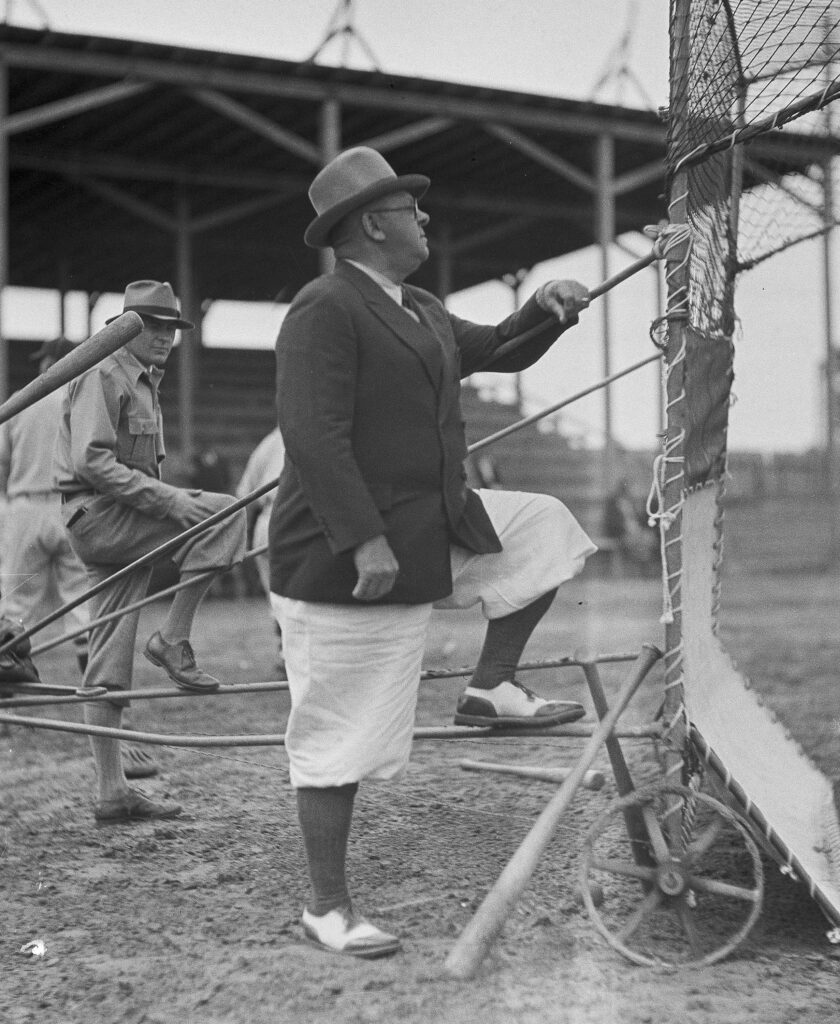


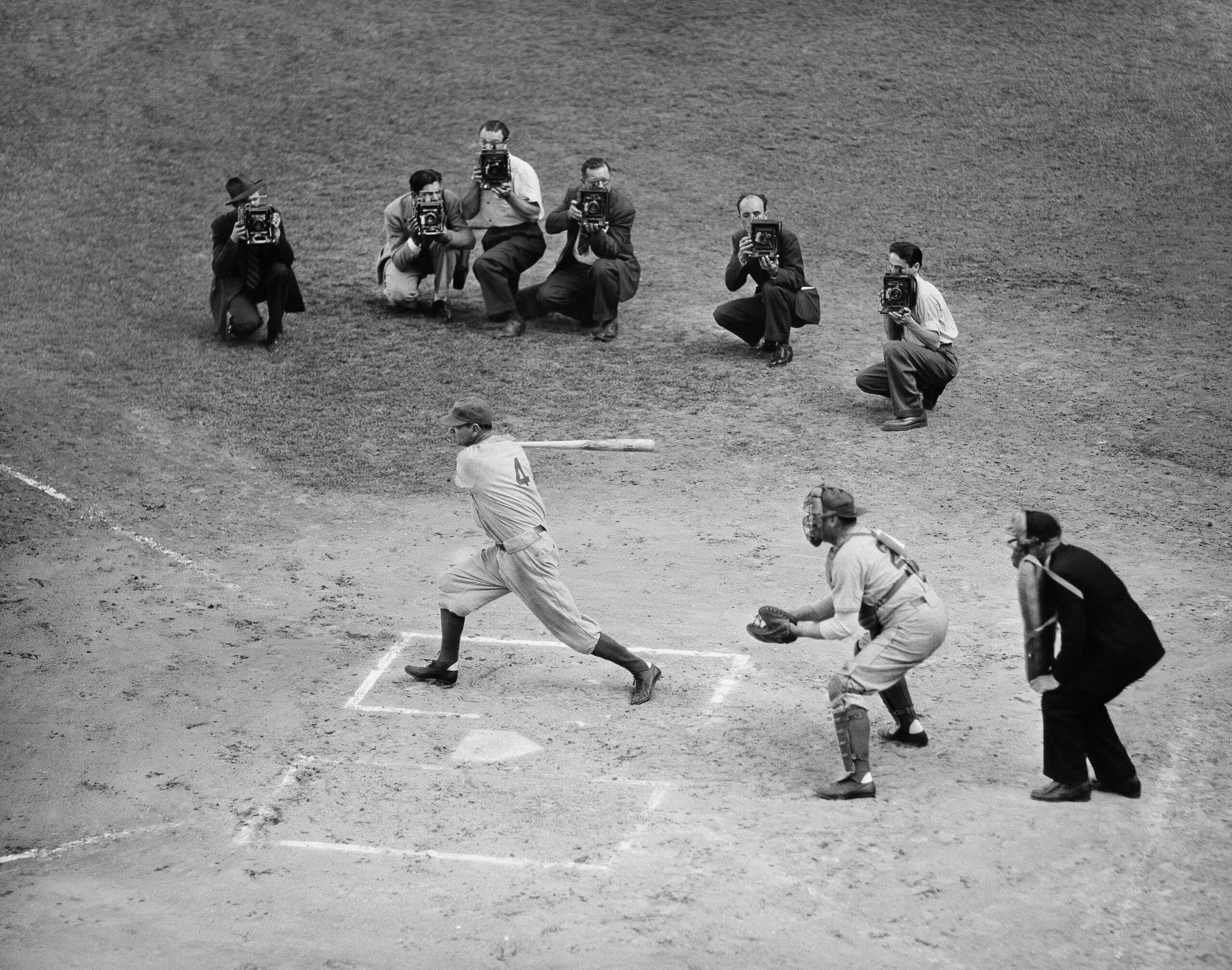
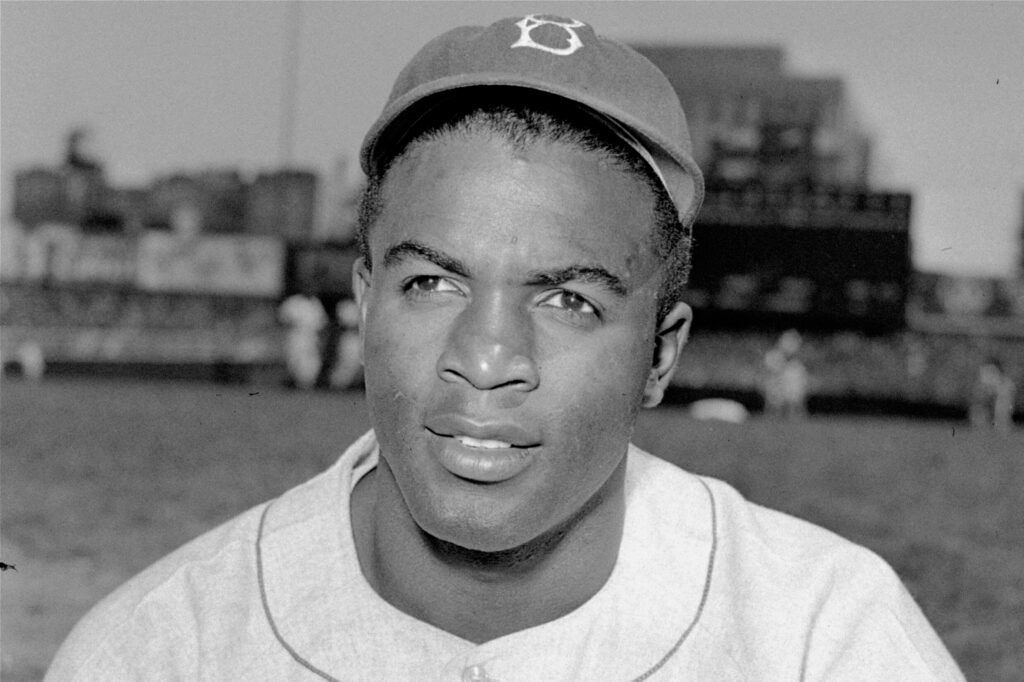
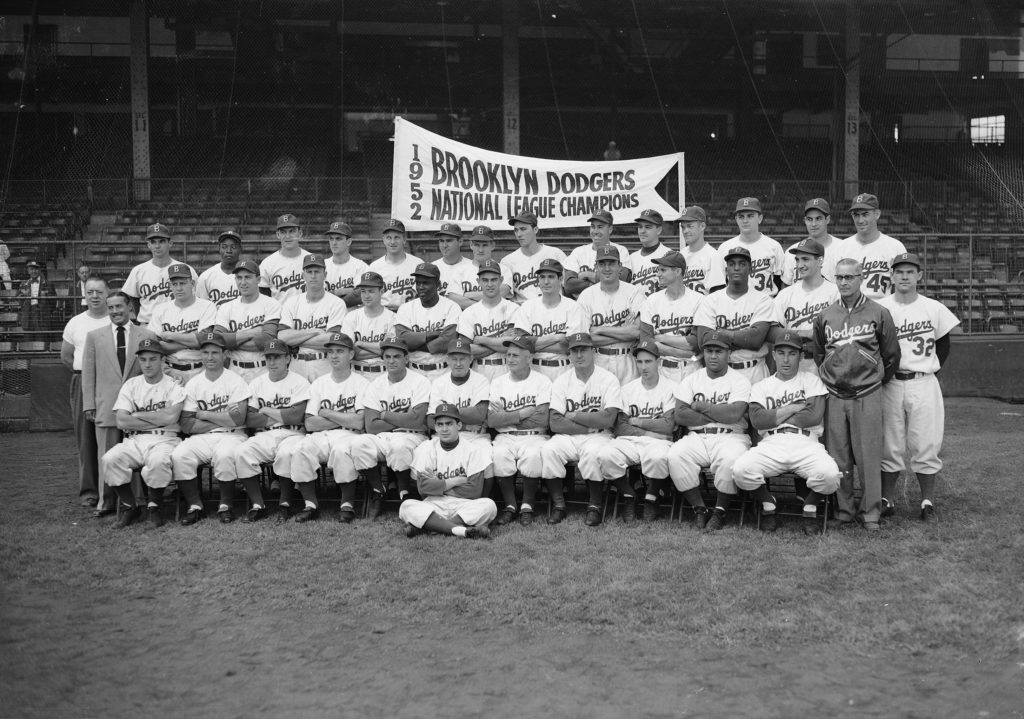
In preparing my May article, an interesting piece of trivia came to light. Not one member of the rosters of the Brooklyn Bridegrooms, The Brooklyn Trolley Dodgers, or the 1955 Brooklyn Dodger World Series winners, was born in May. Many in April, none in May. I won’t speculate.
I struck gold, though, with the Brooklyn Superbas. They had enough May babies for everyone. But just to make it a bit more difficult, the Superbas became the Robins in 1883. Imagine being Brooklyn’s equipment manager over several decades and having to deal with all those different team names. But, back to the Superbas. While I lean towards writing about a player unknown to most of today’s fans, I cannot pass up Zack Wheat, who is well known to many. He was just too good. Here is his story.
His nickname was Buck because his last name was Wheat, and he had one heck of a career. He played for 19 seasons, 18 of them for the Dodgers, and played himself into the Dodger Hall of Fame and the Major League Baseball Hall of Fame. He played left field from 1909 to 1927 as a member of Brooklyn’s many named teams.
The Society for American Baseball Research tells us this. Zachariah Davis Wheat was born on May 23, 1888, at his family’s farm near Hamilton, Missouri, sixty miles northeast of Kansas City. Missouri was still a wild frontier then; just six years earlier, Jesse James was murdered by a member of his own gang in nearby St. Joseph. Zack was the eldest of three sons, all of whom played professional baseball. The Wheats were known for more than baseball. The boys’ father, Basil Sr., was a descendant of Moses Wheat, one of the Puritans who fled England and founded Concord, Massachusetts, in 1635. Wheat not only played the national pastime game, but he did so with genes of a relative who helped form the nation.
Their mother, Julia Scott Wheat, was said to be a full-blooded Cherokee, but SABR research has shown this was likely a fabrication. Despite a denial in his own words, his presumed Native American heritage was still widely discussed in baseball circles. In an era that also produced Jim Thorpe and Chief Bender, Wheat’s supposed Indian blood was thought by some to be the primary reason for his excellence. “The lithe muscles, the panther-like motions of the Indian are his by divine right,” Baseball Magazine wrote in 1917. The statement was repeated and accepted as an article of faith for more than a century.
Basil Sr. died when Zack was 16, and the Wheats moved to Kansas City, Kansas, where Zack got his start as a second baseman with the semi pro Union Club. With his family nearly destitute, Zack set out to make a living as a ball player. In 1906, he went to Enterprise, Kansas, where he earned $60 per month playing for an independent team. That was followed by several minor league stops. Wheat quickly won a reputation as a top-notch defensive outfielder but was lackluster at the plate. Years later, he attributed his mediocre minor league batting averages to malaria he suffered in the southern cities.
In 1908, Zack attended his first major league game. It was a doozy: The Browns’ Rube Waddell defeated Walter Johnson in 10 innings, 2-1, setting an American League record by striking out 17 batters. “After seeing those two pitchers, I wondered if I wanted to be a big leaguer and have to hit against pitchers like them,” Wheat remembered. As it turned out, he wouldn’t have to worry about Waddell or Johnson; Wheat was destined for the National League.
Brooklyn purchased Wheat’s contract from Mobile for a reported $1,200 on August 29, 1909, and that September, Zack batted .304 in 26 games for the Superbas. “He is an Indian, but you would hardly guess it except from his dark complexion,” wrote one newspaper shortly after Zack’s arrival in Brooklyn. “He is a very fine fellow and a quiet and refined gentleman.”
In 1910, his first full major league season, Wheat finally became the offensive threat he had never been in the minors, leading the Dodgers with a .284 average while ranking among the league leaders in hits (172), doubles (36), and triples (15). “I was young and inexperienced [in the minors],” Wheat explained. “The fellows that I played with encouraged me to bunt and beat the ball out. I was anxious to do well and did as I was told. When I came to Brooklyn, I adopted an altogether different style of hitting. I stood flat-footed at the plate and slugged. That was my natural style.”
Nobody could argue with the results. “The beauty of Wheat’s hitting is that many of his drives go for extra bases,” wrote one reporter. Over the next several seasons, Wheat established himself as “one of the most dreaded and murderous sluggers in the National League,” ranking among the league leaders in home runs every year from 1912 to 1916. Five of his nine homers in 1914 were of the over-the-fence variety, considered a remarkable achievement during the Dead Ball era. Wheat was far ahead of his time in many aspects of hitting, adopting strategies that wouldn’t be widely accepted until decades later. He was sometimes criticized for his reluctance to bunt, but he argued that he was more valuable to the team by swinging away. Wheat also came to favor a lighter bat than most (40 ounces was the norm), which enabled him to generate more bat speed. “I am an arm hitter,” he explained to F. C. Lane, editor and longtime writer for Baseball Magazine. “When you snap the bat with your wrists just as you meet the ball, you give the bat tremendous speed for a few inches of its course. The speed with which the bat meets the ball is the thing that counts.” He didn’t need computers then to tell him what computers tell today’s ballplayers now.
Wheat had an eye for the ball. His career batting average was .317. He is credited with 132 home runs. He wasn’t a power hitter; he was just a good hitter with occasional power. He was not the guy an opposing pitcher wanted to see step into the box. The Baseball Almanac records 9,206 trips to the plate. He had 2,824 hits, knocked in 1,248 runs, and scored 1,289. Not a speedster, he still managed to clip 205 bases. His on-base percentage was .368, with a slugging percentage of .450. His OPS was .817. Most impressive was his WAR, which was 60.4.
Wheat was an interesting man. In the offseason, he raised stock — during World War I, he sold mules to the Army to serve as pack animals on the battlefields of Europe — and he used the second job as leverage in contract negotiations. “I am a ball player in the summer and a farmer in the wintertime,” he said, “and I aim to be a success at both professions.” Unless Brooklyn met his demands each spring, contracts negotiated by his wife Daisy, He was perfectly content to stay on his farm in Polo, Missouri. In an era when the balance of power rested entirely with the owners, the threat of a holdout was the only negotiating tool he had. But the Dodgers never pulled the trigger, perhaps because Brooklynites loved Wheat so much that, as one local newspaper wrote, “They regard Zack and his wife and his two children as members of their own families.” By 1926, his last year with Brooklyn, Wheat was making $16,000 as a player and assistant manager.
Here is what one sportswriter had to say about Wheat, quoted in the Hall of Fame archives. “Some years ago, out in Kansas City, a 10-year-old youngster used to hang around the baseball grounds, scurrying here and there in pursuit of stray balls which shot over the fences,” wrote Ford Sawyer of the Boston Globe in 1925. “Today, this same Zack Wheat is setting an example for other eager youths by the manner in which he pounds the horsehide. Superba would have fit him as well as “Buck.”
The outfielder topped the .300 mark in 13 full seasons and led the National League in batting in 1918. He was also an outstanding outfielder with a strong arm, leading National League left fielders in putouts seven times and fielding percentage twice.
An interesting and unusual aspect of Wheat’s career was that he spent the first part of it in the Dead Ball Era. His second best season during those years came in 1914 when he hit .319 with 26 doubles, nine triples, nine home runs, and 89 RBI.
When the livelier ball was introduced in the 1920s, Wheat made the necessary adjustments and averaged .347 at the plate from 1920-25, recording three 200-hit seasons in his mid-30s.
In 1916, Wheat had a magnificent season, batting .312 while ranking among the NL leaders in virtually every offensive category. He also set a Brooklyn record by batting safely in 29 consecutive games. Even better, for the first time in Wheat’s career, the Dodgers found themselves in a pennant race. In the closing weeks of the season, Wheat became so excited that he was unable to sleep at night. “I was thinking and dreaming and eating pennants,” he recalled. “I used to get up in the middle of the night and smoke a cigar so that I could calm down a little and get some sleep.” Brooklyn eked out the pennant but lost the World’s Series to Boston, as Red Sox pitchers held Wheat to a miserable .211 batting average.
In 1919, Wheat was appointed captain of the Robins, and that season marked a turning point for both Wheat and the game he loved. Over the last decade of the Dead all Era, Wheat compiled more total bases than any other National Leaguer, and in hits, he ranked second only to longtime teammate Jake Daubert. But as great a Dead Ball hitter as he was, Wheat’s powerful stroke enabled him to take advantage of the new lively ball like few others. In 1920, he led the Dodgers to the pennant while setting new career highs in hits (191), runs scored (89), and slugging percentage (.463). In the first six years of the lively ball, he averaged .347. In 1923-24 Wheat posted back-to-back .375 batting averages, and in 1925 he had one of the best seasons ever by a 37-year-old: a .359 batting average with 125 runs scored, 221 hits, and a .541 slugging percentage.
The Dodgers’ archives point out that Zack Wheat remains the Dodgers all-time franchise leader in hits, doubles, triples, and total bases. Though he threw right-handed, Wheat was a natural left-handed hitter who corkscrewed his spikes into the dirt with a wiggle that became his trademark. Unlike most Dead Ball Era hitters, he held his hands way down by the knob of the bat, refusing to choke up. “There is no chop-hitting with Wheat, but a smashing swipe which, if it connects, means work for the outfielders,” wrote one reporter. He was an outstanding first-ball hitter, and he was also so renowned as a curveball hitter that John McGraw reportedly had a standing order prohibiting his pitchers from throwing him benders.
But even after years of hitting .300, it was Wheat’s stylish defense that won him the most admirers. “What Lajoie was to infielders, Zack Wheat is to outfielders, the finest mechanical craftsman of them all,” Baseball Magazine crowed in 1917. “Wheat is the easiest, most graceful of outfielders with no close rivals.” An extremely fast runner, Zack was as close to a five-tool player as anyone of his era. His only weaknesses were his poor base-stealing ability and proneness to injury (his tiny size 5 feet frequently caused nagging ankle injuries). Clearly, it takes more than speed to be a good base stealer.
Another thing Wheat did for baseball was get his friend Casey Stengel into the league. They spent several years playing together. Stengel had this to say about Wheat. “One of the grandest guys ever to wear a baseball uniform, one of the greatest batting teachers I have ever seen, one of the truest pals a man ever had, and one of the kindliest men God ever created.”
Wheat had a mild temperament on and off the field and was said to have never been ejected from a game. “I never saw Wheat really angry,” Stengel said, “and I never heard him use cuss words.” Wheat, however, did have his vices. “I smoke as much as I want and chew tobacco a good deal of the time,” he once said. “I don’t pay any attention to the rules for keeping in physical condition. I think they are a lot of bunk. The less you worry about the effect of tea and coffee on the lining of your stomach, the longer you will live and the happier you will be.”
All good things come to an end, as did Zack Wheat’s career. In 1927, the Dodgers decided they no longer needed Wheat. In recognition of his many years of service, the club released him rather than trade him so he could negotiate his own deal with whomever he chose. He spent a stint with the Athletics and had a good year with Minneapolis, batting .309 until a bruised heel sidelined him. Wheat decided to retire in 1929. At the time, his 2,884 hits were tenth on the all-time major league list, while his 4,100 total bases ranked ninth.
Wheat turned to farming full-time after leaving baseball, but the Great Depression lowered prices so dramatically that in 1932, he was forced to sell his 160 acres for just $23,000. He relocated his family to Kansas City, Missouri, where he operated a bowling alley for a short time before joining the Kansas City Police Department as a patrolman. He nearly died on Easter Sunday 1936 when he crashed his patrol car while chasing a fugitive, suffering a fractured skull, dislocated shoulder, broken wrist, and 15 broken ribs. He spent five months in the hospital. Always an avid hunter, once recovered, he opened a hunting and fishing resort, which became a popular destination for ex-ball players. One of his favorite activities was turning on his radio and television simultaneously to listen to two different ball games at once. Occasionally, he and Daisy drove to Kansas City or St. Louis to see a game in person.
In 1957, MLB Reference tells us, Wheat was voted into the Hall of Fame by the Veterans Committee. “That makes me feel mighty proud,” the 70-year-old Wheat said. “I feel a little younger, too.” But Zack’s joy turned to sadness later that year when his wife, Daisy, passed away. Zack Wheat died on March 11, 1972, at a hospital in Sedalia, Missouri. He was asked why he didn’t stay in baseball longer as a coach or manager. He responded simply, “Nobody asked me to.” Shortly before his death, he was asked if he had any advice for youngsters with aspirations in ball playing. “Yes,” he said. “Tell them to learn to chew tobacco.”




















SUNSET PARK — “As a resident of Marine Park, one of the great surprises I found biking around Industry City and visiting Japan Village was to discover Bush Terminal Park. I continue to be amazed at the serene hideaways that the city offers in some of the busiest places — and, still, with an iconic view.”

BROOKLYN HEIGHTS — ‘A miracle that no one was killed …’ That’s what neighbors are saying about the collapse of the Hotel St. George marquee. Shown in this photograph are workmen beginning the removal and repair of the historic, old neon sign at the corner, referencing a relic of Brooklyn Heights’ past: the St. George Hotel.

ATLANTIC AVENUE — Exhausted shopper with cluster of bags and goods from mall at Boerum Place stops to look at huge construction site across the street. “Is that REALLY going to be a jail??” Her male companion is reassuring, “Nothing like Rikers … this is 21st Century.”
BROOKLYN HEIGHTS — Overheard in line at one of most popular pastry outlets on Montague Street: “Hope I can get them into a camp …” A mother with two pre-schoolers in tow was showing a friend the Dodge Y flyer for Healthy Kids Day on Saturday, April 18.