✰PREMIUM Everybody dies — here’s a way to you can go out ‘green’
Green burials are cutting costs and carbon emissions while intimately involving families in the process of death
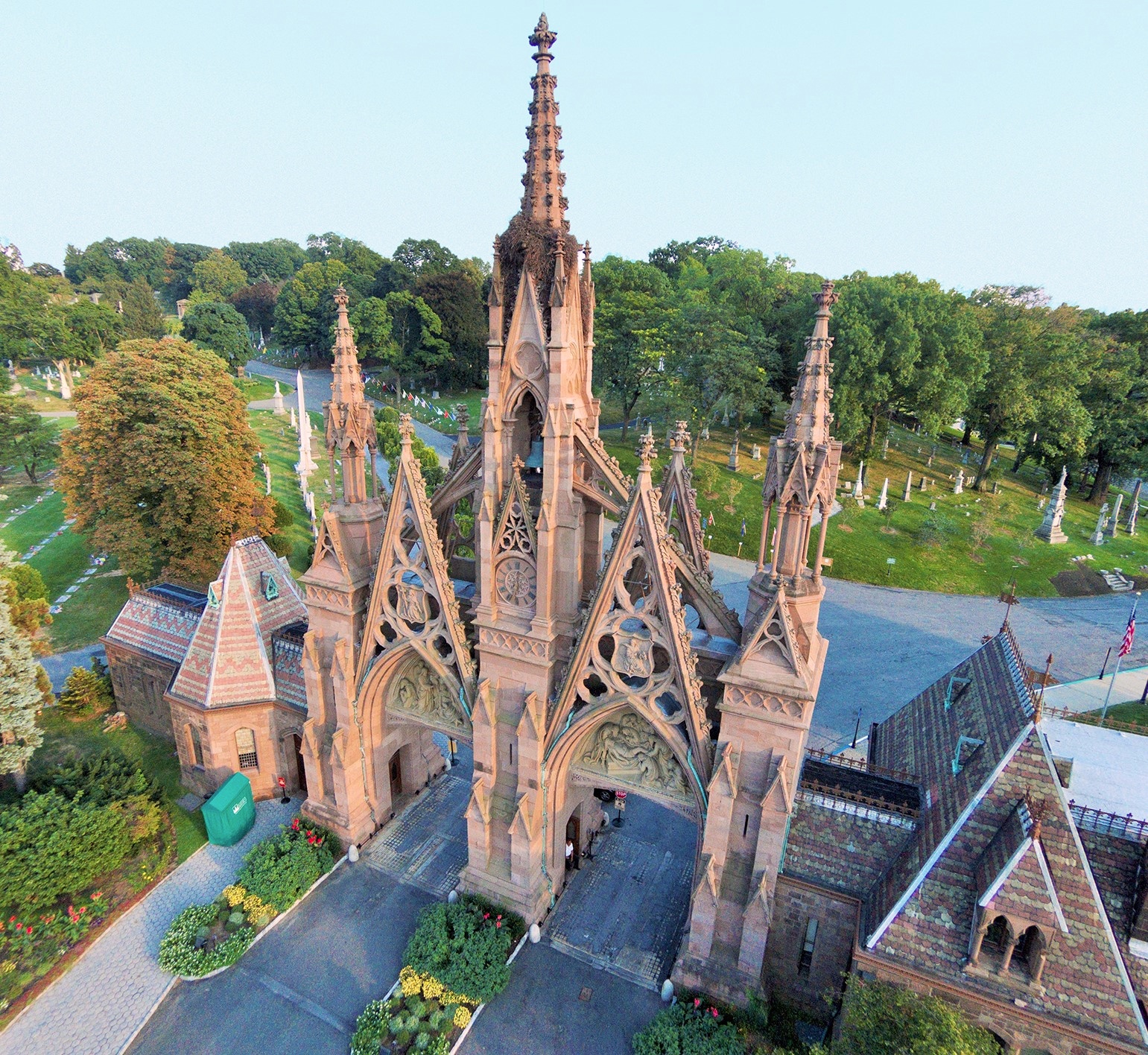
Green-Wood Cemetery in South Slope began offering green burials eight years ago. Since then, around 20 people have been buried with no steel-lined casket or embalming fluid — just a shroud.
Photo by Maike Shulz
By Owen Lavine
May 2, 2025
Copy Link
Email
Facebook
X
LinkedIn
WhatsApp
Telegram
Pinterest
Print
AUTHOR’S NOTE: Brooklyn-based funeral director Amy Cunningham is leading a new type of old funeral these days: green burials. Green burials are gaining traction among people who like “all things natural,” as well as those looking to save money burying their loved ones. Cunningham said green burials offer a way to skip the cremators, covered caskets and concrete vaults while honoring the dead in a “hands on” way. A woven basket, simple shroud and shallow grave is all that’s needed. Brooklyn’s Green-Wood Cemetery started offering green burials eight years ago, according to the cemetery’s President Rich Moylan. Since then, 30 people have gone green. Moylan finds that the term ‘green burial’ has become “trendy” among young people. Jewish and Muslim people have always buried their dead in “green burials,” but the idea may seem novel to many Americans who are used to the Catholic burial practice which is thought of as “traditional.” Green burials are slightly cheaper than traditional burials, don’t waste tons of steel and don’t emit anywhere close to the amount of CO2 released from cremation.
GREEN-WOOD HEIGHTS — Brooklyn-based funeral director Amy Cunningham is leading a new type of old funeral: green burials.
Green burials are gaining traction among people who like “all things natural” as well as those looking to save a little money burying their loved ones. Cunningham said green burials offer a way to skip the cremators, covered caskets and concrete vaults while honoring the dead in a “hands on” way.
Cunningham said people want pure water, organic food and clean air, so of course they’d want a green burial.
Instead of a steel lined casket, the deceased are wrapped in a shroud, often made from cotton, linen or silk, and placed in a woven basket or pine box before they are lowered into a grave, typically three to four feet deep. The deceased are rarely embalmed too. If they are, “green” embalming fluids like enigma compounds are used in place of formaldehyde, the toxic chemical used in traditional burials.
Cunningham said many of her clients decorate their shrouds with art and some families are even making their own shrouds.
“It can be a linen bed sheet, it doesn’t have to be fancy,” she said.
Cunningham said they often decorate the deceased with flowers and herbs that represent remembrance including lavender, St. John’s-wort and rosemary.
Even the headstones are modest, with some families opting out entirely and others vying for a small plaque. For many, Cunningham said green burials are about returning to the earth “naturally, with simplicity, humility and reverence for the land and nature.”
“Some people say, ‘I don’t want to be memorialized: I just want to go into the soil and become a part of the earth again,’” Cunningham said of her clients.
Green-Wood Cemetery President Rich Moylan concurred with Cunningham and added that “it’s generally something that appeals to younger people … the term has become trendy.”
Green-Wood began offering green burials eight years ago, and since then, 30 people have gone green.
The high cost of funeral services are also driving people to green burials according to Cunningham. Professionally made caskets and trays for green burial can run as low as $950-$2500, with shrouds in the $150-600 range. Traditional caskets typically range between $3,000-$7,000, according to Cunningham.
The cost of a plot at Green-Wood — which ranges from $21,000-$28,000 — is fixed, green burial or not, according to Moylan. At Green-Wood, cremations cost at least $3,000 — $500 for the cremation and $2,500 for the funeral director — according to Cunningham.
Green-Wood Cemetery in South Slope began offering green burials eight years ago. Since then, around 20 people have been buried with no steel-lined casket or embalming fluid—just a shroud. Photo courtesy of Green-Wood Cemetery
However, it is legal to bury the deceased in a backyard with the required burial permit, which could cut out the land costs. But Cunninghamj added, “[I am] pretty sure if the zoning folks were contacted for backyard full body burial permission within Park Slope or Brooklyn Heights or anywhere else in Brooklyn, the answer would be a robust no.”
How “green” is it?
Green-Wood Vice President of Horticulture Joseph Charap and Senior Vice President of Operations Eric Barna agreed that green burials are, in fact, green.
Charap said the main benefit is that green burials don’t cause any carbon emissions. The alternative budget option: cremations, are done using gas-powered retorts at Green-Wood, although they are looking to get electric cremators. The cremators burn 19 million cubic feet of gas a year, according to Barna. That’s around the same amount 227 cars would emit each driving 11,500 miles per year, according to the Environmental Protection Agency’s CO2 calculator.
Barna described some traditional burials as wasteful, too.
“For some traditional burials, you’re going to have a casket for a casket like a concrete outer vault or a steel outer vault for a casket. Again, it’s another product you’re putting in the ground that had to be made somewhere else and shipped here,” Barna said. “That doesn’t occur with green burials.”
Barna said harmful chemicals left behind in bodies such as chemotherapy drugs aren’t a concern either, noting that of the 600,000 people buried over 180 years using different burial practices at Green-Wood, worse things have been done to the soil.
“This will always be a cemetery. It’s not land we’re going to draw drinking water from,” he added.
Religious traditions
For Jewish and Muslim people, these funerals aren’t “green burials;” they are simply funerals. Both bury their dead in a simple white cloth.
Cunningham said some secular people see “nature as a faith” and can come to connect with it through green burials.
The funeral tradition most Americans follow stems from Catholicism. Some Catholics, according to Cunningham, “believe in preserving the deceased for eternity and making the body incorruptible,” thus the embalming and shielded casket. She added that the belief isn’t shared among all Catholics, though, pointing to the Catholic Diocese Newark, NJ, which has an earth-friendly cemetery.
Funeral director Amy Cunningham has been administering green burials for over a decade. She asks “why not just more naturally, seamlessly offer the body to the earth?” Photo by Al Johnson
Cunningham said vaults were born out of a fear of grave-robbers and keeping the grounds level.
While she doesn’t fault people for getting cremated or having traditional burials, she wants to see changes in the funeral industry.
“Traditional burial and cremation have required Americans to step out and let the ‘professionals’ handle it,” Cunningham said. “So much of the funeral business today is direct cremations with no involvement, no ceremony — just returning the loved one in a box four days after death.”
However, Cunningham said “green burials require folks to step in and participate.”
“It’s really its own ministry in a powerful way,” she concluded.
SUNSET PARK — “As a resident of Marine Park, one of the great surprises I found biking around Industry City and visiting Japan Village was to discover Bush Terminal Park. I continue to be amazed at the serene hideaways that the city offers in some of the busiest places — and, still, with an iconic view.”
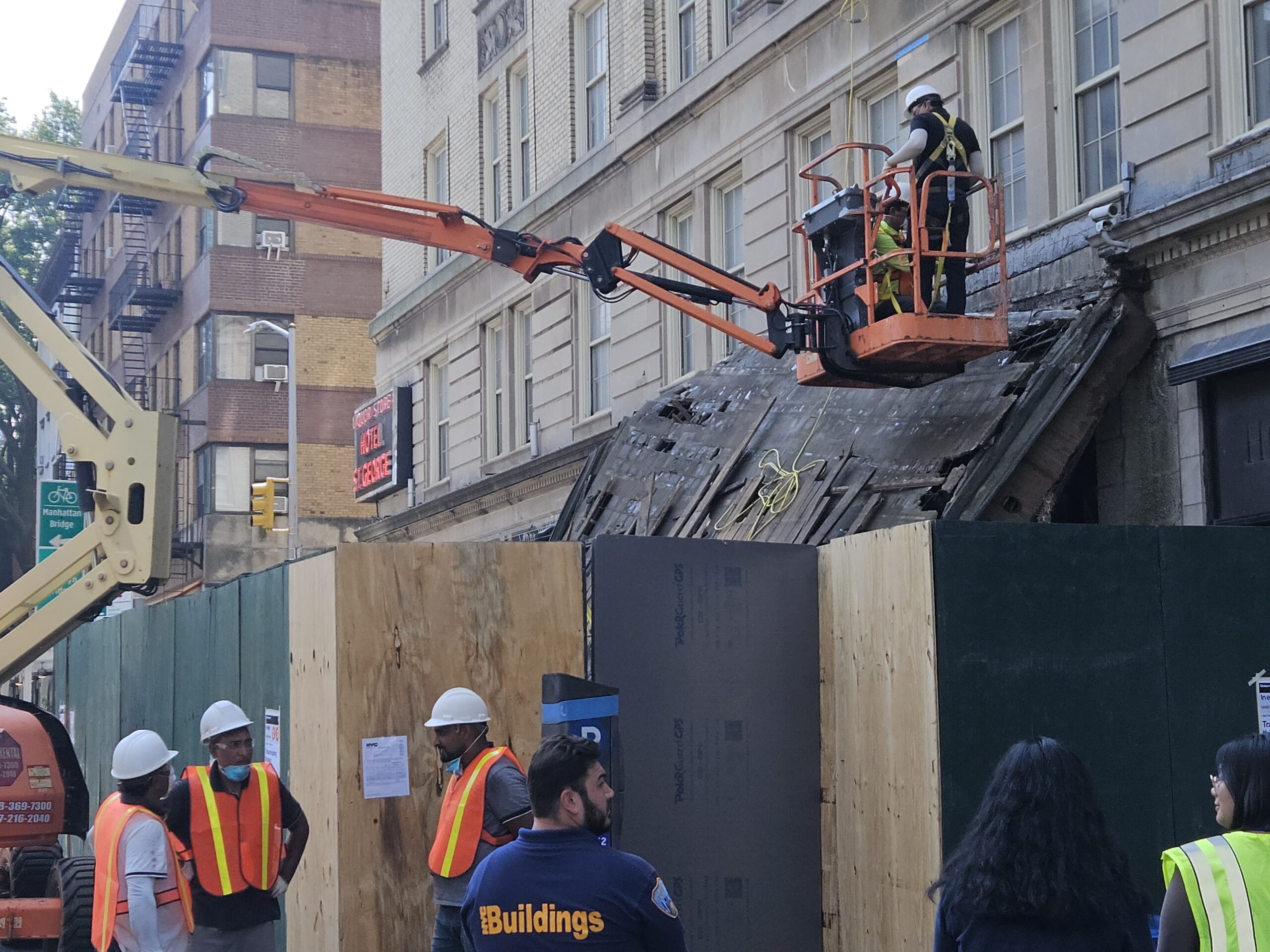
BROOKLYN HEIGHTS — ‘A miracle that no one was killed …’ That’s what neighbors are saying about the collapse of the Hotel St. George marquee. Shown in this photograph are workmen beginning the removal and repair of the historic, old neon sign at the corner, referencing a relic of Brooklyn Heights’ past: the St. George Hotel.
ATLANTIC AVENUE — Exhausted shopper with cluster of bags and goods from mall at Boerum Place stops to look at huge construction site across the street. “Is that REALLY going to be a jail??” Her male companion is reassuring, “Nothing like Rikers … this is 21st Century.”
BROOKLYN HEIGHTS — Overheard in line at one of most popular pastry outlets on Montague Street: “Hope I can get them into a camp …” A mother with two pre-schoolers in tow was showing a friend the Dodge Y flyer for Healthy Kids Day on Saturday, April 18.