Construction alert!
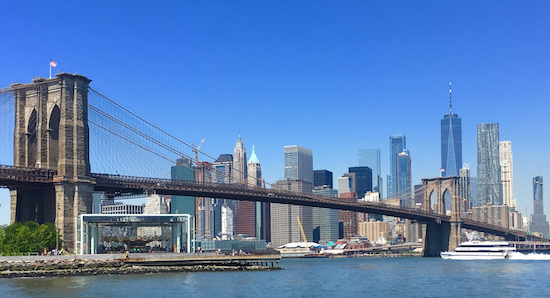
The city Department of Transportation plans to renovate the underbelly of the famous Brooklyn Bridge.
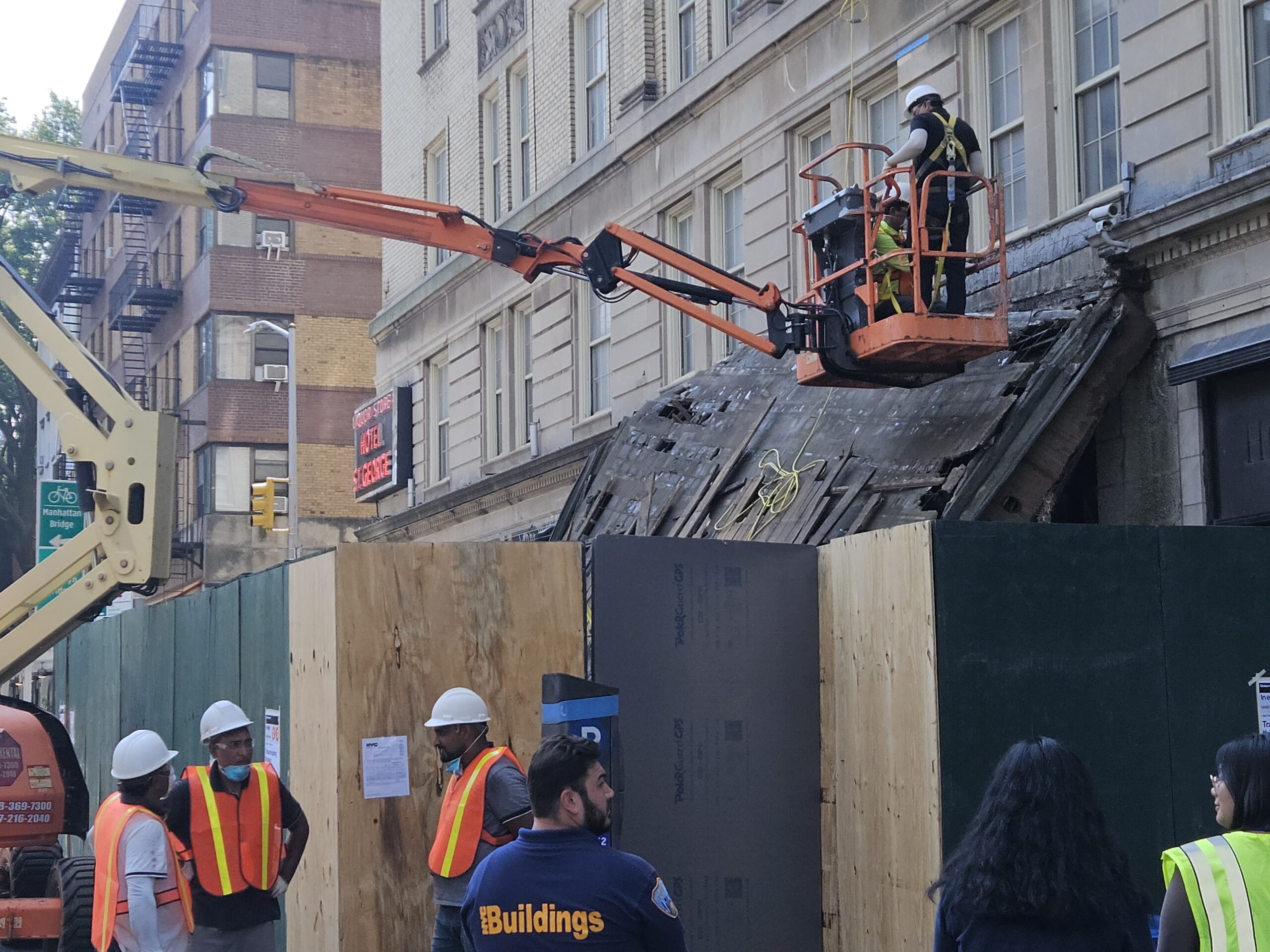
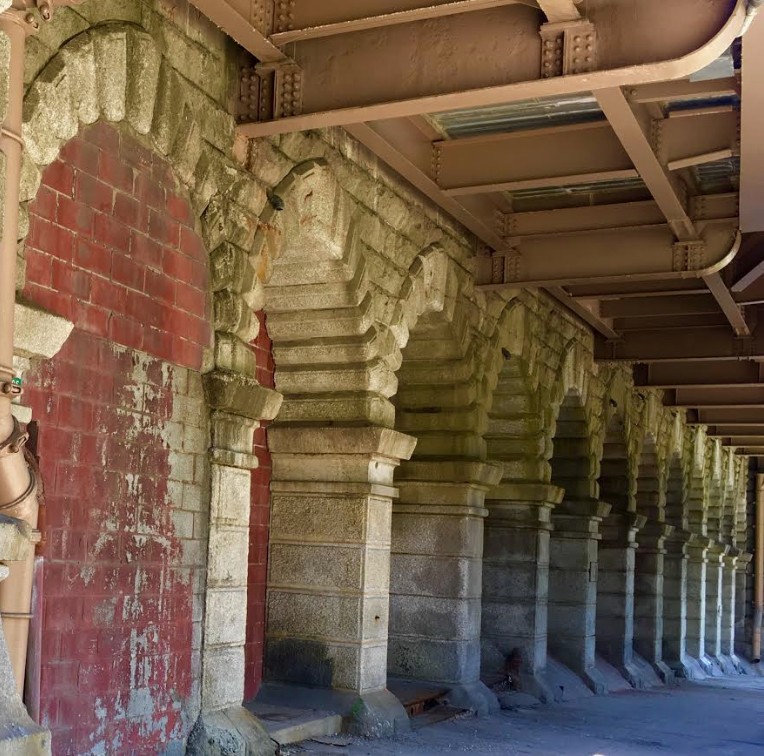
The agency hopes to start next June on a major overhaul of the Italian Renaissance-style arches that are important architectural features of the approach to the bridge in Lower Manhattan.
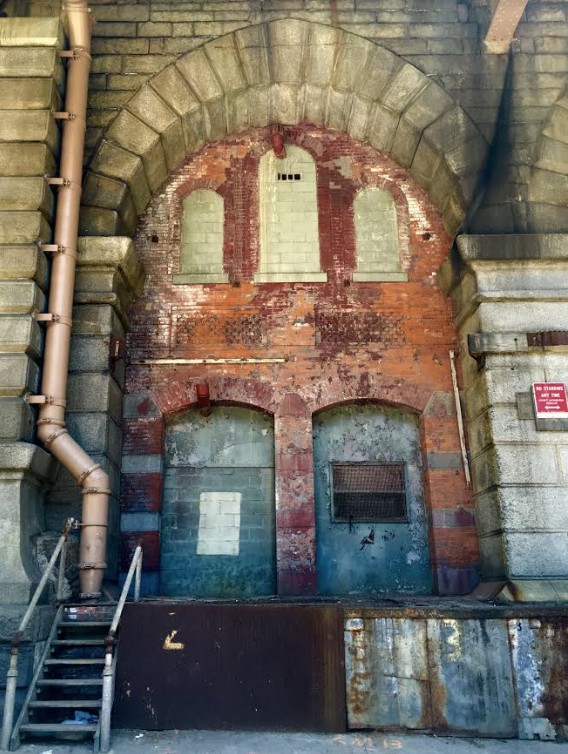
Originally, the arches below the famous bridge were open voids. Decades after the bridge’s 1883 debut, the archways were filled in with brick, which has deteriorated.
On Tuesday, the city Landmarks Preservation Commission voted unanimously to approve the transit department’s proposed restoration of these archways.
The commission’s vote took place at its headquarters — which coincidentally is located near the Brooklyn Bridge’s Lower Manhattan vehicular and pedestrian entrances.
The renovation project will also include repointing the stone on the Brooklyn Bridge’s main towers and installing metal bars to reinforce the towers’ Gothic arches. Also, the masonry on the arches on the bridge’s Brooklyn approach will be repointed.
The Department of Transportation hopes to complete this project in December 2022.
The city agency has already spent many years on other Brooklyn Bridge rehab projects. Past bridge renovation caused distress to residents who live near the bridge in Brooklyn Heights, Concord Village and Lower Manhattan. Their sleep was interrupted by work done at night.
After the Landmarks Preservation Commission’s vote, Nick Pettinati, the Department of Transportation’s deputy director of urban design, told the Brooklyn Eagle the agency is “still working out the details” of whether or not the upcoming bridge repair project will involve nighttime construction.
Why Not Return the Arches to their Original Condition?
During a hearing before the Landmarks Preservation Commission’s vote, Pettinati said the brick in the Lower Manhattan bridge arches has deteriorated and needs to be replaced. The transit agency plans to construct reinforced concrete walls that will stand behind new brick walls in the archways.
The Landmarks Preservation Commission’s Acting Chairman Fred Bland asked Pettinati why the bridge arches can’t be left open — as they were when the bridge was originally designed — after the brick infill is removed.
The Department of Transportation’s answer was two-fold. First, there are security concerns. The Brooklyn Bridge is a terrorist target. Second, walls are needed inside the arches to add structural stability to the bridge.
In testimony during the hearing, Barbara Zay of the Historic Districts Council called the archway rehab project “a commendable and worthwhile endeavor.”
She recommended that the Department of Transportation consult Landmarks Preservation Commission staffers when selecting the type of brick to be used in the arches’ rehab.
In their approval vote, the commissioners stipulated that the Department of Transportation must work with preservation agency staffers to ensure that new brick used in the project matches the existing brick.

A Game-Changing Link Between Brooklyn and Manhattan
The world-famous bridge was the first span to link Brooklyn and Manhattan. Until the Brooklyn Bridge’s much-heralded opening, people relied on ferries to travel between the two places.
With a main span of 1,595.5 feet, it was the longest suspension bridge in the world from its debut until 1903.
John, Washington and Emily Roebling led the construction of the Brooklyn Bridge, which took place between 1867 and 1883.
At least 20 people died while building the bridge, including John Roebling, who got tetanus after a foot injury.
His son, Washington Roebling, succumbed to caisson disease and was confined to his home in Brooklyn Heights. He sat at a window at 110 Columbia Heights and used a telescope to watch the construction work, supervised by his wife, Emily, continue without him.
The Brooklyn Bridge was designated as a city landmark in 1967.