The major waterways of New York City, New York Harbor and the Hudson River, are known throughout the world. But the city is home to many lesser-known lakes, streams, bays, ponds and tributaries.
Sergey Kadinsky, a staffer for the city Parks Department and an adjunct professor of history at Touro College, pays tribute to them all in his book “Hidden Waters of New York City” (The Countryman Press, division of W.W. Norton & Co.). Many of the waterways he mentions are in Brooklyn, and the borough merits an entire section in his book.
Many of the bodies of water he writes about are pleasant indeed: Sheepshead Bay, the lake in Prospect Park, the ponds in Green-Wood Cemetery, some of the inlets off Jamaica Bay. However, the two bodies of water that lead off the Brooklyn section are among the most polluted on the East Coast and probably in the nation: the Gowanus Canal and Newtown Creek. They’re so toxic that both have been designated as Superfund sites.
Kadinsky does an admirable job of describing both. Not only does he describe the pollution and current efforts to lessen it, he takes us into their history. For example, did you know that before the growth of industry, the Gowanus was once a pristine tidal inlet that was known for its oysters?
Kadinsky also details the bridges that traverse both bodies of water, such as the circa-1889 Carroll Street Bridge over the Gowanus, the oldest retractable bridge in the U.S. When a boat comes through the canal, the bridge slides back over tracks onto dry land until the vessel is safely through. For Newtown Creek, he lists not only the bridges that cross it today but also those that have been removed, such as the “Penny Bridge” that gave its name to a now-defunct Long Island Rail Road state.
Sheepshead Bay, on the other hand, is a fishing-boat hub and tourist area. Its piers date to the 1930s, when Emmons Avenue was widened. For years, the central attraction of the community was Lundy’s seafood restaurant; although the restaurant is now closed, its landmark building is still there. If you’re ever in the area, you can also check out the Russian immigrants fishing for herring from the Ocean Avenue foot bridge.
As Kadinsky reminds us, Sheepshead Bay originally ran into Coney Island Creek, making Coney Island a true island. In 1937, to facilitate the construction of the Belt Parkway, the section of Coney Island Creek between the bay and Shell Road was filled in. Part of the surviving portion of the creek is filled with the sunken hulls of small boats.
The star of these is the wreck of the famed “yellow submarine” constructed by Brooklyn resident Jerry Bianco. As Kadinsky tells it, Bianco launched the sub, which he called the Quester, in 1970. He hoped to find the wreck of the ocean liner Andrea Doria, which sank in 1956 after a collision with another ship. However, because there wasn’t enough ballast to keep it on an even keel, Bianco’s submarine “keeled to the side and settled on the shallow bottom of the creek.”
Also covered in Hidden Waters of New York City are the various lakes, ponds and brooks inside the city’s parks and cemeteries. Some of these are truly hidden; others, like Prospect Park’s lake, are not. Everyone who is reading this article has probably seen Prospect Park Lake. Kadinsky goes into great detail, describing the various subsidiary ponds, the bridges over the lake, the boathouse and the original source of the water.
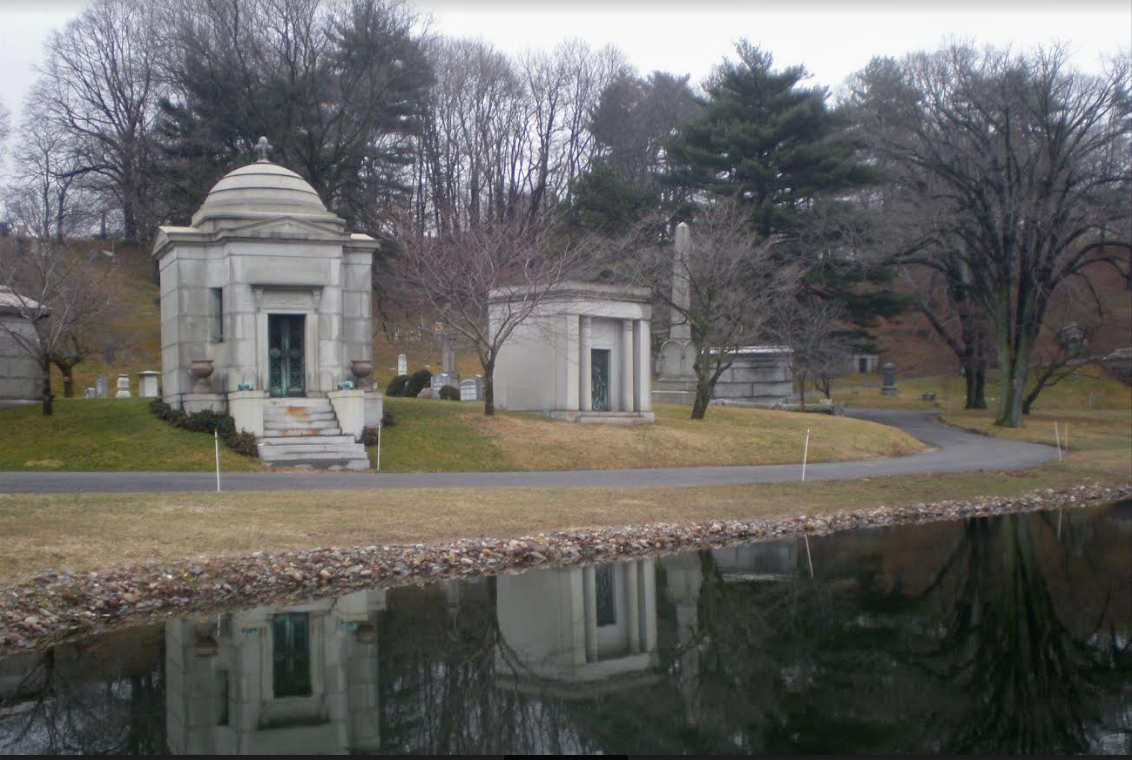
A short distance from Prospect Park is Green-Wood Cemetery, and its ponds were built into the original design of the park to create a rural atmosphere. While Green-Wood is no longer as heavy a tourist destination as it was in the mid-19th century before the creation of public parks, it is still a pleasant place to visit, and the ponds contribute to its pleasant aura.
Finally, the book explores the various inlets, creeks and basins in southeast Brooklyn that may be unfamiliar to those who don’t live in the area: Gerritsen Inlet, Mill Basin, Paerdegat Basin and more. If you’ve driven past neighborhoods where the back yards of the houses face the water and have docks and boats attached to them, here’s the place to find out about them.
“Hidden Waters of New York City” is well-written and easy to understand, and it’s a must for anyone who wants to find out more about nature and history in the big city.