“60 Minutes,” the CBS flagship that has been the top-rated news program on television for 52 consecutive years, isn’t dying.
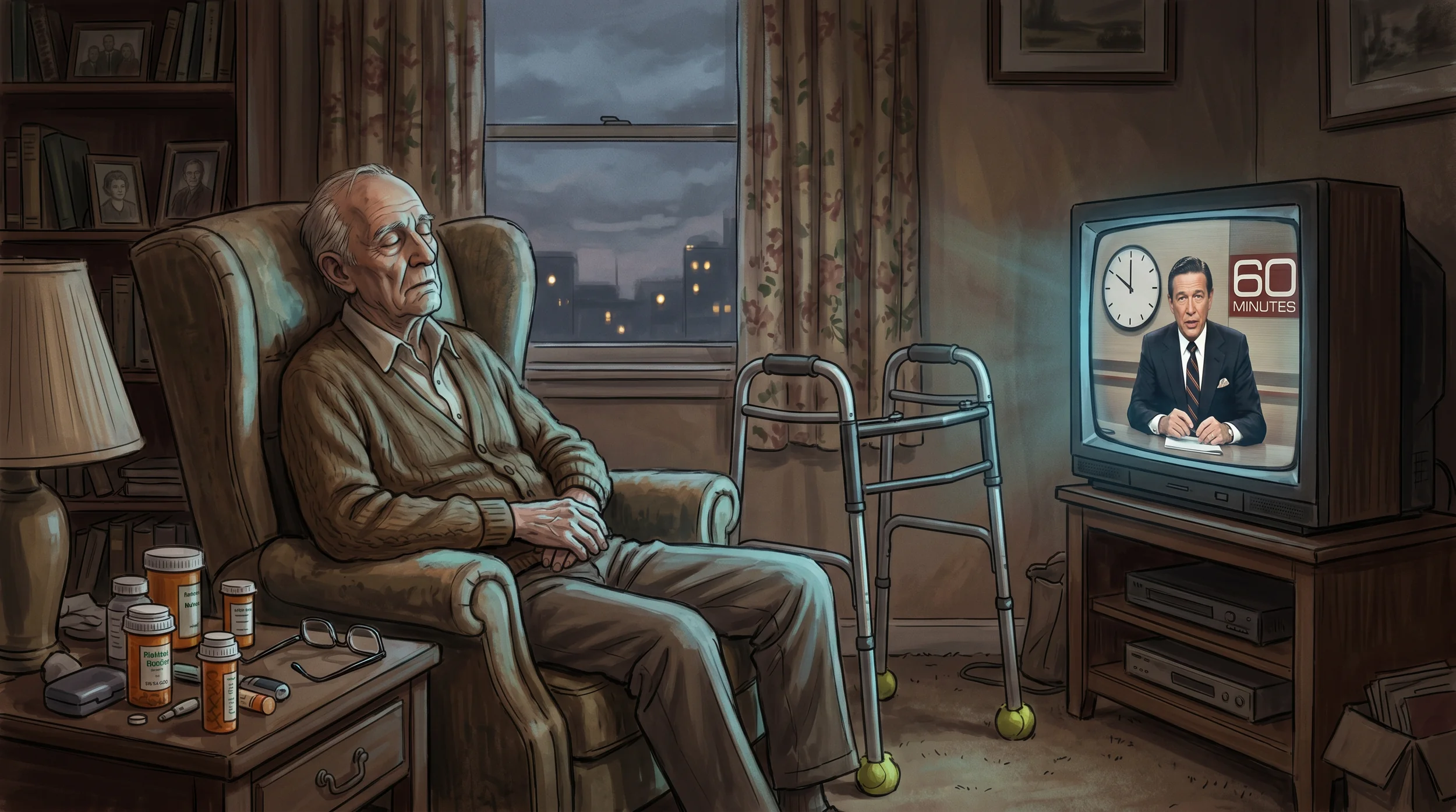
The people who watch it are.
You can tell by the commercials CBS airs that many of its viewers watched the Watergate hearings live — and have been glued to CBS ever since.
Sixties football legend Joe Namath is selling Medicare Advantage plans. The magnificently mustached Tom Selleck, once “Magnum, P.I.,” now hawks reverse mortgages.
Hearing aids. Walk-in bathtubs with safety bars and built-in seats so nobody breaks a hip getting clean. Term life insurance for $9.95 a month, no medical exam required, because at this point, why bother? And pharmaceutical ads whose lists of side effects run longer than the segment that preceded them and include, almost as an afterthought, death.
The joke in television circles has long been that CBS viewers tune in with their colostomy bags already attached. The advertisers aren’t laughing. They’re just not paying premium rates.
Fox and CBS both attract older audiences, but they aren’t the same old. CBS skews establishment, coastal, educated. Their version of retirement panic is selling against home equity. Fox’s is selling against the end of the world and the dollar’s collapse — different anxieties, same actuarial clock.
And that — not the palace intrigue, not the firings, not the breathless media coverage of who said what to whom — is why CBS handed the keys to Bari Weiss, who promptly hired a Vanity Fair writer with no newsroom experience to reinvent a show that just posted a 9% ratings increase.
When your median viewer is north of 65, loyalty doesn’t show up on a CPM spreadsheet. Nine million faithful Sunday-night Americans sounds like an asset. To an advertiser trying to move cars, mortgages and credit cards, it looks more like a waiting room.
Scott Pelley — earning $7 million a year to ask questions — was among those shown the door. He responded by going to the press and announcing that Weiss was “murdering” the show.
It’s a vivid charge. It’s also exactly backwards. The ratings went up. The show finished its 52nd consecutive year at number one. If this is murder, the victim keeps getting healthier.
The drama is real. The business problem behind it is realer. “60 Minutes” doesn’t have a journalism problem; it has a demographics problem, and no amount of palace intrigue changes the actuarial tables.
None of this is new. CBS has been here before.
In 1958, CBS chairman William Paley cancelled the network’s flagship news program “See It Now,” hosted by legendary newsman Edward R. Murrow.
Paley had built CBS News largely on Murrow’s reputation, but was tired of the headaches that a news program brought. Sponsors were skittish, senators were calling, and game shows were far cheaper to produce, controversy-free and considerably more profitable.
Paley told Murrow the show gave him a stomachache and cancelled it.
The stomachache was real, but it was also convenient: a moral alibi for a financial decision that had already been made. Paley loved Murrow the way owners love prestige — enthusiastically, right up until it costs something.
Ten years later, in 1968, CBS launched “60 Minutes,” almost as if trying to atone. For more than half a century, it worked, somehow threading the needle between commerce and journalism in a way that would have astonished Murrow. It won 150 Emmy Awards, broke major stories, changed laws and made money — reliably — year after year because enough Americans still wanted to sit down on Sunday night and be told something true.
That era is ending, not because Weiss arrived, not because Pelley left, but because the audience that sustained it is aging out of the advertising market, one viewer at a time.
The journalism still works. The audience still watches. The business model is what is eroding.
Murrow warned in 1958 that television could become “merely wires and lights in a box” — a machine to distract, delude and insulate rather than illuminate.
In 2026, the box is surviving just fine, but Murrow didn’t predict the audience would fade away.